Emergency Discussion #3: Xi Visits Trump
The summit and the state dinner
This is only the second of four meetings that are scheduled between Trump and Xi this year. Trump first visited China in May, and that went well but didn't really produce anything. This visit went okay, but again it didn't produce anything. There are two more visits scheduled. One will be at APEC in China, in Shenzhen, in November, and Putin is scheduled to be there as well. President Xi has invited Trump to China, and Trump has said yes. I think it's very likely all three leaders will be there for the first time in a long time: Putin of Russia, Xi of China, and Trump of the United States. That'll be very interesting. In December, there will be one more meeting in Florida, at Trump's National Golf Course, and President Xi will probably be there for the G20 summit.
Before the meeting, there was a meeting between Treasury Secretary Scott Bessent and his counterpart, He Lifeng, in New York at the JPMorgan offices, and they were trying to figure out a trade deal. As you know, there is a pause to the trade war between the United States and China, and they basically extended it by a few months. It didn't seem as though there were some major results out of these meetings. They were supposed to discuss the possibility of establishing an AI committee, a global committee, to discuss guardrails and all that. I don't think that happened either. These meetings are happening, but for whatever reason they are extremely lackluster.
You can make the argument, and it's a very legitimate argument, that right now U.S.–China relations are under tremendous strain. Remember, there is another U.S. citizen—I forgot his name—but he was in South China doing some research, and he was apprehended by the Chinese authorities and detained and arrested on the suspicion of spying. That has caused a lot of tension between China and the United States. Also, the United States has accused China of providing targeting information for the Iranians, which has allowed the Iranians to kill Americans. There's a lot of conflict between China and the United States.
My intuition is that a lot of this isn't really conflict between the United States and China. A lot of it is different factions within both the United States and within China who are trying to railroad each other, who are trying to embarrass each other's factions. Right now, in the United States, there are certain factions that want rapprochement with China. There are also many different factions that want to increase belligerence, to increase this conflict between China and the United States, and that's what's really driving a lot of these news leaks.
Something to note is how President Trump went directly to Joint Base Andrews to greet President Xi. This was a very big deal. The last time this happened was when Obama went and greeted the Pope. This is Trump showing the greatest hospitality to President Xi. There was also a flyover, and the two first ladies also spent a lot of time together. There was this big state dinner, and this is only the second state dinner that Trump has hosted in his second term. The first was for King Charles. Again, Trump thinks very highly of President Xi of China, and he's gone really all out to welcome his friend.
I want to show you this list of CEOs who attended the White House banquet.
- Kelly Ortberg, Boeing, CEO
- Larry Fink, BlackRock, CEO
- Stephen Schwarzman, Blackstone, CEO
- Sam Altman, OpenAI, CEO
- Greg Brockman, OpenAI, President and Co-Founder
- Anna Brockman, wife of Greg Brockman
- Dr. Miriam Adelson, Las Vegas Sands, controlling shareholder
- Sergey Brin, Google/Alphabet, Co-Founder
- Gerelyn Gilbert-Soto, partner of Sergey Brin
- Satya Nadella, Microsoft, Chairman and CEO
- Jim Taiclet, Lockheed Martin, Chairman, President and CEO
- Sundar Pichai, Google, CEO
- Larry Culp, GE Aerospace, CEO
- Sanjay Mehrotra, Micron, CEO
- Cristiano Amon, Qualcomm, CEO
- Jeff Bezos, Amazon, Chairman
- Lauren Sánchez Bezos, spouse of Jeff Bezos
- Jeff Yass, TikTok
- Jamie Dimon, JPMorgan, CEO
- Michael Dell, Dell, CEO
- Mary Barra, General Motors, CEO
- David Solomon, Goldman Sachs, CEO
- Jane Fraser, Citi, CEO
- Elon Musk, SpaceX and Tesla, CEO
- Darren Woods, ExxonMobil, CEO
Certain things to note about this list. Number one is these are all CEOs. There are no cultural figures. This is unusual because traditionally, when there are these White House banquets, cultural figures are invited. Someone like Lang Lang, who is a Chinese pianist, would have been invited. Maybe Chloé Zhao, who is an Oscar-winning Chinese director, would have been invited in the past. An actor like Jackie Chan or Michelle Yeoh would have been invited in the past. Clearly, the emphasis is purely on business. That's point number one.
Point number two is, as you can see from this list, most of these people happen to work in the AI, high-tech sector, and that really highlights Trump's priority. As I've mentioned many times in previous lectures, right now there's a civil war going on in the United States between the Wall Street people as well as the Silicon Valley oligarchs. It's really a war between finance and technology. This list shows how Trump is being supported by the Silicon Valley oligarchs.
You will see there are financial people on this list, including Larry Fink and Stephen Schwarzman. I think it's because they straddle these two worlds between finance and AI. Larry Fink and Stephen Schwarzman are heavy, heavy investors in AI databases, especially Larry Fink. Another thing I will point out is that Stephen Schwarzman is very, very close with both the White House and with Zhongnanhai. He's been a very effective middleman between China and the United States for the longest time. This list of CEOs shows you the priorities of the White House.
Another thing that I will point out is there were no Chinese entrepreneurs at the White House banquet. This is extremely unusual. In May, when Trump visited China, he brought with him most of these people, and China invited a lot of their own entrepreneurs. For example, one of the most famous pictures taken during that time was between Lei Jun and Elon Musk. Elon Musk, of course, is the world's wealthiest man, and Lei Jun was, at one point, China's wealthiest man. I'm not sure if he's still number one, but for some time he was number one, and he's considered the best entrepreneur China has right now.
I was extremely taken aback. I was extremely surprised when they were not invited to the dinner. Then you ask yourself, what's going on? A lot of things that you would expect to happen are not happening. Something to appreciate about Chinese politics is, everything in China, it's always politics number one. Everything else is second, including economics.
I think that what's really going on is Trump has been very clear and direct in his demands. He basically wants China to open up its financial sector. He wants more Chinese students to come to the United States. Basically, he wants China to invest more in the United States and allow American companies to make more money in China. That's what Trump wants. He's a business person, right? China has been very, very reluctant to do so. I don't think it's because China is trying to protect its own sovereignty. I think it's because no one is in charge of China right now. No one person has the authority to make any controversial concessions.
I know this is a very provocative statement, but let me slowly explain to you my logic. My argument to you today is that in China, there's really no one in charge. It's rule by committee.
Three paradoxes and three misunderstandings
There are three paradoxes that I saw during this summit. The big paradox is there were no Chinese entrepreneurs present. Why this is important is it violates two important Chinese principles: the principle of reciprocity and equality. If you come to my house and I invite these Chinese entrepreneurs, then when I go to your house, it's expected that I bring Chinese entrepreneurs as well. This is the idea of reciprocity. It's like giving gifts. If I give you a nice gift, you have to give me a nice gift back in return.
It also violates the principle of equality. China sees itself as a peer to the United States. The question then is, why is it that all these American titans of industry were present, but these Chinese titans of industry were not present? Does that mean to say that China does not have any titans? Does it mean to say that the Chinese economy is not important? It's a really weird thing. Remember, in China these things happen for political purposes. Clearly, things were arranged in order to deliver a certain political message to the Chinese people. What we're trying to figure out is, what is this message? That's the first paradox.
The second paradox is there was a rumor this year, in May, that China would invest $1 trillion in the United States, primarily setting up these EV factories. China has these EV cars that are very popular, very cheap, and they dominate the global market. There was this rumor that China would announce a trillion dollars in investment in the United States. It may still happen. Remember, there's still three months to go before the year ends, and they might save it for the G20. It may still happen, but it has not happened yet.
This is very strange because usually, when you are a Chinese president and you come to the United States, you want to show how powerful you are by offering a major gift. The only thing that President Xi has offered so far is two pandas. That's kind of strange.
The third paradox is there have been no major announcements during this summit. In fact, you can argue that things have regressed since the May summit. Usually, they would want to create a narrative where things are progressing, but it seems as though there are these major setbacks this time around.
This is what Donald Trump said on Truth Social:
Very productive meeting with President Xi for both the U.S.A. and China. Tremendous things will be happening. Like almost everyone else, he seemed to like calling the poorly and inaccurately named Artificial Intelligence to a far more accurate and important name, SUPER INTELLIGENCE. That would be “SUPER!” Everyone last night agreed, also. President DJT
One major, major agreement is China and the United States have agreed to rename artificial intelligence into superintelligence. Yippee, we did it. Yay. This is a major accomplishment, guys. We changed the name.
Again, usually a Chinese president, when he visits the United States, tries to offer a gesture of goodwill. The gesture of goodwill is he wants to invite 100,000 young Americans to study in China over the next five years. Sure. Elon Musk telegraphed this a few days before the actual announcement in his interview with China Media Group, which says that they are in coordination.
To understand what's going on, you need to understand three things about China. I know this is going to be hard. Once you accept these three things, then everything starts to make more sense. When you read, when you consume media—New York Times, BBC, CNN—you are misled into believing certain things. I think that's why the expectations were so high for the summit. But living in China, knowing China very well—in fact, I know China better than any other country in the world—I will say there are three major misunderstandings about China.
The first, and what people don't appreciate, is the Chinese economy is in decline. It peaked back in 2014, 2015, and now it is in steady decline. That's point one.
Point two is Xi Jinping is not really in charge of China. I know this is going to shock everyone, but he's not in charge. If he were really in charge, if anyone were in charge, China would not be behaving the way it's behaving. China has been extremely passive these past two years. It's done really nothing, and this is while the world is burning. China has been extremely quiet and passive. A lot of people are saying, well, this is just China's strategic, long-term, patient thinking. That's not true. It's because no one's in charge. That's the real reason.
This gets to my third point, which is China is not able to think strategically because no one's in charge. It can only respond to crises, like the U.S. invasion or the U.S. attack on Iran. That's my central, central argument to you today.
Chinese entrepreneurs and technology companies
Let's get to the first question, which is why no Chinese entrepreneurs showed up at the state banquet. A lot of the reason why is Chinese entrepreneurs have been under a lot of pressure lately. It started two, three years ago with Jack Ma falling from grace. But now it's even extended to Ren Zhengfei, who is the founder of Huawei.
If you know China, you know that Huawei is a Chinese military company, and it is probably the most powerful company in China right now. It receives billions, possibly hundreds of billions of dollars, in state subsidies, mainly to create its own semiconductor ecosystem. For the past couple of weeks, both Ren Zhengfei, the founder of Huawei, and his daughter, Meng Wanzhou, have disappeared. It is impossible for people to get in touch with them, including the executives who work under them. This is extremely, extremely unusual.
Huawei is a public company, and it has a massive PR operation in order to squash any rumors, and it has not done so. This is extremely unusual. There are rumors that he has fled the country. I don't know where he would go to, but there are rumors that he's fled the country. There are rumors that he is under investigation.
Why would he be under investigation? Huawei has been promoting the fact that it's developed its own semiconductors that are high-tech, and it's been able to circumvent the U.S.-dominant global supply chain. It doesn't need photolithography machines from ASML. It doesn't need to buy chips from Nvidia. The rumor is, it turns out that this is all BS. It turns out that whatever innovations Huawei has made in these past few years, it's because they've smuggled in Nvidia chips through other sources.
Quite honestly, living in China, being Chinese, knowing China very well, I would say it is far more plausible that Huawei was smuggling in chips than Huawei developed its own innovative semiconductors. Just being Chinese and knowing how China works, Chinese are much more likely to cheat than to innovate.
Regardless, I think the Huawei first family is in a lot of trouble, and the reason why they haven't announced this yet is it's completely embarrassing. It's entirely possible that Ren Zhengfei will return and everyone will pretend nothing happened. The reason why is it would be too embarrassing for China to admit that Huawei was lying to everyone all along. But as you can see, because of this issue, the Chinese would be reluctant to showcase entrepreneurs at the White House because it really doesn't know who it can trust.
Some other news is there are rumors that the Chinese are investigating DeepSeek and Kimi. This is huge because DeepSeek has been a source of tremendous national pride these past few years. Remember what happened was that OpenAI released ChatGPT, and then, using a fraction of the resources, of the time, of the personnel of OpenAI, DeepSeek was able to create a much more efficient large language model than OpenAI. Again, this was a source of tremendous pride.
DeepSeek said that was because they created more efficient algorithms that were able to parse the internet much faster than OpenAI. It seems like that's not what happened. It seems what happened was that DeepSeek basically created thousands, possibly millions of accounts, and basically mirrored or stole the database of OpenAI and just used it for itself. It's a practice that these Chinese AI companies are continuing to use.
The problem with that is, what's been happening is that Chinese military personnel have been asking AI some really sensitive questions and providing some really sensitive Chinese military intelligence to the AI, and this is going back to the U.S. companies. Basically, these U.S. AI companies are now able to have their own Chinese military database, have access to the Chinese military personnel database. As a result, this has compromised Chinese national security interests.
Again, guys, I live in China. Chinese people do not innovate. They just cheat and they steal. This is what happens when we pull this crap. Huawei thought it was being really smart by smuggling these Nvidia chips. But these Nvidia chips probably had some backdoor that allowed the U.S. NSA to create backdoors to access Huawei secrets.
Look, think about this. Just a thought experiment. For years and years, you know that Huawei engineers have been stealing IP left and right from Western companies. There are videos of Huawei engineers going into telecom firms in the United States and then stealing the hardware. There are videos like that. If you know that they're going to do that, and you know that all they're going to do is reverse-engineer what you have, and they don't really know what the source code is, then why aren't you going to create these backdoors?
Audience comment: BMW and technology transfer
Audience: I have something to support what you're saying about extending the technology. In 2013, I was in BMW Munich, in Germany, and I was having a tour. The tour guide said that, by then, the German model X6 was being sold very well in China. The BMW management decided to open a factory in China. From Germany, they investigated the fact: why is it happening that we don't have any accidents in Germany, and we have a lot of accidents in China?
It popped up that those employees who were working in that factory, after an eight-hour shift, were going 60 kilometers away, and there was another factory which was exactly the copy-paste of what the Germans did there in China. The reason for that was just to copy the whole concept of the car. That resulted in the management pulling out everything from China and starting to ship the cars back as they were up to 2012. But the technology was lost, and we have a result now that the cars that the Chinese are producing are much better than the cars that we produce in Europe. In a sense, technology is everything, is power-based. Just to support your idea.
Audience comment: Huawei and semiconductor innovation
Audience: Professor, something I don't agree with you, because I worked in semiconductors for over ten years. In 2010, moving to AI, good connection with Huawei and all these guys. But Huawei, in fact, before, half of their employees were foreigners, especially Israel, because Huawei had a strong team in Israel to do semiconductors. But after 2018, Huawei shut a lot. Why? Because the U.S. government said that if you work in Huawei, it's impossible for you to get into the USA. That is the biggest problem.
You should understand that Huawei is facing much more challenges than anybody can see, because the U.S. government uses all their power against one company, Huawei, equipped with all the technology, all the high-tech giants of the USA. It is the fact, and all the chipsets sold in China have the backdoor.
Response: That's absolutely right. The United States is intent on destroying Huawei. The reason why is Huawei has been very successful at penetrating foreign markets, which is a direct threat to U.S. companies such as Intel, Nvidia, and Apple. That's why the U.S. is intent on destroying Huawei and any companies that are trying to penetrate into the global market. If Huawei just stayed in China, then the United States would obviously have no problem with Huawei stealing every American IP.
Audience: Also, in the world, only Huawei can compete with Silicon Valley plus Israel. But in fact, now Silicon Valley doesn't have any advantage of innovation. Why? They don't have the new technology. I totally agree about the AI companies and semiconductor innovation. I work very deeply in Israel. I give you a practical example: $1 million U.S. If you have some technical engineers to make some project, the engineer cannot deliver in a timely manner and high quality. But I only use one of the budget, one of the $1 million U.S., hire engineers in Israel. The Israeli engineer can deliver in high quality and timely. In fact, Israel is the center of semiconductor innovation. Silicon Valley is gone.
Response: It's very true that Silicon Valley has become extremely corrupt, inefficient, and all they're interested in is rent-seeking. They want to control Washington, D.C., and they want to prevent innovation from happening. That's why they are banning these Chinese open AI models. That's exactly correct, and that's exactly the issue facing the United States right now.
Again, the Chinese are having problems with their entrepreneurs. It seems as though these Chinese technologists have not been transparent about what's really going on. In fact, a lot of these Chinese technology companies are cutting corners in order to please state officials. Remember, maybe in the United States these entrepreneurs like Elon Musk have all the power, but in China these entrepreneurs, no matter how wealthy they become, are still servants to the state.
Exit restrictions and the Chinese economy
Another thing that's been happening, and this is really important, is on September 15, China announced changes to its exit and entry administration. Basically, the thing to remember is now China has the authority to ban any entrepreneurial and technological and scientific talent from leaving the country for no reason whatsoever. They can just say national security, and they can prevent you from leaving the country.
I think this is a response to the fact that there are a lot of wealthy entrepreneurs who are trying to flee the country. It's really interesting what's happened these past 30 years, because from 2000 to 2020, if you were a Silicon Valley engineer who was of Chinese descent, what you would do is take your knowledge and the code that you created, and maybe you would steal some IP as well. You'd fly back to China to create a company, and you'd get a lot of financing and state support in order to do so. You made a lot of money that way.
That's what was happening from 2000 to about 2020: thousands of these Chinese engineers coming back from Silicon Valley and then using their knowledge and know-how to create Chinese versions of American companies. This minted lots of millionaires and billionaires. But now what they want to do is take this money and go to the West because, unlike China, there's respect for private property rights in the Western world. China has been trying very hard to stop this trend, and now it just made the decision: we don't care if you want to leave, but you made a lot of money in this country; we won't let you leave.
This is scaring a lot of very wealthy people. But it just shows you the tumultuous state of the Chinese economy and of the Chinese middle class right now.
This is a new book called Broken China, by Logan Wright. I've actually not read the book, but his central argument is something that I've been arguing my entire time in China, which is that in 2008, after the subprime crisis in the United States, the Chinese leadership freaked out because they were afraid that the global economy would collapse and China would lose its export market. The response of the Chinese government was to invest heavily in infrastructure spending.
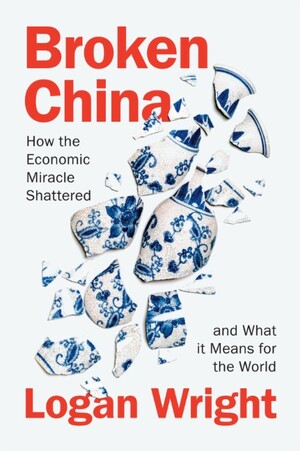
This is not because the Chinese think long term, guys. It's not because they have this great grand vision for how to foster innovation in China. They do not. It was a response to the subprime crisis in the United States. This bubble was great for the entrepreneurial elite, but it's led to lots and lots of debt. It led to a lot of corruption. Now we're living in a time when they're trying to unwind this debt, unwind this corruption.
You think, well, the United States has $40 trillion in debt. That's really bad. Actually, the Chinese debt situation is much, much worse than the United States, and people don't appreciate this. If you don't believe me, then I suggest picking up this book, Broken China, by Logan Wright. I'm not going to read it because this is the system I've known for a long, long time. People are now slowly waking up to the fact that the Chinese are not these brilliant Machiavellian strategists. They're just corrupt as hell. It's that simple, guys. There's no magic here. They're just corrupt.
The military commission and political struggle
Another thing that has been happening in China that has gotten a lot of international attention is the political struggle within China. This is the highest military body in China. You can say it's really the most powerful body of China: seven people, the military commission which controls the military. There are supposed to be seven members, and after three years of purges, we are now left with two.
There are some who say, well, it just shows the consolidation of power under Xi. Look, if you are a dictator, you don't want this crap to happen. It makes you look really, really bad. It makes you look like a fool. Think about this: if you're a dictator, what happened here? Why is a seven-member commission only staffed by two people?
There are different possibilities. One is you're just stupid, and you appointed people you can't trust, and you had to fire them. In which case, why are you dictator? That's number one. Number two is, well, they were corrupt, and that's what the Chinese media reported. But again, why do you appoint corrupt people to this position?
What this really shows us is the intense political struggles within China, where different factions are trying to knock off different people. Because of the intense political struggle, China is in stalemate right now. Again, this makes China look really, really bad. There's a seven-member commission. What you should be doing is replacing these people as you go. The fact that this is so open and it's so blatant and so transparent shows you really no one's in charge, and it's just these different political factions going after each other.
Mao, the Cultural Revolution, and Deng's consensus
Having gone through that, I want to explain to you a quick history of the People's Republic of China so you understand the context in which all this political struggle is happening. Once you understand the history, I think it's fairly easy to project into the future and see where China is heading.
The year is 1949, and a miracle happens. This guerrilla army that was basically fighting a guerrilla insurgency for the past 20 years is now ruler of China under Mao Zedong. People don't appreciate this. They think of him as this communist ideologue. He was not a communist ideologue. He was first and foremost a messianic figure who believed that he was God's champion, who would help China stand up and be a dominant power in the world.

That's why they ushered in something called the Great Leap Forward. The Great Leap Forward was a plan to, within five years, change China from an agricultural nation into an industrial powerhouse. That basically meant just shifting farmers from the fields to the factories. If you know any Chinese history, you will know that this was a disaster for China. It led to a great famine where millions of people perished.
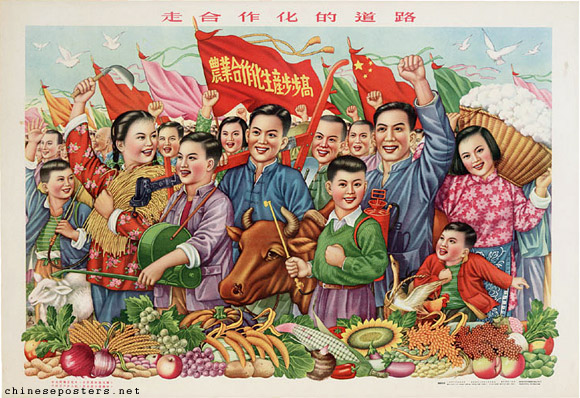
The reason why is they focused so much on industrial production that they forgot to grow food. Because at this time China was an autarky, meaning it didn't really trade with the rest of the world, China refused to ask for help from the rest of the world. Rather than just say to the world, socialism doesn't really work, guys, and we need to buy some food from you, they'd rather just let their people starve.
Eventually, the famine caused by the Great Leap Forward would lead to something called the Cultural Revolution, which happened between 1966 and 1976. What people don't appreciate about the Cultural Revolution is it happened in different phases.
Because of the Great Leap Forward, Mao's leadership was challenged by the rest of the Communist Party. The Communist Party elite got together and said, listen, Mao, you were a great leader, but maybe you're too old, and maybe it's time to transfer power to younger technocrats who know how to manage the affairs of the state. Mao Zedong went along with this for a few years, but then he decided, I'm the messiah, people follow me, and these technocrats will just turn China into a corrupt oligarchy, which was the case for thousands of years. Why did we fight the revolution?
Mao Zedong promoted the Cultural Revolution, where he encouraged the people to rise up against the bureaucrats, against the bureaucratic elite, and overthrow them. For about two, three years, there were these massive purges of the bureaucratic elite. But then Mao was like, these kids, these teenagers, the Red Guards, are kind of out of control. He called in the military to purge these revolutionaries. That was the second phase of the Cultural Revolution.
Now the military is in charge, and Mao Zedong appointed a successor called Lin Biao, who was basically head of the military. But then they had a falling-out, and Lin Biao tried to escape to Russia, and he was killed when his plane crashed. That created the third phase of the Cultural Revolution, which is basically China became a theocracy under Mao Zedong, and it remained so until 1976, when Mao died.
When Mao died, he appointed a successor who would continue his legacy. But the Chinese bureaucratic elite, the communist old guard, got together and said, no, we don't want any more of this crap. We want to restore our own power base. Under Deng Xiaoping, they came back.
What's really important for us to appreciate is, from the perspective of the communist old guard, the worst thing that happened to China was not capitalism. It was not the Sino-Soviet split. It was Mao's messianism. They were afraid of two things. One, they were really afraid that a dictator would arise and basically restore Mao's legacy. They were afraid of Maoism. They were also really afraid of people's religious tendencies, because the Cultural Revolution was a theocracy. They were really afraid of the power of religion.
Under Deng Xiaoping, they created all sorts of policies in order to ensure that these two things, Maoism and messianism, would never, ever arise in China. To facilitate this process, Deng Xiaoping visited the United States. This is Deng Xiaoping in Texas putting on a ten-gallon hat.

This was, of course, a diplomatic breakthrough because it endeared the American population to this old communist zealot. This allowed for China and the United States to eventually establish a very strong trading relationship, which became the basis for modern-day globalization. But the key for us to remember is that under Deng Xiaoping, they created policies to move away from both Maoism and messianism, and they had certain rules that they all obeyed.
- The party elite, the revolutionary vanguard and their children, are untouchable. The princelings are not touchable. You can go after other political opponents, but you cannot go after the families of the red nobility. The red nobility would share in the spoils. They would split up China and divvy up the spoils, and they would not go after each other like they did during the Cultural Revolution. They would maintain unity.
- Never again will one person be allowed to have all the power in China. It will be consensus. It will be committee decision-making. It'll be a very technocratic process.
- From now on, the focus will be on economics.
- The military will stay out of political affairs. This is really important. There'll be a clear demarcation between the military and politics. The military will enjoy the spoils of economic reform, to keep them happy, but they will not engage in political affairs.
All four rules are important for us to remember. Why? Because they've broken all four rules today. This is why it's led to this political stalemate that we have in China. To summarize the four rules: number one, red nobility is untouchable. Rule number two, there will never again be a supreme leader like Mao Zedong. Rule number three, just focus on economics, and that's good. Number four, the military must stay out of political affairs. I'll show you that what's happened under Xi Jinping is they've broken all four rules, and that's why China today is a dumpster fire.
Deng did usher in a time of a new consensus, but there were certain people who felt left out. This was the intellectual class, the university students. The military, the red nobility, benefited from all of those reforms, but the intellectual class felt they wanted to get involved as well. That's what led to the Tiananmen Square protests, and that's what also led to the crackdown. Of course, this really damaged China's international standing.
When Deng died and Jiang Zemin came to power, they were intent on institutionalizing all four of these major consensuses. Under Jiang Zemin, they started this process, but what would happen is that Hu Jintao would then cement this process. One major result of this process is massive spending on infrastructure.
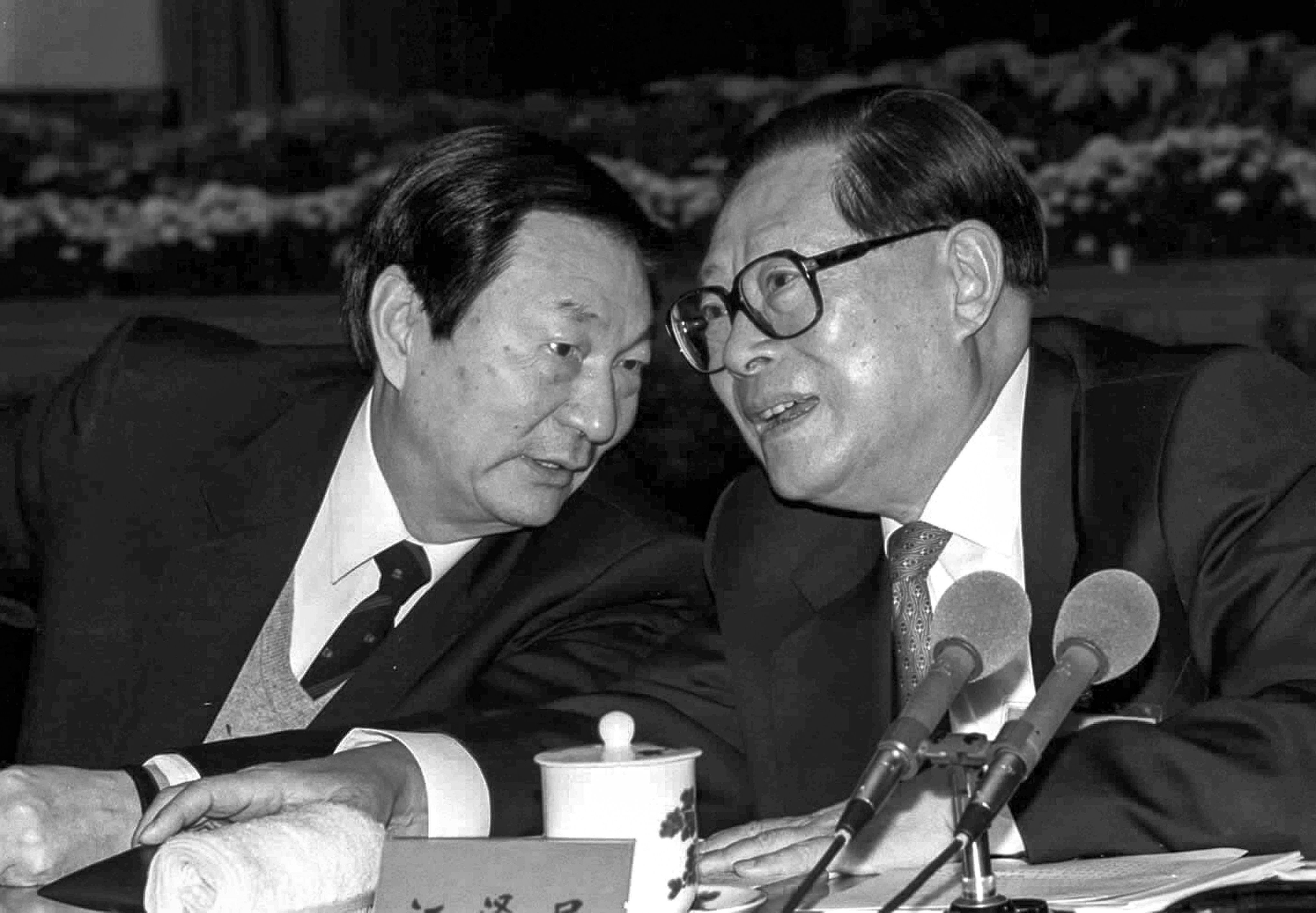
A lot of people are like, well, this just shows you how farsighted China is. The problem is China didn't have the money to spend on this infrastructure.
Why they spent money on this infrastructure, again, was a response to a crisis, which is the 2008 great financial crisis in the United States. Remember, at this time in history, China's main driver of economic reform was its export industry. But once it recognized that the rest of the world could go bankrupt and renege on trade promises, China realized it needed to spend more money on infrastructure.
The best way to understand this infrastructure spending is it was not about building a modern nation. It was about trying to appease as many different political factions as possible within China, and the best way to do that is to bribe everyone. That's how Hu Jintao and Wen Jiabao were able to basically calm things down while global markets were in turmoil: let these local elites, let these bankers, these real estate developers, these government officials steal together from the nation, and then China will be very peaceful and stable. For the longest time, it worked, until Xi Jinping came into power.
The problem with Xi Jinping is he is not of the technocratic mold. He didn't rise in the technocracy the way that Jiang Zemin, Zhu Rongji, and Hu Jintao did. He rose as part of the red nobility. His father is considered one of the Eight Immortals, one of the eight families that rule China. As part of Deng Xiaoping's basically divvying up all the spoils, they got Shenzhen. As you know, Shenzhen is one of the wealthiest parts of China today.
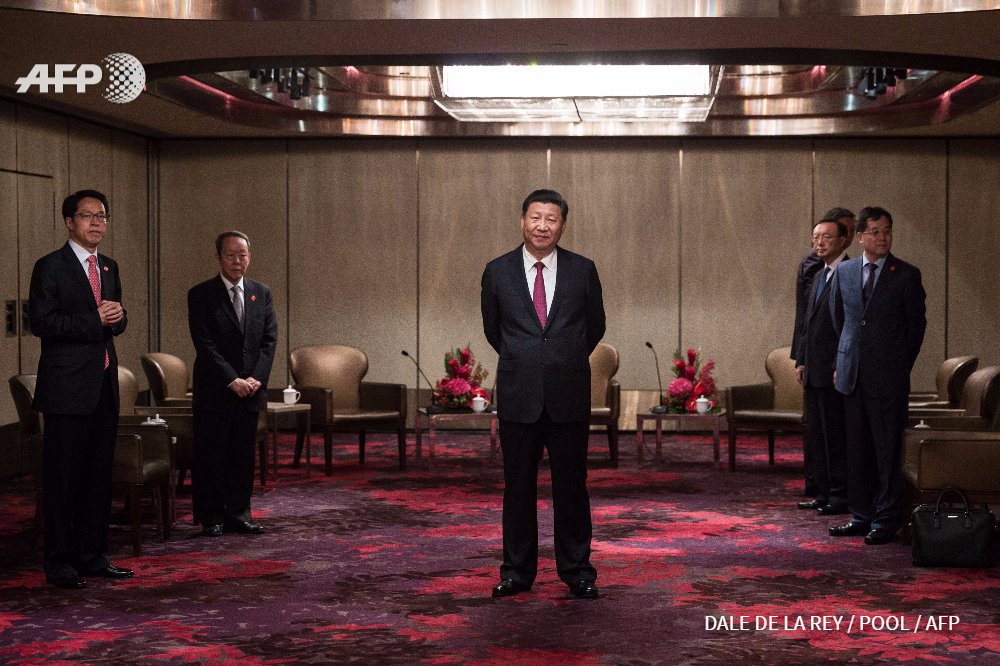
When Xi Jinping rose to power, he was considered a compromise candidate. The red nobility and the technocratic elite all saw him as the least likely to rock the boat. Now we can understand how ironic that is today. Back in 2012, 2013, when they anointed him, he was considered the most stable, the least likely to rock the boat, the most consensus candidate. The reason why is his opponent was Bo Xilai.

You had two candidates. You had Xi Jinping; you had Bo Xilai. Bo Xilai was charismatic. He was ambitious, and he was a proven leader. When he was mayor of Dalian, Dalian was one of the fastest-growing cities in China. Then he went over to Chongqing, and he basically promoted Cultural Revolution policies. He got a lot of state subsidies for Chongqing. He went after the mafia. A lot of Chinese people thought, this is a great leader. But a lot of Chinese leaders were like, oh my God, if he comes to power, he'll probably end up like Mao Zedong.
Of these two—Xi Jinping, who at that time had absolutely no major accomplishments, and Bo Xilai, a very charismatic, ambitious person—you always pick the other guy. You pick the guy who is less likely to rock the boat. But then what happened is a series of events that no one really expected, which allowed Xi Jinping to cement power in a way that was unprecedented in modern Chinese politics. Remember, Deng Xiaoping created all these institutional systems to ensure no one like Mao Zedong would arise again, and then slowly Xi Jinping broke down all these systems.
The first thing that happened is that after the party elders, after the Chinese picked Xi Jinping to be leader, Bo Xilai staged a coup. He tried to wrestle power from Xi Jinping.
Was Tiananmen Square a democracy protest or a color revolution?
Audience: Can you comment on Tiananmen Square? Do you think it was a genuine democracy protest or a CIA color revolution thing?
Response: What I said was Tiananmen Square was a response by the intellectual class to what they felt was being left behind by these reforms. The reforms that the party was instituting benefited primarily the military as well as the red nobility, and the intellectual class felt that they were being left behind.
One thing that they really protested, one demand that they had, was at this time China was still a socialist country. You went to a university in China, and you graduated. They sent you off to a faraway place in the middle of nowhere to work as a bureaucrat, and you were like, screw that, I want to be in Beijing or Shanghai. I wouldn't say it was a color revolution. I wouldn't even say it was a democracy protest. It was really about a privileged group in society, university students, who wanted more power and more rights. Honestly, after Tiananmen Square, they got everything that they wanted. That's what I think happened.
How Xi consolidated power
Back to Bo Xilai. He stages his coup d'état, and so the party leadership had no choice but to rally around Xi Jinping and give him more power in order to stamp out the threat of Bo Xilai. Remember, under Deng Xiaoping, different families controlled different regions in China. This one guy could possibly summon an army of millions. The only way to stamp out this threat was for everyone to unify under Xi Jinping.
But there's a rule: the red nobility is not touchable. He can't actually kill this guy. He's now under house arrest, even though he did try to launch a coup d'état against the Communist Party. That's one major event that helped to solidify and consolidate Xi's power.
Another major event was the trade war, because after Donald Trump and Xi Jinping met, Donald Trump basically launched a trade war against China. That really helped to solidify Xi's power, because previously a lot of the power was centered in the entrepreneurial middle class. But because they were under threat from this trade war, that allowed the political system to consolidate more power. That's number two.

Number three, of course, and the most important, is COVID. I was in China during COVID, and when COVID first happened, I was like, this will last maybe two days and it'll go away. I know this because in 2003 I also experienced SARS. What happened was that during SARS, there was no government mandate. There was no government order. People just decided to lock themselves in apartments for two weeks, and then SARS went away.
That's how diseases work. That's how these viruses work. There have to be these infection points, contagion points, for it to spread. If people are just in their apartments, then this thing goes away really quickly. If you know about viruses, you know their malicious nature, their malignity, decreases over time. But instead, China chose to lock down the country for four years, which is really weird. Why that happened is it allowed Xi Jinping to consolidate power onto himself. He created this huge bureaucracy around him in order to deal with COVID.
Now, to be fair, what I do know is when the virus first broke out in Wuhan, it was a bioweapon. It was killing a lot of people. The reporting back then was that when you first got the virus in Wuhan, your lungs burned. They're like a furnace. It was a real serious threat, and that's what gave Xi the authority to lock down the entire country for four years and create this really absurd authoritarian regime.
Look, look, look. This is a picture of guys getting swabs.
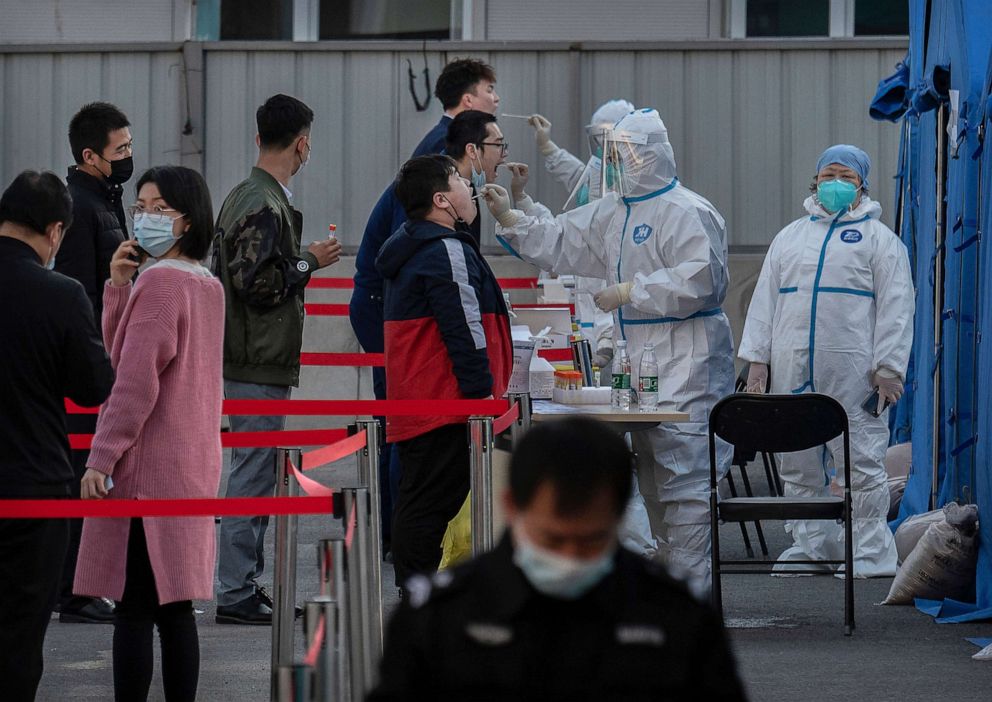
If you're a medical professional, you know for a fact these swab tests are not very accurate. Don't tell me that just by swabbing your mouth, I'm able to diagnose effectively whether or not you have COVID. It was all just theater. But if you got unlucky, if you tested positive, you were sent to the detention center for a month. This is worse than the Cultural Revolution. Why they did this was it allowed Xi Jinping to consolidate power under himself.
The other thing that he did that was really important was he collapsed the real estate bubble. To be fair, a lot of things he did I actually agree with, because remember I said that during the Hu Jintao–Wen Jiabao period, it was just blatant corruption, and it was just too much debt. He inherited this mess, and he had to take certain steps in order to address these issues, or they would just blow up.
I agree with what he did in the real estate market, which is he basically caused the real estate bubble to collapse by refusing to bail out companies that were in default. Evergrande was the classic example, where it was basically a Ponzi scheme, and they thought they were too big to fail. They could always secure funding from the local government. Xi put an end to that, and that has caused this cascading effect, this chain reaction where China's real estate market has collapsed. Again, I think this is a very positive thing because the real estate market was completely unsustainable. But that's also allowed him to consolidate power.
These are things that he was not really in control of, but there are things that were happening, and it was clear that he might have had some part in them. Remember how I said in the 1980s, basically the bureaucratic elite got together and said, we agree not to kill each other the way that we were killing each other during the Cultural Revolution. We agree to play by certain rules and conventions. We agree to play nice. Xi Jinping broke all these rules.
One example is Ling Jihua. Ling Jihua is actually the secretary to President Hu Jintao. If you know anything about the Chinese system, you know that these people are extremely powerful people because they are the gatekeepers. If you want to meet Hu Jintao, you have to go through this guy. Also, he's basically Hu Jintao's bagman. If you want to bribe Hu Jintao for anything, you have to bribe this guy.
Early on in Xi Jinping's tenure, Ling Jihua's son died in a Ferrari car crash, and it was pretty morbid. The details have not been confirmed, but there were rumors that the guy was naked with two other girls, and they were both drunk when they had this horrific car crash. Because of this horrific car crash, there's a massive investigation into Ling Jihua, the father—Ling Gu is the son—and they found out, of course, he was corrupt. They jailed him, and this did a lot in destroying Hu Jintao's power base.
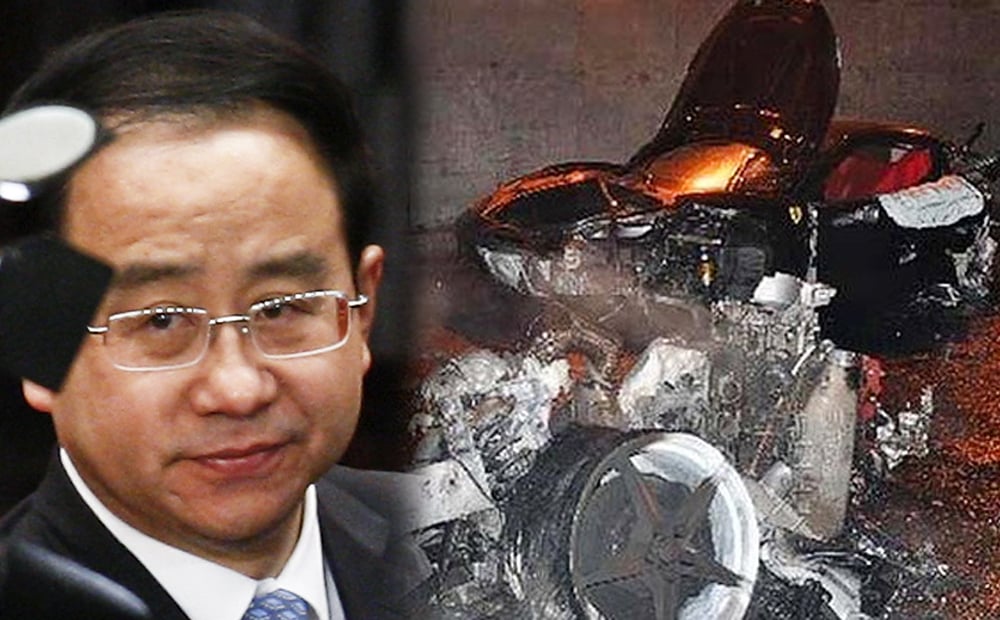
There are rumors that this is a complete setup, that basically some secret police created a situation in order to implicate the father. Ling Jihua himself believes that his son is innocent, and his son was basically murdered in order to frame him. But this event—and again, I can't confirm the veracity of what happened; the Chinese authorities say it was an accident; I can't say it was an accident or not—did weaken Hu Jintao's power base and allow Xi to further consolidate power.
Another thing is the New York Times got hold of Wen Jiabao's financial records, which is, by the way, impossible to do. I actually know the reporter who broke the story. In 2012, there was a New York Times reporter, David Barboza, who broke the story of the Wen Jiabao family's corruption. To break the story, he went through thousands and thousands of SEC filings.
Honestly, maybe if you had a staff of 10,000, you had 10,000 years, you could pull this off. He was able to pull this off in a matter of days, which tells me someone was feeding him this information. Yes, I understand you did go through the filings, and yes, you did prove that these companies tie back to the Wen family. I understand that. But someone had to point you in the right direction. It was like trying to find a needle in a haystack. Someone had to tell you exactly where to look for you to find that.
We can speculate as to who might have pointed this reporter for the New York Times in the right direction. We can also say, because of the scandal, Wen Jiabao's power base was severely depleted. That allowed Xi to further consolidate power. Again, you're not supposed to do this crap. There's a consensus where the top leadership would not engage in these political struggles against each other, because they did this during the Cultural Revolution. They know exactly what happened during the Cultural Revolution. You can see Deng Xiaoping's consensus breaking down.
You would also have these really silly leaks where somehow U.S. intelligence got news that the Chinese army had missiles filled with water instead of fuel.
The big thing is, in 2022, Xi Jinping was able to get a third term. The constitution says that a president should only be in power for two terms. He broke that convention established by Deng Xiaoping and his people, and he got a third term. The peak of his power was getting a third term, but also having Hu Jintao escorted out of the Great Hall of the People.
There's a lot of speculation as to what happened, why Hu Jintao was escorted out. The thing to remember is whenever something is televised in China, it's a highly choreographed event. They spend days with a thousand people figuring out the camera angle, the lighting, the clothes that the leaders wear, how the leaders are depicted. They spend a lot of time on this. Each of these guys, even a provincial leader, will have thousands in a PR office just going, combing over how this person is portrayed on the internet and in the media. This is really important for these people.
The idea, well, Hu Jintao shouldn't have been there, and they had to remove him because he got lost somewhere—that's absurd. This is a highly choreographed event meant to embarrass Hu Jintao, to show that Xi Jinping was in the ascendancy. In 2022, basically the consensus that Deng Xiaoping had established was now completely broken, and now you have one man in charge.
The problem is, and this is really important for you guys to remember, China is much too big for one person to control. Also, Mao was a messiah who proved himself the messiah by obtaining power through the will of God. This guy inherited his throne. Because he saw himself as Mao, basically all these different political factions decided they needed to get rid of this guy. The best way to do that is you destroy the people who he put into power.
In China, personnel is politics, politics is personnel. The way you basically struggle against each other for power is by going after each person's associates.
Purges, foreign trips, and Xi's position
The first person to fall was Foreign Minister Qin Gang. This is a huge scandal in China, where Qin Gang was personally appointed by President Xi Jinping, and then news got out that he had a concubine who decided to have a child in the United States. This child was a U.S. citizen. The child's father was Qin Gang. This got out. We can speculate as to how they got the news. I would imagine that they got the news from the Americans.
One thing to appreciate is these U.S. spies work very, very closely with these Chinese spies because ultimately what they're interested in are these domestic political struggles as opposed to these international political struggles. He was forced to resign. Then the defense minister, very shortly, was forced to resign because of corruption. Again, people struggle as to how this happened. Then you have two generals who are forced to resign because of corruption.
All these rules that Deng had established in the 1980s to ensure that Maoism would never arise again—number one, never allow someone to consolidate all power; number two, don't allow the military to engage in politics; number three, make sure everything is consensus; number four, focus on the economy—it's all being destroyed now. The military is now forced into all this political factionalism, which is destroying the military's capacity to maintain order. In fact, you can now argue the military is a source of a lot of disorder in China today.
You have, again, seven members in this military commission, and now you only have two. Everyone else has been replaced. The most important has been Zhang Youxia. Zhang Youxia was considered the military equivalent to Xi Jinping. Xi Jinping was in control of politics, but Zhang Youxia was in control of the gun. Again, remember, in the Chinese system these two forces are meant to be parallel with each other. In theory, the politics controls the gun, but in reality they're supposed to be equal.
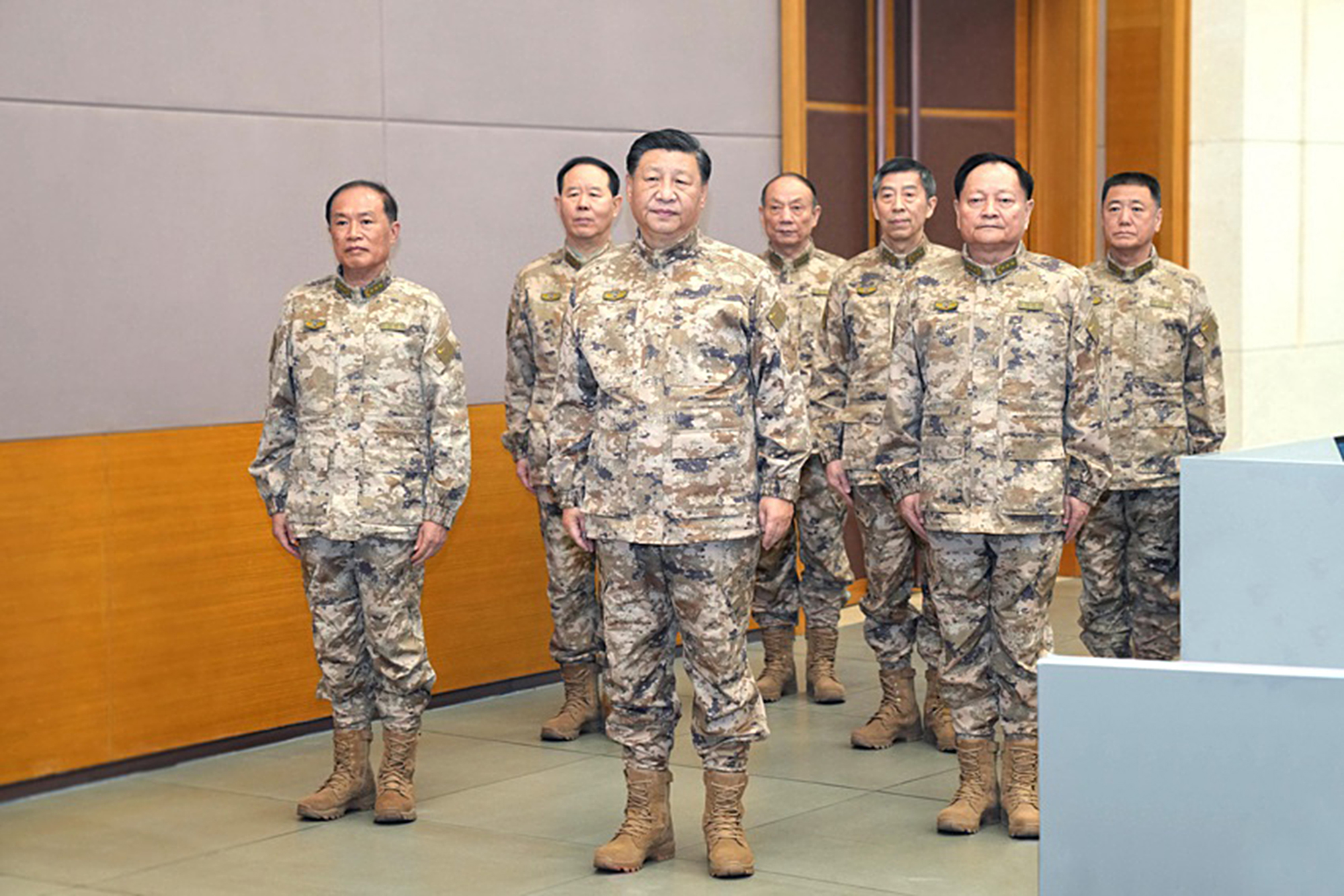
Zhang Youxia's father is also another major general, so he has the pedigree, the credibility to counter Xi Jinping. There's a lot of rumors, there's a lot of speculation that Zhang Youxia was behind a lot of the purges against Xi Jinping's people, and Zhang Youxia was trying to constrain Xi Jinping's power. But because Xi Jinping is the president, and they didn't want things to blow out of control, they agreed to let him stay in power.
In response, Xi Jinping decided that he would basically cross the Rubicon, and he ordered the arrest of Zhang Youxia. There are rumors that actually Zhang Youxia is dead, but in January this year, Zhang Youxia was arrested, and a couple of weeks ago he was expelled by the party for factionalism, for engaging in factionalism.
China right now, it's just a dumpster fire. No one's in control, and they're all trying to destroy each other, which basically means that Xi Jinping himself has absolutely no power.
One thing that is really strange is this is the list of his foreign trips in 2023, and as you can see, it's really not that much. He doesn't really go out that much. In 2025, look at all these countries: Vietnam, Malaysia, Cambodia, Russia, Kazakhstan, South Korea. The thing that distinguishes these places is they're really close to China. This guy, when he leaves, he doesn't go that far. The reason why is because of so much political struggle within the country, you need to make sure that you're around to make sure the different factions don't conspire against you.
This is even more blatant in 2026, where for the first half of the year he really didn't go out. But then we see, for whatever reason, August, September, he's going to a lot of places, and we can speculate as to why. Again, we can only speculate because the Chinese system is a political black box. We can speculate that he's consolidated power, and so he's invincible, and so he can do whatever he wants. That's one possibility.
Another possibility is he's stripped of all power because his personnel, the people loyal to him, have been stripped of their power, and so he's a lame president. Next year he'll be replaced, and his job is now to go out and represent China. One piece of evidence to support this is he does not look healthy. If you're a supreme dictator, you tend to have a certain confidence to you. You have a certain swagger to you.
This is in 2023, when he's visiting San Francisco. By 2023, he looks pretty tired. He does not look like a supreme leader. Compare him to Putin or Modi or Trump, really.
I want to show you guys another video. This is two days ago, when Xi came to the United States. Look at the way he holds on to his wife's hand, and look at the way he is walking down the stairs. He does not look healthy.
U.S.–China relations, resources, and financial markets
What would happen if Canada's potash supply were disrupted?
Audience: I also noticed the same thing you did about how he had to hold Peng's hand as he walked down the airplane steps. Then, when he was on the ground, he also seemed kind of nervous or agitated. Xi kept having to look left and right. I don't know what he was trying to see, but he looked surprisingly nervous. The expressions of the other security members and the Chinese governors who were with him also seemed to have different reactions when they were meeting with President Trump. Xi just seemed kind of normal, but the other people were excited, and then some of the people seemed indifferent. It just seems very scattered.
The actual thing I wanted to focus on is something I think you skipped over in Canada, but I think someone mentioned it during a question, about potash fertilizer, which is potassium fertilizer, which is mined from Canada. A big portion of the world global supply of potash fertilizer, some of it is mined in Canada, and the other two countries you get it from are Belarus and Russia.
For fertilizer, you basically don't have a good substitute for potash fertilizer. You can try to burn wood ash and try to reactivate it with salt or whatever, but you need a ton of industrial processes that you can't set up immediately. In the situation that the United States does attempt some sort of invasion of Canada and that potash fertilizer supply trade is disrupted, what would happen, or what would China try to do about that?
Response: Look, there will be no U.S. invasion of Canada. It's not going to happen. I know that Mark Carney has been talking about it. I know that Mark Carney is like, well, we'll just do guerrilla warfare, and we're ready for the U.S. It's just politics. It's just optics. There's no way the United States will actually launch a ground invasion of Canada.
Look at what happened in Greenland, where for a few months Trump was talking about invading Greenland, but ultimately they signed a deal where the United States has this access to Greenland. Basically, it's just Denmark recognizing that the United States is too powerful militarily, and there's actually no point in trying to resist, so let's just save face and sign a treaty. I think the same thing will happen in Canada.
You're absolutely right, Baron, in that what Trump really wants is control over Canadian resources. Why he wants that is to be able to pressure China into making lots and lots of trade concessions, and fertilizer is a very important part of that. I think this thing will resolve itself naturally, where the Chinese are extremely pragmatic, the Canadian people are extremely pragmatic, and Trump is a business person, and they'll come to an agreement at some point.
But the bigger issue is not fertilizer. You can always access fertilizer. The problem is just a breakdown in global supply chains. We have absolutely no idea how consequential things will be if you break down global supply chains. It's not just that fertilizers are part of the global supply chain. Everything is part of the global supply chain. We haven't really gamed out or war-gamed out what a breakdown in global supply chains looks like. No one's done it. The reason why is it is horrifying to even contemplate the possibility that global trade stops.
Audience: I was later going to ask about soybeans and corn being used for animal feed.
Response: It's the same thing, where China is getting a lot of beans from Brazil right now, and Trump will eventually pressure Brazil into signing a Western Hemisphere trade pact. China's not negotiating with these countries individually, but negotiating with all these countries via the United States. That's what Trump really wants.
What is the macro impact of the U.S.–China relationship?
Audience: What is the macro impact of this U.S.–China relationship? As you have said, the world is moving towards a multipolar world, so China and the U.S. cannot be a dual-polar power. Is this just a vain effort to try to save the supply chain and economy, which will eventually collapse?
Response: Really, China and the United States are the two main beneficiaries of globalization, and so both are status quo powers. Both are stuck working together to try to save the global economy in a time of war. Unfortunately, I don't think either really wants to do this. They're kind of stuck doing it. They don't have a choice in the matter. If they don't do it, then they'll suffer even more. They're reluctant partners, basically.
Audience: What is the role of tech oligarchs like Elon Musk as an actor in the game? What is the incentive they're working towards, specifically to collaborate with China?
Response: They just want to get more money for themselves. They want access to the China market. They want more subsidies from the Chinese government. For example, you guys may know about China and the United States collaborating together on an AI governance board, to prevent AI from killing humanity. What this really is, it's an attempt on the part of oligarchs, these tech companies, to get money from the government. How do you ensure these tech companies don't go out of control? You nationalize them. When you nationalize them, what happens is these tech oligarchs privatize the gains and socialize the losses. We're living in a time when everyone's trying to steal as much as possible.
What role do randomness and coincidence play?
Audience: Something I've noticed in your thinking is you seem reluctant to attribute major outcomes to randomness or coincidence. What makes you lean towards a purposeful explanation rather than just accepting that things may be random?
Response: That's a good point. But during my presentation, I did say certain things were random. For example, number one, the COVID thing, I think there's certain randomness to it. I don't think they purposely planned out the lab leak. If they did, I'd be very impressed, but I don't think China actually has the capacity to execute something like that to that extent. I think the COVID lab leak was just an accident. That's random.
I also said that Bo Xilai trying to stage a coup d'état was pretty random as well, and Xi Jinping is just a major beneficiary of these events. But then I also pointed out there are certain things that happened that were probably not random. For example, the car crash. I'm not saying one random event. I'm just saying, if you look at a pattern of things.
Who is Xi's main opposition?
Audience: Who is the main opposition of Xi? Who is his rival, and do you have any prediction for the 2027 term, supreme leader?
Response: One thing I didn't do was go into the different political factions. Here's the best way to understand it, in a very simple way. China has a lot of provinces. Each of these provinces is controlled by a political clique, and these political cliques can choose to align with each other. That's the best way to understand it.
Basically, President Xi has control over Beijing, and it's in the best interest of these provinces to go along with orders from Beijing in order to project stability. But if things get really bad, then what will happen is these provinces will break away. I think this is something that will happen in the next ten years.
Look at all empires. It's basically these different warlords or these different provincial governors who make the decision it's probably better for them to get along than to fight each other, because fighting each other, there's too much cost. But you always reach a point when, well, we can't settle anything politically, so we're forced to fight things out. I think that China is heading in that direction. The fact that you have only two members of the seven-member military commission still active tells you a lot about how bad things have deteriorated in China.
Could China buy more U.S. Treasuries in exchange for a Taiwan deal?
Audience: I have a question on the U.S. Treasury holdings from China. I think they went down from $1.2 trillion to right now $600 billion. Do you think there could be a deal between the U.S. and China, to say China has to buy a lot more Treasuries but gets Taiwan in maybe ten years? The yields are really hurting the U.S. economy. What do you think?
Response: This is something that I've been thinking a lot about. Let me explain what's going on. What are U.S. Treasuries? U.S. Treasuries are just debt. Why does China have so much U.S. debt? It's because of the trade imbalance, where the Chinese make a lot of goods and then sell them to the United States, and China doesn't really buy things from the United States. That creates a trade imbalance, and this trade imbalance shows up in U.S. Treasuries, because when you sell things to the United States, they pay you in U.S. dollars. You can take the U.S. dollars and buy U.S. Treasuries.
Basically, another way of saying this is U.S. Treasuries are a way for China to bribe the United States to let China export its goods to the United States. Why would China want this? First of all, it's because China is a plantation economy. It's a slave economy where all that matters is the elite. The people are just energy to be extracted. From the perspective of the elite, this is a great deal, because you're just taking Chinese labor and you are then selling it for U.S. dollars, which they can use to go to the United States and spend money on. That's one real advantage to China.
Another advantage for China is it keeps people busy. It keeps people employed. Even though Chinese workers aren't paid that much, they at least have something to do. It's a lot better than working in the fields. Even though we say it's a slave system, it's still better than the system they had before, which was this feudal system. That's number two.
Number three is, even though U.S. debt, U.S. Treasuries, is not really worth that much, it's still the main basis of the global economy. China can take the U.S. Treasuries and then use them as collateral to go and buy other things, like soybeans from Brazil. The current system for many years benefited both the Chinese elite and the American elite. The people suffered. The U.S. people lost a lot of manufacturing jobs to China. The Chinese people are working for slave wages, but they don't matter.
Why is the system breaking down? The system is breaking down because the United States has proven that it can choose to weaponize its financial system in order to maintain its hegemony. The classic example, of course, is Russia, where Russia has about $300 billion of its assets frozen by Western financial institutions, mainly Europe. Europe froze about $200 billion in Russian assets. Starting then, China's like, uh-oh, what do we do now? What they started to do was basically sell U.S. Treasuries to buy more gold.
We have to remember something. This is really important. It's not one government that controls all these U.S. Treasuries. A lot of these are Chinese corporations who are trying to better hedge risk. Right now there are three major buyers of U.S. Treasuries: Japan, the GCC, and China. Some of you were saying it's the U.K. No, guys, if you live in the U.K., you know the U.K. is not buying U.S. Treasuries because the U.K. has no money. It is the GCC buying U.S. Treasuries with the City of London as the middleman. That's why the U.K. appears number two when it's really the GCC. Number one is Japan, number two is GCC, number three is China.
You're absolutely right in that right now, if these three countries stop buying U.S. Treasuries, then the United States could not finance its debt. Right now it's at $40 trillion. If it's forced to raise interest rates to 5%, 6%, it has to pay $2 trillion a year in interest payments alone. This will create huge problems for the U.S. economy. Therefore, what the United States wants is for Japan, the GCC, and China to continue to buy U.S. Treasuries.
The GCC and Japan aren't a problem because they're essentially U.S. vassals. The United States can force them to buy U.S. weapons. The United States wants the GCC to go to war against the Houthis and the Iranians. The United States wants Japan to go to war against China. China is a much bigger problem because China is independent. It's sovereign. It doesn't need to buy U.S. Treasuries, and you can't actually make China buy U.S. Treasuries.
They're trying to think of a workaround, and the workaround is something called stablecoins. I'm not sure how much you know about stablecoins, but stablecoins are essentially digital currency that is backed by U.S. Treasuries. If China agrees to allow stablecoins into the country, this is a backdoor where Chinese citizens can privately buy U.S. Treasuries through stablecoins. That's the workaround that they want to do.
But the problem is right now there's no one in charge of China. I keep on going back to this point, where no one can make this decision because it's too controversial. Xi doesn't want to make this decision because he's still hoping that next year, during the Party Congress, somehow he'll get a fourth term. But the only way you can do that is by not making a mistake. I think letting U.S. corporations into the country to sell stablecoins, different factions will pounce on that.
It seems like the entire world is in a stalemate right now. It seems like things aren't progressing. Look, look, I made a prediction that there'll be a grand bargain between China and the United States, where basically China agrees to open up its financial markets, and the United States tells China we won't deal with Taiwan. We won't support Taiwanese independence. It basically creates a pathway for Taiwan and China to unify in the next ten years.
I think, as things unfold, it seems I'm wrong about this prediction. It's possible in two, three months' time things will change, but it seems right now that I'm on track to be wrong. If I'm wrong, I'm always asking myself, why am I wrong? I think I'm wrong because no one's in charge of China right now, so no decision can be made. That's why you have this slow death.
Natural disasters, India, and China
Audience: I know that the people who were educated in the Mao period are not corrupted. But the people who were born in the 1970s and 1980s are very corrupted. Why? Because for them, money is God. Money is God, power is God; they exchange each other. But you are right that Xi doesn't want to make a decision. Why can't he win? Because he doesn't want to take a risk. I don't think any bargaining will happen between China and the USA at any time.
The coming mega-earthquake in Tokyo will end everything: the collapse of the semiconductor, the collapse of AI, the collapse of the material world. People don't understand that Tokyo will have the mega-earthquake, will end everything: the AI bubble, semiconductor bubble, material world. Professor, read more about the document about the mega-earthquake in Tokyo. I think this scene will be changed totally. But another thing I want to ask you: if India and China are Gog and Magog, what will happen?
Response: On your point about the earthquake, look, I don't know if an earthquake will happen in Tokyo, but I think you're right in that we have been really lucky in that there have been no real major natural disasters so far. If a natural disaster were to happen somewhere, then the world would be really badly affected, because right now the world is not very resilient. In fact, the world is much more unstable than ever before.
I am of the opinion that India and China do not matter in geopolitics. I don't think what happens in China, what happens in India, actually impacts geopolitics. I think it matters more what happens to the United States or in Russia or Europe. The reason why is if things happen in these nations, they are much more likely to go to war overseas. I think if there's a civil war in China, then China will just turtle up. If things break down in India, then India will just turtle up as well. I think that because of these internal domestic structural contradictions, both India and China are very weak countries.
Why did China agree to be industrialized by the United States?
Audience: I've also gone through your civilization series, and at the end you talked a bit about how China has been industrialized by the U.S. Why would China have agreed to be basically industrialized by the U.S. after the financial crisis? I've been struggling with that idea. Why would China just agree to that? Was it really that powerless against the U.S. at that point, or how was it at that time?
Response: At the end of the day, it has to do with the way Chinese society is structured. You have an elite which controls one billion peasants. These one billion peasants are basically free labor. If you're the elite, what you want to do is basically try to monetize this labor as cheaply as possible. The United States comes along and says, listen, we'll give you the technology. We'll give you market access. We'll even help you set up these factories, and all you have to do is agree to make this trade in U.S. dollars. For the elite, it's a no-brainer.
They're basically being offered free money, because otherwise they weren't doing much with this energy anyway. The United States is like, we'll come in and we'll buy it from you. If you're elite, you're basically a parasite. You would take this deal.
Audience: Because the elite just didn't care about all their billion people, and they thought, well, this is a good way to use them because we don't know what to do with them besides that.
Response: Exactly. This has been true in China for the past 5,000 years. The peasants are considered property, and they're not considered real people. If you came to China and actually met Chinese people, you would recognize that China is a very anti-human society. It's no different than India or other countries.
Audience: The elites have also basically gotten what they've been promised. That also came true, so it's paid off for them.
Response: Look, if you're the Chinese elite, what do you want? You want to have your children go to elite U.S. universities to become part of the American elite. You want to make a lot of money and then transfer this money to the United States so they can buy residential property and retire. It's worked out great for them.
Listen, I lived in China most of my life. I finally made some money, and I am now renting a room in Ottawa, in the woods. Every morning and every evening I go out for these long walks out in nature, and I'm like, wow. First of all, the air is clean. Oh my God, I finally have clean air. Number two is it's quiet. It's quiet. There's no noise. There's no people going around making a lot of noise, and I'm just really, really happy.
If you're the Chinese elite, this is the life you want to live. You don't want to deal with Chinese people. You want to come to the United States, buy some property out in the woods, and just retire and enjoy your wealth. But for that to happen, you need to basically ensure the Chinese people are still working for you.
Audience: It's all about the elite once again.
Response: Yep.
Which country's young people are more politically engaged?
Audience: You have been both to China as well as the U.S. Which country's youth take an interest in politics more? Who is more politically educated and aware? Which country, the U.S. or China?
Response: Obviously the United States, because the United States is a democracy. You can say it's a fake democracy, but it's still a democracy, in which case you are allowed to discuss political opinions, and you are asked to engage in politics. Therefore, you need to keep aware of the news.
In China, it's the opposite, where if you engage in politics, if you try to read too much political news, you can only get into trouble. There's really no doubt about this.
Audience: Let me put it in another way. Which country's population aspires to become politicians in the future? More aspiration for becoming a politician.
Response: Chinese aspire to become bureaucrats, not politicians. There's a difference. Being a bureaucrat just means that you're a pencil-pusher, and for them they consider that to be a very safe and stable job. The Chinese like stability, whereas in the United States people here are very ambitious.
Why meet repeatedly if no one can make a deal?
Audience: What is the goal of Xi and Trump meeting three times this year if it's hard to even get a deal or even attempt a deal if no one is in charge?
Response: Exactly. This is something I didn't touch on. If you look at things from a nation-state perspective, it's very hard for a deal to happen. The question is, what's the point of Xi and Trump meeting four times this year? As we discussed earlier, Xi doesn't look that healthy, but he made a point of coming all the way to the United States to spend some time with Trump. I would say the simple explanation is what Xi is trying to do is stabilize U.S.–China relations.
What he's afraid of is the U.S.–China trade war erupting again. Right now there's a ceasefire between the two, and China does not want this ceasefire to end. That's something that all factions can agree on. All political factions within China can agree: we need this guy, President Xi, to go to the United States and, based on his personal rapport with Trump, make sure Trump doesn't go wacky again and declare war on us economically. That's something that they can all agree on, and that's why I think they wanted President Xi to go to the United States. That's from the nation-state perspective.
But we also need to look at things from a personal perspective. What is it that both people want? Donald Trump obviously wants a third term. The guy is 80 years old. Theoretically, this is his last term in office. Why is he working so hard? You'd be like, well, it's to have his legacy. But if he really cared about his legacy, would he have declared war on Iran? Would he have stolen millions of dollars from these crypto barons?
I think Trump wants a third term, but the same applies to Xi. He wants to continue to maintain power. I think for these two people, the purpose of meeting is, how can we work together to extend our power? From Trump's perspective, he wants President Xi to be in power for another four or five years. He wants Putin to be in power for another four or five years.
My argument is, at the end of the year, what we'll see is the rise of the triumvirate: a secret alliance among three people, Putin of Russia, Xi of China, Trump of the United States, where the three agree to help each other maintain power. Very similar to what happened in Rome in the first triumvirate and the second triumvirate. The first triumvirate, of course, was Pompey, Crassus, and Caesar, and they agreed to secretly help each other win political positions. I think the same thing will transpire.
That's why President Xi went to meet with Trump. If you are going to create this alliance, you need to create trust and rapport among these different players, and that's why I think he ultimately went.
AI, Russia, and the possibility of conflict
Can AI and urban planning be used for the betterment of humanity?
Audience: I'm not sure if you've heard of 15-minute urban planning, both in China and around Shanghai cities. The basis of it, from my understanding, from my readings as a child, I've read about Jacque Fresco. I'm not sure if you're familiar with his work and the Venus Project. It's a resource-based economy as an alternative to a monetary system. But increasingly I'm noticing that it's turning into AI surveillance cities, pretty much. I want to know your opinion on that and how this technology can be used for the betterment of humanity if it's in the right hands, not in the hands of these secret societies and government. What do you think about that?
Response: China has a lot of these 15-minute cities, and China has been very successful in being very authoritarian. The example is COVID lockdowns. These COVID lockdowns were completely ineffectual in the Western world because people live in houses, and you can't actually monitor every single house. But in China, everyone lives in a residential building, and it's very easy to lock down a residential building. China's lockdowns were extremely effective. I know because I was locked down. It really, really sucks.
I think that the idea that people will use AI for the common good is just ridiculous. The logic is very, very, very, very simple. For AI to be effective, you need economies of scale. You need to concentrate power. What we know is, in an institution, the more power you give it, the less empathy it has, the more top-down it becomes.
The classic example is city planning. I'm not sure if you've read about Jane Jacobs. If you read Jane Jacobs, her book The Death and Life of Great American Cities, it's a wonderful book. It shows how, usually, left alone, they will develop these organic, diverse communities with lots of cross-purposes. I highly recommend everyone read that book.
Why is it her ideas never became popular? Instead, you have someone like Robert Moses, who was probably the most famous urban planner of the 20th century. Why did he become so dominant? The answer is that's how power works. You put powerful people together, and you give them a blueprint. They understand what a blueprint is, and they understand how to implement the blueprint. But if you talk to them about human creativity and human diversity and human spirituality, they're like, what the—man, get out of here.
People in power are psychopaths. People in power are not very imaginative. They see the world in a very top-down way. The idea that we will use AI for the common good is just complete nonsense. If you have access to AI, it means you're a really powerful person. If you're a very powerful person, you're going to see the world in a very limited, very simplistic, very narrow manner.
What is the relationship between China and Russia?
Audience: We covered AI, we covered China, we covered the United States and its northern neighbor, Canada. How about Russia? We also covered the vassal states like Japan and others. What's the role of Russia? Russia, in a war, they're kind of losing, not winning for sure. The economy is declining. It's more the relation of China and Russia.
Response: As you know, President Xi and President Putin have a very strong personal relationship. For the past ten years, they've been trying very hard to strengthen the relationship between Moscow and Beijing. There are lots of flights between Moscow and Beijing. The problem is that if you're a middle-class Chinese, you would much prefer to be in the United States than in Russia.
When you go to the United States, the United States is a very tolerant, very open society. When Chinese go to Russia, there are all these horror stories of being shaken down by the police. You're driving a car, and the police stop you and demand a bribe. You say, no, I did nothing wrong. They put you in prison until someone comes and pays the bribe off. Russia is still a pretty racist society as compared to the United States.
Even though at the top level there's a lot of cooperation between Russia and China, at the people-to-people level, which is what really matters, the interactions are much more limited than between the Chinese and the United States. People don't appreciate that. Even though there's a trade war going on, there's still a lot of interactions between China and the United States. Three hundred thousand Chinese students are still studying in the United States, and more and more want to go to the United States, even though Trump is not very nice to Chinese students, and even though China has been trying to warn Chinese students against going to the United States.
I think in the long term the United States and China will still be very strong friends and strong partners. I'm not really sure about Russia and China. The reality is the United States and China do not have any real geopolitical conflicts, whereas if you look at Russia and China, there could potentially be a lot of geopolitical conflicts.
One area of conflict is, of course, Central Asia, where China is trying to create its Belt and Road Initiative, and Russia is trying to create its north–south corridor. Kazakhstan has always been a source of tension between these two countries. The Russian–Chinese border is still heavily defended. There's lots of the Russian Far East that China considers to be historically part of China. If I were a betting man, I would just say it is much more likely for China to have a rapprochement with the United States. I think in the long term China will see Russia as a greater threat than the United States.
Why does Xi keep invoking the Thucydides Trap?
Audience: Something that I found interesting about the summit between Trump and Xi is that Xi once again invoked the Thucydides Trap. For those who don't know, it's basically the concept that when there's an established power and a rising power, war tends to break out between those two. My reading of that is that that's a concept that's a bit too farsighted to just be a sound bite to present to media or to an American audience for politics' sake.
I do wonder what you think is the significance of his repeated invocation of the Thucydides Trap. From where I see it, I think that it has a lot to do with the Belt and Road Initiative. I think that's the fundamental conflict between China and the U.S., because that's something that China, obviously, they've spent a lot of resources in building the Belt and Road corridor. From the U.S. perspective, that's something that absolutely cannot happen. I think that there is a pretty big legitimate conflict over that.
Response: Certain things to appreciate: the Thucydides Trap is a book written by a Harvard historian called Graham Allison. Graham Allison is Xi Jinping's favorite historian. Graham Allison visits China a lot, maybe once a year, and he's very close to the Chinese leadership. It's flattering for the Chinese to think that they could potentially replace the United States one day.
There are certain historians. Graham Allison is one of them. Martin Jacques is another person. Martin Jacques wrote a book, I think that's a book called China's Number One or China Will Become the Global Superpower. If you're a historian, you're willing to say China has these imperial ambitions and China is a dominant power, then the Chinese love you. Again, it's because in China, politics is everything. Optics is just politics. If a Western historian is willing to say China is rising and rising, then you'll be wined and dined by the Chinese leadership.
Xi Jinping knows Graham Allison very well, and so Xi Jinping has a personal affinity for the term the Thucydides Trap. That's why he mentions it a lot. It's paying homage to his friend Graham Allison. But when he mentions the term Thucydides Trap—and he did this in May, and he did this this time around—what he's really saying is we need to avoid the Thucydides Trap. The best way to do that is to transition from a relationship based on strategic competition to one based on strategic stability, the status quo.
That's what he's really saying. He's not really saying that the Thucydides Trap is inevitable and we, China, are on the rise. What he's really saying is we should both work hard to avoid the Thucydides Trap. It's not something that either of us wants.
Rhetorically, what's really interesting is both in May and in this recent summit, both leaders, Trump and Xi, are using very similar rhetoric. The speeches are almost identical to the ones they gave back in May, where Trump is trying to invoke the historical friendship between the Chinese people and the American people, and Xi is trying to invoke the same friendship. I think that there's a lot of coordination between both of them, and I think that eventually both will come to a compromise of some sort. Not necessarily a grand bargain, where they settle the Taiwan issue once and for all, but basically a compromise where they agree to get along.
Why did Trump and Xi disagree about AI regulation?
Audience: Again referring to the ongoing summit between Xi and Trump, I'm not sure if it's still going on or not, but there was an interesting disagreement regarding AI. Trump made a statement that he also projected upon China, insisting that China also shares this view, that AI should be left alone without new regulation. Then Xi completely contradicted that with his own statement, saying that the two powers have a responsibility to ensure that AI remains under human control and is managed and regulated for human welfare. I'm wondering if you make anything of that split.
Response: I think Trump is definitely being controlled by the tech oligarchs. People like Elon Musk, Peter Thiel, Sam Altman, they do have Trump's ear, and Trump is defending their interests. Xi Jinping just has a very authoritarian perspective when it comes to AI, where he sees AI as solving all of China's economic problems, but he also sees AI as first and foremost a political tool used to cement the power of the Communist Party. That's why they don't really see eye to eye on that. But it's not really an issue for the two.
Is civil war a greater danger than war between the two countries?
Audience: I'm curious about potential civil war in the U.S., as well as I've heard from following other thinkers that there's a potential for civil war in China as well. We're looking at a fight between these two powers, and yet we're looking at the potential collapse of both powers. I'm wondering what you think about that.
Response: I actually agree with this analysis, where I think the real danger is not conflict between the United States and China. The real conflict is civil discord and civil war within these two countries. First of all, I think these two countries are too far apart. They're separated by a huge ocean to actually engage in a war. Second of all, I don't know what they would fight over. If China wants to take Taiwan, the United States is not going to go defend Taiwan. Why would the United States go do that? Who cares?
I don't really see the United States and China ever going to war against each other. At the same time, what I do see is a lot of discontent within these countries. The economies of both countries are not doing very well. You have an aging crisis, where basically this aging elite is able to control all the resources, leaving nothing for young people. The similarities between these two nations are so stark that I think it's very hard for both these nations to avoid civil war at some point.
Could China survive a supply-chain collapse through regional trade?
Audience: I've been thinking about the total supply-chain collapse issue a lot. China is currently an export economy. They take resources, they manufacture them into something and export it to another nation, and then they get money back. If a supply-chain collapse were to happen, China would only be able to trade regionally, let's say with Russia, Japan, and these Southeast Asian countries, but they don't really have good relations with any of those countries.
The U.S. is too far away for any decent amount of trading to happen, because if the supply chain collapsed, there would be piracy everywhere, so a lot of that would get lost. What could China do in a situation like that? Or else their factories are going to close and then end up like the Rust Belt and U.S. automobile companies.
Response: I don't know how much you've thought about the breakdown of supply chains, but I think if you actually war-game it out, you would recognize there's no bottom to the chaos that would be unleashed. You would think, worst-case scenario, you have these regional trading blocs. That's not what's going to happen. What's going to happen is civil war and conflict throughout the entire world. You have political revolutions, and there's really no bottom to this.
I think the best analogy you can use is the Bronze Age collapse. Once you set off this chain, I think the second-order, third-order effects are something that's very hard for us to imagine, because globalization is not something that happens just at the state-to-state level. It's embedded throughout all of society. Once the global supply chain starts breaking down, then it's complete and utter chaos, and something that we'll probably see in a year or two. I don't mean, once the global supply chain breaks down, then there will be a new world order. No, I think it'll be complete chaos.
Audience: What I've seen so far is basically all progress during and after the Industrial Age that started in the U.K. is going to basically get wiped out.
Response: Yeah, that's right.
Does China have a concept of an Asian technate?
Audience: You've mentioned in the past the concept of the U.S. technate, how America has this concept of withdrawing inwards at the time of the collapse, or something along those lines. Does China have a similar kind of philosophy? That ties into a certain geopolitical incident. If you recall, when there was that small spat between India and Pakistan, Pakistan's Chinese military technology overpowered India's Western technology. In my mind, why doesn't China use that technology to have its own technate of Asia?
Response: In East Asia, it's not China that wants to create a technate, it's Japan. Historically, Japan has something called a Japanese Co-Prosperity Sphere, where it controls all of East Asia. But China doesn't do that. Why? Because culturally, China and Japan are very different. Japan is a very cohesive society that is also very homogeneous. There's a lot of equality in Japan, so they stick together because historically they've been very poor.
China is a plantation economy. It's a slave system, meaning the elite sees its people as peasants to be exploited. It's not interested in conquering territory. What it's interested in is maintaining stability and harmony and balance in China itself.
Transnational capital, religion, and political power
What is China's relationship to transnational capital and the occult?
Audience: You've talked before about transnational capital basically infesting the world and its relationship to the occult. I was wondering, what's the relationship between China, the occult, and their relationship to the United States?
Response: China doesn't have Chinese capital. The reason why is it's controlled by families. China is controlled by the revolutionary families, the red nobility, and they interact with transnational capital. But at the same time, they're trying to prevent transnational capital from monopolizing China because, if that were the case, then they would cease to have any power.
The Chinese don't practice the occult, and I think that's one of the fundamental weaknesses of China. The Chinese are extremely pragmatic, very practical, very utilitarian. They don't really have a conception of the occult. They used to, but over time what the emperor did was degrade the influence of the occult because the emperor saw the occult as basically another power center that could challenge the emperor. The occult is run by priests, and the emperor would not want a priesthood like India or in Israel.
The thing about the Jews is the power base is in the rabbis. It's decentralized. There's no one emperor. Same thing with the Indian people. The Chinese are very different. The Chinese are a very top-down authoritarian system. Quite honestly, that's why the Chinese are not very imaginative. I hate to say this, guys. Go to university, go to Harvard, go to Yale. The smartest people are who? Jews, Indians, and Persians, not the Chinese people. I think a lot of it is because the Chinese don't engage in the occult the way that the Jews and the Indians do.
Could China experience a spiritual reawakening?
Audience: With the Chinese population, because there's such a lack of spirituality, is it possible that in the next decades there's going to be a reawakening of the Chinese population because of how empty their lives are, as you said, how much the young people are suffering? What do you think it would take for that to happen?
Response: I'm seeing the same thing, where as times get bad, Chinese revert back to a superstitious, messianic personality. We saw that during the 19th century, when after the Opium War you had something called the Taiping Tianguo Rebellion. It was started by this guy who thought he was the long-lost brother of Jesus.
What's been happening in China is, yes, you do have economic collapse, but another issue that's been arising in China is these natural disasters, a lot of flooding, and that's always a source of creating all this messianic energy, almost a sort of anxiety and desperation. It's in these situations of poverty, of suffering, of natural calamity, it's very easy for people to come out and say, I'm the messiah. Follow me.
I think over the next five, ten years, you will see a lot of this behavior. Once it starts, it's almost impossible to stamp out, because the elite sees these messianic tendencies as a political tool they can use to further their own power.
Is the grand bargain an illusion, or does Washington still have leverage?
Audience: With Trump and Xi meeting, are we just watching political theater, when the U.S. is forcing China to do some action to pressure Iran? It appears that Beijing is playing classic judo defense, buying time for themselves. From a game-theory perspective, is the U.S.–China grand bargain fundamentally an illusion, or does Washington really have leverage left to force China into a structural deal?
Response: I think one assumption that you make that is erroneous is you think the nation-state is the basis of geopolitics, and that's not true. The United States actually doesn't care if it wins or loses this war in Iran. The United States doesn't care if China is helping Iran or not. What Trump wants is to further his own political interest. There are different political factions in the United States, the AI oligarchs, for example, who want to further their own political interests.
Focusing on geopolitics, focusing on the nation-state rivalry, distracts us from the grander game being played. Again, as I mentioned, Trump is just interested in a third term, and that means destroying his political opponents. Who are his political opponents? The globalists. He wants to work with China and Russia in order to destroy the power of Europe and the British Empire. That's the game you want to watch: the game between the nationalist and the globalist. This Iran thing, it's almost a distraction.
How would U.S.–China–Israel relations develop after a global breakdown?
Audience: I'm speaking to you from Haifa, and I'm looking at the Haifa port, which is owned by the Chinese.
Response: Haifa is beautiful. I've actually been to Haifa.
Audience: It's a beautiful city. I love it. Chinese also own other companies such as Tnuva. There is Huawei here. I used to work there. The China–U.S. relation, as you pointed out, they're basically friends, and Israel is friends with both. After the global breakdown, how do you see Pax Judaica rising and the U.S.–China–Israel relationship going on?
Response: I think what's happening today is the nation-state is a cover for these multinationals. It's really these multinationals that have all the power. The port in Haifa, it's not owned by the Chinese. It's owned by a Chinese corporation that is independent of the Chinese government. It acts in its own interest, and these companies are going to go to places where they can have the best return on investment, and that's often Israel.
I think Pax Judaica will become dominant as the world breaks down. These nation-states become less relevant. These corporations, these multinationals, become even more salient. They become even more obvious, and they're looking for places to invest, places where they can find safe harbor. What happens? You have a lot of corporations, both Chinese and American and European, moving their headquarters to Israel, because in Israel they have lots of human capital. Israelis are really hardworking, really smart, really well educated.
I understand there's been lots of Israelis who are like, no, that's not true, dude. I understand. I'm talking about things in relative terms. If I'm a U.S. corporation, I'm like, where can I go in order to find talent that's cheap and effective? Not the United States, not China. It's Israel. Israel is still in a very strategic location in the Middle East.
One example that I like to think about is the military. Yes, you can complain all you want about the IDF. They're getting their asses kicked in Lebanon, whatever. But compare the IDF to CENTCOM, which is just completely incompetent. What we're seeing is CENTCOM transferring a lot of its assets and resources to Israel because of its incompetence. Right now, CENTCOM is losing all its bases in the Middle East, and therefore it's shifting all its assets over to Israel for protection.
Things aren't absolute. Yes, in absolute terms Israel has a lot of issues, but I'm saying you compare Israel to other places, and it seems right now that Israel will probably emerge as a dominant power in the Middle East after this war in Iran is done with.
AI competition and the limits of prediction
Who benefits from portraying China as America's main rival?
Audience: So many media portray China as the U.S.'s main rival. Who benefits from the narrative, and why?
Response: It's really the Americans who benefit from the narrative that China is the main rival, specifically U.S. tech companies. You're Sam Altman or you're an AI company, and everyone's asking you, why are we investing so much in data centers when we're not actually deriving much value from your AI services? If I had a choice whether to have water and electricity for free or ChatGPT for free, I'm always going to pick water and electricity, because I need water and electricity to survive and to live a good life, whereas I don't actually need ChatGPT.
The only response these companies have is, well, if we don't do it, then China will do it. Do you want China to get AGI first? Because China will get AGI first if we don't actually invest in data centers. Meanwhile, I think the United States has ten times as many data centers as China, so it's absurd.
The function of the media is to cause fear and anxiety in the United States, because fear and anxiety cause obedience. They're always coming up with these narratives to scare people. Right now, honestly, they're focusing a lot on the China narrative. But honestly, no one's scared of China because, back in the Cold War, yeah, Russia was scary. Russians are not afraid to die, and Russia will kick your ass in a fight. China, Chinese people, no, no. You've gone to school with Chinese kids. You know what they're like. They are not a threat.
What if AGI arrives within the next few years?
Audience: I know you believe that AGI is not something that will come about within the next couple of years. But if you're wrong in that regard, how do you think that will affect the U.S.–China relationship moving forward once that is created?
Response: Let's game-theory this out. Let's just say, for example, they're able to achieve AGI. Whichever nation is able to achieve AGI first will obviously dominate. But here's my question. I'm just using game theory. Why would other nations be hostile towards this AGI?
The United States achieves AGI, and China's like, does that mean we shut our borders and not allow our people to access this AGI? Or do we allow our people to access this AGI because we know that it will bring much more economic benefits to us? If I am a politician in China, do I care who actually controls this AGI? All I care about is staying in power more.
The example I use, there is an analogy, which is the U.S. dollar. The United States controls the world's currency, and that's an absurd power. It's almost as powerful, even more powerful than the idea of AGI. China could have been like, screw this, we're not going to trade with the U.S. dollar because that would destroy our national sovereignty, which would be a legitimate argument. But what happened? China did trade in the U.S. dollar, and China became very wealthy because of its trade with the U.S. dollar. Its people became much more productive. They were able to build better infrastructure. People were able to travel around the world and learn more knowledge.
My question then is, if the United States were the first to achieve AGI, why would China actually be hostile towards this AGI? Why would China be like, no, we have to create our own AGI? They wouldn't care. They'd be like, if AGI means our economy becomes stronger, if AGI means that our political system becomes much stronger, then we will adopt it. I think this would be true for every country.
Now, let's just say China were to be the first to achieve AGI. This would be a problem for the United States because the United States would not surrender its sovereignty over to this Chinese AGI. It would benefit China to achieve this AGI, and honestly, this is why, if you look at Chinese policy these past five years, China has gone all in on AGI.
But again, I'm not really sure if China were to achieve AGI, if that would be a good thing for China, because the United States still controls the U.S. dollar. The United States could, in theory, choose to embargo China. China has this AGI, but Japan, India, Southeast Asia, Australia have chosen to embargo China. How would the AGI respond to that? It couldn't respond to that, because nuclear weapons. Then how about Russia? Would Russia surrender its sovereignty to this Chinese AGI? Probably not.
It's a really absurd situation where if America were to achieve AGI first, then the world would basically follow the American lead, especially China. But if China were to achieve AGI first, then the United States would basically declare war on China.
Are the rumors about Xi's health different this time?
Audience: Regarding the analysis about Xi looking a little frail, a little unhealthy, ever since he came to power in 2012, it's like a seasonal thing where if he disappears for a week or two, people start talking about, did something happen? He always reappears. There's been so many false alarms. I personally have an attitude of whenever something happens to him, it's going to happen, but you can't read the tea leaves or anticipate it because he always comes back, every time so far.
What makes these recent signals he's giving, or observations that people are making—is there anything different about them, or is this just another false alarm, so to speak? Also, regarding something you said in your Substack about Chinese whispers, you said that there's a rumor about Bo Xilai potentially being freed from prison and somehow staging some political action. Bo himself is already 77 years old. How would that rumor have any wings when somebody's been in prison since 2012 and is already 77 years old? How would something like that possibly work?
Response: You make a great point, which is throughout the years there's always been rumors about Xi's health. The most serious rumor is he actually suffered a stroke a couple years ago, and this explains the paralysis in the Chinese system. I did say throughout this presentation that through a series of events, he was able to consolidate power and install his friends, his cronies, his associates into very important positions of power, especially in the military. But over time they've been purged.
The question then is, how did he lose so much power? The answer is, apparently, the rumor is—again, this is all rumors; we have absolutely no idea—during a very important meeting, he had a stroke, and he was hospitalized for a few days. While he was away, that allowed different political factions to get together and go after all his associates, and that's why we have this paralysis right now in the Chinese system. Again, this is only a rumor. I have absolutely no idea if this is true. If it were true, it would actually help us explain a lot.
My main question, my main problem with what's going on in China right now is a sense of deep paralysis. Again, I live and work in China. It doesn't feel as though someone is in control. All the reporting about Xi is that he's a very authoritarian person. He's very strong-willed. He's very domineering. But in China, again, it doesn't feel as though the country is moving towards a certain direction.
Let's just game-theory this. If someone were in charge, what would be happening? First of all, I think what would be happening is basically the beginnings of preparation for war against Taiwan, to reclaim Taiwan. You would see that in the Chinese media. You would see that in schools. You would basically see a rally around the flag. That's number one.
Number two is you would see the emergence of some national champions that are heavily supported by the state. You do have some of these AI companies, but it seems very much like a lot of these companies are not as energetic as you would think they are.
Number three is you would see a much stronger Chinese voice on the geopolitical stage. Remember, back ten years ago, there was this huge trend of wolf-warrior diplomacy, where you had these very outspoken Chinese diplomats speaking the Chinese narrative in different places. They were very aggressive, but it was clear they were being supported by a very strong central authority. Nowadays, you don't have these people. You don't have any real spokesperson for the Chinese interest on the geopolitical stage.
It's very weird how you have this war in Ukraine, you have this war in Iran, and there's no real spokesperson representing the Chinese interest. You have someone like Professor Morandi representing the Iranian interest, but you don't have a designated figure going on Piers Morgan or CNN or BBC, just speaking out the Chinese interest. That, to me, is really weird, and that suggests they don't really have a narrative they want to present.
All of this is really weird to me, and my only explanation is the country is in paralysis. Why is the country in paralysis? There's no leader in charge. But again, I could be wrong. I do see some stark contrast between Xi's first five years in office and these past two years, especially in terms of wolf-warrior diplomacy, especially in terms of presenting an international agenda.
Remember, in his first five-year term, he emphasized the Chinese Dream a lot, the idea of an emergent China on the world stage. Now he doesn't even talk about the Chinese Dream anymore. That is his singular idea, and he doesn't really talk about it. In fact, he doesn't talk about any ideas, and that's weird, because traditionally these Chinese leaders do have a slogan or a theme that captures the essence of what they're trying to achieve. I don't know what he's trying to achieve. Maybe Taiwanese reunification, but that's not really discussed anymore in China, which is really weird.
Could powerful leaders extend their lifespans?
Audience: I also remember that last year, at the commemoration for World War II, Putin and Xi were caught talking on the hot mic about possibly extending lifespan with new technologies. Is that just idle talk, or is that a real possibility for people with that kind of power to live at a functioning, healthy age long term that normal people don't have access to? I know that in a recent talk in the U.S., you said there's no guarantee that the leaders would die at any normal timeline.
Response: Look at Putin, who is, again, in his seventies, and he looks extremely alert. He looks pretty healthy. Modi is also someone who looks pretty alert, pretty healthy. I do think they have access to the best technology.
Let's just assume that there is this factional struggle within China right now. Actually, it would be in the best interest of President Xi to look sick and unwell in order to throw his opponents off. Remember, it's not hard for these guys to get together and overthrow him. But the problem is, what happens afterwards? They don't actually trust each other. They're always scrambling to figure out. They're opportunistic. They're speculative. They're trying to position themselves into power. In China, the general rule is whoever is the first to act is the first to die.
What happens to nuclear weapons during a collapse?
Audience: With the coming Bronze Age-like collapse and civil wars, what would happen to countries which have nuclear weapons, like China, which I recently read was increasing its nuclear arsenal?
Response: Basically, if there's a Bronze Age collapse, then a lot of the struggle is domestic and internal, which basically means you just can't use these nuclear weapons. Over time, what happens is the state's capacity to deploy these nuclear weapons becomes degraded. You need a lot of upkeep and maintenance to maintain these nuclear weapons. If you don't have the resources, then they get ignored, and then they're just not used.
Did Fulton Sheen's beatification overshadow Xi's visit?
Audience: One thing that hasn't been mentioned, and I don't know if you saw this, but I find it really intriguing: the beatification of Archbishop Fulton Sheen happened yesterday, which is the same day Trump hosted Xi for the state dinner and everything at the White House. What I find so ironic is Fulton Sheen was an incredibly popular American advocate against communism.
A super, super famous story in the 1950s: it was actually the story of a ten-year-old Chinese girl named Little Li, who was martyred in China during the Communist Revolution, that inspired his big devotion to a daily holy hour. I don't know if you know that story, but I find it so odd that this date of Fulton Sheen's beatification, which 50,000 people filled a football stadium for in St. Louis, and it had all this media coverage, it really overshadowed Xi's visit.
This date for Fulton Sheen's beatification was picked six months ago by the Vatican, which is probably before China and the U.S. made their arrangement. Do you think that is just pure coincidence, or do you think it was maybe an insult to Xi, especially since Trump was complaining that the media didn't cover his event, because there's all the White House media ban, all that drama going on? But meanwhile, all these grassroots news agencies were covering this feel-good, happy, grassroots, we love America, we are so not communist.
I wanted to know if you saw the alignment of those two events, and how Fulton Sheen was inspired by the martyrdom of a ten-year-old Chinese girl. I want to know your thoughts on perhaps the religious vein in all of this.
Response: I actually have absolutely no idea about who he is and his relationship to China. I think it's a coincidence. It's very hard for me to imagine they actually planned this out and picked a date when President Xi would be in the United States, because remember something really important: they only confirmed that President Xi would visit the United States two days prior to his actual visit. There was actually a health scare where he was in India, and he skipped the state dinner, and he had to go back to China. I don't know how much planning goes into these things.
What I will say, though, is I think people are just underwhelmed by this visit. I had some expectations that there would be some surprises, and it's been very underwhelming. It almost seems like a rehash of the May visit, but not as interesting. I think there's just not that much media coverage of the visit, and there's been very little commentary. I don't think people are that interested in the China visit. That's what I find really interesting, how there just doesn't seem that much interest out there.
Audience: If you don't know who Fulton Sheen is, look him up on YouTube sometime. He was a very entertaining TV star back in his day.
The dollar, AI policy, and the speaker's outlook
How long can the U.S. dollar hold on?
Audience: You talked about the U.S. dollar crashing and coming to an end. But before it's going to come to an end, you said after the Chinese visit, it's going to probably return back to normal levels somehow. We've already seen it reviving. Do you see this happening for the next one, two years, or for a couple of months until the war returns? How do you see the dollar hanging around?
Response: I think it's very hard to replace the U.S. dollar. I think in the worst-case scenario there'll be other currencies that challenge the dominance of the U.S. dollar, and it's possible you will have these different trading blocs emerge. But honestly, and this is not financial advice, honestly, if I had wealth, I would just keep it in U.S. Treasuries, the most liquid.
I'm not saying this because I think U.S. Treasuries are the best investment. There are probably some other investments that give a better return on investment. I'm just saying U.S. Treasuries are just the most convenient. You can do the most with U.S. Treasuries. I think that in a time of uncertainty, you want the most flexibility.
How do you see the ICE situation in the United States?
Audience: At the moment, I'm living in the U.S. as an immigrant. I've been here for four years. My question is, how do you see the ICE situation all around the U.S.? Do you think it's safe for me? I've seen locally ICE is around, so I'm always careful where I'm going. I try to stay at home most of the time. I go to work, but I'm just afraid that they will close the borders and I end up trapped. I'm originally from Mexico. What do you think?
Response: It's hard for me to comment on this because I'm not American. It's really hard for me to make a judgment. I think ICE's power will only grow, but I think it's possible ICE shifts its focus from dealing with illegal immigrants to dealing with cities that don't cooperate. I think ICE is slowly becoming a police force, a personal police force for Donald Trump. But it's very hard for me to comment.
Could Xi help Trump obtain a third term or a Nobel Peace Prize?
Audience: Do you think Xi is supporting Trump to get his third term by mediating between Iran and the U.S. to make a good Nobel Peace Prize theater?
Response: I think this is much too clever. I think Trump doesn't need Xi and Putin's help to get a third term. But what I do think is that the three—Trump, Xi, and Putin—do benefit from global chaos in order to degrade the power of the globalists, especially the Europeans and the Canadians, the City of London, basically.
I think that at some point the three will get together and propose maybe a new world order where the three countries, and possibly Iran, get together and agree on a new global order of stability, and that will get Trump the Nobel Peace Prize. I think that's what might happen.
Will regulation restrict open-source AI?
Audience: Currently, the U.S. AI companies, I assume they're trying to pressure Trump into releasing new AI regulations in order to prevent competition so they can monopolize it themselves. But they're also in a situation where they're treating Chinese AI companies as the main threat. We have to make sure we outcompete these guys. Will the U.S. eventually try to release regulations that prevent open-source AI models from being run by smaller companies or individuals, and then just only allow the big companies like Claude or OpenAI or whatever?
Response: I don't know enough about the industry to comment, but I will make two guesses. Guess number one is they will definitely block Chinese open-source models from entering the United States. That's pretty obvious. My prediction number two is they're actually much more interested in securing government funding for their projects. What that might mean is a nationalization of data centers, where the government assumes the cost of running these data centers, and then these AI companies can just run their models. I don't know enough about the industry, but those are my two guesses.
Audience: Right now, the big thing used to compare the different models is benchmarks. If Chinese open-source AIs get cut off from the United States, how would people compare the performances between the two and say, oh, the Chinese are still right on the U.S.'s tail, so we need to keep doing more funding?
Response: I don't think they care. I think you're right. I think all they're interested in is creating a monopoly, and that means controlling the levers of policy in Washington, D.C.
Is U.S.–China AI competition theater?
Audience: I just share from the AI industry. All the investors in China AI, like Hillhouse Capital, like the co-founder of the Alibaba Group, all the guys graduated from the same university as yours, from Yale. The AI competition between the U.S. and China is theater. In fact, the investor in China AI robotics is the U.S. venture capital fund. They are transnational agents. They graduated from the same university, Yale University.
Also, Professor, I find a reason why you were admitted by Yale, because they have the guy named Henry Luce. He's the founder of Time magazine, Fortune magazine. Every single U.S. reader is educated and funded by this guy. This guy is the founder of the American Century. This guy was born in the seventies. Since it's theater, the competition between the USA and China, what will happen?
Response: As you point out, I think you're right. I think a lot of this is theater. I think what's going to happen is an AI takeover of government in both places.
How does a BRICS gold-backed system compare with the petrodollar?
Audience: I'm wondering about the BRICS gold-backed system that China launched out of Hong Kong. What's your take on that and the petrodollar?
Response: The difference between the petrodollar and the BRICS system is, in the petrodollar, you have a hegemon. What a hegemon is, is a dispute-resolution mechanism, like a godfather. You don't have that in BRICS. What's been happening is no one can actually agree on anything. Unless China's willing to employ or deploy military force to resolve conflicts, then no one's going to take China seriously.
The idea that we all sit together and we all get along never works. If you actually have people coming together and sitting around and trying to come to a decision, it will never, ever work. You always need someone in charge, and unfortunately China is not willing to do this. For China to be in charge, it either needs to deploy its military, which it doesn't want to do, or it needs to be the global reserve currency. But the global reserve currency just means you have open capital markets, and China doesn't want to do that either.
It's a ridiculous situation where China doesn't want to assume any of the risks and liabilities, but it wants everyone to get along, which never happens.
Are Chinese elites studying Kabbalah?
Audience: Do you think there are some Chinese elites who are trying to study Kabbalah?
Response: The answer is they're not because it's too hard. Kabbalah is a very complex tradition. It's pretty simple if you're Jewish, because you need to both access the Bible as well as the occult. The Chinese elite, my God, they're not that bright, and they're kind of lazy too.
Has traveling changed your view of China and the United States?
Audience: You touched on this briefly, I think, in your Los Angeles talk, where you were always confused about your American friends coming to China and being enamored with everything. Then when you stepped into L.A., you felt like you understood their perspective much more. Now that you've had a little time away from the States, can you speak on how your perspective might have shifted, whether you look at China differently or whether you look at the U.S. differently after not being there for several years?
Response: You're absolutely right in that when I was in China for too long, I tended to maybe judge China too harshly, and I tended to perceive the U.S. in a more positive light. That's just human nature. After spending a month in the United States, how do I feel about the U.S.? How do I feel about China?
I don't think the United States is heading in the right direction. I don't think China is heading in the right direction. My desire is to explore more of the world so I can get a more global perspective. But I am not optimistic about either the United States or China. I think both countries have a lot of issues. I think these issues will become much more clear in a year or two.
I will also say that regardless of the issues in the United States, the United States is still a nicer place to live than China. One main takeaway I've had these two months of traveling North America is I really don't want to go back to China, man. I really hate China. I don't like people spitting on the streets everywhere. I don't like people bumping each other, pushing each other around. I don't like people just cursing each other out for the most minor things. I don't like the pollution in China.
I'm spending some time in the woods in Canada. I love the fact that my kid can just explore the woods by himself with his friends. I think that's how kids should just grow up, and you can't do that in China. I'm looking to get out of China as soon as possible. But I do understand the limitations and problems in North America as well.
How do you respond to concerns that your predictions create anxiety?
Audience: I have a very transparent and open question. My cousin and I have been listening to you for a while now, and the things you talk about are really enlightening. You go very deep on a lot of things that I think are not said. One criticism of you that constantly comes up with me and my cousins when we talk about these things is, I feel like a lot of podcasters and people in general nowadays say things that stir up a lot of anxiety in people. Obviously, times are bad, and it causes people to worry about the future.
One criticism that's come up of you a lot is that you have some sort of ulterior motive, whether people are saying that because you're from China, that might have something to do with it, where you're trying to stir up something, or whatever it is, some ulterior motive. My cousin and me, we're on the side of no. We truly believe you're doing it because you want to better the world. You have a mission, you want to just expose truth, basically. We always defend you, but what would you say to that if that question came up to you?
Response: It's a great question, and something I struggle with every day. My main response is very simple: I try to make predictions. But the reason why I try to make predictions is I think that we as humans have the capacity to control our own fate through our own analysis. What I'm trying to do is teach people how to think for themselves. To validate my model, I make predictions. How do you know if my analysis is correct? If my predictions turn out to be correct.
I blew up because of the Iran war. If you go back two years, when I was making these predictions, everyone online would call me crazy for saying that the United States would attack Iran, because they'd be like, why would we do that? That's insane. But it happened, and that's why I blew up online. Just because I became popular online doesn't mean I'm going to sit back and just make money. My mission is to educate people.
Now I'm making new predictions, but it's all based on my game-theory model of the world. That's what I'm trying to do. I'm trying to teach people. You don't have to listen to what I say. If you listen to what I say, what I hope you're doing is listening carefully as to how I'm making my analysis. That's actually more important than my predictions.
What you also find is I'm willing to admit when I'm wrong, and then go back and analyze my model and figure out where I went wrong. That's my main response.