Game Theory #15: The Return of History
When the Berlin Wall fell, an American State Department official named Francis Fukuyama wrote a very influential essay called "The End of History." For decades, capitalism was in a struggle with communism. In his essay, Fukuyama argued that with the triumph of capitalism, we've come to the end of history. Meaning, we now know what humanity most strives for, which is a liberal consumer democracy where people feel empowered to have the freedom to buy whatever they want. For him, this was the apex of human civilization.
This created what is called the unipolar moment, where America is the global hegemon. It created a world that is heavily globalized, capitalistic, and very individualistic. This is a very unique moment in human history, and with this war in Iran, we've come to the end of this moment.
The Three Pillars of the Unipolar Moment
Let me first explain the three major characteristics of this unipolar moment.
1. Pax Americana
The first is what I call Pax Americana, where American power and military might guaranteed peace in the entire world. This is unique in human history; for the first time, there was a power that was able to dominate the entire globe. America was able to do so through three mechanisms.
- Military Power & Aerial Supremacy: This was backed up by special forces and the CIA. The CIA was able to infiltrate every single government in the world, identify who would be loyal to the American Empire, and then promote this person. If there were individuals that challenged the American Empire, these people were demoted or eliminated. For nations that proved problematic, for example, Syria or Libya, special forces went in to sabotage the economy, and then air power went in to destroy the government. What's good about this is that it did bring peace to very problematic regions. For example, in East Asia, Japan, South Korea, North Korea, China, and Vietnam did not compete against each other. They just participated in the global economy, which brought tremendous wealth and prosperity to the East Asia region. This is also true in Europe and South America as well.
- Mass Surveillance (The Internet): Believe it or not, the internet was created not to help you communicate and watch pornography. It was actually created to have a mass surveillance system over the entire human population so that the Pentagon and the military knew exactly the vibe, the culture, the attitudes, and the emotions of each region. Through social media, through mechanisms such as Facebook and Twitter, they were able to manipulate certain emotions.
- A Rules-Based International Order: American power hid behind multilateral organizations such as the United Nations, the World Bank, and the World Trade Organization. People didn't notice that the American empire was dominating everything. They believed that the world was fair and just, and through logic, reason, and debate, they could present their case.
For the longest time, Pax Americana provided peace and stability to the world, which brought tremendous prosperity.
2. The Supremacy of Science
For most of human history, people were religious; they believed in gods. But with the rise of Pax Americana, science became the dominant religion of the whole world.
The last example is COVID. COVID was raging across the world, and then they introduced vaccines. Now, I teach critical thinking skills, so when I first heard about vaccines, I was a bit skeptical. I said to my friends who are Chinese and American, "You know, vaccines used to take about 10 years to develop, and that's when the virus is stable and has been around for centuries. But this COVID is constantly mutating, and they haven't done enough trial research. So, is it really safe to take these vaccines?"
Whether they were Chinese or American, their response was the same:
"How dare you question science? You are a peasant. Have you gone to school? Have you no culture? Can you not think?"
This shows you how science has become the new religion of the world. If you think about it, these scientists that run the world are actually transnational priests. Science is an international brotherhood. If you're a scientist in China, you're not actually loyal to China; you're loyal to the international order of science because that's how you get promoted. You get published in Nature or Science. If you win an award like the Nobel Prize, that's how you get rewarded. You're better off being loyal to the brotherhood of science rather than your own nation-state. And of course, it is the American Empire that controls science.
3. The Universality of the US Dollar
It's an incredible thing. Think about it: it's just a piece of paper, but you think it's gold. You think there's value in it, and not just you, but everyone around you. If you take your US dollars, you can go anywhere in the world and buy yourself a villa, enjoy a nice vacation, or fly around. But not only that, you aspire your whole life to accumulate as much US dollars as possible. Is there really a difference between $100 million and $100 billion? There's actually no difference. You can't spend it. But you want to achieve as much as possible, and as a result, you focus your entire life on accumulating as much as possible.
The Decay of the Old Order
These are the three main pillars of the unipolar moment. In the beginning, which was maybe the early '90s, this led to tremendous peace and prosperity throughout the world. The problem, though, is that over time, these three pillars started to decay.
- Pax Americana started to itself ignore the rules-based international order which it created. America started to bomb countries such as Libya and Syria without actual approval. Most recently, it went to attack Iran without even asking for the opinion of the world, without even caring what the world thought. This leads to the idea of hubris. Maybe the first generation appreciates the importance of collaboration and consensus, but the second generation—the children—are arrogant. They have hubris; they want to enjoy their power.
- The Supremacy of Science basically became a religion in itself—an orthodoxy—so that science does not become the main engine of innovation in the world. It becomes the main engine of orthodoxy or suppression. That's why for the past 20-30 years, we've seen very little in terms of technological innovation. Don't tell me Silicon Valley is a center of innovation. All they do is make food delivery apps. It's been a long time since we've seen massive innovation in the world. What we've seen these past 20-30 years is the scaling out, the popularization of innovation, where American technology is spread throughout the world, especially in China. But we have not seen actual major innovation in science itself.
- The Universality of the US Dollar leads to printing dollars, or basically corruption. Because America is able to print as much US dollars as it wants to fund its corruption, it does so. The US dollar has lessened in value, which means it's made inequality worse, it's made corruption worse, and it's made people very lazy. If you're a young person, you're like, "You know what? No matter how hard I work, I'm still screwed in the end because the boomers, the older generation, have so much more money than I do. I can never catch up." So you refuse to play this game. Either you quit—"lie flat"—or you gamble. You pray that if you put a million dollars in Bitcoin, it'll go up to $10 million, or you gamble on the stock market or sports betting. That's why in America, gambling has become so popular.
This has led to today. We shouldn't see this war against Iran as just the decision of one person, Donald Trump, or the machinations of one country, Israel. This war in Iran is happening because we have come to the end of the unipolar moment, because the American empire has become corrupt, self-indulgent, lazy, and arrogant.
The Shift from Efficiency to Resilience
With the end of the American empire, with the end of Pax Americana, we are shifting towards a new world. In this new world, some will survive, but most will not. This is true throughout history: when an empire declines and the world order is shifting, when there's a paradigm shift, people are forced to make a hard choice of either adapting or dying.
We have to move from an emphasis on efficiency to resilience. That is the main goal in the future. Today, it's really about how to make things as cheap as possible and get them to as many people as quickly as possible to make as much money as possible. The idea of efficiency is generating as much profit as possible. The idea of resilience is to appreciate that there will be a series of crises, and what you need to do is focus on adapting and surviving these crises.
For a nation or a community to survive in the future, there have to be three major changes. If you are able to make these three major changes, you will survive. If you do not make these changes, you will be eliminated. It will be survival of the fittest.
- From Materialism to Spirituality: Right now, nation-states have convinced their populations that what matters is material well-being. If you are driving a car, if you have a house, if you have enough food to eat, then you should shut up and obey because we're doing our job. But in the future, governments can't do that because there are not enough resources to go around. They have to make you believe that what matters is your happiness, your well-being, your spirituality—and that usually means a renewed focus on religion.
- From Individuality to Community and Family: Today, what you're taught in school and in society is that what matters is you, me, the ego. If it's doing well for me, it's good. I don't actually care about other people. In the future, you have to focus on building a community and on helping others.
- From the Old to the Young: This is very simple, and it is actually the hardest thing to do. Today, most countries, especially the wealthy Western industrial nations, are controlled by the baby boomers, the elderly, the gerontocracy. They have all the money and all the power. But for a nation to thrive in the future, this power needs to shift to a younger generation, ideally in their 30s. The younger, the better. You might think this is easy to do, but it's not. First of all, these baby boomers have access to the best healthcare in the world, they have a lot of money, they really enjoy living, and they're also really selfish. This is actually the hardest problem to solve for most Western societies: how do you transfer power from the old to the young?
Historically, we've never faced this problem before because the old simply didn't live that long. Now, baby boomers are living to at least 100 years old, so they have another 20 years ahead of them in power. Meanwhile, the young cannot develop the experience and expertise in order to lead the nation. Whichever nation figures out this problem first—how to get rid of the old and give power to the young—will most likely thrive in the new world that's coming. If you were to ask me which nation would most likely achieve this first, I would say Japan. The reason is very simple: in Japan, this problem is the most present. They have the oldest population in the world, so they need to resolve this issue very quickly, maybe in the next 5-10 years. I think Japan will actually resolve this issue, but it may be the only nation that's able to do so because it's so difficult. You love your grandparents. Do you want to see your grandparents die? Of course not. You're going against human biological nature.
The Coming Crises: A World Rebalancing
Our world today is built entirely on access to cheap petroleum products—cheap energy. Why are you allowed to be in school learning rather than in the fields farming? Because of energy from oil in the Middle East. Your computer is based on petroleum. This camera is based on petroleum. This pad, this clothing, the medicine you take, the food that you eat comes from fertilizers which are also based on petroleum. Everything in this room, everything in the world, is based on cheap petroleum. The main foundation of the entire global economy is cheap petroleum. So what happens in a world where petroleum is no longer cheap? You need a massive rebalancing.
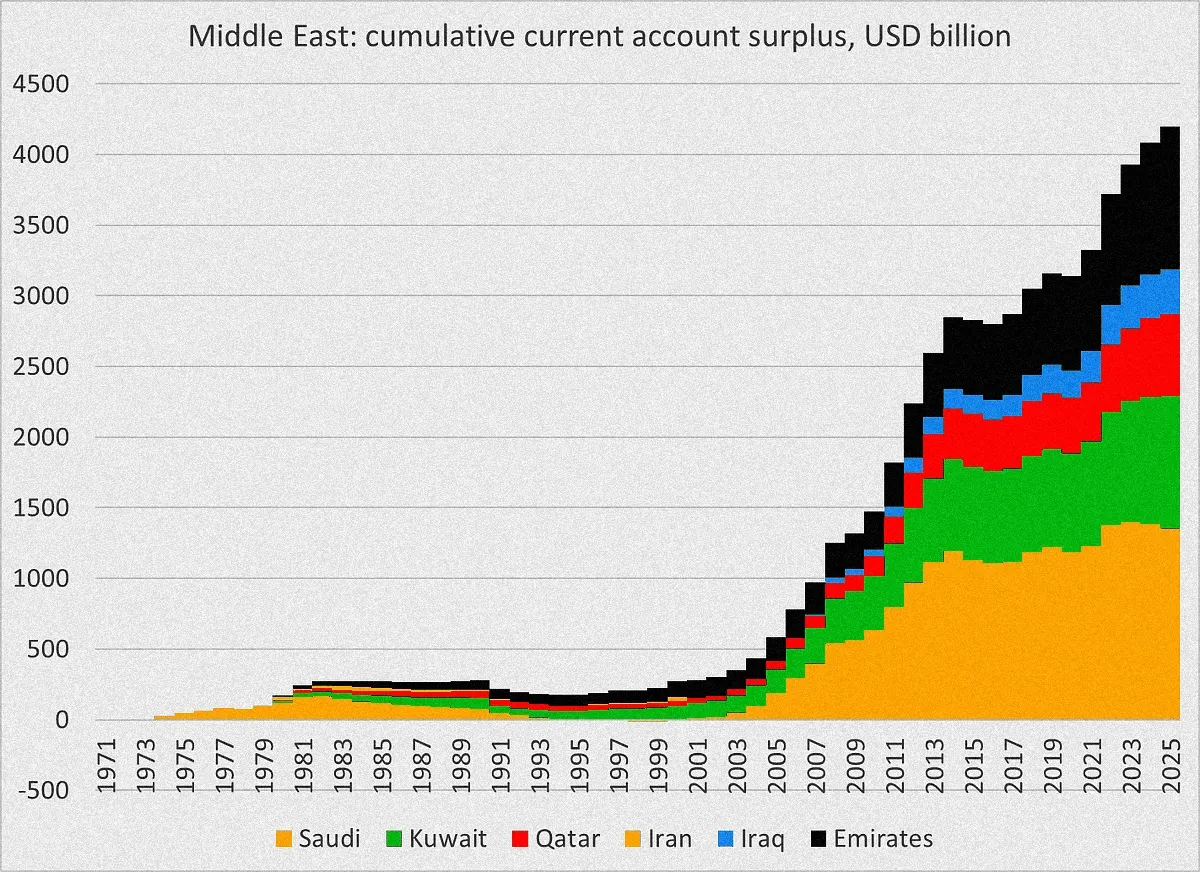
Around the year 2005, the GCC countries started to have a massive account surplus, meaning they were selling so much oil they couldn't spend all their money. Why was this happening? China. In the 80s and 90s, China was building factories. Then, China started setting up its own account surplus and wanted to develop its industrial base. How do you do that? By importing oil from the GCC. That's why we have these skyscrapers, malls, and roads—because China was able to import all this cheap oil. The GCC would then take this money and invest it back into the American stock market, but also in Africa and in infrastructure. For the longest time, the Chinese economy and the GCC were the two main pillars of the entire global economy. If the GCC is no longer able to export oil, this will have a major impact on China, and together, the two will have a major impact on the global economy. The global economy is dead.
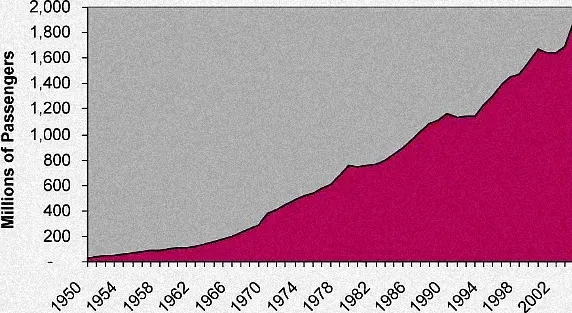
Today, flying around the world is very simple. You can get your mobile out, go to a website, book a flight for tonight, pay with a credit card, take a taxi to the airport, and be there the next morning. You couldn't do this 20 years ago. The technology was around, but it was not widely available. In 1950, it was a tremendous luxury to fly; you had to be a millionaire. Now, anyone can fly. This happened in the past 30-40 years because of Pax Americana, which guaranteed there would be no problems in the world, so planes could just fly around without being shot down. This world is coming to an end. In the future, flights will be very expensive, and vacations will be unaffordable.
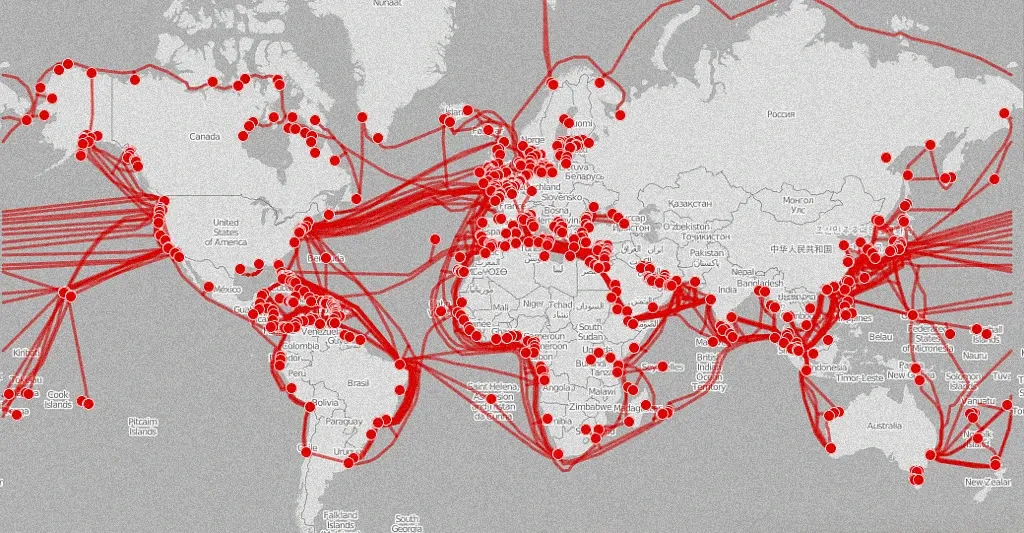
You think the internet is just there when you go on the computer. No, the internet is a network of undersea cables that connect the entire world. Unfortunately, there's a war going on right here, and it's really easy for Iran to cut off these undersea cables, which would lead to internet disruption for maybe 20-30% of the world. Africa, India, the Middle East, and maybe parts of Europe would lose internet access. You might think, "Okay, they just won't watch Netflix anymore." No. The entire economy is based on the cloud. Banking and finance would be hugely impacted. This could happen anytime.
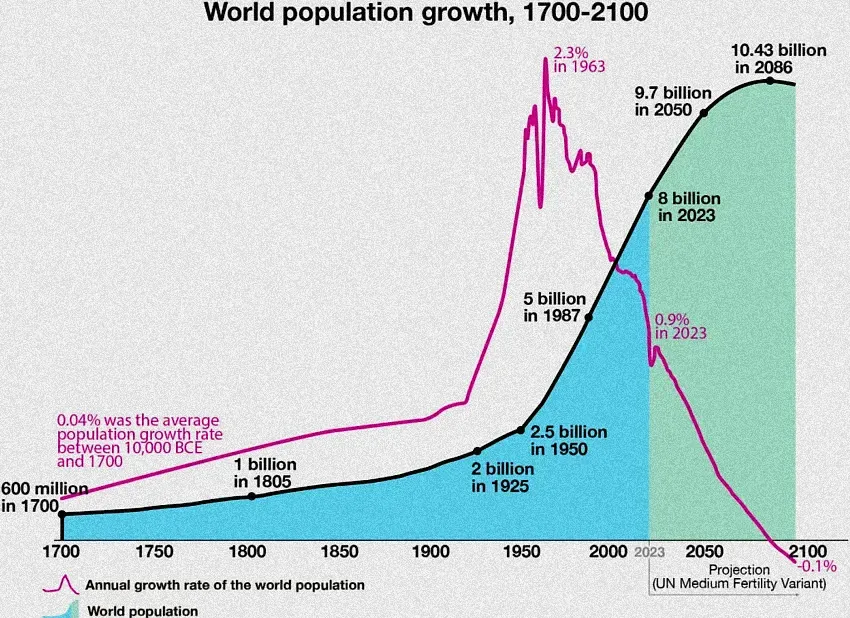
One thing you notice about this world is the sheer amount of population growth. After World War II, because of Pax Americana, you see a massive boom in population. Unfortunately, this is not sustainable. It is not possible for the planet to sustain 8 billion people, many of whom want to fly around the world twice a year, drive an SUV, and have avocados and cherries every single day. When you are too off-balance, the correction is pretty extreme. The fact that we have so many people means that if there's a crisis, the population will see a massive shrinkage. How? Food scarcity.
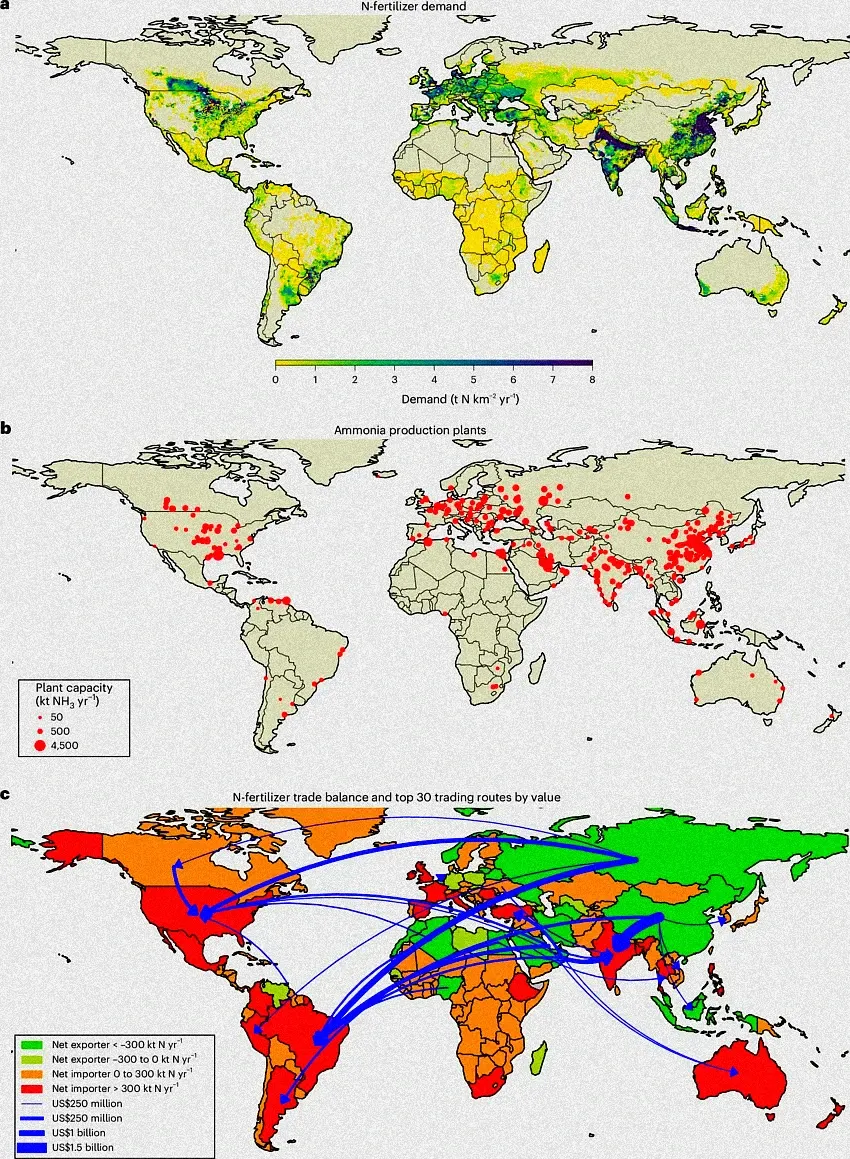
The yellow areas are places that need fertilizer to grow food, meaning their land is not good for farming. They also have a large population. A lot of this is in Africa, Central Asia, and parts of South America. Ammonia, produced from petroleum, is fundamental for fertilizers and is mainly produced in the global north. What allows for this young population is the fact that the north is able to export fertilizer to the south. If this trade were to stop, people in the south would be in a lot of trouble. This trade in fertilizer is what sustains a global population of 8 billion people.
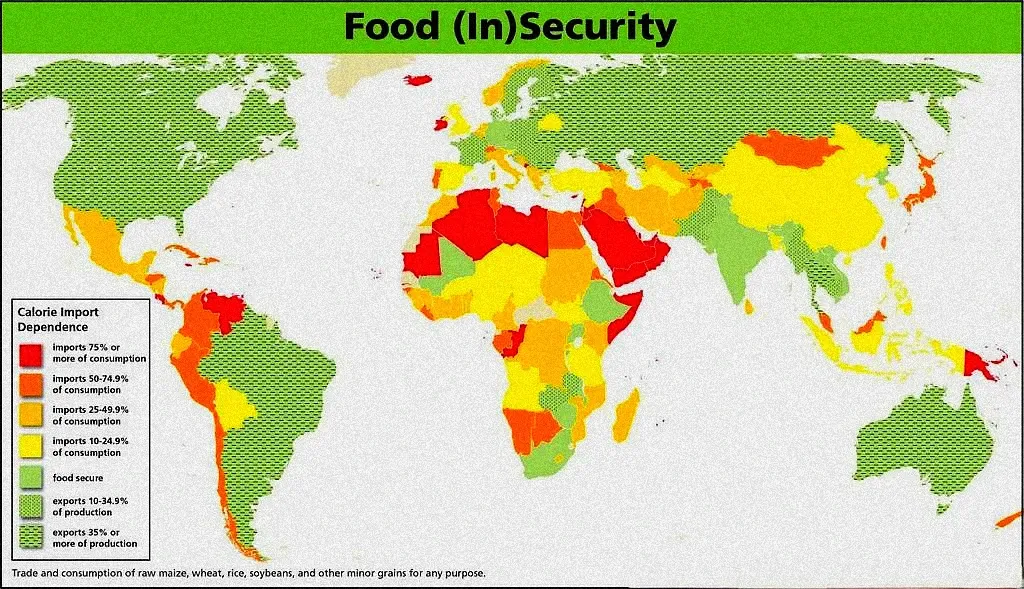
If you're in the green, you're okay. But if you are in the red, you are in a lot of trouble. Honestly, if you are not in the green, you could still be in a lot of trouble because we're looking for resilience. The idea of efficiency is to imagine the best-case scenario and try to make as much money as possible. The idea of resilience is to imagine the worst-case scenario and see if you can survive it. If you have food security issues, you are facing a massive problem. And where's China? Not in the green. This is something that national leaders around the world are talking about right now: food scarcity.
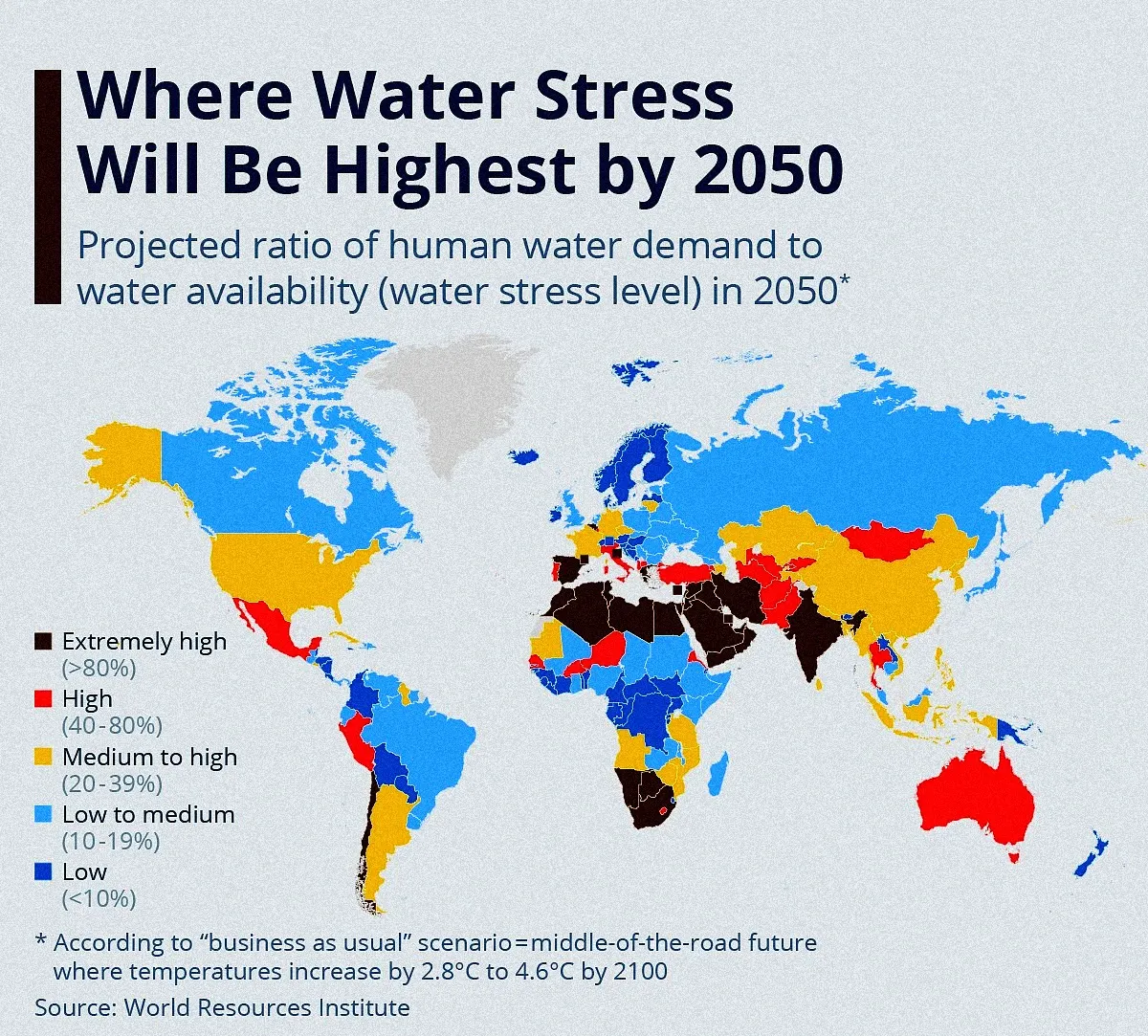
The countries that suffer from food scarcity, some of them also suffer from water scarcity. I would say that water is far more problematic than food. If you are any country in this area, you should be worried.
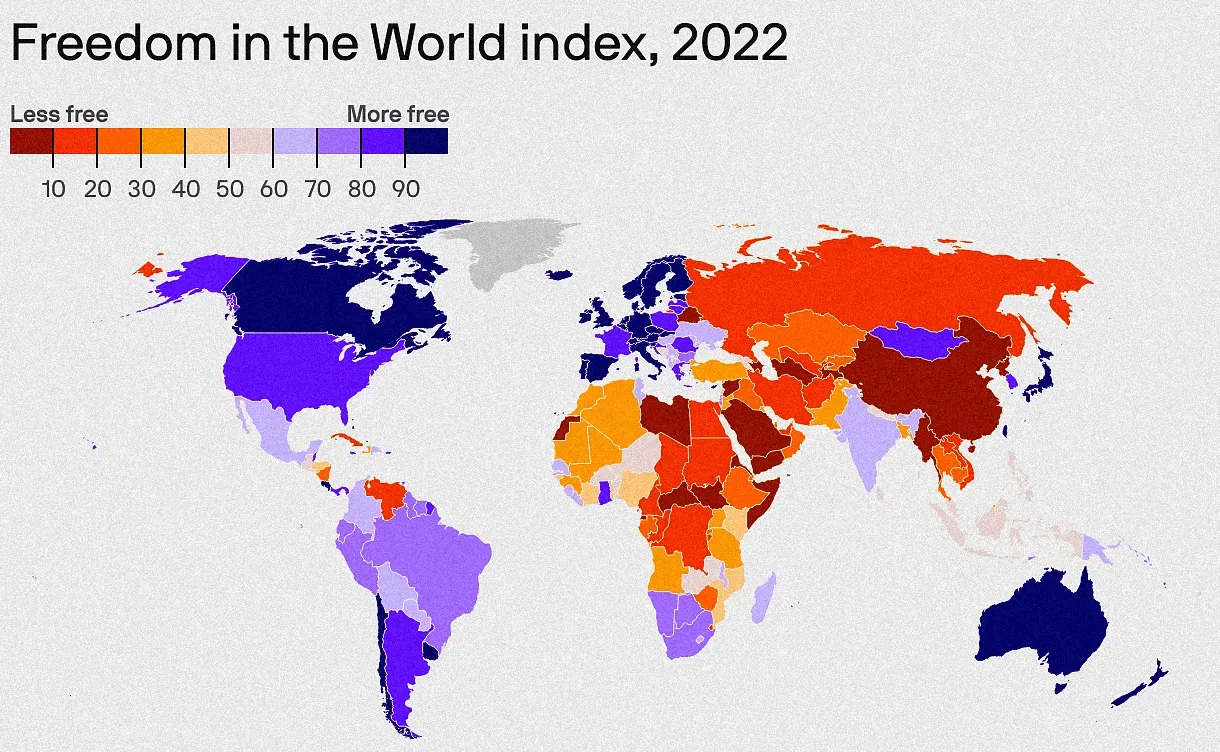
Freedom is a very important issue because it's actually important for resilience. When there's a crisis, leaders and the population need to collectively make sacrifices. But when there's very little freedom—meaning very little transparency and accountability—the leadership could possibly make selfish, self-defeating decisions. The public is not involved and therefore refuses to make the sacrifices necessary for the nation to survive.
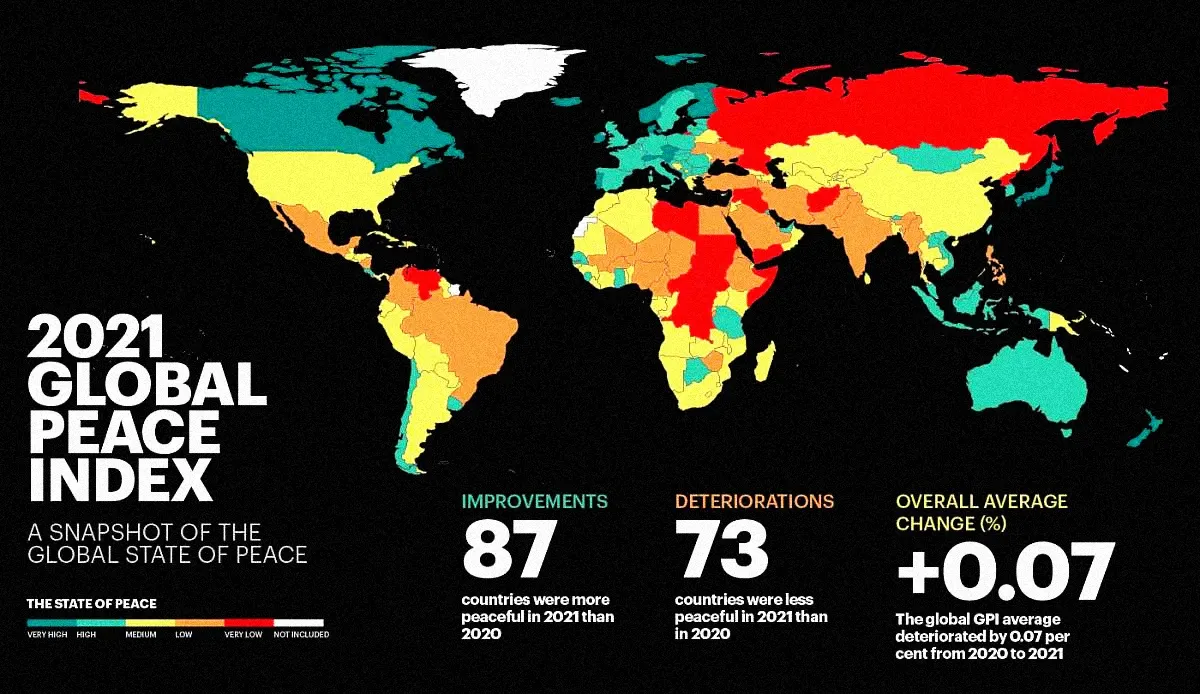
This leads to conflict around the world. Countries that suffer the most from food and water issues are also most likely to come into conflict. As you can see, Africa and the Middle East are under a lot of conflict and stress while also suffering from food and water scarcity.
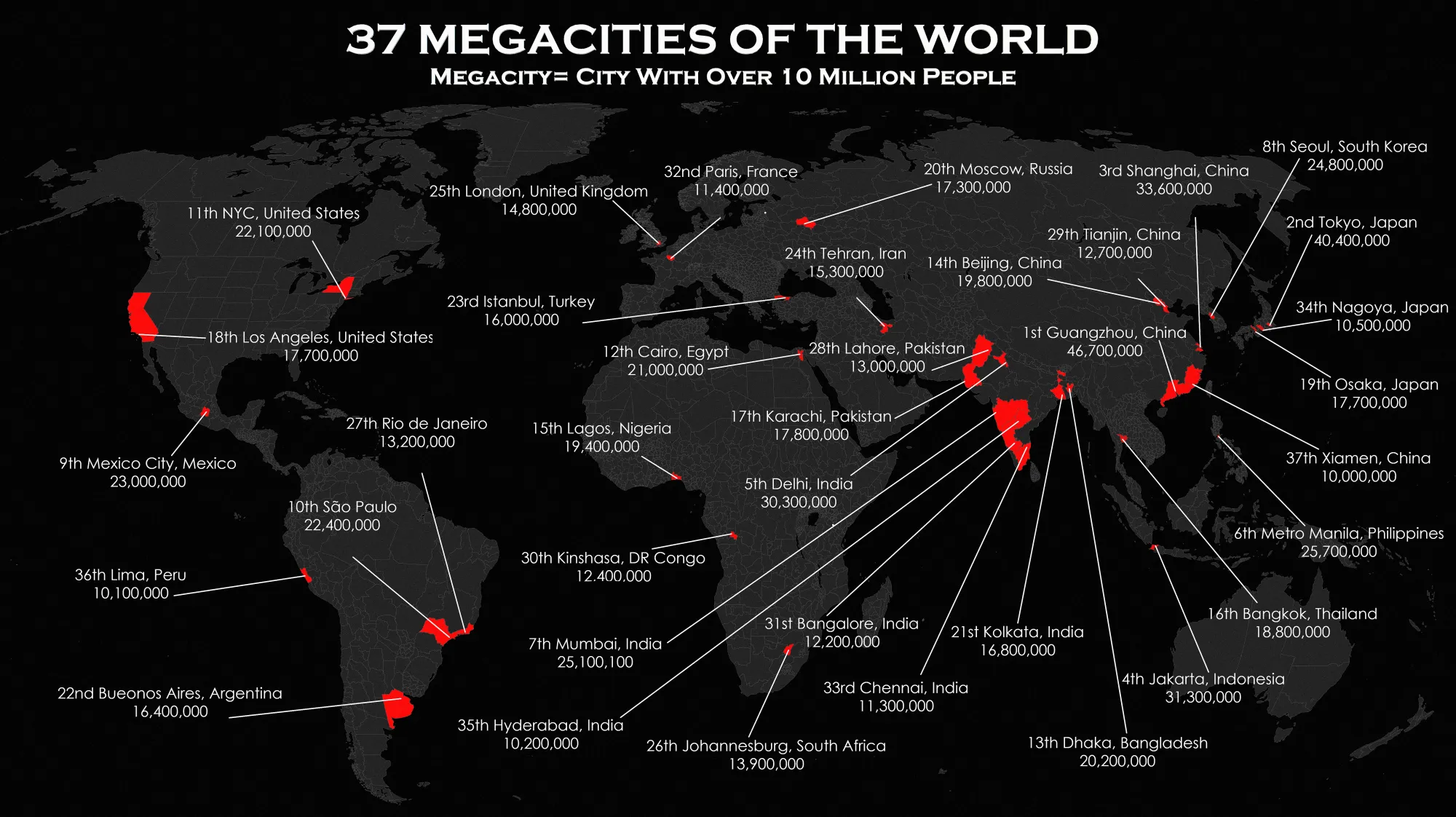
The idea of megacities—cities with over 10 million people—is that you think they're amazing because of shopping malls and skyscrapers. No, megacities are really bad. They should not exist. They exist because of globalization. They bring in a lot of people, have them specialize in a particular industrial area, and then export to the rest of the world. Most megacities are located in India and China, which is a problem because both suffer from food and water issues. To be resilient, you actually want most of your population not in cities but in the countryside growing food. First, they are self-sufficient. Second, you will have a food supply. Unfortunately, right now China imports a quarter of its food and 75% of its oil. This brings up the question of how resilient China is, but also any big country with too many megacities.
With this war and disruptions to global trade, we should expect massive instability in nations that are not very resilient—that have very little freedom, and have food and water issues. You will see revolutions, wars, and famines, which leads to massive migration.
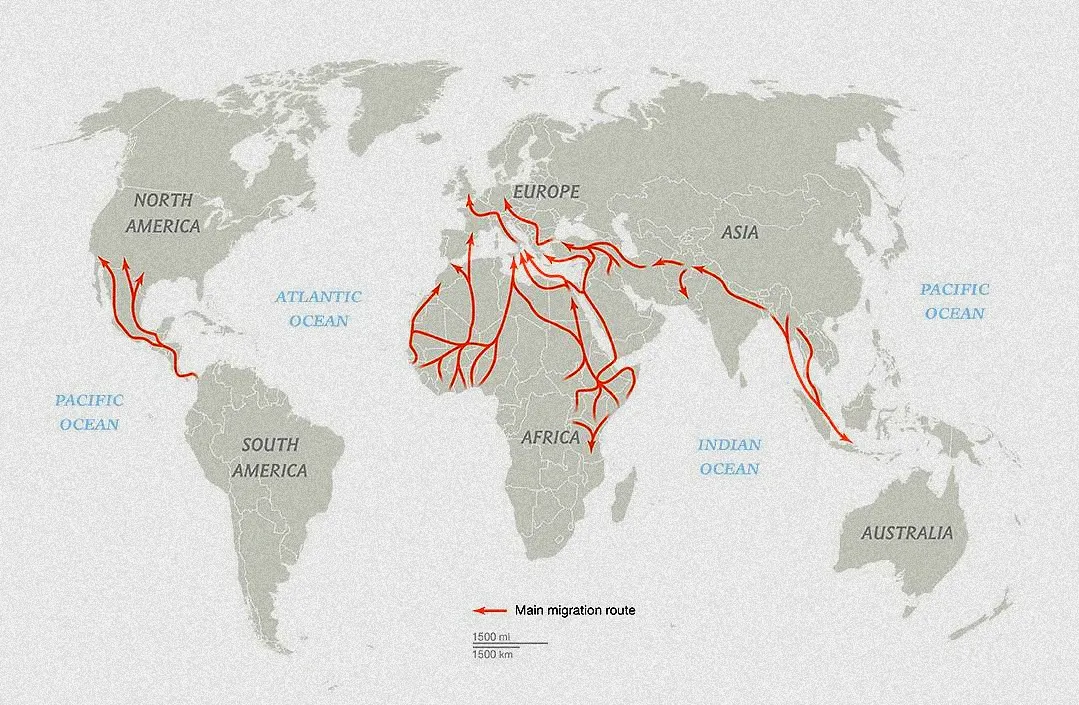
These are migration trends we're already seeing, where people from Africa and the Middle East are moving to Europe, and people from South and Latin America are moving to the United States. We should expect these trends to not only continue but to accelerate by maybe 100 times. You might think Europe and North America can just build walls. Unfortunately, they have a huge problem: aging.
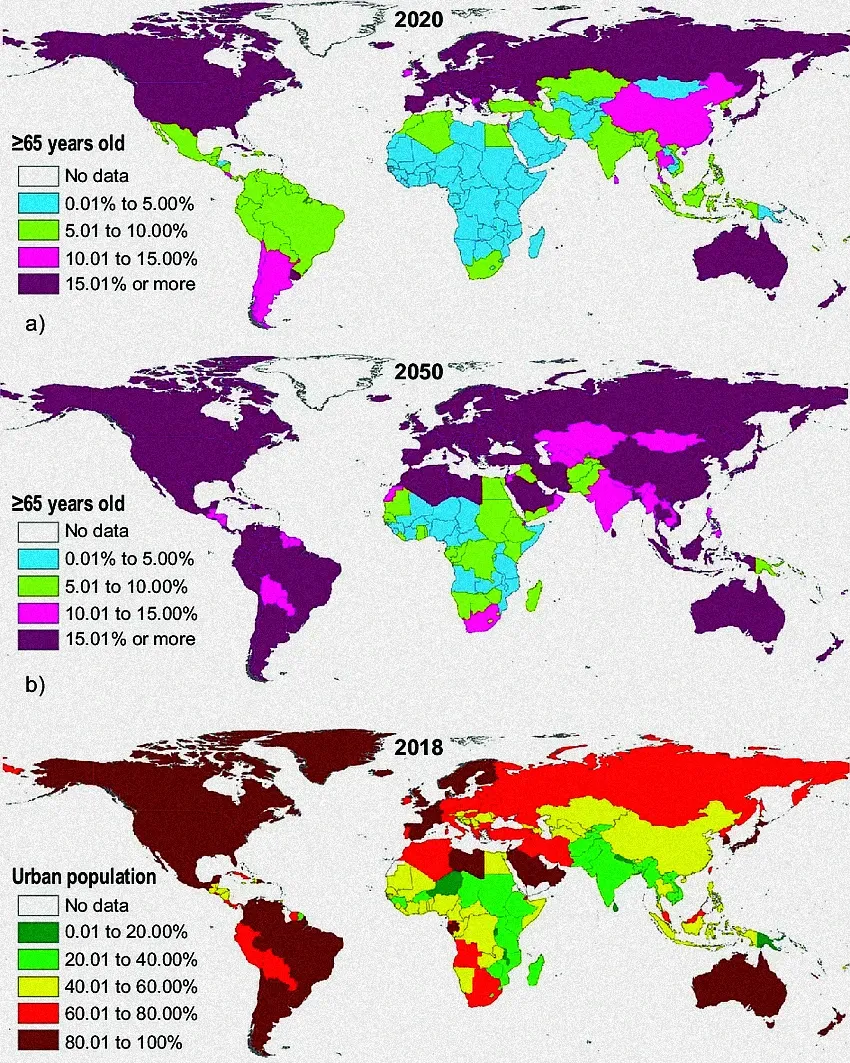
In 2020, the countries in purple have a significant elderly population. By 2050, the entire northern hemisphere will have a significant elderly population. The industrial economies are aging very rapidly, which means their only option is to bring in cheap, desperate workers from the south who are fleeing conflict zones in order to run their economies. The problem, of course, is that this will lead to cultural conflict, where the native populations will feel they're being replaced by these refugees and immigrants. This will probably lead to civil conflict within North America and Europe. There's really no way around this issue because the elderly are in control, and they want people to mow their lawns, nourish them, and deliver food to them. Young people don't have to do that because their parents have money, so one way around this is by importing cheap immigrant labor.
The New World Order: Emerging Blocs and Future Trends
With the end of Pax Americana, you will see the emergence of regional trading blocs—basically, the idea of mercantilism.
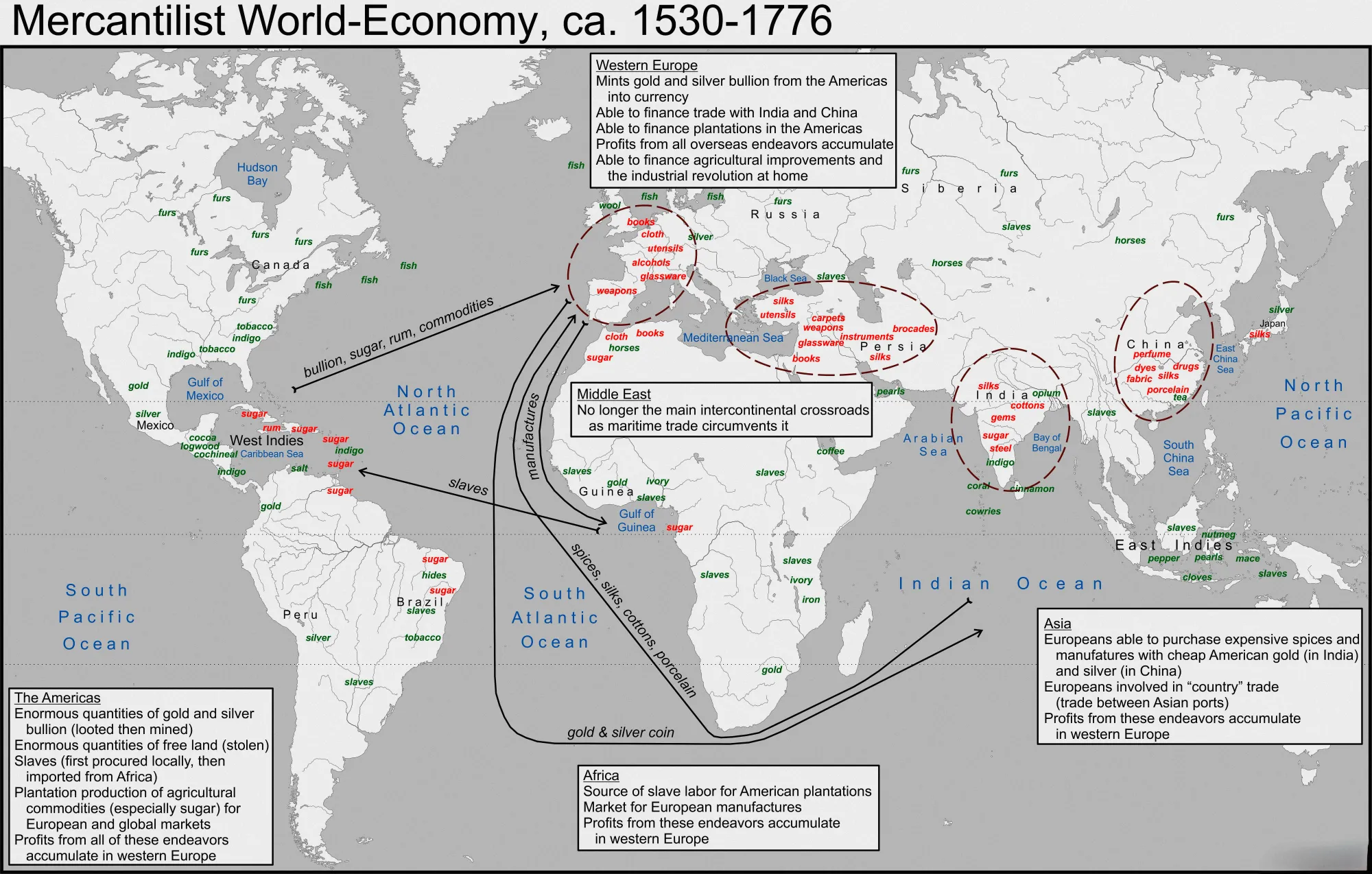
For most of human history, this was what we did. There was no one power that controlled the entire world. You had a local hegemon which guaranteed trade among its allies, and you only traded within your regional trading block. That's the world we're heading back towards. This does not mean the end of global trade; it just means much more limited global trade.
Another thing you will notice about the ancient economies is slaves. Slaves were a very important part of the trade. You need energy to run society. Today we use oil; back then, they used human beings. If you can no longer have access to cheap oil, you enslave people. That's the way we've historically done things.
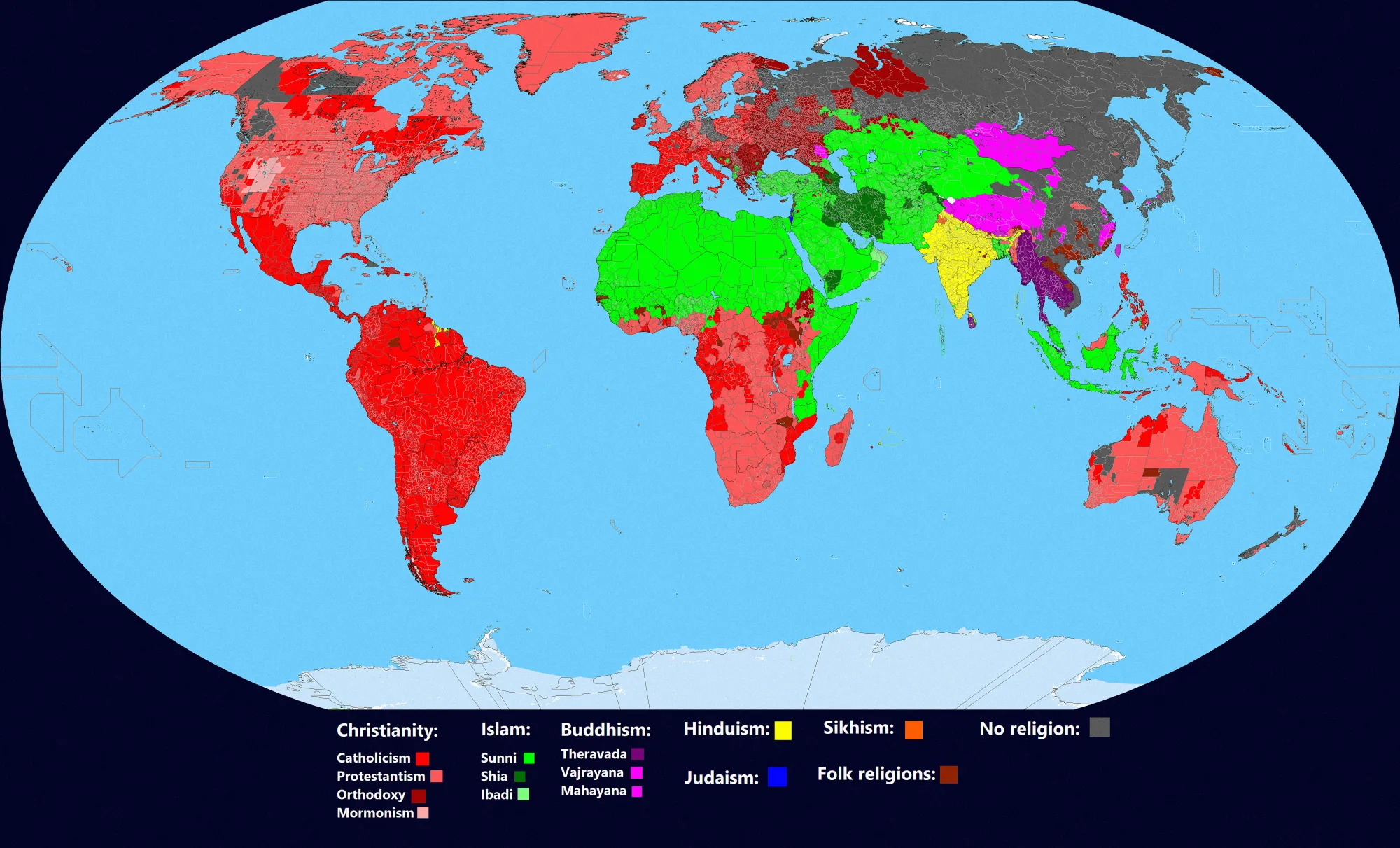
The last thing I want to talk about is religion. Remember, the idea of resilience is that you need people to focus more on spirituality and less on materialism, because if they focus on materialism, their lives are getting worse and worse. You need to cause a national spiritual rejuvenation in your country. If you are in the gray, you might have issues because your people are not religious and are too materialistic. Unfortunately, East Asia—Japan, China, Korea, Vietnam—are especially non-religious. That will be a problem for them in the future.
Major Trends for the Next 10-20 Years
If you really believe that next week Donald Trump and Iran are going to come to a peace agreement, or that in five or six months both will exhaust themselves and things will go back to normal, you're living in a fantasy world. You have to wake up and recognize that this is the end of the unipolar moment. We're moving towards a new world, and you have to choose to adapt or you will die. It's that simple.
- De-industrialization and De-urbanization: People in the cities will have to move back to the countryside, especially young people. They have to learn real skills. No more cryptocurrency trading for you guys. Learn how to milk a cow or kill a chicken. Do something useful.
- Nationalism and Re-militarization: You have to get young people willing to fight and defend your land. That means getting them to believe that your nation deserves to be strong. Whichever nations are most ready and able to excite their younger population into fighting wars will be the ones who will be most resilient.
- Independent Trading Blocs: The world will be organized into self-sufficient systems.
- Resource Wars, Famines, Genocides, Slavery: For most of human history, humans were the cheap energy source. If you don't have access to cheap oil, you're going to enslave human beings. This is not a pretty future, but it is a future that could happen, and you have to mentally prepare yourself for this possibility.
- Mass Migration: People in the south are most likely to suffer from resource wars over water and food, so they will escape to Europe and North America.
- Revolution and Civil War: Political instability in America and Europe will rise because the baby boomers refuse to retire. These are aging populations with massive inequality, corruption, and stagnation, which will lead to chaos in the streets.
- Religion: If you are not religious, I actually recommend looking into the possibility of becoming religious. It's going to be very useful for what's going to happen later on.
How the World Might Look in 10-20 Years
- Russo-German Alliance: I think there will be an eventual alliance between Russia and Germany in Europe. Maybe for the next 5-10 years, they will go to war against each other, but eventually, the two will figure out they are better off working together.
- Pax Judaica: The entire point of this war in Iran from Israel's perspective is to knock America out of the Middle East, establish itself as the local hegemon, and then create a Pax Judaica. I think Israel will come to dominate the Middle East. What about Iran? If the United States were to leave the scene and Israel and Iran had to go to war, they would likely agree to split the Middle East, with Iran controlling the Strait of Hormuz and Israel controlling the Levant. Historically, the Jewish people hated the Greeks and the Romans, but they actually got along with the Persians. In fact, the place in the Middle East outside Israel with the largest Jewish population is Iran, and they're very well treated there.
- Japan's Solution to Aging: The major problem facing all Western industrial nations is the aging crisis. In most countries, you can't do anything about it. But Japan is a very special country where the elderly have a moral obligation to the nation. It could be a situation where Japan is in a lot of trouble and the elderly voluntarily choose to exit power and give it to the young. I think Japan is the only nation that would do this voluntarily.
- The American Holy Empire: The nation most capable of surviving the next few decades of tribulation is America. It is so incredibly wealthy, protected by two oceans, and it really controls Canada and Mexico. It has unlimited resources and population. Americans are also the most creative, entrepreneurial, and energetic people in the world. I would not bet against America. But I think America will need a new identity to survive. They will go from Pax Americana, which is a secular, global idea, to one that is much more nationalistic, focused on community and nation—which means embracing Christianity. I think Christianity will be the force that rebuilds America.
- Techno-Marxism: Nations that have the resources will want to institute an AI surveillance state to better marshal their limited resources and control their people. You will have this sharp division of people into different classes where at the very top you have freedom, but people at the very bottom become slaves or serfs.
The world has completely changed. We're not going back to the old world. We're going to a new world, and what this new world will look like is something that we can choose to control.
How will relationships between countries change?
The best way to understand the geopolitical situation is that it's constantly in flux; it's dynamic. You cannot easily divide nation-states into friends and enemies anymore. Their alliances will constantly shift over time, and the nation-state system itself may break apart into much more resilient communities. It's possible that nation-states become a series of city-states.
Think about the world in the 1930s, or even China during the Warring States period. I can't tell you that we'll go to a new world and this is what it will look like. It will constantly change. It's possible that in the beginning, in East Asia, maybe Vietnam, Japan, South Korea, the United States, and Russia combine to contain China because they see China as the hegemon. But then they might say, "Wait a minute, Japan's rising in power," so they combine against Japan. It's a dynamic situation.
Basically, everything that you've been taught in school, everything that you understand about the world, and everything you believe to be true about the world will change. You have to open your mind and be ready for constant political flux.