Game Theory #14: The Law of Proximity
Last night, there was a major escalation in this hypothetical war. The Israelis have bombed the Iranian oil fields, and in response, the Iranians are now attacking the energy infrastructure of the GCC.
Qatar provides 20% of the world's LNG. This represents a major escalation. As I've pointed out before, the entire strategy of Iran in this scenario is to destroy the global economy, and this is how it would do so. It also attacked Tel Aviv in response to the assassination of their de facto leader, Ali Larijani.

As you can see from this picture, this is a cluster warhead, and it is impossible for air defense to stop this. Tel Aviv is getting pummeled. We don't have footage because it's being censored right now. You would think that the Israelis would want this war to end as soon as possible because Tel Aviv and other cities are getting destroyed. There's really no way for the Israelis to defend themselves against Iranian ballistic missiles.
But unfortunately, there are many Israelis who are very happy about all this destruction. One of the more influential rabbis in Jerusalem said that this war of destruction will bring about the coming of the Messiah, and it will happen on Thursday, which is today. They are not at all saddened by what is happening. In fact, they are quite animated and very excited. You cannot look at this war from a geopolitical lens; you have to look at it from an eschatological perspective.
A Regional War with Maximalist Objectives
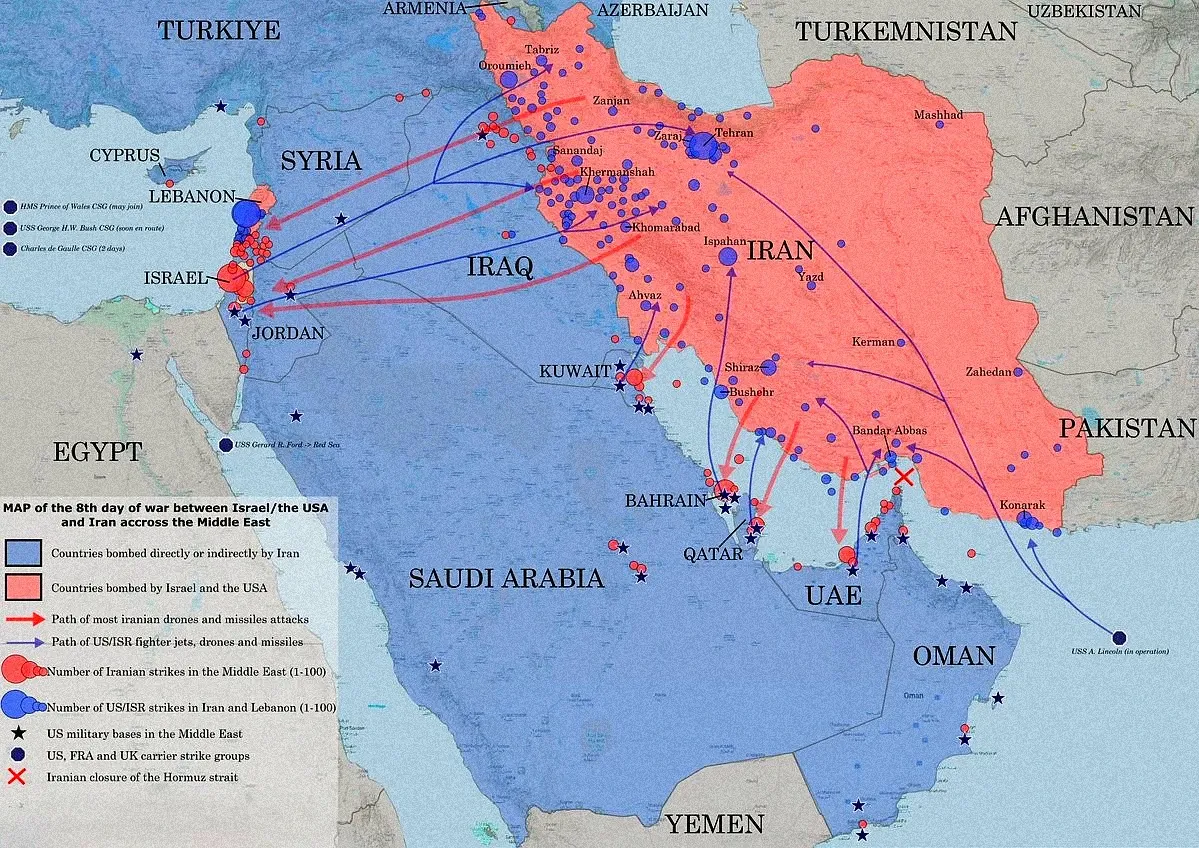
Let us look at where we are in the war so far.It is a regional war, and both sides are seeking maximalist objectives. This means the United States and Israel want to destroy Iran, especially its capacity to be a nation-state. Right now, the Americans and Israelis are attacking their leadership—decapitating their leadership—as well as targeting their economy. Later on, as this war progresses and escalates, they will start to target civilian critical infrastructure, including water. And it's already happening. They also want to have a divide-and-rule strategy where they provoke ethnic conflict in Iran and divide Iran up into ethnic enclaves. This is what we call Balkanization.
The Iranians, on the other hand, want to destroy the entire global economy. You do that by attacking the energy infrastructure of the GCC because the entire basis of the global economy is cheap energy.
As this war progresses, you will notice certain things. Eventually, the Americans will have no choice but to launch a ground invasion. One possible attack vector is Kharg Island. This is where Iran stores about 9% of its oil for export. The idea is that if you take Kharg Island, you will destroy the Iranian economy and thus its capacity to sustain this war. The problem with Kharg Island is that it's easy to take but hard to defend because of the coastline. In which case, you have to also take the coastline, but then you deal with the Zagros Mountains, and so you have to expand outwards. This is what we call mission creep, where you cannot justify the war. So what you do is you put in some soldiers, and then the mission creep becomes the justification for the war. Kharg Island will be a flashpoint.
Another flashpoint will be Saudi Arabia because the Iranians are attacking Saudi Arabia. What Saudi Arabia can do is declare war on Iran. This is important because Saudi Arabia has a mutual defense pact with Pakistan, so that if any are attacked, the other is obligated to come to each other's defense. This is important because, as you can see, Pakistan opens up the eastern front, making it possible for the Americans to attack from the east. The other important thing is that Pakistan has nuclear weapons. I strongly believe tactical nuclear weapons will not be used, but once Pakistan is in the war, nuclear warheads are now at play.
Another thing to watch is how this war expands elsewhere. When the time is appropriate, the Iranians will activate their proxies, the Houthis, and they will close off another critical choke point. What's going to happen is that there will be two critical maritime choke points that are closed off, thus isolating the GCC and cutting off the world's access to cheap energy. When they do that, we can expect global retaliation, and other forces will have to come in to secure cheap energy. It is possible the South Koreans and the Japanese will be forced into this war because they are so dependent on GCC energy.
The Decapitation Strategy
Something else that is creating attention online is people are speculating that Benjamin Netanyahu is dead. The reason is that he has not been seen in a public setting for many days. There have been cabinet meetings that Netanyahu usually chairs, and he's not there. The other thing is that there are fake AI videos of him giving speeches, and it's pretty blatant that these are fake. So people are speculating that he is dead and they're trying to cover it up.

This is a picture of him visiting a cafe in Jerusalem to prove he's not dead. The problem is that this cafe is in a mountain, and it would take him about 50 minutes to drive there. So why does he go there? Why doesn't he just have a cabinet meeting or get on the phone with Donald Trump to prove he's still alive? I personally don't believe he is dead. He could be hiding somewhere, or he could be injured. What we do know is that the Iranians are killing a lot of senior Israeli officials, including the head of Mossad, the spy agency, and Netanyahu's residence was also targeted in Tel Aviv.
This raises an interesting question: How are the Iranians able to target so many of the top leadership of the Israelis?

But not only that, this is Ali Larijani , the de facto head of the Iran war effort, and he was assassinated yesterday or two days ago. The Iranians have confirmed this. He is confirmed to be dead. Analysts are extremely worried about this because he is a very pragmatic person, so you can negotiate with him. Once this war reaches a certain point where both sides are exhausted, it would be possible to approach him and say, "Let's just negotiate a ceasefire," and he'd be willing to because he's very experienced. He's also very influential, so he's able to bring together the different factions of the Iranian government and negotiate a ceasefire. With him dead, it is now almost impossible to foresee a ceasefire.
You really don't want to kill other nations' leaders. Let's use an analogy. Imagine in the streets there are two gangs at war with each other, Gang A and Gang B. If you look at gangs, they are structured as hierarchies, but there's a lot of autonomy among the different sections. What holds the gangs together is the leader. When these two gangs go to war, what they try to avoid is killing each other's leader. Why? Because a war is often used to achieve certain political objectives. The point isn't to kill everyone; the point is to negotiate a treaty that is most beneficial to you, and you do that by negotiating with each other's leaders because they have the authority to implement the treaty.
The second reason is if you kill the leader, there will be a competition to replace them. During a gang war, the person who is most violent, the most extreme, will often become the new leader. By killing this leader, not only do you cause conflict within the gang, but you also cause a massive escalation in the conflict between the two gangs. There's really no way out. That is why historically, you do not target other nations' leaders—because then there's no off-ramp.
By targeting Larijani, the Israelis and the Americans have ensured that there will be no off-ramp. This war will be fought to the bitter end. Unfortunately, that is the objective here. The Israelis and the Americans are interested in maximalist aims to destroy Iran permanently. And the Iranians are also maximalist in that they want to destroy the global economy permanently in order to restructure reality itself.
This leaves us with three major questions:
- How are these leaders dying? It's not that easy to kill a leader, right? Because he's protected by security. Usually, there are two ways to figure out where the leader is. There's human intelligence, called HUMINT, and there's signal intelligence, called SIGINT. Signal intelligence just means electronic eavesdropping, where I listen in on your telephone calls, where I track your IP address. The Israelis and Americans are obviously very sophisticated in that. And the Americans and the Israelis are saying we are using electronic surveillance in order to track these people down. I don't think that's convincing. I think the most important, the most reliable source of information is human intelligence: having spies embedded in local networks to spot for you where they are. That's the best way to figure out where they are. So then this raises the question: how are the Israelis and Americans getting this human intelligence? That's the first question we want to look at.
- Why are they dying? What's the point of killing them? Because once they die, they can just be replaced, and they're often replaced by a more extreme individual.
- What does this mean for the war and the world? What do these decapitation strikes ultimately mean for how this war will progress and how this will affect the world in general?
The Law of Proximity
To answer these three questions, I want to introduce a new idea: the Law of Proximity. The idea is this: whenever you play a game, you're not just playing one game. You're playing many, many different games. The game that you choose to play is the one that is most proximate to you, the one that is closest to you. And that impacts your decision-making the most.
You are actually playing multiple games every single day.
- The Family Game: You might have parents and you have siblings. The game you're playing, of course, is to win attention from your parents. And to do so, depending on who your siblings are, you might use different strategies, including doing well in school or being a pain in the ass. Unfortunately, my kids choose to be a pain in the ass. The parents are playing another game, which is social prestige. They're competing against other parents to have the best family possible.
- The School Game: Not only do you play a game at home, but you also play games at school. When you go to school, you're competing with your classmates for attention and popularity, but you're also playing a game in the school to get the best grades so that you can get into a good college.
- The Work Game: Then you go to work, where you're competing in order to win the favor of your boss and to be popular among your colleagues.
- The City Game: Then you play a city game where you live in Beijing and you want Beijing to be better than maybe Shanghai or Shenzhen.
- The Nation Game: And then you play a game of maybe a nation where you want China to be stronger than Japan.
Every single day you're playing multiple games, even though you may not recognize it. What's important is the game that is most important to you is the game which you are most close to—the one that you can see in front of you.
This is also true for nations. We think that the game is between nations, but really, the game is within nations. The conflict within nations is the one conflict that determines how nations behave against each other. We will look at three examples of this: the civil conflicts in America, in Israel, and in Iran to figure out why they behave the way they do and then figure out how this war will progress.
Civil Conflict in America
Clearly, there is a civil conflict right now in America. You have the Democrats and you have the Republicans. What's odd is that even though these two different political parties are at war with each other, they both support the war because their calculus is different.
Why do the Democrats support this war? They believe that this war will be extremely unpopular in America, which will allow the Democrats to dominate in the midterms in November and then win the presidential election in 2028. They believe that this will be so unpopular it will destroy Donald Trump and allow Democrats to rule forever. It will basically destroy the Republican party.
The Republicans have a different strategy. This war may be unpopular, and this war may make America lose, but it's okay. Why? Because in a time of war, the president has something called emergency powers. Emergency powers allow the president to essentially suspend the constitution and to suspend or delay elections. Also, the Republicans want to pass something called the Save America Act, which means that if you are a voter, you must present ID in order to vote. You might think this is reasonable, but historically, the idea of checking ID is a way to discriminate against minorities, to have police officers there to scare minorities. That's traditionally how racism was enforced in America.
In other words, the Republicans have many different strategies of either cheating or manipulating the elections. If the war is going really badly, what they will do is call a national draft and cancel the elections. As you can see, this is not really about America defeating Iran. This is really about the Democrats or Republicans trying to obtain power and keep it.
But it's not just about the Democrats and Republicans at war with each other. There's actually a much deeper divide in America: a conflict between the elite and the counter-elite. This is a Peter Turchin idea. He argues that what leads to civil war is that you have too many elites who want to be the ones in power. This is elite overproduction. Power is a zero-sum game, and therefore, when you have elite overproduction, they have to go to war against each other in order to have that power.
To put it very simply, the Democrats represent the elite and the Republicans represent the counter-elite.
This is the main divide in America that will eventually lead to an actual civil war. But right now, they're fighting over foreign policy.
Why are people in finance fighting with people in AI? If you're able to control Washington D.C., if you're able to control the levers of government, you're able to make a lot of money for yourself. What people don't really understand is that both finance and AI are bubbles that will burst. They're parasites.
Finance is a parasite because there's something called a private credit bubble. Rather than banks issuing loans to companies, companies privately issue loans to other companies. You would think that these companies would be very careful with who they lend to, but that's not true. In 2008, these banks destroyed the global economy, and the American government bailed them out. They suffered no consequences. This is the idea of moral hazard: if you do not suffer consequences for your stupidity, you're just going to be more stupid in the future. These companies believe, "We control Washington D.C., therefore we can be as risky and stupid as we want." This problem has reached about $2 trillion. They think that, worst-case scenario, the government will bail them out because they're too big to fail and all their friends are in government.
But there's a problem today: there's another group doing the same crap, and it's called the AI bubble. You have companies like Microsoft, OpenAI, Oracle, and Nvidia, and the way they operate is they just lend money to each other. It's like, "I give you a billion dollars, then you give me a billion dollars, and now we have $2 billion." It's a circle jerk, and it's getting a lot of money from the GCC and other investors. The problem, of course, is what's happening in the war. If the GCC can no longer put more money into this bubble, then eventually this bubble will have to burst. But they're like, "That's okay. We control Trump. We control the White House. We are the stock market. Therefore, Washington D.C. will bail us out."
That's the war going on. You have two parasitic forces, the finance sector and the tech sector, and they are all looking for government bailouts when their bubble bursts. But the government doesn't have infinite money. It can only bail out one side. So they're going to fight over who the government bails out. If the Democrats win the House and the presidency in 2028, then the private credit people will get bailed out. But if Trump and his people stay in power in 2028, then the AI people will get bailed out. That's the civil war going on in America right now.
Civil Conflict in Israel
People don't really appreciate how divided Israel is. Around 2020, you had a million people in Tel Aviv calling for the resignation, impeachment, and jailing of Prime Minister Netanyahu because Netanyahu, like most Israeli politicians, is very corrupt. To avoid going to jail, Netanyahu proposed changing the judiciary, changing the laws. There were massive protests against him. At this point, it seemed as though Netanyahu was going to fall from power and go to jail for the rest of his life. But then, of course, October 7th happened, and now Israel is in a permanent war. That gives him emergency powers.
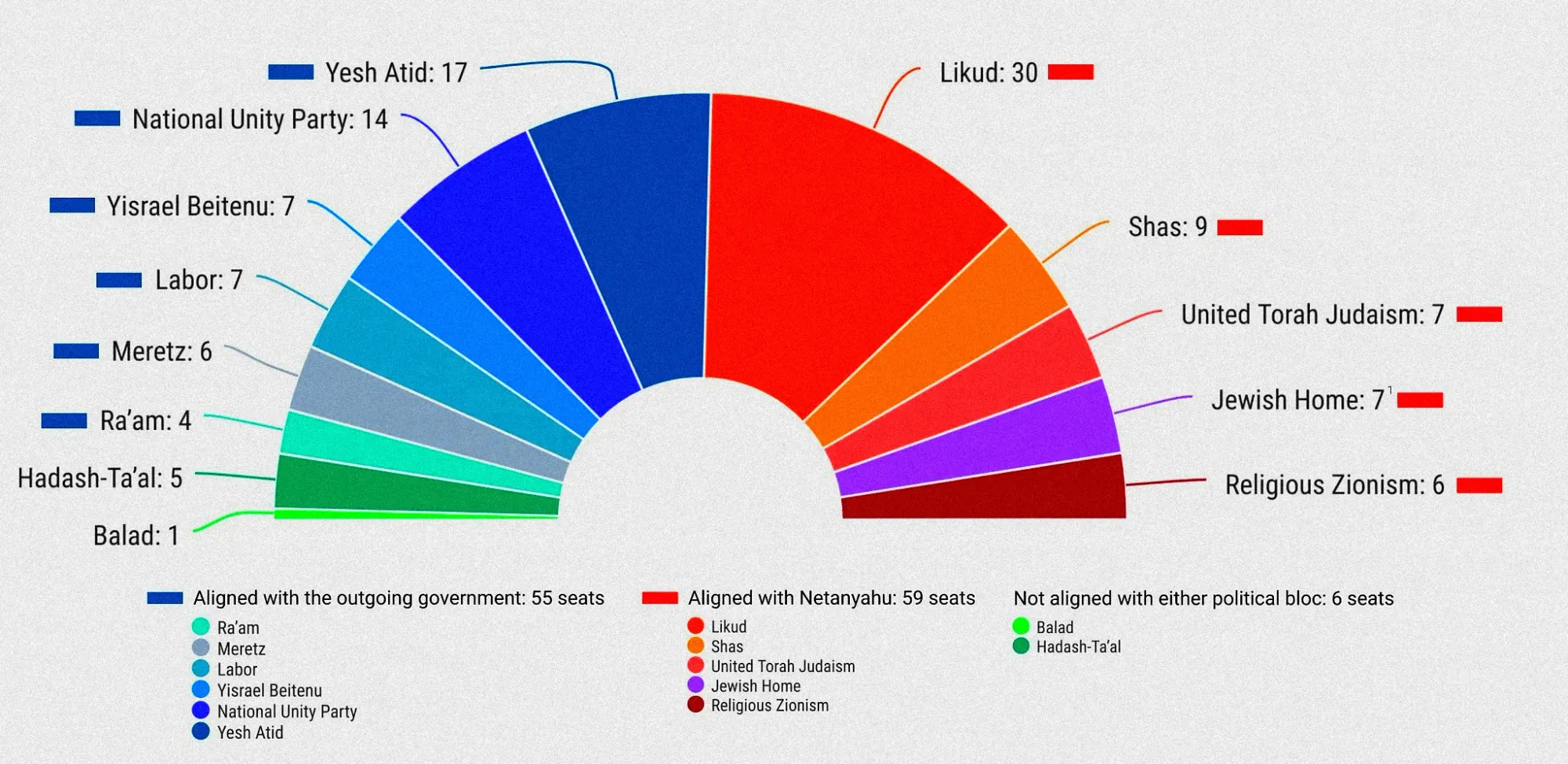
To give you a sense of how divided Israel is, let's look at the Knesset, which is the parliament. There are a lot of political parties, and as you can see, none of them are dominant. The biggest, Likud, which is Netanyahu's party, has about 30 members, but it cannot rule by itself. Therefore, it has to join with other political parties in a coalition. Israel is an extremely divided society. A lot of people talk about a Jewish global conspiracy, but what people don't really understand is the Jewish people have never gotten along.You go back to the time of Jesus, and there were like three major factions in Jerusalem: the Sadducees, the Pharisees, and the Essenes. They all hated each other. In the year 70, the Romans sent a huge army to destroy Jerusalem. You would think at this time the people in Jerusalem would get together and unite and defend Jerusalem because otherwise they'd all be killed. Well, they didn't get together. And the Romans destroyed Jerusalem and burned down the Second Temple and massacred a lot of Jews. So the Jews have always had this problem where they're extremely creative and intellectual, but that just leads to massive infighting.And again, I hate to say this, but the leaders of the different political parties of Israel really hate each other. It's not a show. They genuinely hate each other. And that's why Israel has been politically so dysfunctional these past few decades.
The major conflict in Israel is represented by Tel Aviv and Jerusalem. These two major cities represent two different centers of gravity, two different visions for Israel.
These are two vastly different visions for Israel. Tel Aviv is this open, democratic, modern, progressive city—lots of homosexuals, lots of open ideas, very secular, very outward-looking, very Western. Jerusalem is the complete opposite. And they hate each other. The fact that Tel Aviv is getting destroyed right now in this war, people in Jerusalem are actually okay with this. They're not like, "Oh my god, they're killing." No. Tel Aviv is the great Satan. Let's just destroy it so that we can build a theocracy.
They both see Israel as the kingdom of David, but they perceive David differently. For people in Tel Aviv, David was the king when Israel was at the height of its glory, when it was an open, cosmopolitan, creative, innovative empire. That's what they want Israel to be. The people in Jerusalem see David as a different person. They see David as primarily a poet-prophet. They see David as the exemplar, as the favorite of God, because he redeemed himself and repented in the eyes of God. They focus on redemption and repentance.
They focus on the story of David where he is king and one day falls in love with Bathsheba. He has sex with her, she gets pregnant, and that's a problem because she is married to someone else, Uriah the Hittite. So David has him killed. God finds out and sends the prophet Nathan to tell David he has sinned. At first, David refuses to admit he's in the wrong. But then their child dies, and David falls into tremendous grief. Every day he's praying to God for forgiveness, asking for redemption, repenting. And God forgives him. In this process, David becomes a better person and becomes united with God.
That's the vision that people in Jerusalem have for Israel: a nation that engages in redemption and repentance. They don't care about this war, Iran, or the United States. They care about the Jews finding God again and being loyal to God. That is what will bring peace to the world.
They believe that in every person there's a divine soul that comes from God, but it is trapped in the animal soul. Tel Aviv is the animal soul, and Jerusalem is the divine soul. The animal soul seeks material comfort. You want to have sex, get drunk, party, drive a Ferrari. This is all animal. But inside of you is the divine soul that only seeks to be with God. We are in a constant struggle between the animal soul and the divine soul. From their perspective, Tel Aviv represents the animal soul of Israel, and Jerusalem represents the divine soul. So it's okay if Tel Aviv is destroyed. Good.
They also recognize that war is good because if people really want to find God again, they need to suffer. They need to lose everything before they recognize the glory of God. Think of the book of Job. Job is a character in the Bible who's very wealthy, and God decides maybe he's only faithful because he's wealthy. So, Job loses everything, and this heightens his faith in God. That's the vision that these religious zealots have in Jerusalem: let's destroy Israel so that we can refine and rediscover our love for God. The destruction of Israel will lead to the redemption and repentance of the Israeli people and therefore peace in this world. The Messiah will finally come. That's why the rabbi was constantly talking about the Messiah coming on Thursday. He feels it's so close. There's so much destruction, so much war, so the Messiah must come because now the Jews recognize that only God can save them.
Civil Conflict in Iran
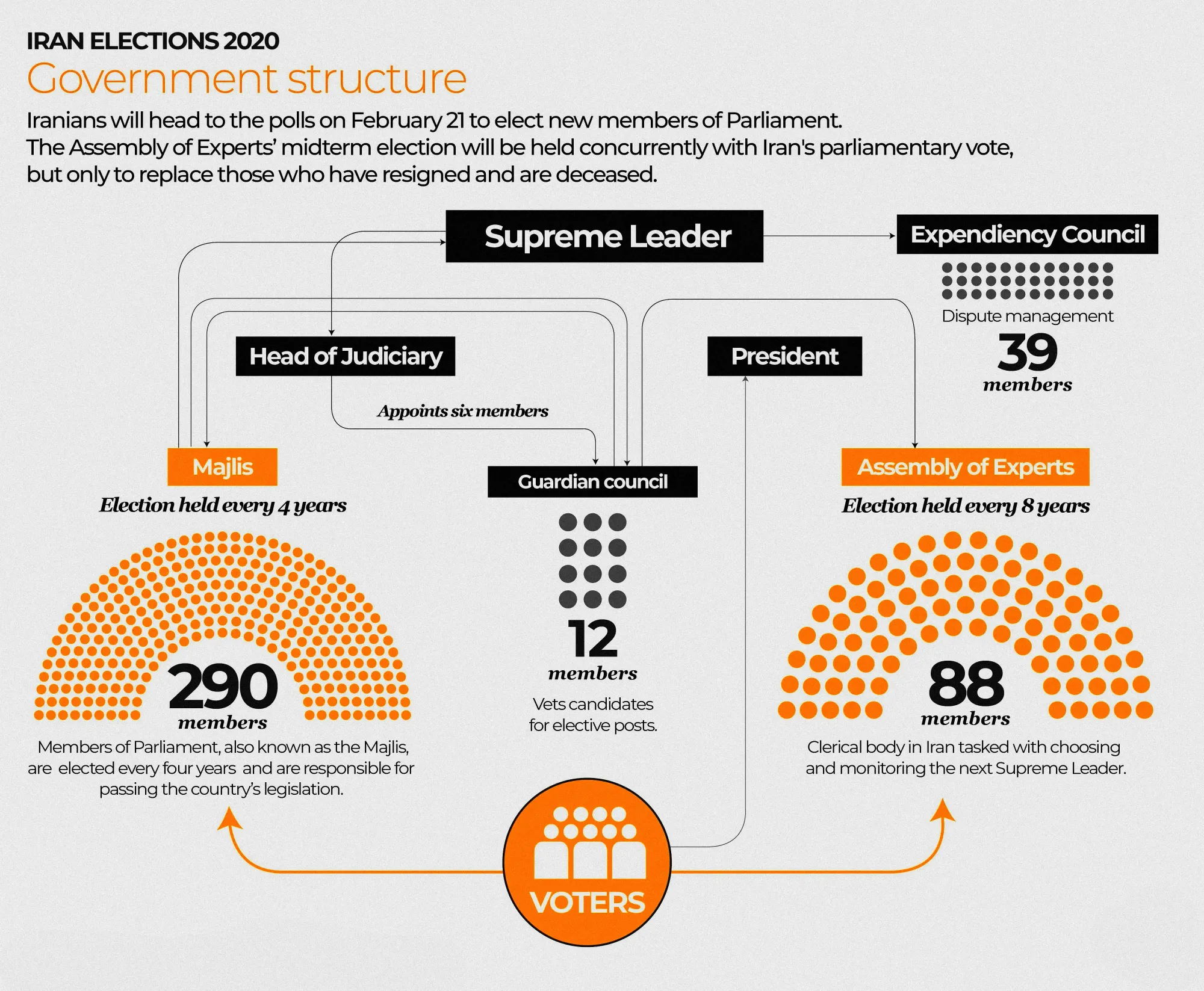
This is the political government structure of Iran. It's very complicated, divided into religious aspects (Assembly of Experts) and secular aspects (the government). The Islamic clerics are at the very top. This is the dual identity of Iran. It's a pretty divided country, not just politically and religiously, but also ethnically.
The major divide in Iran is the conflict between the Islamic theocracy and secular nationalists. This is basically the rural-urban divide: people who are well-educated and want to see Iran as a secular state that promotes democracy, progress, and science versus these religious individuals.
What happens in a war is that you become more extreme. The theocracy will transition into Shia eschatology or martyrdom, where they think this war is about having the 12th Imam, the Mahdi, return to lead them to war against the great Satan, which is Israel and the United States. Over time, the Islamists will become much more radical. This will force the secular nationalists to also become much more radical. They will become Persian exceptionalists, which means that Persia is the greatest civilization in human history and therefore it is worth dying for. The survival of the Persian civilization is much more important than the survival of the Iranian state.
The great question for the Iranians is whether they are able to reconcile the differences between these two strands of their culture or if this will lead to civil war. We are seeing civil war in Israel and in America. Iran cannot afford to fight a civil war at this time because they're being bombarded by two very powerful nations. But unfortunately, the Law of Proximity teaches us that people are much more interested in their own internal conflict than the outside global conflict.
Conclusion: What This Means for the World
This understanding helps us answer our three big questions.
How and why are these leaders getting killed? They're getting killed because of all these civil conflicts within these nations. These different factions are providing intelligence to their enemies in order to eliminate their internal enemies. I don't have evidence, but according to game theory, that's the best explanation for how these leaders are getting killed. It's not that easy for a foreign nation to precisely identify the location of a leader. What we're seeing in this war is both the Iranians and the Israelis are doing an excellent job of killing each other's leaders, and that's not common. This civil conflict within these nations offers the best understanding of why this is happening.
Where is the world going? As you can see from these conflicts, it seems as though the world can only become much more theocratic in the end. At the end of the day, this war in the Middle East is really a war between two different competing visions of the world: the global secular financial order versus a nationalist theocratic order.
This is what we can expect over the next 5 to 10 years. Iran becomes much more theocratic, extreme, and nationalistic. Israel abandons democracy and embraces theocracy. America will also abandon democracy and embrace theocracy because that is the general trend of the world.