Game Theory #9: The US-Iran War
World War III has started. The United States and Israel have begun to attack Iran, and we are now in the fourth day of this war. We can expect this war to last for many weeks, possibly also for many years. But I promise you that after this war is done, the world will never be the same again. What we will do is use game theory to understand and analyze the geopolitical situation. I'm going to teach you the ideas, the theories, and the techniques to understand the world around you and make predictions. We can know if our analysis is correct because all this is happening in real time, and so we can test it against reality.
Let's go over some basic facts about what's happened so far. In the early morning of Saturday in Tehran, the Israelis and Americans launched a decapitation strike against the Ayatollah Khamenei, who is the supreme leader of Iran. There are arguments and disputes as to what happened. The Americans and Israelis said that they had real intelligence about where the leader was, and so they sent airplanes to bomb the crap out of the place. They also had a spy who was able to record the body of the dead.
At first, the Iranians denied this and insisted he was still alive. But eventually, state media admitted that he did die in the air strike. What they also said is that he was 86 years old and he chose to die. He could have gone to Moscow, but instead, he chose to stay in Tehran and die for his people. Not only that, but he died along with many of his relatives: his daughter, his son-in-law, and his grandchildren. Many of the family died in this assault. There has also been reporting that he had prostate cancer, so he was going to die fairly soon as well.
The Iranian Perspective: A War of Martyrdom
What you need to understand first about the war is that even though the Americans and the Israelis claim great success in decapitating the leadership of the Iranians, from the Iranian perspective, this is a martyrdom.
The religion of the Iranians is Shia Muslim, which is different from Sunni Muslim. Sunnis are the majority; they're about 90% of all Muslims in the world. The Shia have always been the minority and, as such, they've always been persecuted. In the Shia faith, the core value—the force that binds everyone together and gives them purpose and meaning in life, that galvanizes them into action—is the idea of martyrdom, which forces Jihad: to sacrifice yourself for your religion, to sacrifice yourself for the common good.
Think of the death of Khamenei as a sacrifice, a self-sacrifice, in order to motivate the Iranians in this war. For the Iranians, this is not a political war. This is not an economic war. This is not a war of resistance. This is a Jihad. It's a war against the "Great Satan" to avenge their leader. They will fight to the death.
That same morning Khamenei was killed, a school in the south of Tehran was struck, killing about 150 school children—girls in primary school. Again, there's debate and argument as to what happened. The Israelis said that, first of all, the school was next to a military base they were targeting. Second, they claim it wasn't them who struck the school, but an air defense missile that went off course. The Iranians insisted, no, the Israelis purposefully attacked the school to kill the school children. You might ask, why would the Israelis do that? But in recent years, we've seen what they've done in Gaza and Palestine to the Palestinians, and it's pretty consistent with what the Israelis have been doing.
This action is meant to show to themselves and the world that they are now all-in. They've made the sacrifice and are now committed to this war to win at all costs. This action has also provoked the Iranian people to resist with their full might. We don't have complete evidence that it's the Israelis who did this, but given past actions from the Israelis, this is fairly consistent with what they've done. We can assume that this is something they did; why they did this and what the purpose is, is something we will discuss as we move on. It's very complicated.
Expanding the Conflict: The Attack on the GCC
Next, I want to show you this. This is Dubai.
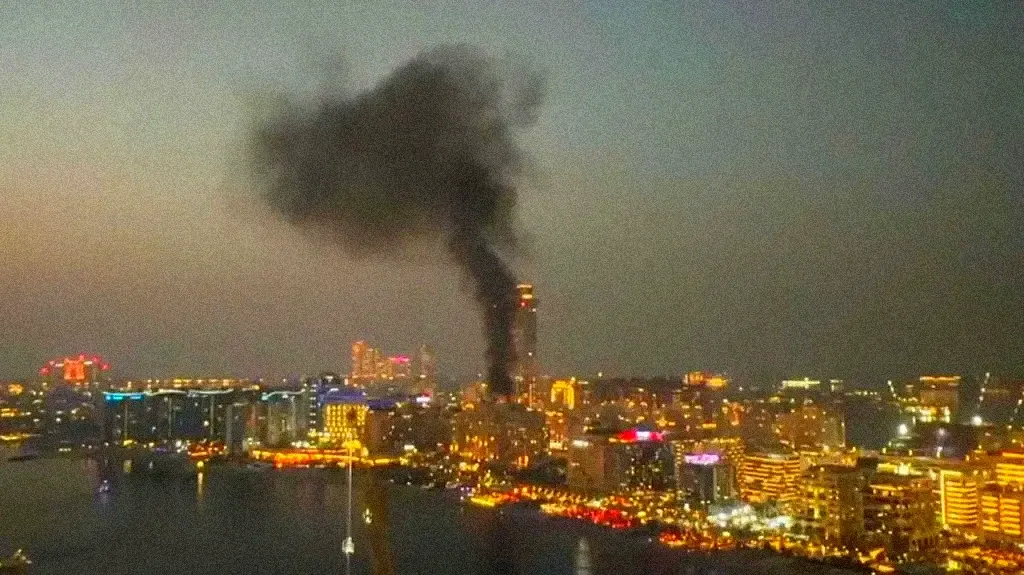
Dubai is considered one of the wealthiest, safest cities in the world. There are tens of thousands of Westerners who move to Dubai because it's clean, you don't pay any taxes, you make a lot of money, and there are great restaurants. This is really the economic model of Dubai. It's one of the Gulf Cooperation Council (GCC) countries. For the longest time, Dubai had a really good deal because they were under the protection of the American military, so they didn't have to pay for defense. They were in the Middle East, which is the oil-producing center of the world, and so they focused on aviation, logistics, finance, and tourism. They became extremely wealthy. I'm not sure if you've taken Emirates, one of the best airlines in the world. Their airport, Dubai International Airport, is the busiest in the world.
For the longest time, Dubai was flourishing under American protection. And Dubai said to the world, "Listen, we're like Switzerland. We're neutral. We don't want any involvement in any wars. We're here just to take care of our citizens, to make sure everyone has a good time and makes money."
Then, right after the war started, the Iranians attacked the GCC: Dubai, Abu Dhabi, Bahrain, Qatar, and Kuwait. These places were like, "What's going on? We're neutral, man. We're not involved in this war." The airport was shut down in Dubai. At one point, the rich people in Dubai were willing to pay about $250,000 US just to get on a plane and get out of there.
The reality is this: for the longest time, Dubai had a reputation for being safe, and that's why people moved their money there. After what the Iranians did, it's dead. Dubai as a city, in the long term, is dead. If you're a wealthy Westerner, you're not going to move to a place where it could be attacked at any time by the Iranians. You might move to Singapore, Hong Kong, Japan, or South America, but you're not moving to Dubai.
The big question for us is, why did Iran do this? It was the Israelis and Americans who attacked you. Why go after the GCC? Not only that, but they're escalating the attacks against the GCC. The short answer is because these places, even though they pretend to be neutral, house the American military. They allow the Israelis and Americans to use their airspace to attack Iran.
This is Bahrain.
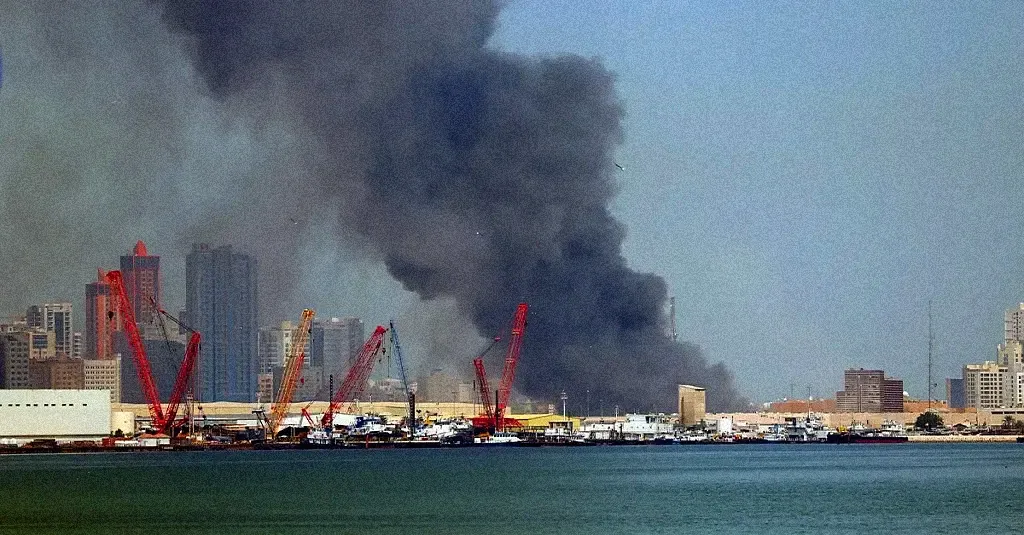
Bahrain is interesting and will probably be one of the major centers of this conflict. First of all, it is home to the American Fifth Fleet, their naval base in the Middle East. As you can see, the Iranians are attacking it with missiles, and it's being blown up. Bahrain is also interesting because about 50% or more of its population is Shia, the same religion as the Iranians, but the people in charge are Sunni.
What makes this strike really important from our perspective is that not only are the Iranians attacking US military assets and destroying the economies of the GCC, but they're also trying to ignite a religious war. If you're Shia, you're loyal to the Ayatollah. If he's dead, then you must, as a religious obligation, now commit Jihad against your enemies. It's no different in other religions; if you were to kill the Pope, the Catholics would be really angry and would want to kill you. So now you have the Shia in Bahrain who will probably eventually rise up, creating a revolution.
Bahrain will be the first to fall. Dubai will probably go bankrupt. But in the long term, we can expect the entire GCC area, including Saudi Arabia, to eventually collapse. This is something we will use game theory to understand.
The Geopolitical Chessboard: Geography is Destiny
We can know how this war develops just based on geography. This map, even if you don't know the war, the participants, or the weaponry, will tell you exactly how this war will progress.
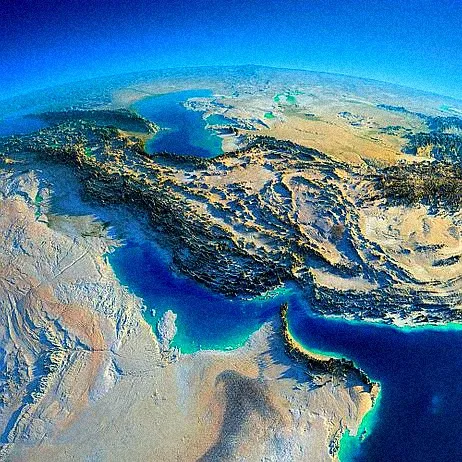
This area here, a really small strait about 33 kilometers wide—people can swim across it—is called the Strait of Hormuz. This small area is the center of the world. This one area is the nexus, the pivot of the world. Let me explain why.
First, from the GCC, you have 20% of all the world's oil flowing through this narrow strait. It goes to Asia: India, Pakistan, South Korea, China, and Japan.
- India depends on 60% of its oil from this area.
- China depends on 40%.
- Japan depends on 75%.
Prime Minister Kishida of Japan has said that if the Strait of Hormuz closes, they run out of oil in about eight to nine months. The entire Japanese economy would collapse. And guess what? The Iranians have closed the Strait of Hormuz. We can expect that the entire global economy will suffer greatly over the next few months.
Second, the GCC sends oil across the Strait, and what do they get back in return? Food.
People don't appreciate the GCC, but it is really the lynchpin of the American empire. The American empire is the petrodollar. The idea of the petrodollar is this: the US dollar is worth nothing; it's only valued when people want it. But the GCC says that if you want oil from us, you have to pay us in US dollars. That is the basis of the value of the US dollar. So if the GCC collapses, the American economy and the American empire both collapse at the same time.
The problem, though, is the GCC is an artificial construct of empire. It does not exist naturally. Why? Because there's no food and no water. These cities are able to grow into the millions because of all these petrodollars flowing in. If you close off the Strait of Hormuz, there's no food coming in. They're all going to starve. How much food does the GCC get from overseas? 80%. 80% of all the food it consumes comes from overseas that it imports. It does not grow it by itself.
The Strait of Hormuz is really key, and the Iranians will close it in order to strangle the global economy and therefore bankrupt the American empire.
The second thing you will notice is these mountains. These mountains are what we call Iran. This is the GCC. This is not a fair matchup. Because these are mountains, you can hide rocket bases, drone bases, and missiles. That's the entire Iranian offensive strategy. From here, they can hide missiles and drones from which to attack the GCC.
And what are they attacking? They're attacking three things:
- American military bases. Is it possible for the Americans to defend against these attacks? The answer is no. It's the silliest thing in the world. You have all these bases in the Middle East, but you cannot defend them against the Iranians.
- Oil and energy infrastructure. How hard is it to blow up an oil field with a drone? Not hard at all. Can you defend these oil fields? No, you cannot.
- Water. This is the most important. The GCC has little access to fresh water. The only way it can produce water is through what we call desalination plants—factories that take saltwater and, through an electrochemical process, turn it into fresh water. 60% of the water supply in the GCC comes from desalination plants. Is it hard to blow up a desalination plant using a drone? The answer is it's very easy.
You have this absurd situation where Iran is a mountain fortress where it can hide its offensive capacity, and the GCC is just this flat desert, exposed to attack with nothing it can do about it. At any point in this war, the Iranians can choose to just destroy the entire GCC, and there's nothing that anyone can do about it.
But Iran also has a weakness, and this is fundamental: Iran also has a water problem. For the longest time, they have suffered from a drought issue due to climate change. The plan of the Israelis and Americans is to destroy the water supply of the Iranians. The fortress is a mountain fortress, but it can also be a mountain prison where people are trapped inside with no access to water.
What we're going to see, and are already seeing, are attacks on civilian infrastructure and hospitals. In the future, you will see attacks on the water supply, on dams, on reservoirs, on power plants. The idea is to make Iran so uninhabitable that the people will have to rebel, or there will be a refugee crisis.
As you can see from this map, this war is the end of the world. Both sides have the potential to destroy each other. It's really a question of how far they want to go. We can also say this is almost a game of chicken.
We can blow each other up. How far do you want to go?
The problem is that the Iranians are Shia, who believe in martyrdom, and their religious leader has been killed. So they're willing to go very, very far. The GCC countries are Muslim, but they're materialistic. They love money. Also, most of the population are expatriates—foreigners. 90% of Dubai are foreigners. Guess what's going to happen if they suffer? They're going to run away. This is not a fair matchup.
The big questions that people have are:
- Are the Americans going to use ground troops? The only way you can defeat Iran is by using ground troops. Will America send half a million, two million soldiers to topple the government?
- Will nuclear weapons be used? If you're losing a war, would you choose to use nuclear weapons?
- Who else gets involved? This situation is so dire that Europe—specifically Germany, France, and Britain—are talking about entering this war. If that happens, it is possible that Russia and China will also enter this war on the side of the Iranians. This is World War III.
Because of the importance of the Strait of Hormuz and the Middle East, everyone has to get involved at some point. We're going to use game theory to really try to understand what's happening on the ground and where this could lead us.
The Illusion of Empire and Asymmetric Warfare
There are American bases all over the Middle East.
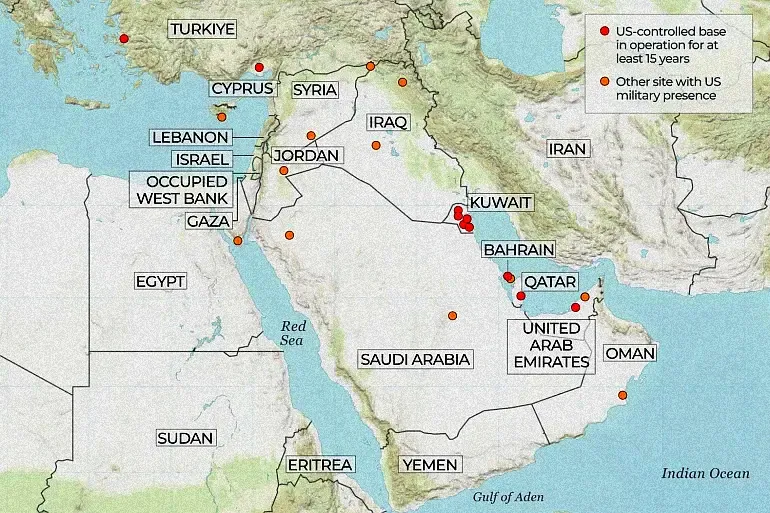
Originally, these bases were established to protect these nations from basically their own people. These are monarchies that were imposed on these nations by the Anglo-American Empire—the British first, and then the Americans came to support these monarchies. But as we just said, these American bases can't actually defend these people; they're exposed.
The reason is that the American military was built during the Cold War, a war between the Soviet Union and America. The Cold War was defined by something called MAD (Mutually Assured Destruction) because both had nuclear weapons. They didn't really go to war against each other. In other words, these bases aren't really meant to defend these nations from other enemies. They're really meant to impose American authority in the Middle East. It's the idea that an empire is really an image, a hallucination.
Empire is an aura of invincibility. If you fear it, then you obey it.
But it's not really designed to fight a war. And that's why we have this absurd situation. Because there are so many bases in the GCC, that gives the Iranians the perfect pretext to attack them in order to destroy the GCC economy, which will destroy the American empire.
This is how the war is shaping up.
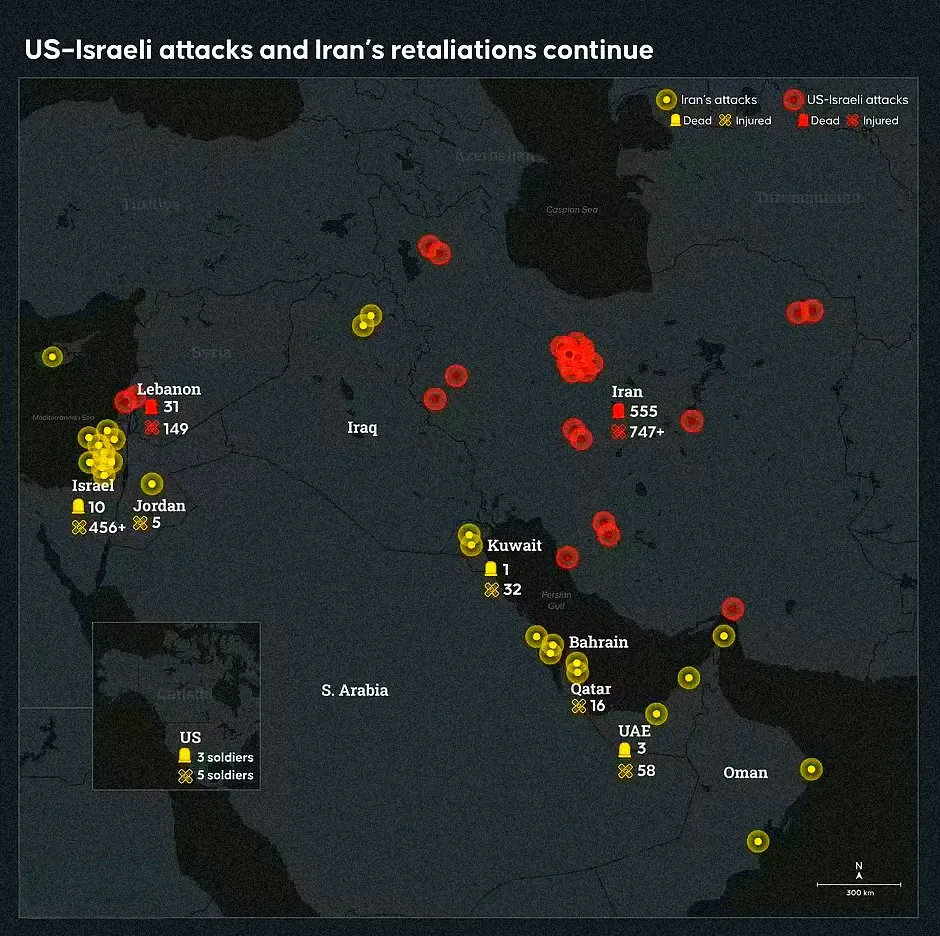
The red is the Israelis and the Americans. The yellow are the Iranians. As you can see, the Iranians are attacking everywhere, primarily Israel, but also with a lot of focus on Bahrain and Qatar. The intention is to destabilize the economy and the government, to try to get as much instability as possible. The Americans and the Israelis are focused on Tehran, using something we call "shock and awe." The very idea of shock and awe is you decapitate the enemy: you cut off the head, and the body will fall down.
The problem, though, is that the Iranians see this as a religious war and have announced total war. What this means is that command and control in Iran is decentralized. There's no one person telling everyone what to do. Every region has its own orders, its own strategy. So if you knock out Tehran, everyone else keeps on going. You knock off the head, it doesn't change anything.
Unfortunately, the Israelis and Americans use this as a military doctrine. Military doctrine just means how you design your military and for what purpose. Even though the Americans seem like an invincible army, they are not equipped to fight a 21st-century war against drones and religious fanatics. They're just not. But because of military doctrine, they're going to keep on attacking Tehran. The great irony of all this is that the Iranians who would be most supportive of regime change are actually in the cities because they are educated and progressive. The people who are most fundamentally against you and will fight you to the death are the religious fanatics, the Shia militants living in the rural areas. This is a really silly thing where you are actually destroying those who would most likely support you and leaving alone those who are most likely to commit Jihad against you.
The Concept of Asymmetry
Another idea to understand is asymmetry. Asymmetry means that the two sides are choosing to fight different wars using different techniques because one is much stronger than the other. America has a great empire, unlimited resources, the US dollar—it controls the world. Iran is a country that has been under economic sanctions for the past 45 years. It's poor, and its technology is very limited. But as we learn, those nations that are poor actually have more energy, are more open, and are more cohesive.
Let me give an example. This is what we call the Shahed drones.
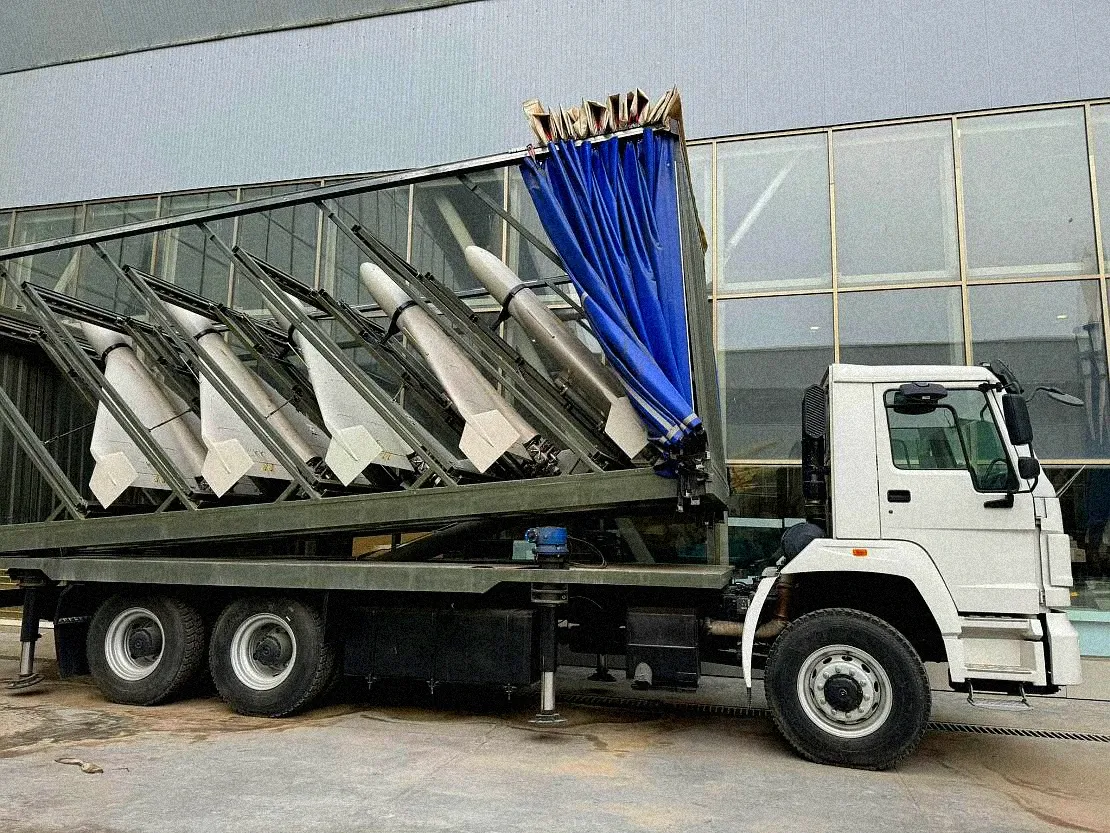
Each of these drones costs $50,000 at most; it can go as cheap as $35,000. As you can see, you can fit a lot of these drones onto a truck that can go anywhere in Iran and hide anywhere. These drones are cheap and easy to make. They make about 500 a day, and estimates are there are about 80,000 that the Iranians have right now. They can go on for a long, long time. One of these drones can knock out a desalination plant, an oil field, or a hotel. It can do a lot of damage, and it's easily transportable.
How do the Americans defend against this? They use something called a THAAD (Terminal High Altitude Area Defense) system.
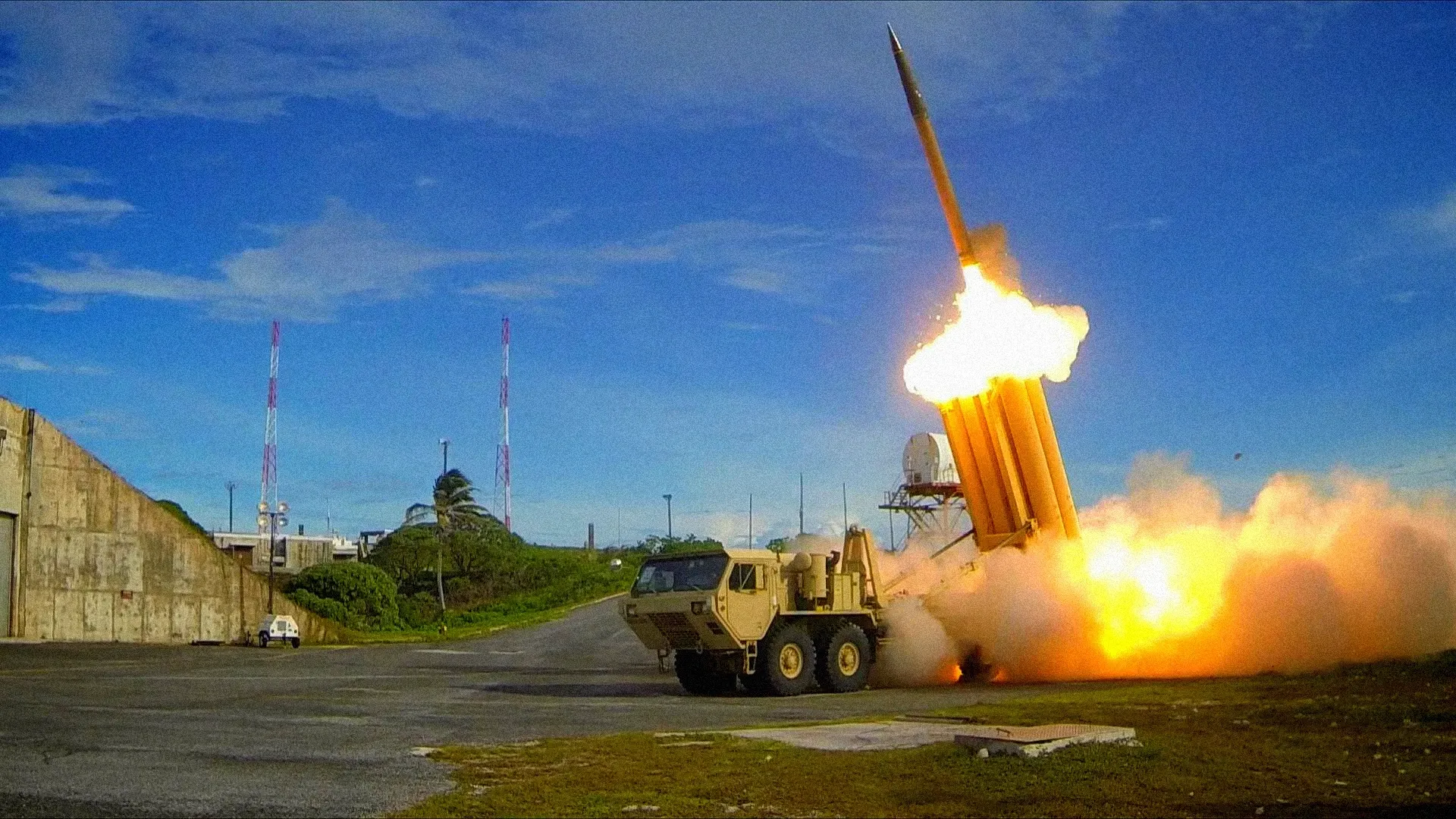
The thing you need to know about this system is it's really expensive. This missile costs $1 million. So, there's this $50,000 drone coming your way, and you throw a million-dollar missile at it. Often, these missiles miss, so you have to throw two or three missiles at it. You're spending two to three million dollars on each $50,000 drone. That's kind of silly.
Second, this thing is really big and really slow, so you can't really move it around. Therefore, it's pretty easy for the Iranians to spot where this is and attack it. When these things blow up, that's a lot of money.
You might ask, "But this makes no sense. The Iranians have had drones for 10 years. We've also seen drones used in the Russia-Ukraine war to devastating effect. Why don't the Americans know this? Why didn't they prepare?" Again, it has to do with military doctrine. The Americans are used to fighting the Cold War. In the Cold War, you couldn't actually fight because then people would use nuclear weapons. The Cold War was about flexing.
You see how big and powerful I am?
That's all it was. These weapon systems are designed to scare the crap out of you. They are designed to impress you, and as a result, they cost a lot of money and don't do anything. That's the entire American military. It costs a lot, it doesn't really do anything, and it's not resilient, innovative, or open. Also, the American military is corrupt. This is really about corruption. They don't really care about winning a war; what they care about is spending as much money as possible because then they get a cut.
The War Over Water
Something that people don't really talk about, but you need to understand, is the water issue in the GCC, the Middle East, and Iran. This is a map of the world showing water stress. 100% water stress just means that you drink as much water as the environment produces. You want to be below 100% to be sustainable; ideally, you want to be at 10%. If it goes above 100%, it means you are using more water than the environment actually produces.
So, 200% is really bad. Guess what? Look at the Middle East.
Water is a huge issue. It doesn't matter if Iran kills American soldiers or destroys American military assets. It doesn't have to do that. All it has to do is destroy the desalination plants, and then the GCC is destroyed.
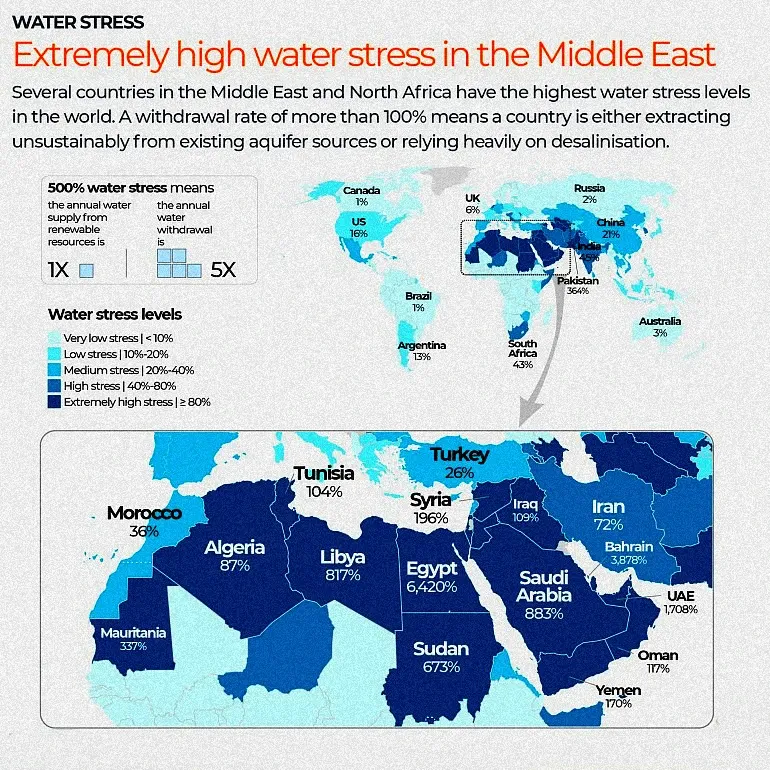
But it's also true that Iran has water issues. 72% is pretty bad. So even though the Iranians could destroy the GCC much faster than the Americans could destroy Iran, Iran is still in trouble.
Let me give you an example of this. This is Lake Urmia in northern Iran. It's the sixth-largest saltwater lake in the world, or it used to be. This is what it was in 1984.
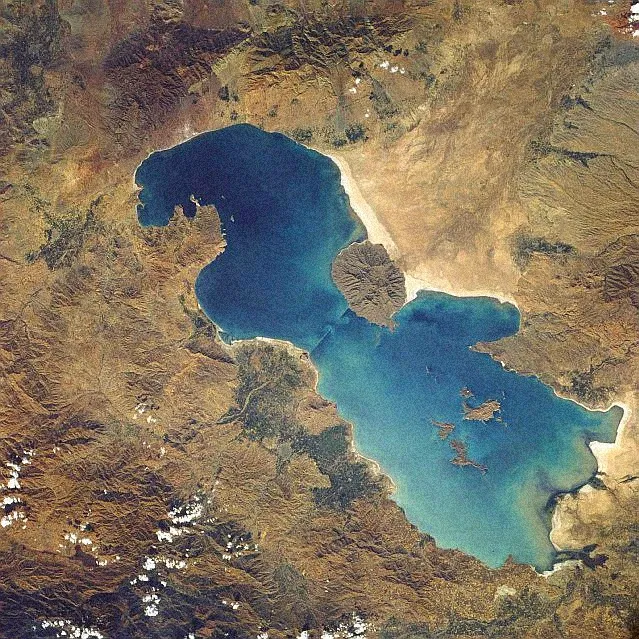
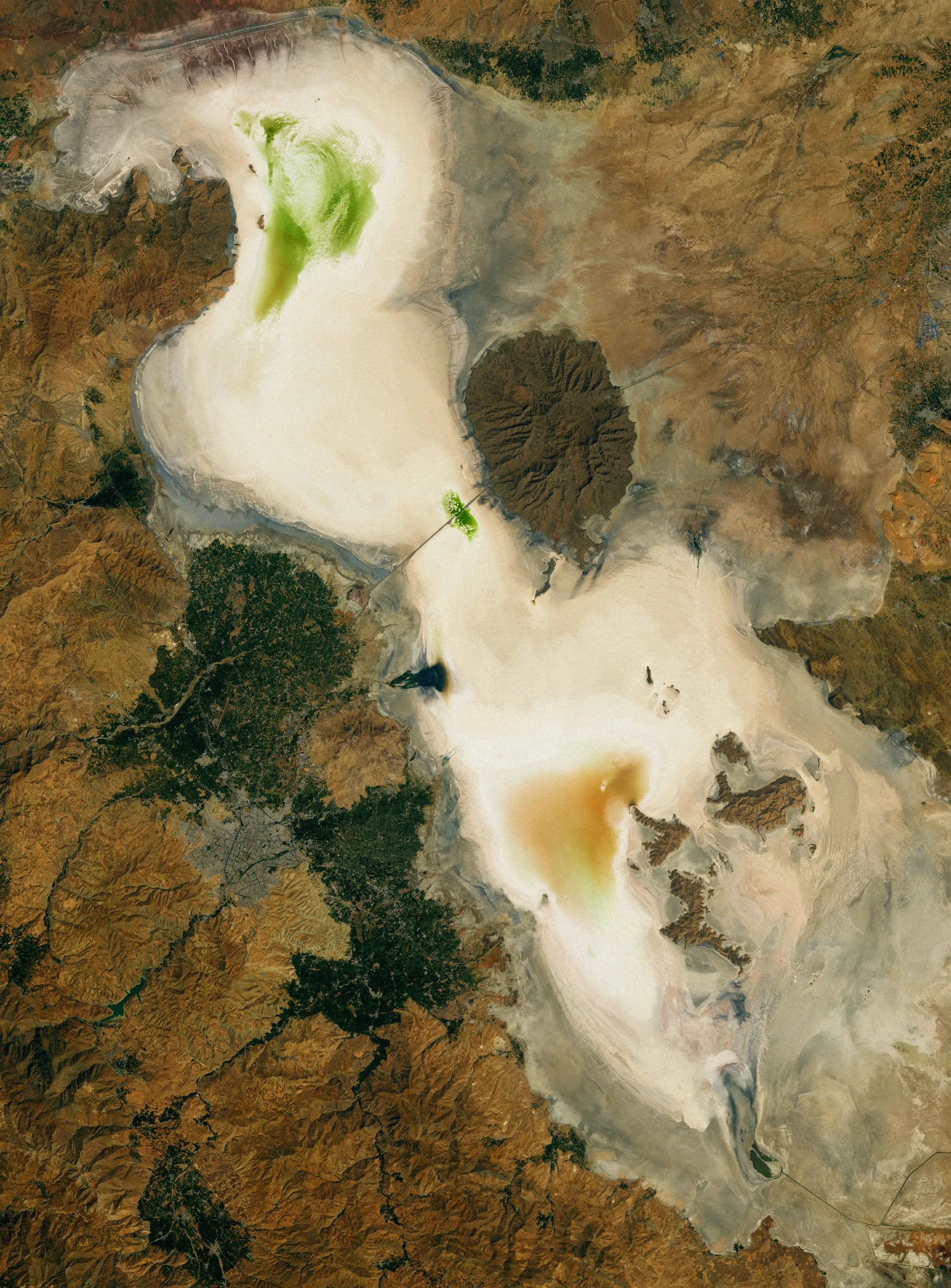
Twenty years later, this is what it looks like. There's no more water here. You can walk from one side to the other. There's some water over here, but it's shallow now. That's how serious the water issue is in Iran, and that's the weak point that the Americans and the Israelis will attack. They want to make sure that Iran has no access to fresh water, which will cause devastation in their nation.
Grand Strategies: Balkanization vs. Pax Islamica
That's strategy number one for the US and Israel. Strategy number two is this. This is a map of the different ethnic minorities in Iran.
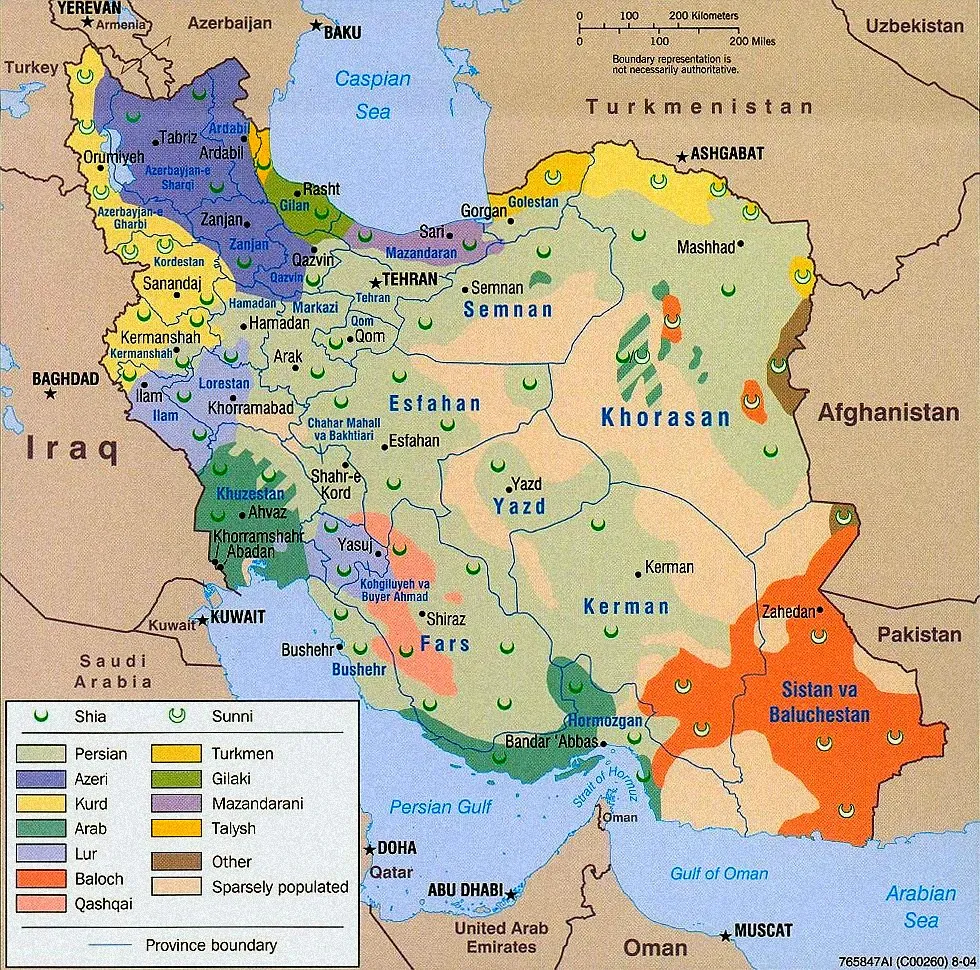
As you can see, it's a very diverse place. In the center are the Persians, but you also have 10 other groups as well. In the borderlands, it's basically a different country. These places have more in common with their neighbors than they do with Iran.
The second weakness of Iran, after water, is the ethnic makeup of the country. The strategy of the Americans and the Israelis moving forward is to destroy Iran as a coherent nation-state, divide it into ethnic enclaves, and have them fight over water. That is the grand plan.
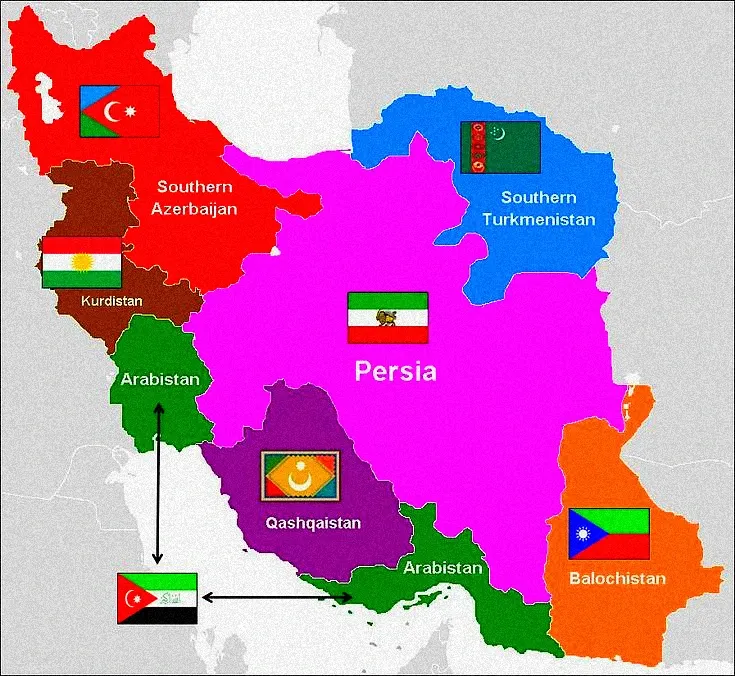
This is the vision where Persia is limited, and all these other places are sponsored by the Americans and the Israelis. They're given money, weapons, and political support. And then this war will wage over water forever. This is how you destroy Iran and make sure it is no longer a viable threat. It's a pretty evil plan, and that's why they have not announced it. If you announce it, people will ask, "Why are you doing this? What did the Persians ever do to you to warrant you destroying their civilization?" And the answer is nothing. The Americans will never admit they're doing this, but if you look at the map of water supply and ethnic tensions, this is the optimal game theory strategy for them to use against Iran.
How can the Iranians respond to this? The answer is this. This is a map of the Muslim world.
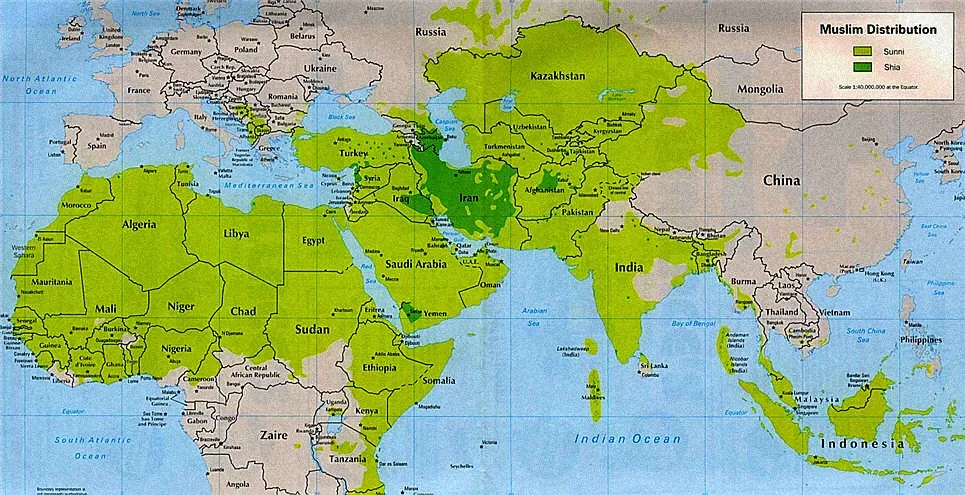
The light green are the Sunni people, which is 90% of the entire Muslim population of about two billion people. In dark green are the Shia. The main place for the Shia is Iran, one of the few Shia nations in the world. But you can also see from this map that Shia are spread throughout the world.
The first thing the Iranians want to do is create a Jihad to unite all the Shia against the American Empire. They want to create an uprising, and it's already happening. The Shia in Pakistan stormed the American embassy, and the Americans killed a lot of people. The Shia have attacked the American embassy in Iraq. American embassies are being attacked in a lot of places. The first strategy is to create an international, global Jihad of the Shia against the American empire, and it will continue for a long, long time because the Americans have killed Khamenei, and that requires vengeance.
The other thing, though, is that it can unify the Muslim world. If you look at this map, most of the Muslim world is actually run by unpopular dictatorships. They're allowed to exist because they're clients of the American Empire—Saudi Arabia, Egypt, Algeria. If you rally the people who hate their governments and you overthrow them, then that makes Iran the leader of not just the Shia world, but the entire Islamic world. This creates something called Pax Islamica. That is the end goal. If you do that, then you don't have to worry about the Americans and the Israelis anymore.
The Israeli-American game plan is to fracture Iran into ethnic enclaves that will fight over water for the rest of their lives and die. The Iranian game plan is to create a religious war, a crusade that unifies the Shia people, overthrows the American Empire, and establishes a Pax Islamica.
The key is the GCC. The game plan is this: you have to destroy the GCC because the GCC is the lynchpin of the American Empire. The GCC sells oil for US dollars. Where does it put those US dollars? It puts them into the American stock market.
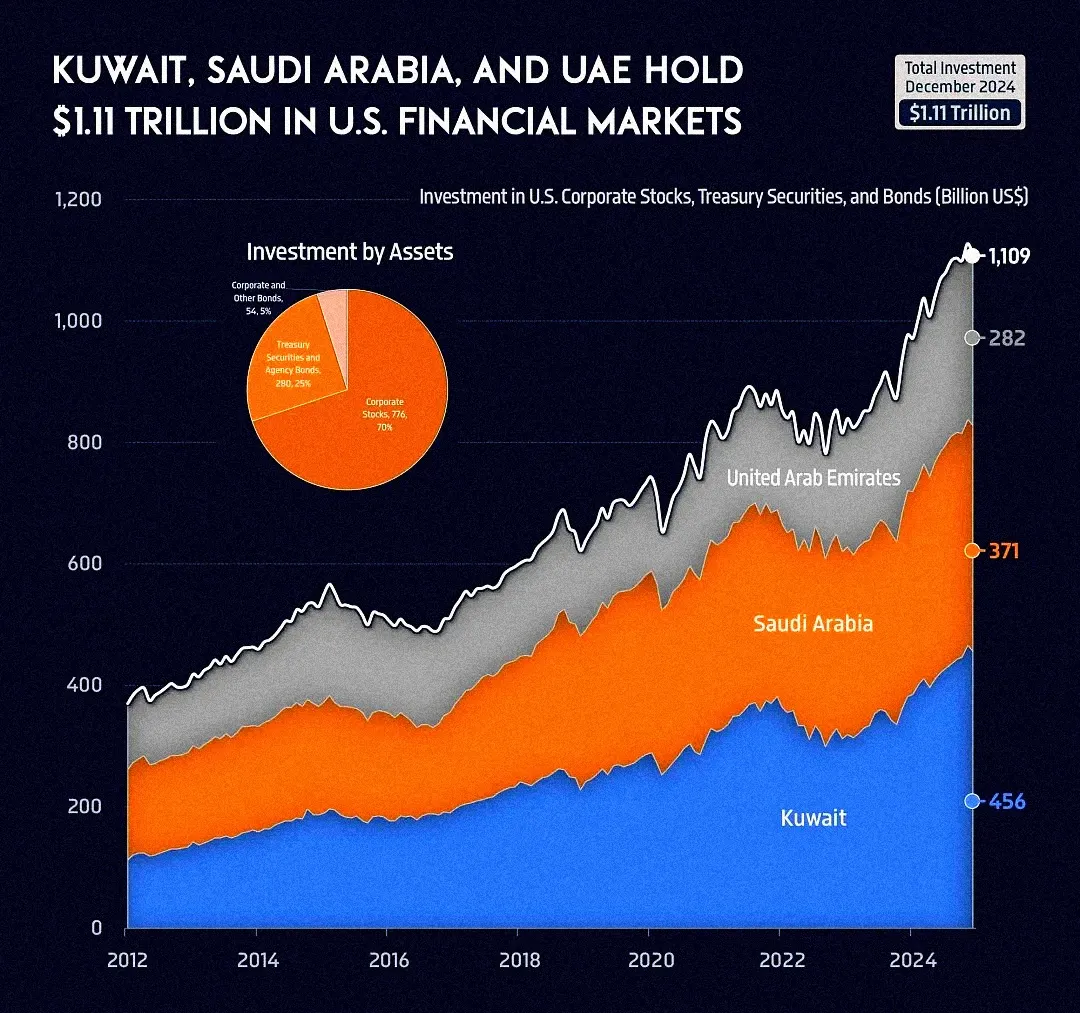
This shows the investments of the UAE, Saudi Arabia, and Kuwait into the US financial markets. As you can see, from 2012 up to today, it's been exploding because the US financial market is one of the safest places you can put your money. The intention is this: if Iran cuts off oil and these countries no longer have access to US dollars, they're forced to spend whatever resources they have on protecting themselves. Then guess what happens? The stock market collapses. The stock market is the real growth engine of the US economy, so the entire US economy collapses with it.
There are about seven companies in America that account for about a quarter of stock market growth. These seven companies, of course, are AI companies: Nvidia, Microsoft, Google, Apple. These companies are heavily invested in by the GCC nations. If these nations are no longer able to invest in the stock market, these companies will collapse in value, and with that, it would lead to an economic depression in America.
That is the situation for today. This was just an overview. Over the next few weeks, we will explore each issue in depth and really understand what's going on.
What brings other countries into this conflict?
A great question is what brings the rest of the world into this conflict. The easy answer is energy access. They need to protect their energy supplies. It's a very complicated situation because Europe is now fighting Russia, so Europe is not buying any energy resources from Russia. Therefore, it depends a lot on the GCC. If the GCC is not providing them energy, then Europe will go bankrupt. So Europe needs to enter this war on behalf of the Americans.
Then you have Russia, which cannot allow Iran to fall because if Iran falls, they'll come after Russia next. China is actually neutral; China's okay with either scenario, but that's just the way the Chinese system is set up.
Each nation will have its own different strategic interests to consider. What we need to figure out is that this war in the Middle East is actually connected to the Ukraine war. As we move along, I'll show you how these two things connect.