Secret History #11: Dawn of the Human Imagination
Today we start a series on the entirety of human history. We'll be going very fast, and what's important is for you to understand the concepts. If there are ideas you don't understand, it's very important that you challenge me and ask for clarification.
We start off with the dawn of humanity.
Charles Darwin is the most influential thinker of the past 200 years. The reason why is he wrote a book called The Origin of Species, and he presents to us the theory of evolution. You all know the theory of evolution because they teach this to you in school, and it is embedded in our everyday lives.
There are three main ideas to the theory of evolution.
- The first is that it was all accidental. You have these genetic mutations, and the mutation that is best fitted to survive in an environment would win out. It's all a random, accidental process.
- The second thing is that it is materialistic, meaning everything that you can see is all that exists.
- The third thing is it is emergent, meaning that things build on top of each other. It is a bottom-up process.
The theory of evolution marked a turning point in human history. Before Darwin, European countries were Christian, and Christians believed that there was a divine God who created us. As such, we were all equal before the eyes of God. Therefore, you cannot go and enslave other people; you cannot go and kill other people.
There were three main ideas to Christianity. The first idea is one omniscient and omnipresent God. The Holy Spirit is what infuses life; it's what gives meaning and purpose to life. The world is a mystery, and we have to hold faith. There are things that we cannot understand. God has a plan, but it is a mysterious plan, and so we must be humble and serve the purpose of God. The theory of evolution destroys this conception of the universe and introduces a more materialistic one.
So why did this happen? It happened for three reasons. The main reason is that in the 19th century, when Darwinism came into being, Europeans were engaged in a process of imperialism. They were going around the world conquering other people, colonizing other people, and essentially committing genocide. They needed a theory to explain why this was happening, and Darwin's theory of survival of the fittest was the most appropriate theory. The idea is that the world is divided into races, and the white race is superior to everyone else; therefore, the white race has legitimacy in colonizing other people.
Evolution would give rise to racism and eugenics. Before Darwinism, we didn't really have a concept of race because everyone was equal in the eyes of God. Now, with the rise of Darwinism, the world is divided according to race. Because of evolutionary theory, people started to believe in eugenics, which is the idea that "stupid people"—people who are not white—should be sterilized because if we let them live, all they would do is dilute the genetic pool. Even today, there are still many people who believe in racism and eugenics.
The thing about evolution that's very important is that it's a theology. What does that mean? It means that it's a theory of human progress about God. So even though evolution thinks that genetic mutation is an accident, the theology is that the strong survive, and that's what's right. Might makes right. In many ways, evolution is a rejection of Christianity.
You would think that Christians would oppose Darwinism and evolutionary theory. But what was surprising is that when the book came out in 1859, within only 20 years, the theory of evolution would come to dominate the entire Western world. It became the dominant idea in schools, in universities, in the sciences. And even today, evolution is a dominant paradigm, meaning that you cannot question evolution. If you question evolution, it means you're crazy. But I'm crazy, so we're going to question evolution today.
Questioning the Evolutionary Narrative
You've heard this in school: evolution means we came from monkeys and apes, and then there were different species of humans, and eventually, our species, the Homo sapiens, won out. What evolution says is that we are just a monkey. And what do monkeys do? Monkeys like to have sex, monkeys like to eat, monkeys like to fart. That's all we are. We're just monkeys.
But there are certain problems with this theory. The first problem is, if you look at evolutionary theory, what you should have is tremendous diversity as the species develops. So why is it that we only have one human species? Why aren't there many different ones? The argument is that there were many different species before, but we won out. Okay, that's fine.
But another problem is, why are we going all around the world? All species of human beings like to migrate, but primates don't do that. Why is that? Humans like to migrate. The explanation often is because of climate change, because of war, because humans are chasing game—bison and food. But then how do you explain these people?
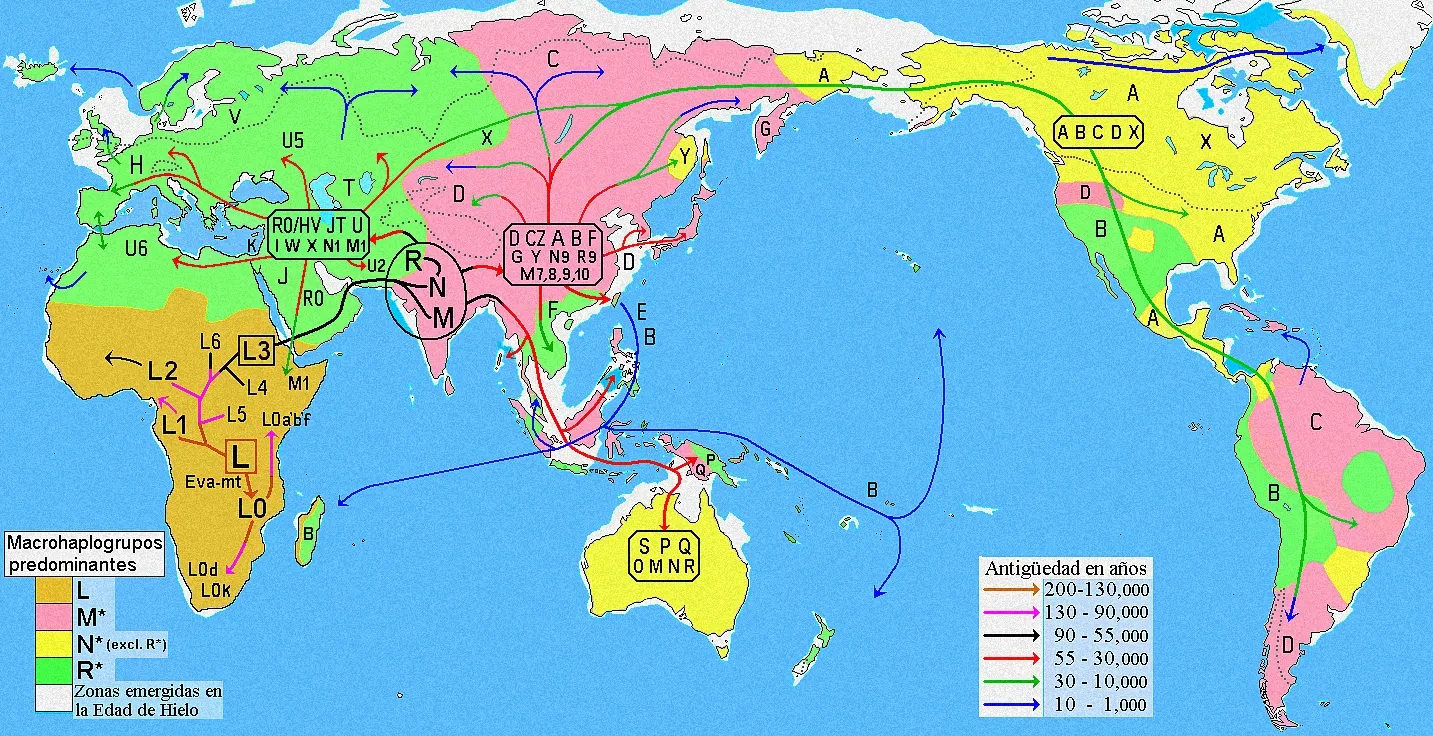
These are people who went to populate the Pacific islands, Micronesia. That's kind of weird. First of all, it's really dangerous to go out on the Pacific for months and months. Also, how did they know that there would be islands waiting for them in the Pacific? That's something that's very odd about human beings.
In fact, there are lots of things that are really odd about us that other animals don't do. For example, we're very religious. The Neanderthals are supposed to be before Homo sapiens, but what we've discovered are these religious ritual sites where Neanderthals engaged in religious ritual practice. That's kind of weird. What does religion have to do with survival? In fact, you can argue that religion is a waste of time. Why aren't they hunting? Why are they using so much resources and time in building these ritual sites?
Homo sapiens did cave paintings, and these cave paintings,are extremely elaborate. It's very time-consuming to actually do these paintings. Also, these paintings are deep inside caves that are very cold and where there isn't much air. So it's kind of dangerous to be in these places. But we know that Homo sapiens spent a lot of time in these deep, wet caves drawing these paintings. That's not very utilitarian. Why would we do that? That's a mystery.
Also, when we drew on caves, we figured out how to make it artistic. We figured out that red ochre would give us red and yellow pigment on the caves. We also used charcoal for black. We were very creative and resourceful.
We know a lot about the Ice Age because, as you can imagine, during the Ice Age, things freeze over, so they can be easily preserved. And actually, for most of human history, we were in the Ice Age period.
During the Ice Age, the entire world was basically frozen over. So how did we survive? We survived by using the resources around us.
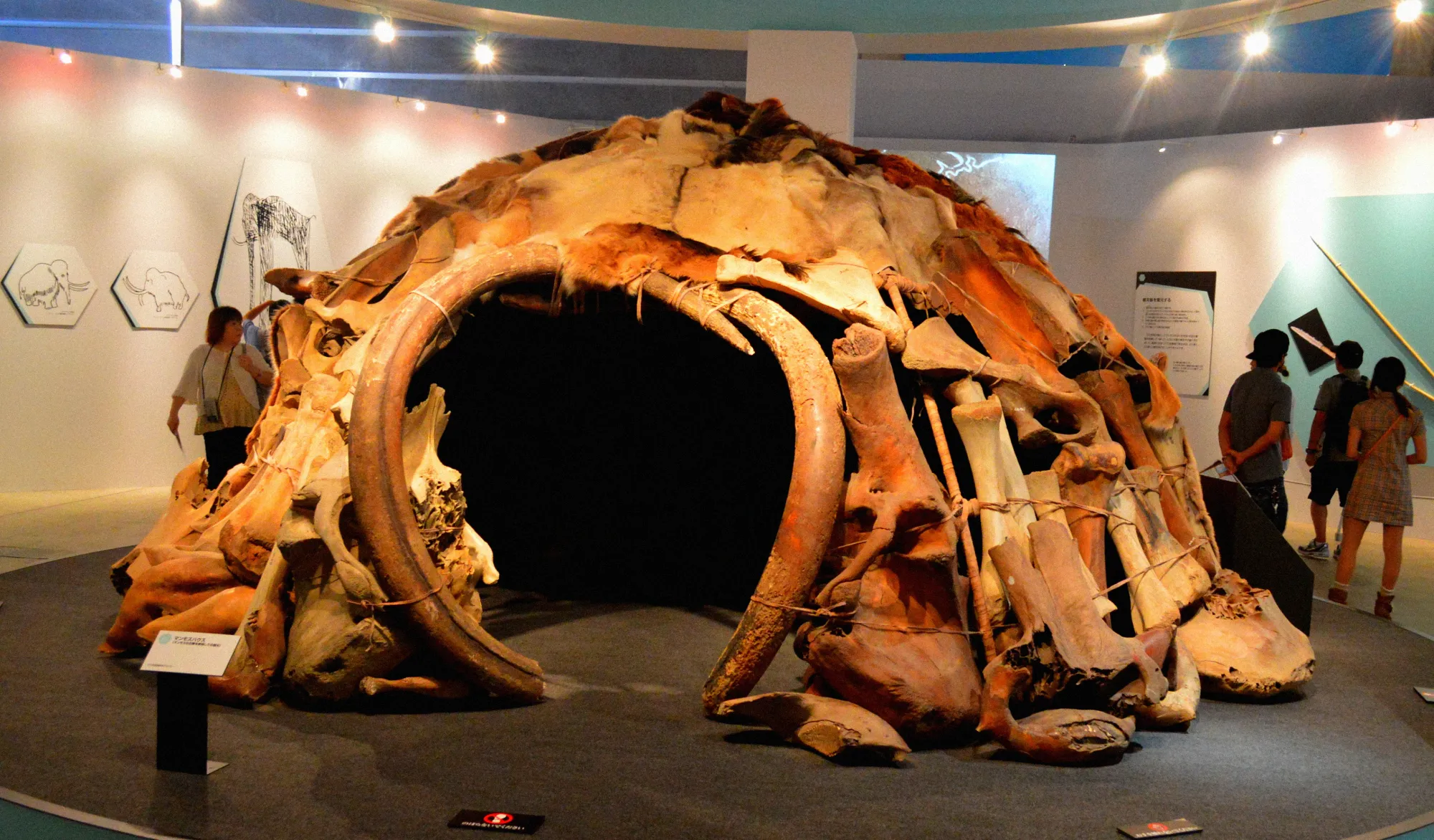
This is a mammoth, and so they killed a mammoth and they turned the mammoth into a house. Now the question is, how did they know how to do that? How did they figure it out? We've been trying for a long time to figure this out, but my answer to you—and this is a theme that I will keep on emphasizing—is they just knew it.
The Power of Intuition and Empathy
Let's do a thought experiment. Let's just say that there are 10 of us, and I give you this wall. I say to you, "You cannot talk. You cannot communicate with each other. All I want you to do is draw a picture." Now, you would think that the picture would be disgustingly ugly; it would be incoherent. But if you were to actually do this experiment, something weird and wonderful would happen. There are 10 of you, you're not communicating, you don't have a plan, there's no draft, but one of you would draw something. And then the rest of you would see that something, and then you would draw something else. For example, maybe you draw a sun, then another person draws a tree, then another person draws a mountain. It's almost like telepathy.
And that's how we are. If you put humans in a group, they would know instantly how to work together. They would know how to share ideas together. All this is because of intuition. No one said, "Hey, there's a mammoth. Let's go kill it for food and for housing and for clothing." But if you walked together and you saw a mammoth, all of you together had the same thought: "Oh, that could be a source of food and clothing and shelter for us." And you all knew how to work together. That's the beauty of the human imagination and human empathy. That's something that they practiced a lot back then, but we've lost because of civilization.
Back then, humans were just very good at working together. You didn't need to have a boss to say, "Okay, you should go and hunt bison. You should go and make clothes. You should go and feed kids." Everyone knew exactly what to do, and you didn't have to communicate.
What's also really interesting about this time period is the diversity of human organization. What I mean by that is that in different times of the year, in different locations, humans would form different organizations. Most of the time, maybe there would be groups of five to 10 who would go and get food. But then you have some times of the year when you have these religious festivals where hundreds, possibly thousands, got together and you celebrated your god together. It was all intuitive. You didn't have communication, but they all knew at what time what organization would best fit them. If you didn't like the situation, guess what? You'd go somewhere else and start your own organization. Early human history was a very diverse, very dynamic, very creative period in our lives, even though we've forgotten about it.
The Language of Cave Paintings
The third example of our creativity are these cave paintings that were discovered recently but which date back 30,000-40,000 years.
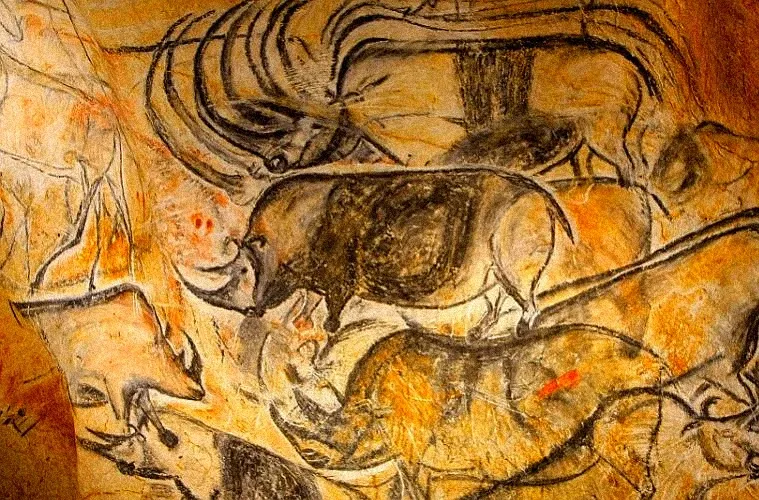
You can see how beautiful these paintings are. Whoever painted these put a lot of care and devotion into them. It's not just kids playing; it's adults who spent a long time purposefully ensuring that every detail is exact. The question then is, how did they do this? Because there's no paper, there's no planning. And again, I present to you the idea of the imagination. They dreamt this. They had a dream, they saw the picture in their heads, and they went and drew this in a cave because they wanted to express themselves. They wanted to leave a legacy, a memory. There's a calling in you to be creative and to be imaginative.
This is a story, right? You have these horses, but then you have these predators, lions. This picture is telling a mythology; it's telling a story of how nature works. People were observing nature, and what they see is a cycle of life and death, of destruction and renewal. We're all together, we're all unified, we're all one. It's balance and harmony.
That's why if you were to kill these animals, you also had to commemorate them. This is a world of balance and harmony. If you kill these animals and you eat their food, you must thank them for the sacrifice by commemorating them. It's the same thing as later on when humans fight in battles, we build monuments to celebrate those who have fallen, because we want to create balance and harmony in the world. We want to commemorate those who made our lives possible. In this world, what matters are these animals because these animals are what give humans food and clothing.
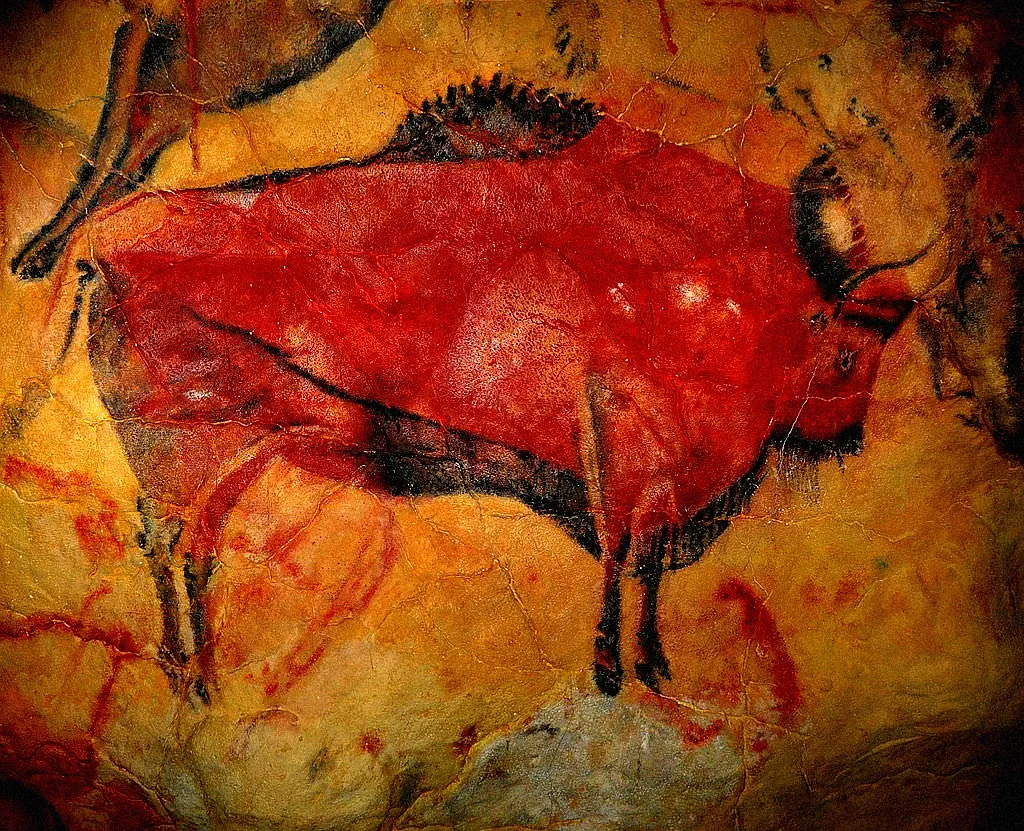
This is in Spain, in Altamira. This is a bison, and you can see the red ochre, how beautiful it is. It's not meant to be realistic; it's meant to be surreal, almost a mythology. There's a story being told in these pictures. We don't know what the story is, but you can imagine that there's a story of life and death, destruction and renewal, and the struggle of humanity to get food from nature, but also a willingness to celebrate those who have fallen.
There's religious significance to everything in these cave paintings. How do we know? Because this is clearly a shaman.
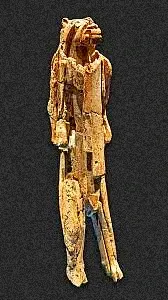
This is what we call the Lion-man. This dates back 40,000 years in Germany. We believe that in early societies, the shamans were the leaders because they had the most wisdom, because they had a connection to the divine.
Also, what's really important is music. This instrument was really important to these civilizations. There's a lot of mystery as to how we first spoke, and as I said, we don't really need to speak because we can all understand each other. So why do we speak? Because we want to sing. Singing, creating music, was a way to express ourselves in the same way as painting was. And music, once you add words, becomes storytelling. That's why we created language—not for economic reasons, not in order to create a hierarchy, but for creative reasons, to celebrate our humanity together.
These pictures have religious elements. You can see two almost bird-like figures, and back then, the bird signified Mother Earth. The bird figure is very important. You can see the bird figures are almost leading the animals, herding them across.
So then ask yourself, why are these paintings appearing in caves? For these people, they all believed that nature was connected, and the spirit world and material world were connected together. The question then is, how does the spirit world connect with the material world? Through caves, through portals—rivers, caves, mountaintops. That's why these places were considered appropriate sites for religious ritual. You painted these pictures in caves because it's almost like you're summoning the spirit of these animals to return. You've killed these animals; how do you get them to return? By calling for them in these caves. As you can see, it's a complex but complete mythology of how the world works. And for them, this was very real.
These shamans would actually turn themselves into these beasts in order to better communicate with them, because these animals—these bison—were the basis for all life on Earth. If you didn't have them, then you would die off. So you dressed up like them in order to better communicate with them in the spirit world to draw them back.
There are always three questions associated with these cave paintings:
- How are they painting in caves? They're painted together, using red ochre and charcoal. What's most important is that because these caves actually lack oxygen, when they're painting, it's almost like they're in a trance state. Because you don't have enough air to breathe, you're on the precipice, the edge of life and death. It's almost as though you are actually communicating with the spirit world as you're doing this. It's all divine inspiration, all divine intuition. What they believed is that when they paint, they're channeling the power of the spirit world. It's not about us using our experience to paint; we are channeling the divine when we do so. The same thing happens when we sing or when we tell stories. We're not doing this out of our own will; we are only a portal or a mechanism or a channel for the divine to communicate with everyone else.
- What are they painting? They're painting the story of life itself. They're trying to paint a picture of how life works: a cycle of death and life, destruction and renewal, and everything's connected together.
- Where and why are they doing this? They're doing this in caves because caves are portals into the spirit world. They're trying to complete the cycle of life and death. If you kill an animal, you have to thank the animal by making a religious ritual.
The First Writing System
The other thing that's really interesting about these cave paintings is that we find symbols inside them. This is Genevieve von Petzinger, a Canadian archaeologist, and she spent decades going to different caves in Europe and cataloged all the different symbols.
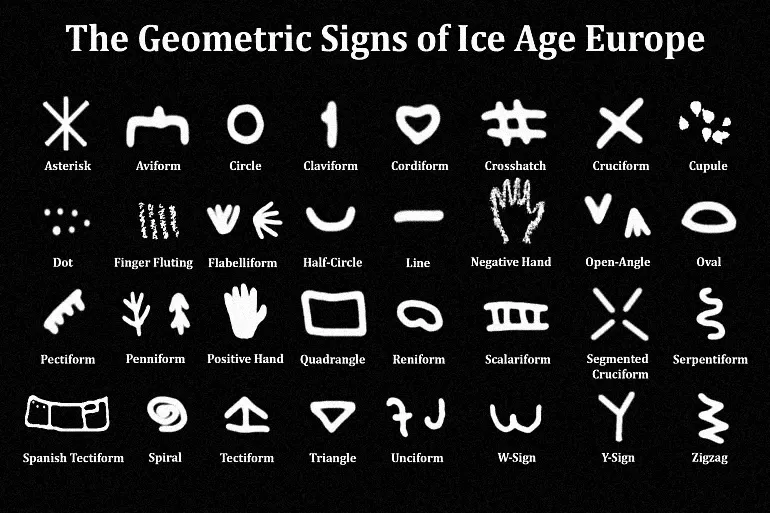
These are not pictures; they're symbols. And as you can see, there's a lot of them. Why would they have these symbols? What's interesting is, if you think about it, this is a writing system. In other words, they had the capacity to write, but they chose not to. Why?
Because if you think about it, in this world, writing is a corruption. When you speak, you're channeling the divine. So when you are writing something down, you're actually counterfeiting the divine. Also, remember that for them, talking is really like singing, and you cannot capture music in the written form. It's almost like a corruption of the song. And for them, this is really important: everything is meant to be a communal experience. When you sing, when you talk, when you paint, we do it together. But when you write, it's a solitary experience. That's why even though we humans, from a very early time, had the capacity to write, we chose not to. This is really important for us to understand. Writing was a conscious decision not to do something; it was not a technology that was invented later on. We just chose not to do it because we thought it was a corruption of the natural world.
These are all the geometric signs of Ice Age Europe. It's very similar to alchemy, which is trying to figure out the secrets of the universe. The question then is, where did they get these signs? And the answer, of course, is it came to them in a dream, or they were inspired with these signs. This is a world of inspiration, of intuition, of imagination. It's not something that's deliberate. They don't plan this out and discuss it; it just comes to them, and when they draw it out, it makes sense to people.
Why are there symbols in art?
- To express abstractions. There are certain concepts you cannot draw out, like energy, life force, cycle, or repetition. You have to use symbols in order to express these ideas if you want to tell the story.
- To visualize the spirit world. The spirit world is talking to you, but it comes to you in images. So you use symbols in order to express what they're talking about.
- To make things sacred. When you draw the symbols on a stone, you're making the stone divine and sacred. You're storing a memory inside the stone. Maybe something wonderful happened here; maybe you gave birth to a child here. Then you commemorate the stone with a symbol.
Why are they doing this? First of all, they're trying to bring beauty to the world. That's why we humans were created: to make this world a more beautiful place, a more imaginative place, to celebrate the divine. We're showing God or the spirit world the underlying soul of reality. We're trying to figure out how the spirit world works inside our reality. The third reason is we're trying to tell a story about who we are. We're trying to combine our imagination together to create society, to create belonging, to create community.
Are we trying to connect with the divine?
This is really important. We're not trying to connect with the divine spirit. Why? Because the divine spirit is all around us. We coexist with the divine. Everything around us is divine. What we're trying to do is be in harmony with the divine. In this world, there's no separation between the material and the spiritual; it's all one world together. The spiritual is all around us. But there are certain things that we do in order to reconcile our existence with the spirit world. For example, if we kill an animal, we need to commemorate the animal through paintings and through songs.
We still do this today. This is graffiti, street art.
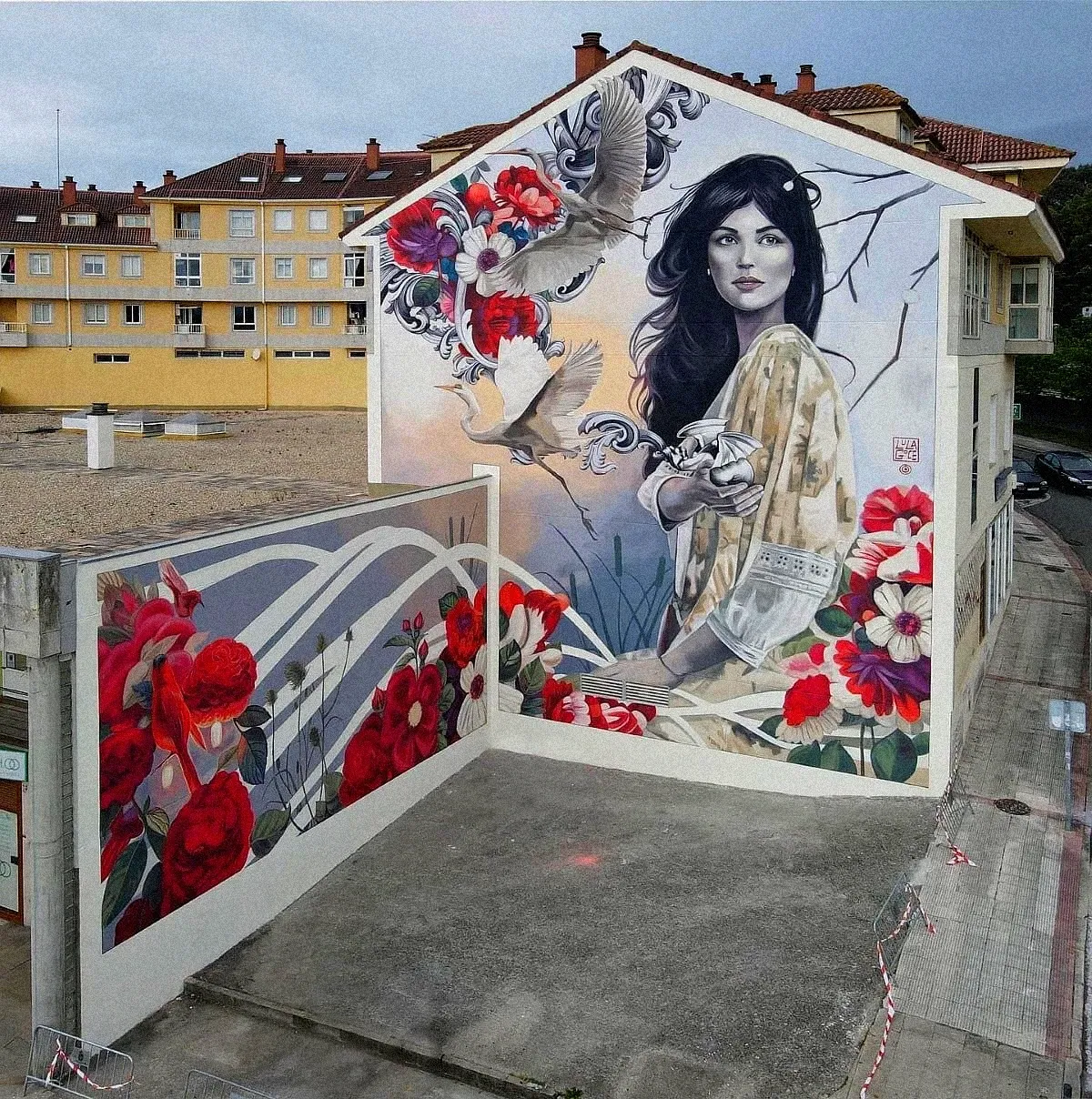
This is in Spain, and you can see how beautiful this is. It's the same concept as the cave paintings, where we're trying to give meaning to our community. We're trying to tell a story of who we are, where we came from, and where we're going. It's designed to build a common imagination. No different from the cave paintings.
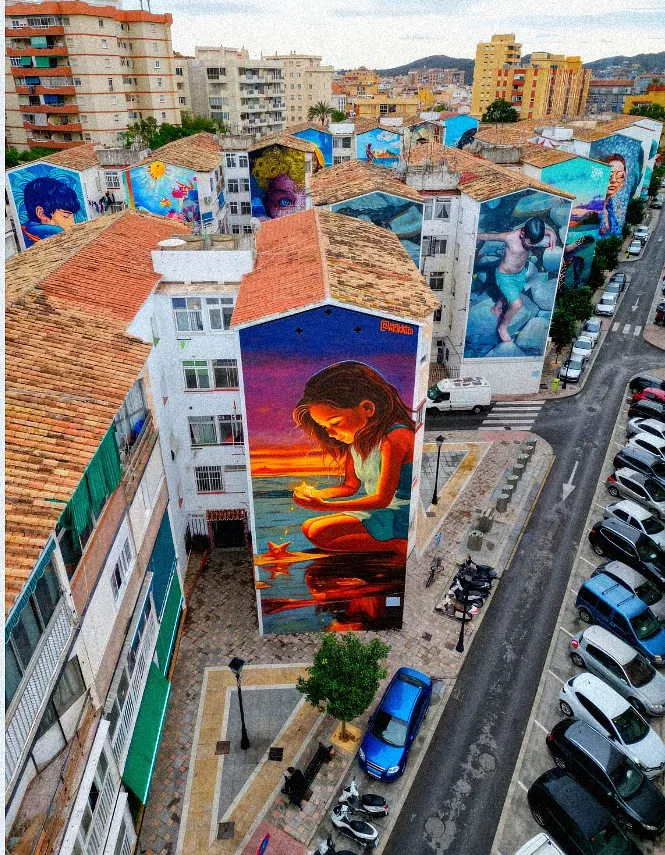
You can see different communities might have a different focus, but the painting unifies the imagination of the people. For this community, what matters is the family. The matriarch, the mother, is the cornerstone of this community, and that's what you do with this painting. You can see how beautiful these buildings have become because of the paintings. That's what art does. Art gives purpose and meaning to our world.
Core Concepts for a New History
There are some really important concepts I need you to understand, and they are going to be counterintuitive for us. The first concept is that pre-literate people—people who could not read and write—were more intuitive, more imaginative, and more empathic. I can know your emotions right away. I don't have to ask you anything. I don't have to ask you how you're feeling today; I know exactly how you're feeling right away.
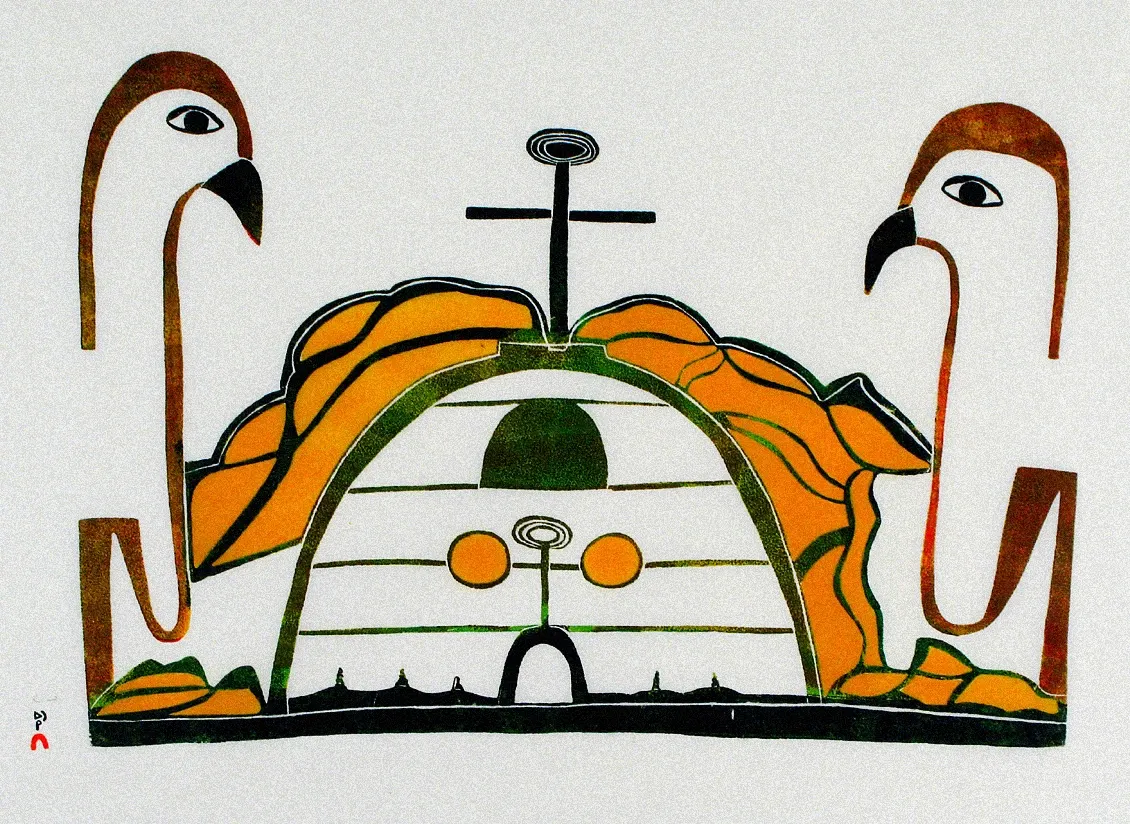
This is Inuit art by native people. Even in communities of today that have held to this tradition, you can see how they perceive the world. They perceive the world as unified. The gods are with us. In fact, everything we do is a celebration of the gods. Our house is our temple. The temple is not a place you go to celebrate the gods; you celebrate the gods in your house, if you have enough faith to turn your house into a temple.
If you go to many native communities that maintain the traditions of the Ice Age, they're all like this in their perception. But the problem is they cannot communicate it using modern language, so we just think they're stupid. They can't write essays, they can't give speeches, and so we think they're stupid. But they're not. It's just that they're focusing their energies on empathy, on imagination, on intuition.
Empathy in Action
Let's give examples of empathy in action, and this is true for the entire world.
- The Horse That Could Do Math. Once there was a horse in America that could supposedly do math. The horse would go on stage, and the trainer would ask a question like, "What's 2 plus 2?" And the horse would tap its hoof four times. The horse cannot do math. What the horse is doing is reading the room. The people who paid money to watch the horse do math obviously believe the horse can do math. So when the trainer asks, "What's 2 plus 2?" the horse starts tapping and is watching everyone. As the horse comes to the answer, it sees that the people are really excited. Their eyes are bulging, their breathing is faster because of anticipation. The horse thinks, "Oh, now I know the answer." This is empathy. Animals can do it, and we can do it as well. It's actually our superpower.
- Telepathy Tapes. In America right now, there's a very popular podcast called The Telepathy Tapes. The idea is that kids with autism are able to read the minds of their parents. The autistic kids cannot do that; they do something else. In China, there's a similar case where a mother in the countryside—not educated, no money—has an autistic son who doesn't really speak and can't make eye contact. One day, the mother contacts CCTV, the national broadcaster, and says, "My son can read my mind." The TV people thought this would make a good documentary, so they flew down to this poor village. The boy is put into a room by himself, and the mother is given a number, like five. Then the mother goes and asks the boy, "Please read my mind," and the boy says, "You saw the number five." It was pretty amazing. The documentary team spent days trying to figure out what happened. Finally, they brought in artificial intelligence. What the AI figured out is that it's the pitch of the voice that gives the answer. The mother is saying, "Read my mind," but the difference in the pitch corresponds to a different number. The problem is, it's so subtle that only the boy can hear the difference. Ordinary humans cannot. The documentary crew confronted her, and the mother said, "Yes, I'm sorry. It's all a lie. We're poor, my son is autistic. I want my boy to go to school, I want my boy to get professional help. That's why we devised this scheme." But think about this. Think how amazing it is that the two of them together were able to devise a scheme so creative that it tricked people. Only an AI could figure it out. This mother is not educated, but she loves her son and wants the best for him. So she figured out what her son's special ability is—pitch—and devised a scheme to make full use of it. That tells us the power of the human imagination if we truly love someone. They created a hidden emotional language together.
- Cooperative Painting. We discussed this. If I put 10 of you in a room with a blank wall and ask you to draw, the pictures you create are going to be pretty amazing. You're not allowed to speak, cooperate, or plan ahead. But I guarantee you, when the 10 of you get together and start drawing, you will draw a great picture. The reason why is not because you want to draw a great picture; it's because you all want to help each other. You don't want to let each other down. Because of cooperation, because of empathy, you want to be at your very best, your creative best. That's the secret to creativity. When you're able to find a purpose and meaning in other people, your creative potential will be fully released.
The Resilience of Imagination
Another important fact about human beings that is not really understood is that we are obsessed with being creative and expressing ourselves. That's who we are. We are the imagination personified, manifested, made tangible, made visceral. We are imagination itself. Our imagination is resilient and will always find a way to shine.
You may know of people who lose a sense. If you can't see, your hearing improves. Or people who are deaf can see much stronger. They use sign language to communicate, and one thing I've noticed in China is that when I go to restaurants, now and then there will be groups of deaf people communicating with each other. They're always happier. In fact, they're the happiest people you will ever meet in China. It's not because they're doing sign language; it's because deaf people have a deeper emotional intelligence. When they're together, they're communicating emotionally, and that brings tremendous joy and comfort to them.
- Beethoven. This is a great composer, one of the greatest in human history. His music is startlingly famous. The problem is, he was deaf. How is it possible for you to be deaf and at the same time compose some of the world's greatest music? The answer is he saw the music. The music came to him in dreams, and he was able to see the picture. What is music? Music is vibrations, waves. You can actually see for yourself a movie of vibrations. The more symmetrical these vibrations are, the more beautiful the music is. Because he saw the music, he was able to create music that was unique in human history. Others hear the music, but he saw the music, and it turned into a movie of movement.
- John Milton. He wrote Paradise Lost. The problem is, he wrote it while he was blind. How did he do that? Because he heard the songs. He turned Paradise Lost into a musical. He didn't need to speak it out; he just heard it. He had secretaries who wrote out whatever he sang, and that's why when you read Paradise Lost, it's actually like music. It's probably the most beautiful poetry ever composed in the English language. You can see how resilient the human imagination is. If you want to express yourself, you'll find a way. It's all about will. Do you really want to express yourself? Because if you do, you'll always find a way.
Socialized into Mundanity
Here is another lesson: We are socialized into mundanity. Our true selves are divine. You're normal, you're boring, you're not talented because you believe what others tell you. Society does not want talented people. Society does not want interesting people. Society just wants robots and slaves. So schools, companies, and organizations socialize you into mundanity, into nothingness. But if you look at your true self, it is divine.
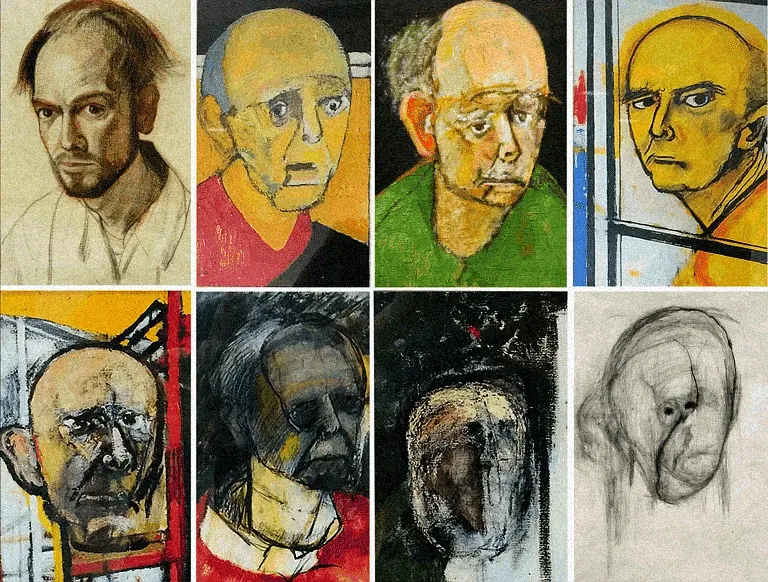
A lot of people have Alzheimer's. What literally happens is they're losing their minds. This is a self-portrait of an artist who documented himself losing his mind. When he was first diagnosed, he drew a picture of himself. Then a year later, he drew another, and on and on. As you can see, by the end, he's completely lost his sense of being. You can use this picture as a metaphor for Alzheimer's and see what it means to lose your mind.
But there's another way to understand this picture, which is that the artist is shedding his artifice, shedding his clothing, and revealing his true self. What Alzheimer's is, is losing your socialization. You're losing your ability to speak, to verbalize your ideas, to communicate with others. What's left behind are three things:
- Spiritual desires. A lot of people with Alzheimer's, for whatever reason, suddenly go to church. They're not religious, maybe they grew up in an atheist household, but once they develop Alzheimer's, they have this spiritual desire to go to church and pray.
- They love to sing. They don't talk, but they sing.
- They draw.
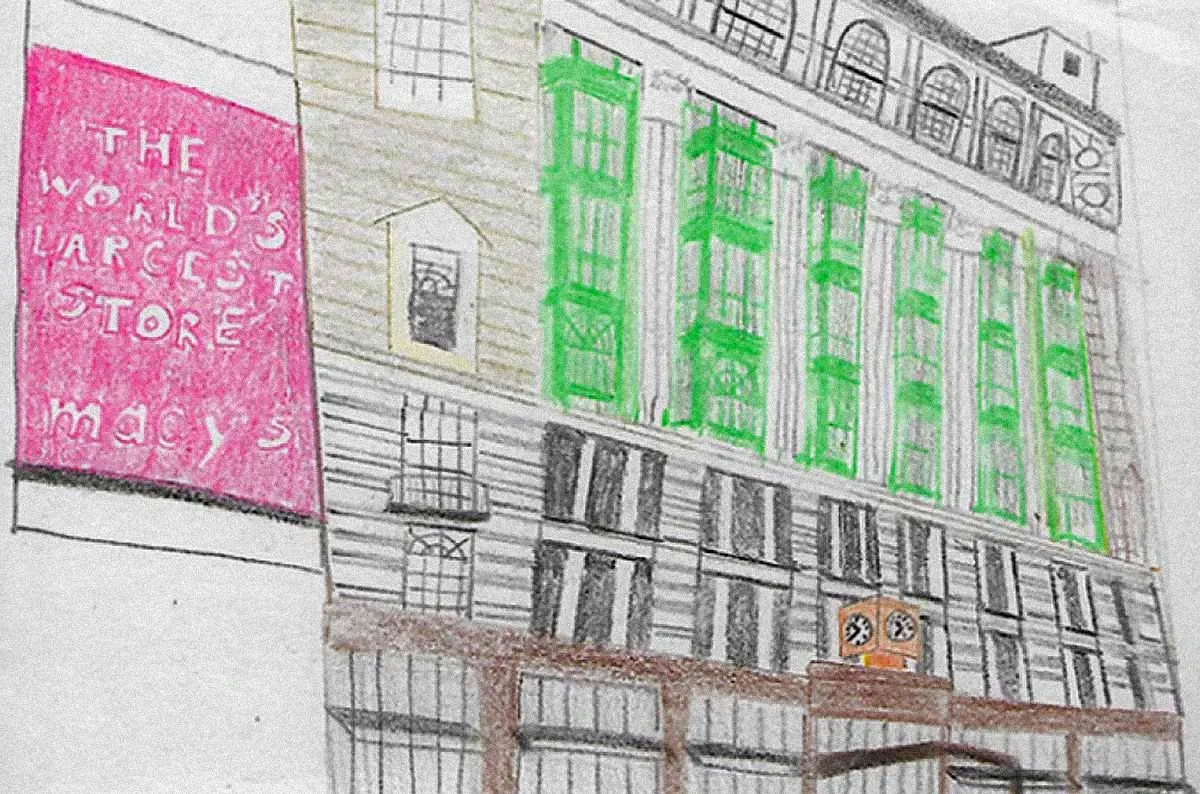
This is a painting by an Alzheimer's patient. Not great, but guess what? He did this when he was in his 80s, and he had never painted before. That's pretty amazing. The moment he had Alzheimer's, his true divine self opened up, and he wanted to express himself.
They say about Alzheimer's that you hear voices, you see things that aren't there; it's a hallucination. But as I told you, during the Ice Age era, we all did this. We all believed that we coexisted with ghosts, with spirits, with fairies. This was true throughout most of human history. So even though, medically and psychologically speaking, these people with Alzheimer's are hearing voices, the reason why is that the voices were always there. We just forgot about them because we're socialized to forget about the different forces and voices that exist alongside us.
Debunking the Five Myths of Civilization
You've been brainwashed into thinking certain ideas about who we are. They're not true.
- Myth 1: Humans are driven by material desires. We want a lot of money, we want to pass on our genes, we want to marry beautiful young women so they can give us a lot of babies, and we want to maintain our status. All we care about is power.
- Truth: Fundamentally, we humans are imagination, and we care about three things. First, we want to express our religion through art, music, and rituals. We want to know where we came from, why we're here, and where we're going. Second, we are diverse and want to differentiate ourselves. We want to stand out, be different, be creative. Third, we are curious and want to explore. That's what explains why we go everywhere.
- Myth 2: The most natural unit is the family, and men want to protect their property, which includes women. You may have been taught that men are in charge and women are just animals to breed babies.
- Truth: For most of human history, it was women who had control of their bodies. Women could choose who to sleep with and how many men to sleep with. And they often chose to sleep with everyone. Why? First of all, women enjoy it. But second, it allows women to create social cohesion. For most of human history, in early civilizations, women were the core and center of all societies. Third, there's actually a strategy in sleeping with many different men, because now everyone is responsible for raising a child. If a father knows exactly who his children are, he's going to protect his children and discard everyone else. But if no one knows who the fathers are, everyone is responsible for caring for every single child, and that's the best strategy they can have because it ensures that every child becomes successful.
- Myth 3: Humans follow the iron rule of nature, survival of the fittest. That's what Darwin taught, that's what evolution is.
- Truth: Throughout most of human history, humans cared for each other. We were compassionate, we had empathy. We believed that every creature has divinity, and those who are weakest have the most divinity. That's why when we kill an animal, we still thank the animal, because we're all part of the same life cycle.
- Myth 4: Humans have gotten smarter over the centuries. Civilization is far superior to primitive cultures.
- Truth: With the development of civilization, the human imagination has decreased. Our brains can be supercomputers if we allow them to be. Pre-literate people were more creative, which means they had better memories than we do. They were able to recall more stuff, store more information. They had more sensitive perception, more empathy. They knew exactly how you were feeling, why you were feeling it, and how to make you feel better. And they had greater emotional resilience. They were much more mature than we are.
- Myth 5: We evolved from apes.
- Truth: We are uniquely imaginative, and we can choose our own evolution. Don't believe we're apes. If you believe you're an ape, then you're an ape. If you're an ape, then you like to go beat people up and have sex with a lot of women. But we're not apes. We're imaginative first and foremost, and as such, we have control over our lives.
The Dwarf of Romito Cave
Let me give an example of this to conclude. This is Romito 2, and we discovered him in a 10,000-year-old burial site from the Ice Age. He's a dwarf.
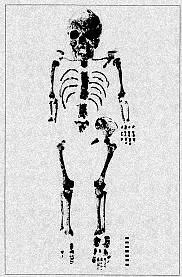
You would think that dwarfs don't really contribute to the community. So maybe, you know, he's born, it's clear he's deformed, so just kill the guy because he's not going to have a great life anyway. Instead, what we found is, first of all, he lived to a pretty old age, and he was buried with jewelry. He was buried elaborately. You only do that for people you really prize. That's kind of strange. The people who we think are most worthless—dwarfs that actually don't do anything—they actually thought were divine and deserved an extremely elaborate, ritualized funeral. Why?
This is from the book The Dawn of Everything by David Graeber and David Wengrow.
When archaeologists undertake balanced appraisals of hunter-gatherer burials from the Palaeolithic, they find high frequencies of health-related disabilities, but also surprisingly high levels of care until the time of death and beyond, since some of these funerals were remarkably lavish.
This is an amazing idea to think about. If you were deformed, if you were ill, they didn't throw you out. They spent a lot of time to take care of you, even though from our perspective, it was a waste of time and energy because you were going to die anyway. So why would they do that? There are three possibilities.
- Maintaining cosmic balance and harmony. Everything is a cycle, meaning we're all part of God. If you suffer, then we have to make you better because we're all part of God together. The concepts are the unity of all, "as above, so below," and setting a good example for others.
- A stronger sense of empathy. Because this is a pre-literate society, people have a stronger sense of empathy and morality, so they didn't want to see others suffer.
- They appreciated diversity and difference. They appreciated it in a way we don't anymore. Our entire school system is designed as survival of the fittest. If you can't do math, goodbye, you're worthless. If you can't get 100 on a test, goodbye, you're worthless. But back then, they saw difference and diversity as gifts from God. If you're a dwarf, it meant you had something special to offer. If you're strong, you can go hunt animals and protect the family. But if you're a dwarf, it meant that you might have something else to offer. And if we just celebrate you as someone who has something special to offer, then you can offer it to us. Often, what they could do is they could probably sing better, they could probably tell better stories, they had more wisdom, more intuition, a better connection with the divine.
That's true even today, where the best storytellers and best musicians are often those who are marginalized from society—strangers, outsiders, those who society persecutes. They probably have greater imagination, greater intuition, greater empathy. Today, we don't celebrate these things, but back then, they did. If you were different, if you were deformed, if you were ill, they saw you as blessed rather than cursed. And that's what we've forgotten today.
Reconnecting in the Modern Age
Are people with cognitive disabilities closer to the divine?
First of all, we're all connected to the divine, but we just choose to forget it. Why? Because mass society needs you to be obedient, needs you to be a machine, needs you to work. The entire point of school is to separate you from the divine. At an early age, you're removed from your parents, and in school, you're taught all sorts of strange knowledge like 1 + 1 = 2. Who cares? But you're taught this is what matters. Before, we would just let kids run around in nature and learn resilience, courage, and creativity. The entire point of society is to brainwash you or remove you from the divine.
But there are certain members of society who can't be removed from the divine because we don't want them. Kids who are autistic, kids with disabilities, kids who are just different—once they are discarded, they actually return to the divine.
In China, in the United States, everywhere in the world, we're seeing a massive surge in mental illnesses: depression, eating disorders, suicidal tendencies, anxiety, fear. It's an explosion these past 20 years, especially with the advent of mobile phones, social media, and the internet. Kids' lives suck. Why are kids so miserable? The answer is that when you're born, you have an automatic connection with the divine. As you lose this connection, you grow more and more confused, which leads to anxiety and doubt. Over time, if this confusion is not addressed properly, it will lead to depression.
Another simple way of saying this is we crave human connection, we crave knowledge of the divine, we crave purpose and meaning in our lives. But the social media system has created this fake system in which our imagination is imprisoned, pursuing activities that have absolutely no purpose. On social media, all you care about is likes. "How do I get my friends to like me?" So you do all sorts of silly things, like post pictures of you dancing in Hawaii, even though it gives you no meaning. What's happening is, before we cared about what makes us happy, and now we care about what we think would make other people happy. That's not who we are. Once you lose that connection to the divine, you can only get lost. If you deny your intuition, if you deny your emotions, then you'll just become more and more miserable.
Where does our strong empathy come from?
Empathy just means our connections with others, and this is something we are born with. A mother is born with an emotional connection with her child, and a child has an emotional connection with a mother. Over time, as this connection grows, their empathy develops, and this empathy almost becomes telepathic. So even if the child is in school and is bullied, the mother, while washing her clothes, might feel, "You know, I don't feel right. Maybe I should call the teacher and ask how my child is doing." That's what empathy is. It's a natural emotional connection that we're all born with.
But it's entirely possible—and we know this from our society—to break that connection by sending the child off to school, by having a child online too much, by having a child watch television too much. Once that emotional connection is broken, remember: we crave empathy, we crave emotions more than we crave food. It's as though we're becoming zombies. If you don't have empathy, you don't feel connected with other people. It's as though you become a zombie. You don't have any direction, you don't have any purpose, you don't have any meaning in life anymore. And that's what leads to tremendous depression.
We are not socialized into empathy. We are socialized out of empathy. We are born into empathy.