Secret History #12: Heaven on Earth
Today, we will discuss what happens as the planet warms up, allowing for agriculture and settlements, and as the population grows and we settle down to form cities.
Debunking the Myths of Human History
Here we don't just learn facts or places; we learn about ideas and concepts. To understand human history, you need to internalize certain concepts. In our culture, you're taught certain myths about who we are. I'm going to go over some of these myths, show you they're wrong, and explain why we have them.
Myth 1: We Are Materialistic
You are taught that we are materialistic—we like money, sex, and power. The truth is that throughout most of human history, we had three primary concerns:
- We have a religious impulse. We want to express this religion through art, music, and dance. By religion, I mean we have three questions in our heads: Where do we come from? Why are we here? And where are we going? We had religion to answer these three questions, and that's why we still have religion today.
- We are all diverse. We want to differentiate ourselves and stand out.
- We are curious. We want to explore.
That's fundamentally who we are. The question then is, why are we told that we're materialistic? The answer is it's better to control you. In a society, there's a hierarchy, and the people in charge want you to work hard and be obedient. But if you believe you want to explore, then you're not going to be obedient enough.
Myth 2: The Nuclear Family is Natural
This is going to be hard for you to understand. You're taught that the nuclear family—father, mother, children—is the most natural human unit. It's not true. If you look at most ancient societies, the most natural organization is that women are usually in control. Why? Because women have complete autonomy over their bodies, so they can choose who to have sex with. That's where the power comes from. They control access to sex, which gives men pleasure.
With this power, they often choose to sleep with as many men as possible. There are three reasons why they choose this strategy:
- It's fun. It gives them pleasure to have sex with as many men as possible.
- It's a political strategy. Women are really good at negotiating politics and use sex as a political tool. If two guys are fighting each other, she has sex with both, and then voilà, they're best friends now. Women are very good at managing emotions through sex.
- It ensures the survival of their children. This is the most important reason. If you're a woman, you want to make sure all your children grow up successfully. From your perspective, it's to your advantage to hide paternity—to hide who the father is. Why? Because now all the men in the village are responsible for raising the child, as no one knows who the real father is. Everyone assumes, "I could be the father."
This is historically how societies were usually organized, with the woman in charge. As such, societies tended to be very egalitarian because women don't really care about status and power; they care about harmony and balance.
The question then is, why did we change? There's a very simple explanation: to produce more children. If you're a woman, you don't want to have too many children. You want to make sure all your children have access to resources, but you also want to stay healthy. If you have too many children, it's possible you could die in childbirth. Women have always practiced population control. But when we switched to a patriarchy, we could have as many children as possible because women basically became slaves, and their main duty was to have as many children as possible. That's why after this transition from matriarchy to patriarchy, a lot of women started to die.
Myth 3: Humans Believe in Survival of the Fittest
That's not true. Historically, if you look at how societies are organized, we tend to be compassionate. We look after the ill, the elderly, and the weak. That's who we are. We have empathy; we care about other people. So why do we believe in survival of the fittest? To create fear and anxiety. If you have fear and anxiety, you work harder, but it's also easier to control you.
Myth 4: Humans Have Gotten Smarter Over Time
One thing you will learn is that this is not true. Humans have always been smart, but we've expressed our intelligence in different ways. Primitive cultures expressed themselves through art. They had better memories, were more sensitive, and were more resilient than we are. So why are we taught that we're smarter? The answer is confirmation bias. Everyone likes to believe that we're smarter than the people who came before us.
Let me give you an example of how smart they were. Let's just say that you have a boat and you want to navigate the Pacific. That's very hard to do, and you usually need a computer because there's so much information you need to process.
The Polynesian people are amazing; they settled the entire Pacific. Wherever there's an island, they had a settlement. This is a testament to our desire to explore the world. What is fascinating is how they did this because if I were to put you in a boat in the Pacific, you'll probably die.
So how did they navigate? They built boats that allowed them to navigate the Pacific, but these were not large boats, so they had to get to an island fairly quickly. They needed to read the stars. In their heads, they were able to map out the stars and, from the stars, figure out exactly where they were. They also had to memorize oceanic currents to better navigate. Also, every island has its own distinct oceanic ecosystem. They had to look at the wind, the oceanic currents, and the stars. We have computers to do this for us today, but back then, they had to do this all in their heads.
They had some maps that helped them, like maps of the stars and oceanic currents, but they were doing this all in their head. What's really amazing is while they were out at sea, they couldn't sleep. The navigator had to keep track of all this information to know exactly where they were. If the navigator fell asleep, they got lost and then they died. That's the power of the human imagination.
Myth 5: We Evolved From Apes
The truth is that we are imaginative and can choose our own evolution. You're taught in school about the theory of evolution, how we evolved from apes. Maybe our bodies evolved from apes, but our minds did not. Our minds come from somewhere else.
So why are you taught we evolved from apes? It's to justify the power hierarchy. The people in charge are just stronger, better, and more fit than we are.
The Power of the Religious Imagination: Building the Pyramids
The pyramids were built around 2400 BCE. There's a great mystery as to how these pyramids were built. You might have heard silly explanations on the internet, like aliens came and built them, or the lost civilization of Atlantis gave the technology to the Egyptians. This is an example of confirmation bias. We think that we're smart and everyone before us was stupid. What you'll learn is that these people had an imagination that allowed them to build the pyramids.
First of all, there's debate as to what the pyramid is. You're taught in school that it's a tomb. It's not a tomb. It looks like a tomb, but it's a temple.
So, how did they build the pyramids? They didn't have blueprints or computers, but they had the imagination. They could see the building of the pyramid in their heads. They actually built it from the inside out. It's hard for us to imagine they would do this because we think, "You don't have a pen, so you couldn't write it down. You don't have a computer, so you can't process all the information." They did it all in their heads. That's the power of the human imagination.
It was a massive undertaking, a huge organization that took about 20 years and lots of people. The question then is, how were they able to organize in such a manner? The answer again is empathy and imagination. Someone had a vision, and this vision was so compelling that everyone knew exactly what part to play.
Also, you're taught in school that the pyramids were built because the pharaoh is God and it's a tomb for the pharaoh. That's really insulting to the Egyptian people. Like all cultures, the Pharaoh wanted what's best for his people. In his lifetime, he would undertake a lot of public works projects, including canals. The pyramids were just a public works project—a temple.
Why Can't We Rebuild the Pyramids Today?
What's amazing about the pyramids is that we could not build them today. We have computers and all these machines, and guess what? We cannot build the pyramids. The way we work is different from the way they worked. Let's go over the differences.
We break projects down into a process. You might think this would lead to better results, but it actually leads to worse results because you're no longer focused on the vision; you're just focused on the process. That's why today, everything we do sucks. I can give you the greatest computers and the best machines in the world, and you really couldn't build the pyramids because you lack that vision. It's not about how smart you are; it's about your purpose in working.
Other Examples of Tremendous Human Achievement
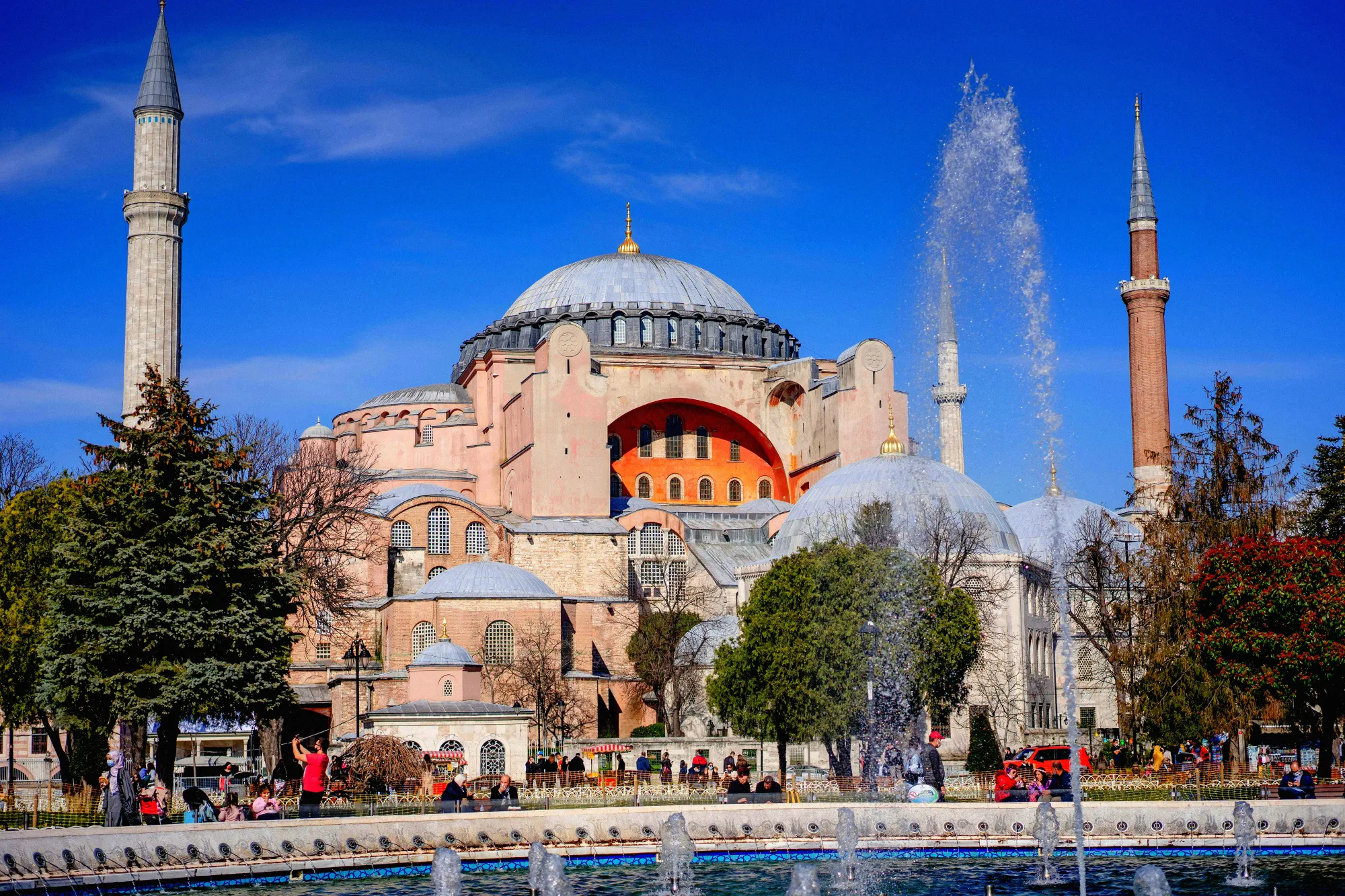
This is the Hagia Sophia, built in 532 in Constantinople. It's still in Istanbul. You can get on a plane and fly there, and it's still there. You can see the amount of attention and care put into architecture back then because it was about bringing heaven to earth.
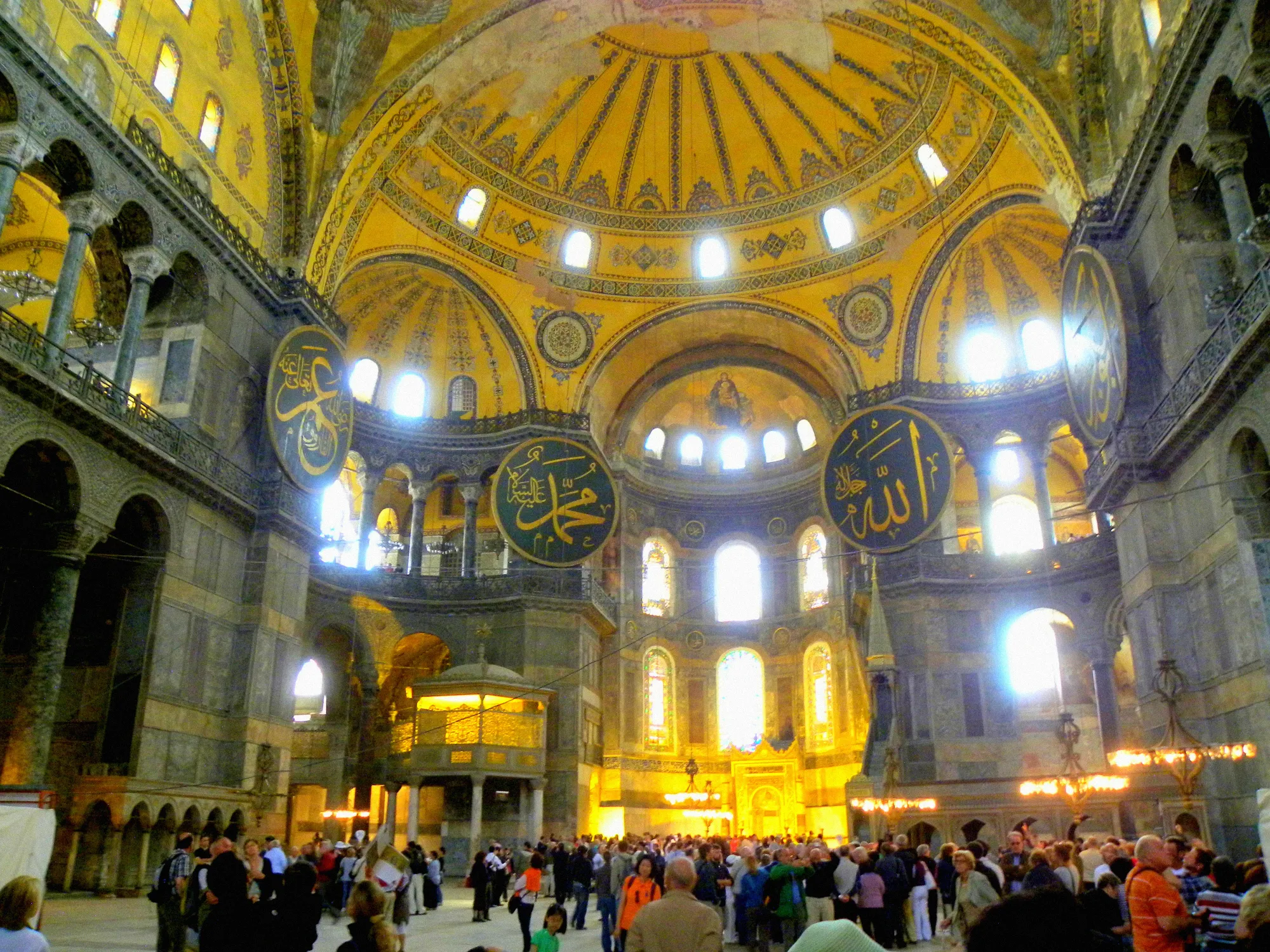
Inside, it is beautiful. Every inch, every piece of the church is just beautifully constructed. Everyone who worked on it was working with the same vision and dedication.
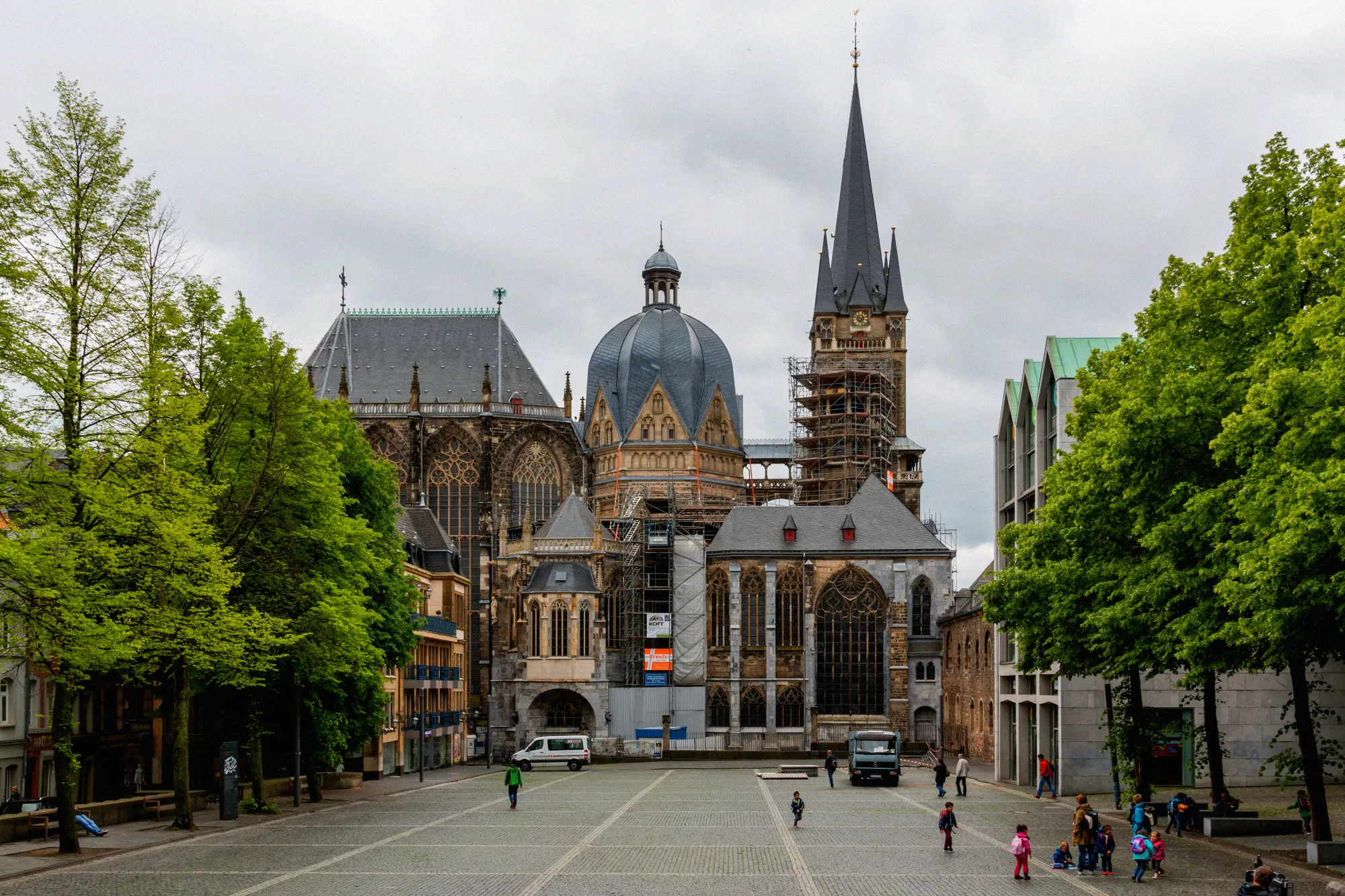
This is the Aachen Cathedral, built in 790. This is what it looks like today, no different from when it was first built. No one said this was built by aliens or Atlanteans. The idea that the Egyptians couldn't build the pyramids by themselves and had to rely on aliens is just a racist comment. Charlemagne, the first Holy Roman Emperor, is buried inside this cathedral, but no one's saying this is a tomb. We all know it's a church. The pyramids are a church, a temple to their gods.
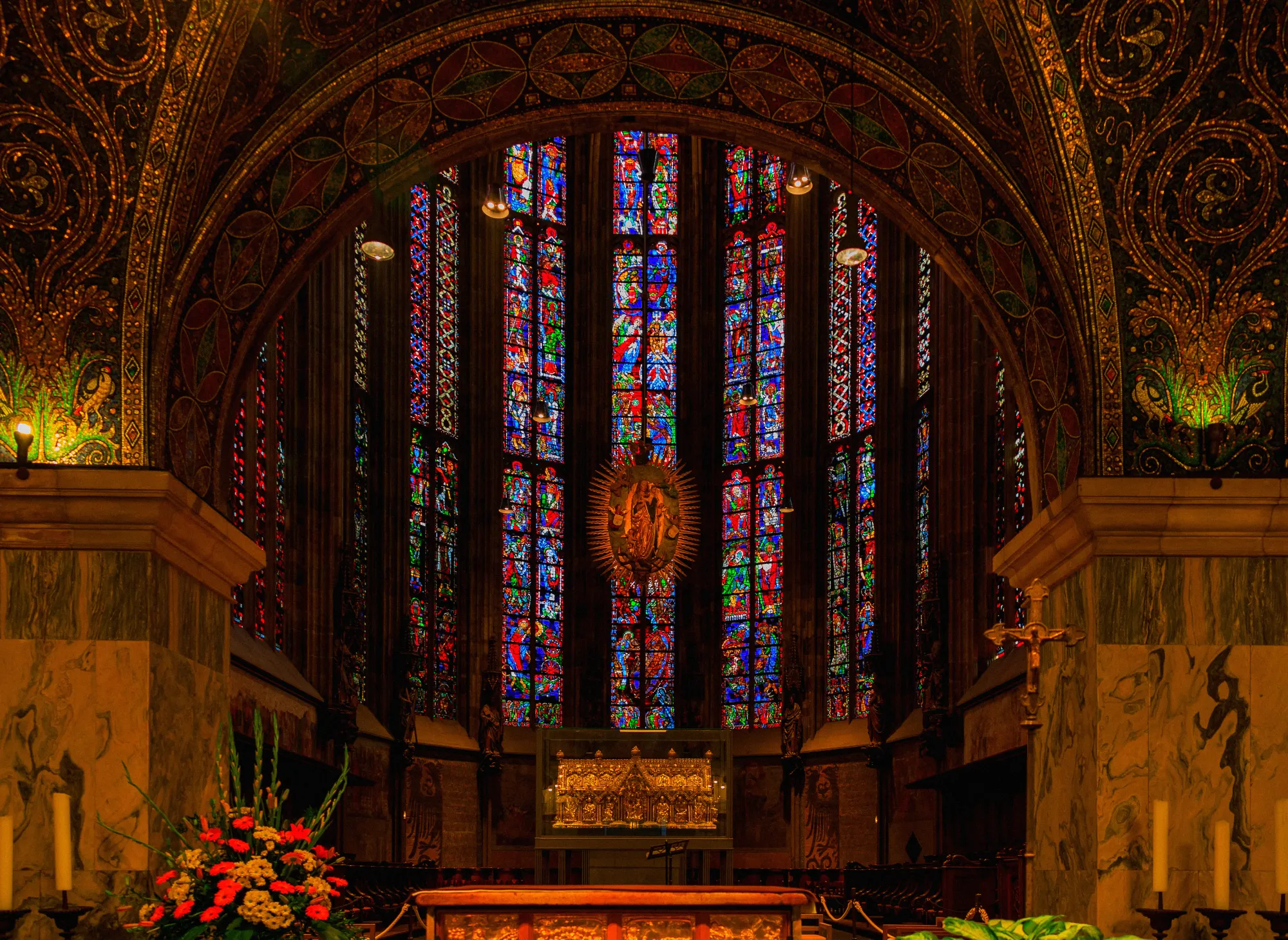
This is what it looks like inside today. You can go to Germany and walk inside this church and see for yourself how beautiful it is. Back then, they put care and love into everything they did because they believed it was to make a more godly, spiritual world.
The Manhattan Project is probably the greatest achievement of humans in the 20th century. There were 100,000 scientists who worked on it to build the nuclear bomb. They had the same concept: they believed they were creating eternal peace on earth, heaven on earth. That's why they worked so hard. And they were right. With the atomic bomb, nations are afraid to go to war. Before the atomic bomb, World War I and World War II killed tens of millions of people. Even though there are still wars, they're not as devastating as before.
The World's First Temples
This idea of bringing heaven to earth goes way back to the beginning of humanity. This is Göbekli Tepe. It was first built in 9,600 BCE and is considered the world's first temple that we have discovered. We can assume that wherever humans go, they will build temples because, as I mentioned, humans are first and foremost religious. They express themselves through art, architecture, music, and dance.
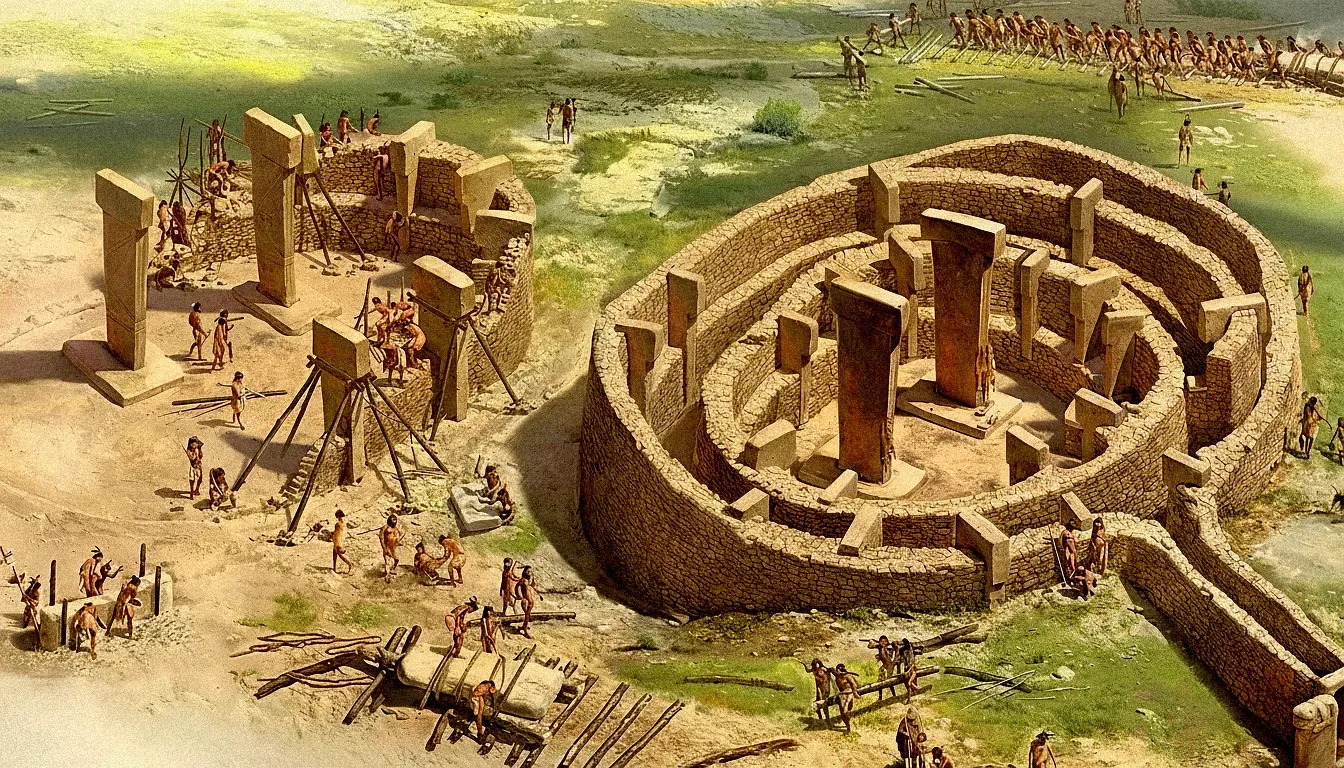
It's an amazing achievement because these pillars are really tall. We don't know how they were able to move these pillars into place. But if you think about having a vision and then working together to achieve it, it makes more sense.
The Process of Building a Temple
Let's discuss how they were able to build Göbekli Tepe. This process is important because it repeats itself throughout human history.
- A charismatic leader emerges. It could be a man or a woman, but he or she has a vision for creating a temple, a place for God to live on earth. The leader shares this vision, and everyone works hard to achieve it.
- The leader dies, creating a power vacuum. Now you have different people competing to be the new leader. A temple is always the most valuable real estate on earth. If you are in a temple, people come to pray, and they have to give you gifts and tribute. They would organize a religious festival once or twice a year, and people would have to bring food as a tribute to the priests. If you control this temple, you live a very good life.
- A succession crisis leads to conflict. When the first leader died, they would have trials to prove who the gods favored. For example, two contenders might stand on different hills, and they would see where a bird lands. If the bird lands on my hill, then the gods favor me. At this time, humanity believed the mother goddess ruled over all, because people were concerned about fertility for farming and for having babies.
- Factions form and conflict escalates. Over time, they realized they could just cheat by forming secret societies. People would swear blood oaths to each other and become a faction. This led to conflict, which was often settled through human sacrifice. If your faction lost, you'd all be sacrificed. We know this because under Göbekli Tepe, there are tombs of human remains. We assume these people lost a power struggle and were all sacrificed together.
In other words, power struggles, political conflict, religious disputes, human sacrifice, and secret societies go all the way back to the beginning of human society.
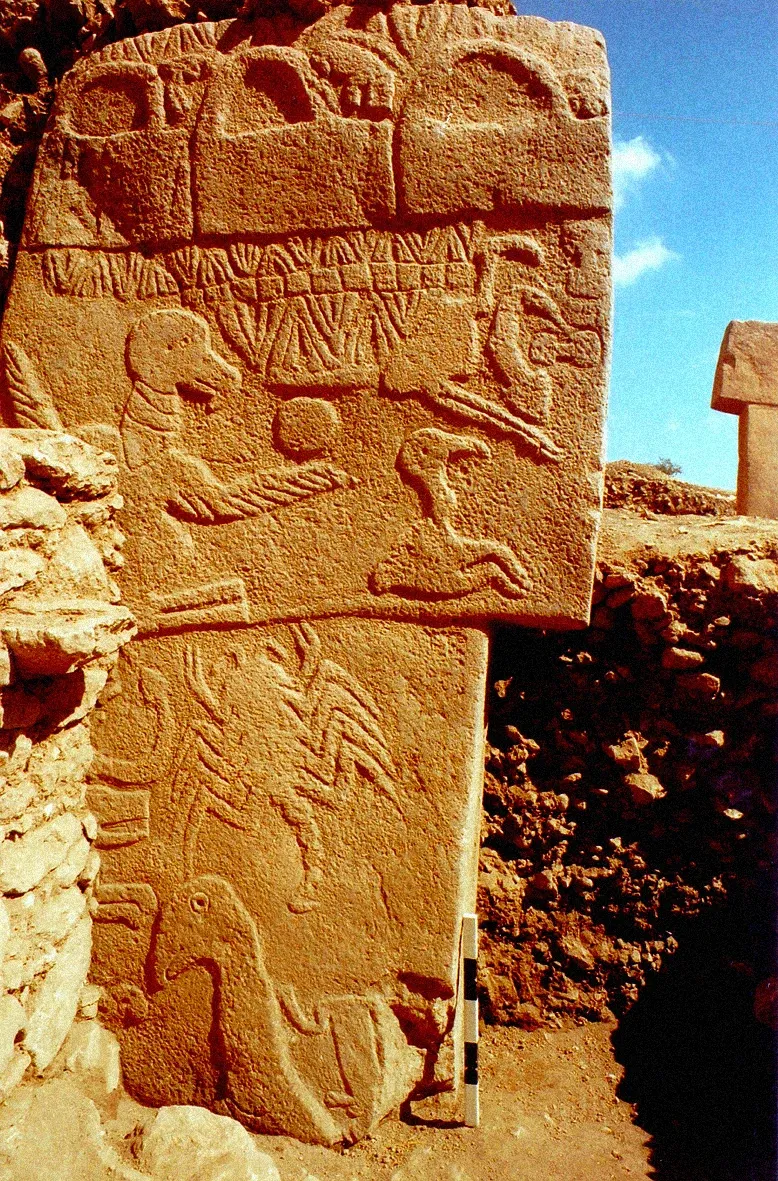
With architecture, there's mythology in place. Here, we assume the mythology is the mother goddess with a bird in the sky and a human skull. They had a sophisticated mythology. Remember, humans are diverse. Once one mythology becomes established, new people come to establish a competing one.
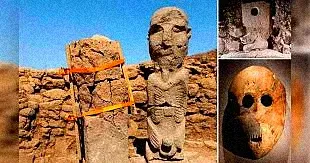
A nearby place is called Karahan Tepe. As you can see, the mythology of this place is different. This might be the cult of the skull. The idea here is that when people die, you can still communicate with them in the spirit world if you have their skull. The skull becomes a portal into the afterworld, allowing you to draw on their wisdom and spirit. We see this cult of the skull in many ancient cultures, including in China. It's what we call ancestor worship.
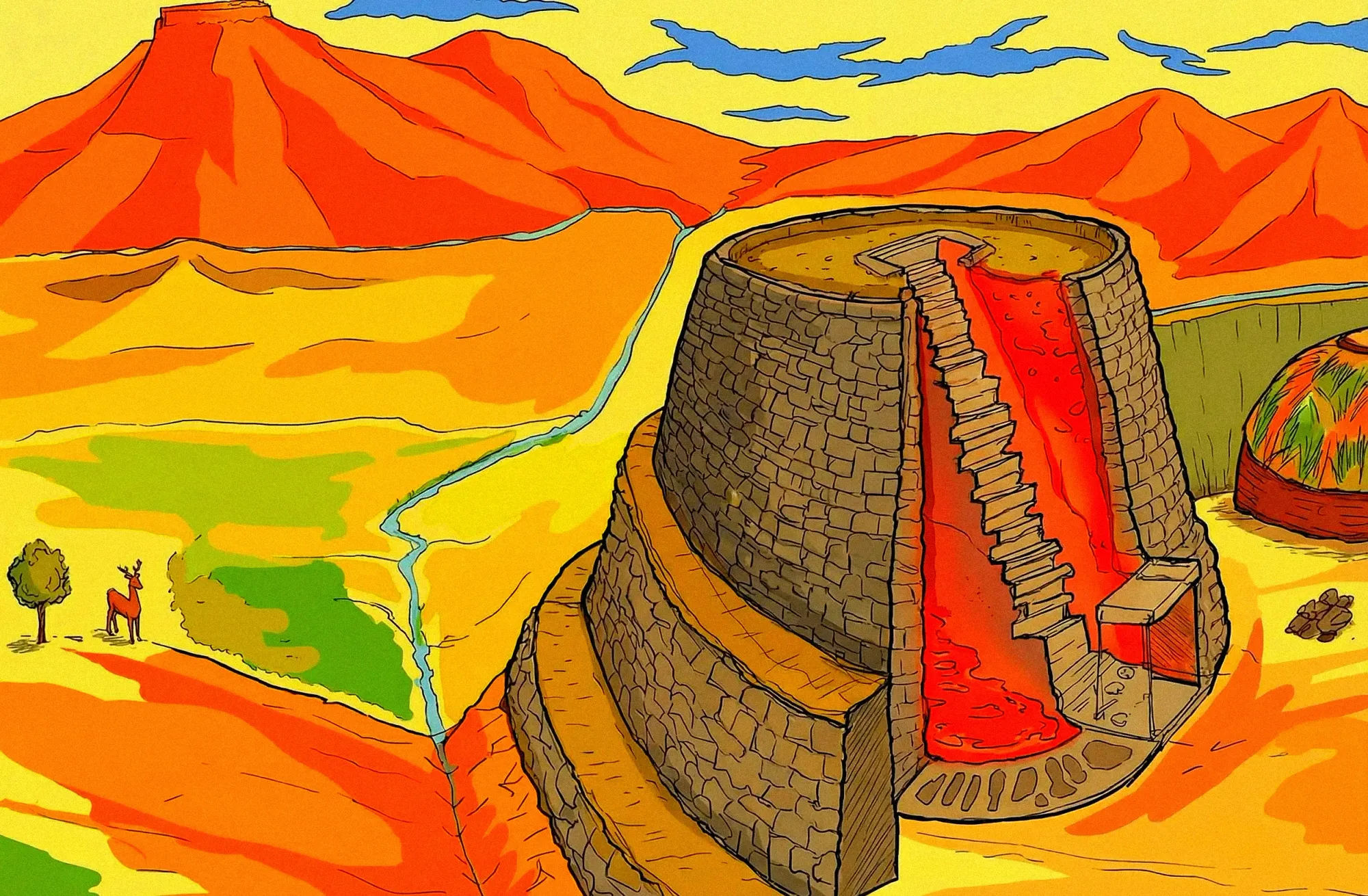
The Tower of Jericho is another settlement. We might assume that a tower is for defensive purposes, to ward off invaders. But there's a much better explanation: it's a religious temple. During the solar equinox, the sun hovers above the temple and causes it to flood the area with its shadow. If you are a religious person, you feel as though heaven is coming to you directly. You have a ritual and a celebration when this happens, and you can feel as though you're ascending to heaven or heaven is coming down to you.
Çatalhöyük: The First City
Çatalhöyük is one of the first settlements we've found. Göbekli Tepe was just a temple; people would go there once or twice a year for a religious celebration and then leave. Çatalhöyük is where they decided to settle down permanently.
In school, you're taught that we started farming because it allowed us to access more food so we could grow the population and become healthier. But if you actually dig up the bodies of hunter-gatherers and compare them to farmers, you'll realize that hunter-gatherers were taller, stronger, lived longer, were healthier, and had better teeth. As a hunter-gatherer, you have access to lots of different foods, and getting it is pretty easy. As a farmer, you have to work really hard to grow food that's not very nutritious, and your diet is very limited. Because of the starch, your teeth get rotten really fast. Also, because you're living together in close quarters, it's easy for diseases to spread.
Being a hunter-gatherer was an easy, happy, healthy life. Being a farmer sucks. So, why did they become farmers? For religious purposes, so that they could settle down and be with their religion and their charismatic leader.
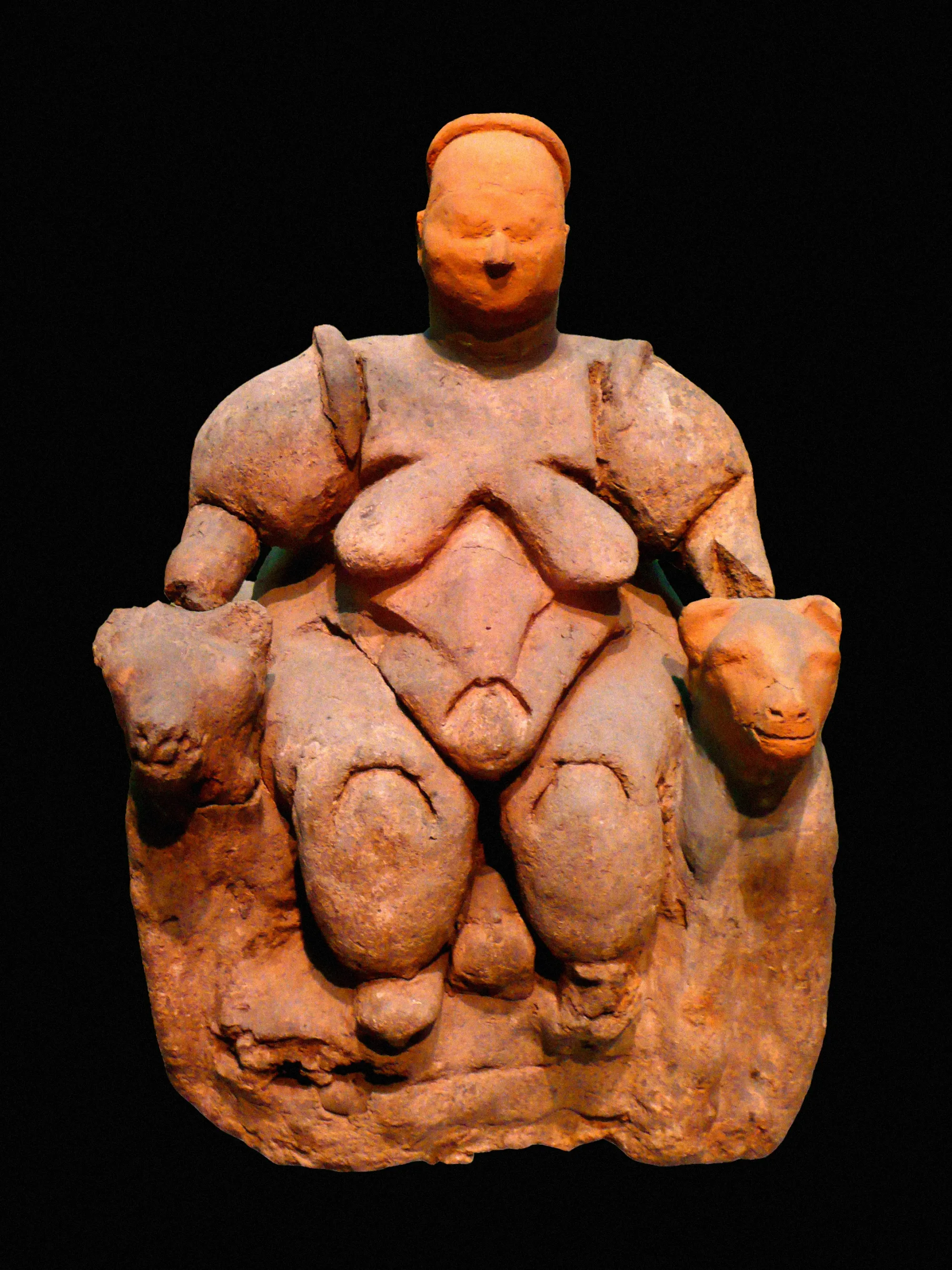
This is the religion of the mother goddess, and accompanying her is the bull, who represents virility, energy, and strength. A woman cannot give birth by herself; she needs a male. So they worshiped both.
Çatalhöyük was a very sophisticated and egalitarian community. Each house was a temple unto itself. They had paintings to bring in the energy of their gods, and that's why they wanted to stay there—to be with their gods, even though it meant a harder life.
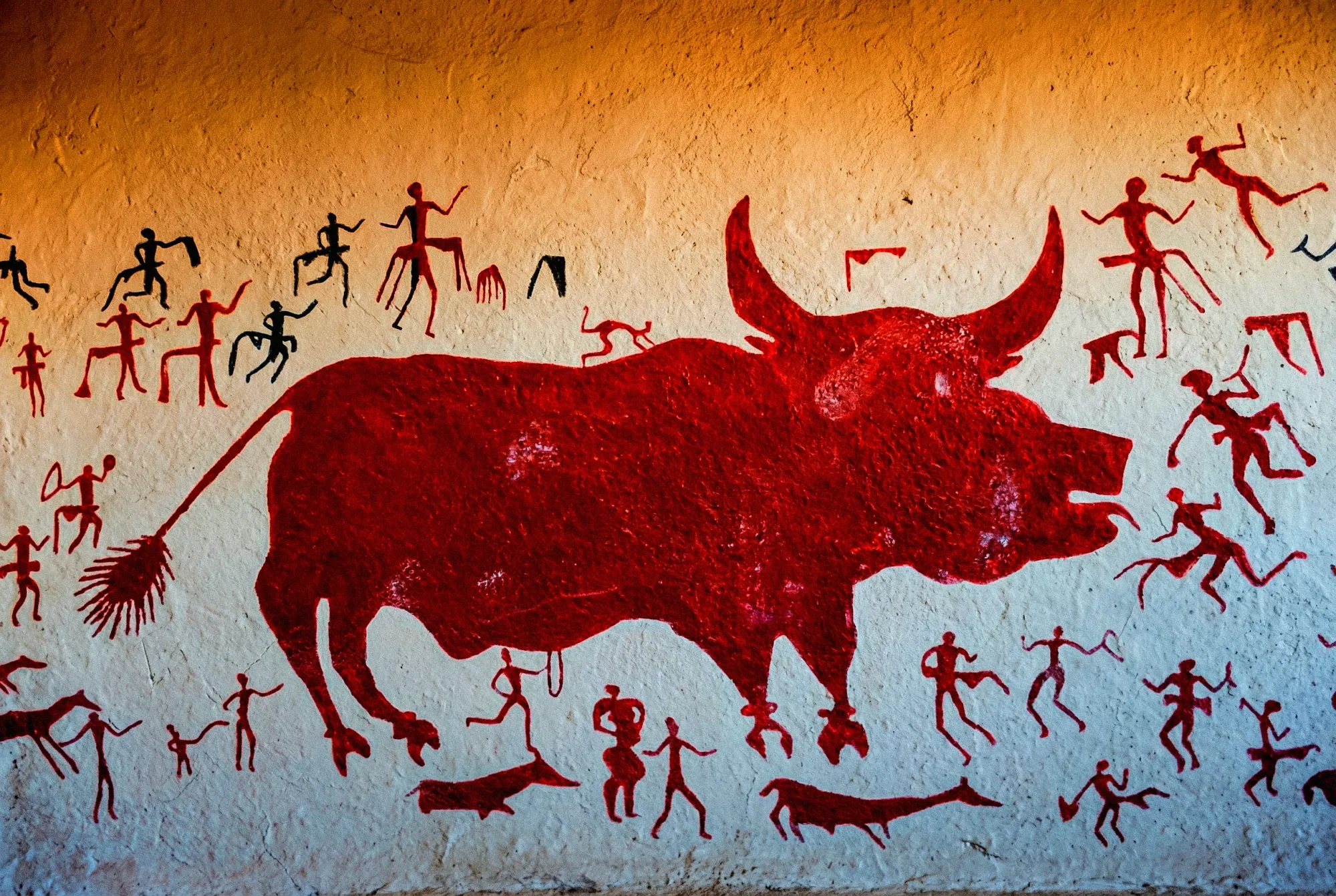
They buried their dead underneath their houses. As you can see, each house is elaborately decorated with ornaments to their gods.
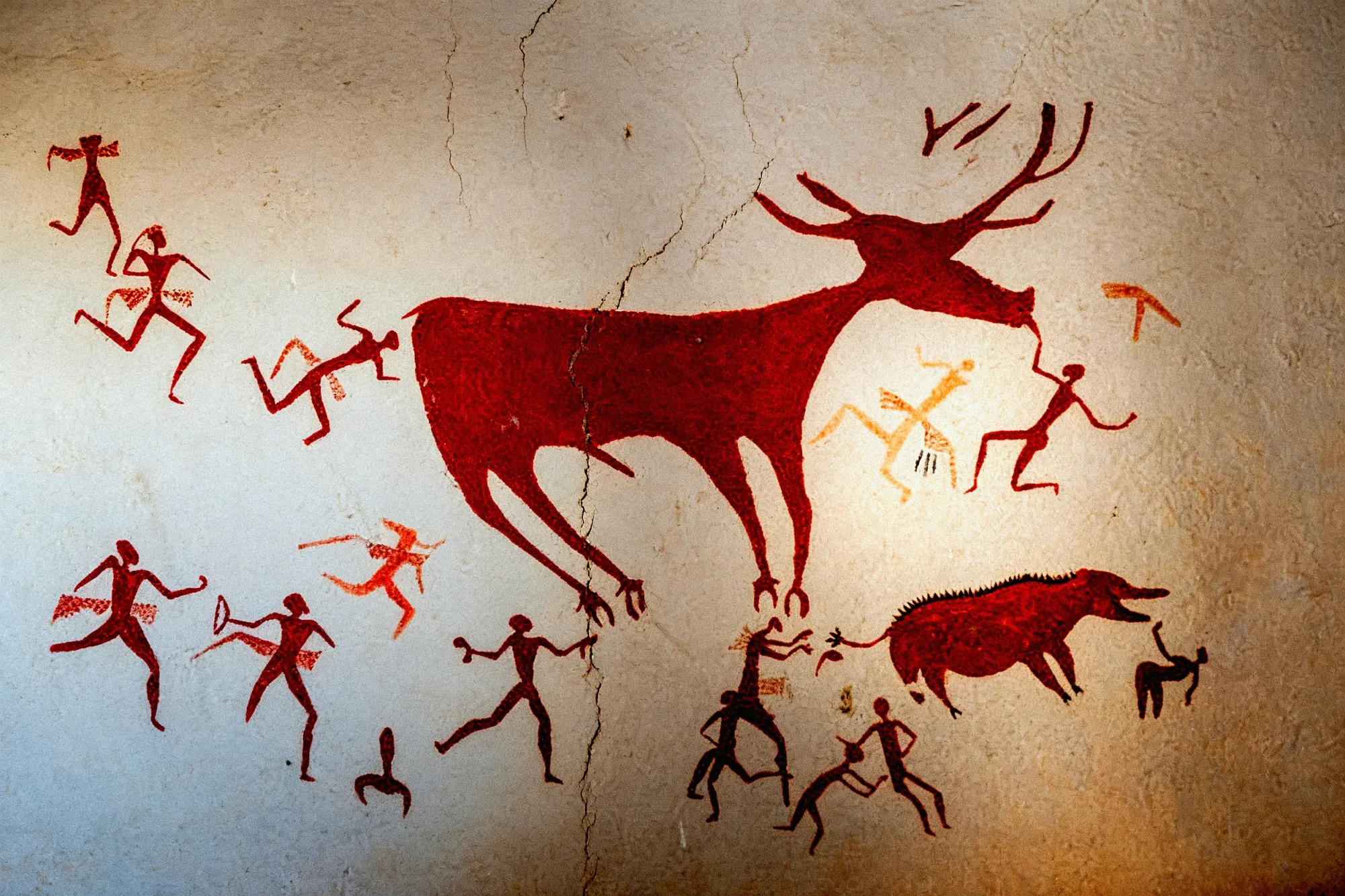
This is a painting of a gazelle hunt. It's really a dance. They're hunting the gazelle, but they see it more as a dance, a celebration. At this time in history, we felt an obligation to the animals we killed. We had to thank them and celebrate them to maintain balance and harmony in the world. It was almost like a contract. Before you could kill animals, you needed to pray to the gods and ask for permission. After you killed them, you must thank the animals for sacrificing their bodies to you.
The Pattern of Human Settlements
Let's look at how Çatalhöyük came together and why it fell apart.
- A charismatic leader has a messianic vision. He takes people to a place and says, "This is where the gods are. Let's settle down here and bring heaven to earth." They become a creative, artistic community.
- They choose a place with a nice climate that allows them to farm to supplement their hunting and gathering. Over time, as the population grows, they become more dependent on farming.
- In the early days, there's lots of social mobility, leaders are elected, and the society is very egalitarian.
- Over time, the system breaks down. Because of overpopulation, there's too much stress on the environment, and the land becomes less productive. Then you have climate change happening as well.
- Another big issue is that the hierarchy becomes hereditary. Before, leaders were elected; now, positions are inherited. This leads to corruption, where the elite bully and exploit everyone else.
- People forget the memories of the first days. So what do they do? People just get up and leave. You can always choose to leave. If you don't like the community anymore, you and your family just get up and go to another place to build a new community based on your principles.
Three Principles of Human Society
Based on this, I want you to remember three things about how we humans come together in a community. These three basic principles are almost like laws that will help you better understand how societies rise and fall.
- Societies are fluid and dynamic. They're always changing over time; they're never still.
- Diversity within societies is greater than across societies. Yes, there's a conflict between the United States and China. But if you actually look at the differences, the diversity within China is greater than the difference between China and the United States.
- Communities exist in opposition to each other. Think about the cities in China: Beijing, Shanghai, Shenzhen, Chengdu. They're all different because they want to be different from each other. But also within Beijing, you have different districts, and they're all different from each other because they want to be different.
These three laws will help us better understand how societies form, thrive, and ultimately die.
Lessons from Indigenous Cultures
In The Dawn of Everything, anthropologists David Graeber and David Wengrow emphasize the diversity and dynamism of different societies. Let's look at the native people of the Canadian Northwest Coast. What's really interesting is that throughout the year, they have different social structures. During the winter, everyone comes together and forms a hierarchy with palaces, an aristocracy, and different classes. But then, during the summer, people will just go away and start new societies. It's fascinating how in different times of the year, when needs are different, people will choose different social organizations. People actually adopted different names in summer and winter, literally becoming someone else depending on the time of year. A metaphor is how when you play a video game like World of Warcraft, you adopt a different identity and persona, and that's fun for you. It was common in the ancient past for people to adopt different social structures, and they could choose which one to go to.
The People of the Anaconda
In The Wayfinders, Wade Davis looks at native tribes throughout the world, specifically the people of the Amazon. Even though these people look simple, spiritually they are very complex and have a sophisticated mythology. These are the People of the Anaconda.
In the beginning, before the creation of the seasons, before the ancestral mother Romi Kumu, the woman shaman, opened her womb, before her blood and breast milk gave rise to the rivers and her ribs to the mountain ridges of the world, there was only chaos in the universe.
They have this very complex mythology. This is the universe they've created for themselves. It is complete, unified, and very complicated, and that's true for all mythologies. One thing that's really important for them is maintaining balance and harmony in the world. Like most primitive people, they believe there are different dimensions, and their role is to maintain harmony across these dimensions because that is what guarantees a happy and prosperous life.
For the people living today in the forests of the Pará-Paraná, the entire natural world is saturated with meaning and cosmological significance. Every rock and waterfall embodies a story. Plants and animals are but distinct physical manifestations of the same essential spiritual essence. Everything is more than it appears. For the visible world is only one level of perception. Behind every tangible form, every plant and animal, is a shadow dimension, a place invisible to ordinary people but visible to the shaman. This is the realm of the He spirits, a world of diaphanous beings where rocks and rivers are alive, plants and animals are human beings, sap and blood the bodily fluids of the primordial river of the Anaconda. Hidden in cataracts, behind the physical veil of waterfalls, in the very center of stones are the great malocas of the He, where everything is beautiful: the shining feathers, the coca, the calabash of tobacco powder, which is itself the skull and brain of the sun.
You can see how their mythology is very complex and how they have embedded it into their everyday life. Every day when they wake up, they see a world of color, energy, and change.
Among the Barasana, such renewal is the fundamental obligation of the living. In practice this implies that the Barasana see the earth as potent, the forest as alive with spiritual beings and ancestral powers. To live off the land is to embrace both its creative and destructive potential. Human beings, plants, and animals share the same cosmic origins and in a profound sense are seen as essentially identical, responsive to the same principles, obliged by the same duties, responsible for the collective well-being of creation. There is no separation between nature and culture. Without the forest and rivers, humans would perish. But without people, the natural world would have no order or meaning. All would be chaos. Thus the norms that drive social behavior also define the manner in which human beings interact with the wild, the plants and animals, the multiple phenomena of the natural world: lightning and thunder, the sun and the moon, the scent of a blossom, the sour odor of death. Everything is related, everything connected, a single integrated whole. Mythology infuses land and life with meaning, encoding expectations and behaviors essential to survival in the forest, anchoring each community, each maloca, to a profound spirit of place.
When you kill something, you first need permission; you need to have a contract. This is true through most of human history.
When men go forth to hunt or fish, it is never a trivial passage. First a shaman must travel in trance to negotiate with the masters of the animals, forging a mystical contract with the spirit guardians, an exchange based always on reciprocity. The Barasana compare it to marriage, for hunting is a form of courtship in which one seeks the blessings of a greater authority for the honor of taking into one’s family a precious being. Meat is not the right of a hunter but a gift from the spirit world. To kill without permission is to risk death by the spirit guardians, be it in the form of a jaguar, anaconda, tapir, or harpy eagle.
The concept here is karma. If you do evil, evil will come to you. It's important to maintain harmony. This is no different from the cave paintings. Way back at the dawn of humanity, we believed the same thing. We believed that these animals came from the spirit world. That's why you paint them, why you express art—to thank the animals for coming from the spirit world to feed and nourish us.
The Forest People
Now let's go to Africa. In the book The Forest People, Colin Turnbull spent a few years with the Mbuti pygmies. They live in the forest, and even though their mythology is a bit different, it's still the same essence. The Molimo is a musical instrument they use to communicate with the spirits of the forest.
Ritual is really important for these people. You are a member of the community if you participate in all their rituals, believe in their mythologies, and honor their ancestors and traditions. If you refuse, they will ostracize you or even kill you. During a religious festival, Turnbull was told that everyone had to participate.
I was told, however, that everyone had to eat, just as no adult male was allowed to sleep but had to sing while the Molimo singing was in progress. Apparently one of the greatest crimes a Pygmy can commit, if not the greatest, is to be found asleep when the Molimo is singing.
If you refuse to participate in the ritual or break its seriousness, you are a threat to the community. They will kill you and forget about you. The women would be told that the Molimo itself, the great animal of the forest, had carried off one of their number. But like the men, they would ask no questions and would never again mention the missing man.
This is how they explain why they practice these rituals:
Normally everything goes well in our world. But at night when we are sleeping, sometimes things go wrong, because we are not awake to stop them from going wrong. Army ants invade the camp; leopards may come in and steal a hunting dog or even a child. If we were awake these things would not happen. So when something big goes wrong, like illness or bad hunting or death, it must be because the forest is sleeping and not looking after its children. So what do we do? We wake it up. We wake it up by singing to it, and we do this because we want it to awaken happy. Then everything will be well and good again. So when our world is going well, then also we sing to the forest because we want it to share our happiness.
Their idea of God is heaven on earth, where you're connected to the environment around you. Everything you do impacts the environment, and the environment impacts you. You practice these rituals to maintain balance and harmony. The world is a script. To live, you must follow certain practices to respect the traditions of the world, and that's what brings harmony and heaven to the world. This is something that, for most of our history, we've understood and appreciated. The question then is, why did we change?
Why is it that modern people, with all our technology, seem to lack the vision of ancient peoples?
It's a different world, and brains worked differently back then. In that age, religion was the end-all, be-all. You lived for your religion. Today, our religion is capitalism, which is just about making as much money as you possibly can.
The difference is that the time of the Egyptians was a spiritual age. You sought inspiration from the heavens, and people's imaginations could expand because they would wake up with ideas. Today, we live in a materialistic age. We don't believe in God or divinity; we just believe in numbers, computers, and process. It's hard to understand because you live in a time of complete materialism, so you don't understand what it means to live a life of spirituality, of divinity, of trying to bring heaven to earth. But if you did, you'd be a very different person. There were things you could do that would be unimaginable to you now. For example, a monk can meditate for months or walk barefoot in the cold for years. We can't do that. If I said, "Hey, meditate for a whole month, just don't eat," you couldn't do it. You'd ask, "What's the point?" And their answer is, "Because I want to be with God. Because I want to feel as though it's heaven on earth."
It's not just a question of how smart you are. It's a question of faith, purpose, and meaning. The reality is that not only do we not live a life of purpose, meaning, and spirit, but we also think these things don't matter.
Did it matter who had the original vision for a project like the pyramids?
That's a great question. It's hard for us to understand, but there was no sense of individual property, like, "This is my idea, you can't have it." It was always, "We're in this together." We don't know who built the pyramids. Why? Because it doesn't matter who built them. All that mattered is that they were built. That was the spirit they had. Nowadays, if I have an idea, I think, "How do I patent it? How do I get credit for it? How do I make money out of it?" And that's why ideas suck.
Back then, it was just about the idea being expressed to other people. When you have that spirit, when you have that heart, when you share who you are, then God comes into you and gives you ideas. But if you're just thinking, "Nope, all I want to do is make money," God leaves you.
There must have been a genius, a charismatic leader, and the universe gave him this vision for the pyramids. He knew exactly how to do it. He went to the pharaoh and said, "Listen, I have this vision," and the pharaoh said, "Let's just do it." The pharaoh got credit, but it didn't matter who got credit. What mattered is that it was built. There was no sense of individualism, capitalism, or private property. It was all, "Let's just work together to build a better world." Yes, the people who worked on it were getting paid, but that's not what mattered to them. What mattered was achieving this vision together.
It's hard for us to understand, but once you have this mentality of common sacrifice, you are able to do tremendous things together.