Secret History #15: Capital and the Bronze Age Collapse
Let's begin by reviewing where we are in history. The four earliest civilizations are Egypt, Mesopotamia, the Indus Valley, and of course, China. The reason they are the first four major civilizations is that they have major rivers that allow them to develop agriculture as well as overseas trade. They would establish a major city, and this city would have colonies along the river. In Egypt, it's the Nile. In Mesopotamia, it is the Euphrates and the Tigris, and the first city is Ur. In China, it's the Yellow River. In the Indus Valley, it's the Indus River.
These different city-states would go to war to control trade routes, leading to a time of major innovation. Because of these wars, they needed better and better equipment, and so eventually, they developed bronze.
Bronze, as you know, is an alloy of tin and copper. You need both to create bronze, which was the strongest metal at the time. It's ideal for shields, armor, and swords. Whoever has more bronze weaponry will win any war.
The problem, however, is that tin is hard to mine, discover, and manufacture. In fact, tin deposits are scattered all around the world; they are everywhere, but not concentrated. Therefore, you must build more trade routes to access tin. More trade routes developed, and the major points along these routes became cities themselves. This world became globalized to facilitate warfare.
What's interesting is the Indus Valley itself. Unlike Egypt, Mesopotamia, and China, it was not engaged in warfare. We've done archaeology in the Indus Valley in modern-day Pakistan, and we have not discovered weaponry. We've discovered bronze, but not weaponry. In fact, we believe the Indus Valley was a peaceful, egalitarian, and artistic civilization. But it was still brought into this global system. Why? Because bronze changed from weaponry into a symbol of status. People used it for pottery and jewelry, and eventually, bronze itself became capital.
The Great Collapse
This world was heavily globalized and interconnected, touching every corner of the known world. But starting in about the year 1200 BCE, this system collapsed. The collapse was sudden and devastating. In Chinese history, this is the time of the Shang dynasty. Around the year 1200 BCE, it collapsed.
We know this was a widespread event because Egypt was under attack during this time by the Sea Peoples. We believe the Sea Peoples were refugees fleeing the destruction of Europe. We believe there was a perfect storm engulfing this world at this time.
This perfect storm included climate change, which led to drought, which led to famine, which led to a migration crisis. The Sea Peoples came in from the north and wiped out existing civilizations, including Mycenaean Greece and the Hittite Empire in Anatolia (modern-day Turkey).
Mycenaean Greece and the Hittite Empire are important because we believe they were the two major antagonists in the Trojan War. Troy is located right in the center of global trade, which is why people fought over the city. With Mycenaean Greece and the Hittite Empire being destroyed, Egypt also came under attack. Egypt survived the invasions of the Sea Peoples, but it was left exhausted and lost its global power status. The Indus Valley was overwhelmed by refugees fleeing from the steppes.
Mesopotamia is very interesting because it was actually the most resilient of all the four major civilizations. The reason is that Mesopotamia, throughout its history, was constantly at war. Egypt was protected by natural geography—the Sahara desert and the Red Sea. China also had natural boundaries. But Mesopotamia did not; it's a flat land, so it was very easy for mountain people and other outsiders to invade and build new empires.
Throughout Mesopotamian history, there have been three major empires: the Akkadian Empire, the Babylonian Empire, and the Assyrian Empire. These empires didn't last that long, maybe a couple hundred years at most, because the area was so competitive. But because it was so competitive, it was actually much more resilient than the other areas.
Why Did a Globalized World Suddenly Collapse?
The big question for us is, why would this world collapse like this all of a sudden? It's relevant for us to understand because many scholars have compared the Bronze Age world to our world. Our world is also one that is heavily globalized, and it seems like it's on the verge of collapse. So why is it that a globalized world in which many countries are getting very wealthy can collapse all of a sudden?
The argument I will make is that it has to do with the nature of capital.
This was a proto-capitalistic system. What we know about proto-capitalism is that it allows for rapid growth, but it also allows for rapid collapse.
What is Capital?
Capital has three major characteristics:
- It is universal. Universal just means that everyone in the world wants it and believes it has value.
- It is a store of value. This means you're able to take wealth and store it inside this commodity.
- It has mobility. Mobility means I can take this thing and transport it somewhere else at little or no cost.
If something has these three characteristics, then it is capital. Throughout human history, there have been different types of capital. Let's look at some examples.
- Grain: Grain is sort of universal because everyone wants to eat, but not everyone thinks it's valuable. It's hard to store value in grain because it can decompose, and it's hard to transport because it's cheap but expensive to move. That's why grain never became capital.
- Cattle: Cattle, like cows and sheep, are a better form of capital because you can store more value, and it can be universal. But it's hard to transport, which is why cattle never became capital.
- Slaves: Human beings—women as sex slaves or men for labor—were a better form of capital. It's sort of universal, and you can store value in it, but the value is uncertain or unstable. It is mobile. Slaves became an economy, but a very basic one.
- Bronze: Bronze is extremely valuable. Everyone wants it, so it's universal. You can store a lot of value in it because it's hard to make, and you can move it around.
In other words, bronze became the first real universal currency in the world, and this allowed for its rapid globalization. The equivalent of bronze today is, of course, the US dollar. The US dollar is universal, it's a store of value, and it's mobile. The US dollar allows for the rapid growth of capitalism around the world.
How Capital Changes Human Nature
We humans are composed of two natures: an altruistic nature and a utilitarian nature.
- Altruistic means you care about human relationships. You want to be nice to people because you want to be their friends or they're part of your family.
- Utilitarian means you don't care about others; you just care about the goal, the profit, money, or power.
We are composed of both sides. Think about when you go to a restaurant. If the meal is good, you pay a lot of money for it and give the waitress a tip. When you go home for dinner and your mother is happy to see you, she cooks you a really nice meal, and you say, "Thank you." You don't want to do the opposite, where you go to a restaurant and just say, "Thank you," and leave. And you don't want to go to your mother's house and say, "Hey, this meal was fantastic. Here's $1,000 for you." We have two different natures, and we keep them separate.
What capital does that's very interesting is that it moves us from the altruistic state into the utilitarian state. At first, that's good. When you're altruistic, you don't really want to do anything because you don't want to offend other people. There are lots of villages in the world that are static. Why? Because for them, what matters is not change; what matters is harmony. In these places, it kind of sucks to be an outsider or to stand out. In fact, there are some traditions in which if you are outspoken, thoughtful, or curious, they will kill you and make you a sacrifice to the gods because they see you as a threat to their social system. An altruistic system doesn't like change.
When you bring in capital, people are more motivated to work hard, innovate, and explore. So at first, this is good. The system expands and reaches a point of maximum growth. But then the scale tips over, and people become too utilitarian. When you become too utilitarian, you cheat, you don't care about others, and you start to exploit other people. This causes a lot of problems, and the system collapses.
Capital comes into the system and makes it grow really fast. Once it hits a certain point, it has to collapse.
Let's use another example. Say you are a leader of a village. If there's no money involved, what do you care about? You care about status, your reputation, and how other people perceive you. You care about the feelings of others. Once capital enters the equation, the leader sees you differently—as a commodity to be exploited. The leader thinks, "How much money can I make off you?"
Not only that, but the leader will align with other leaders, and they will become a cartel or an elite. Together, they will exploit people. They will also expand and look for new areas to conquer because all they care about now is money and how to expand their capital. But once the capital expands too far, only a few people have all of it. The people down below are enslaved and exploited. They become indifferent and want to destroy the system. If you force them, they will revolt against you. So the system must collapse.
This is just the way capital works, and there's nothing you can do about it. That's why the Bronze Age grew, but that's also why the Bronze Age collapsed. And that's why our world grew, but this is also why our world will collapse as well.
A World Forged by Trade
The four major civilizations—China, the Indus Valley, Mesopotamia, and Egypt—were at war and had an insatiable need for bronze, which requires tin. Tin is located where the stars are, scattered all over the place. So, they built trade routes into these tin-rich places to extract the metal and create bronze armor. But in doing so, they also created new civilizations and new cities, until you get a completely globalized world.
How do we know it's a completely globalized world? Because over the past 20 years, we've discovered shipwrecks from the Bronze Age. When you dig up these ships and analyze where the products are from, you're able to rebuild the trade networks.
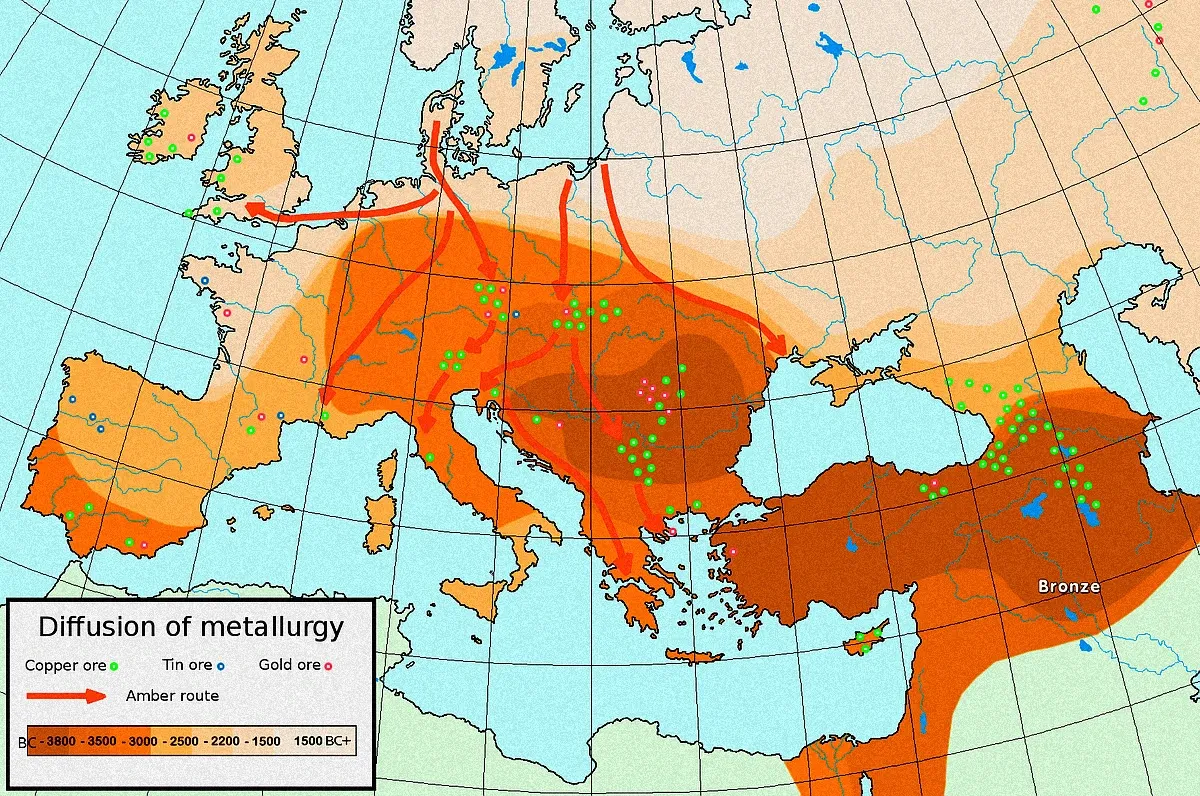
The green on this map represents copper sources, which are plentiful. The problem is the tin sources are spread out. To create bronze, you need to constantly expand your trade networks. The expansion keeps going until it encompasses the entire world. The dark brown shows the earliest trade routes, and the pink shows the later ones. The entire world is encompassed, including Britain, Ireland, and Scandinavia. This is important because the British Isles and Scandinavia aren't often discussed in the Bronze Age, but recent research has shown that it was all interconnected.
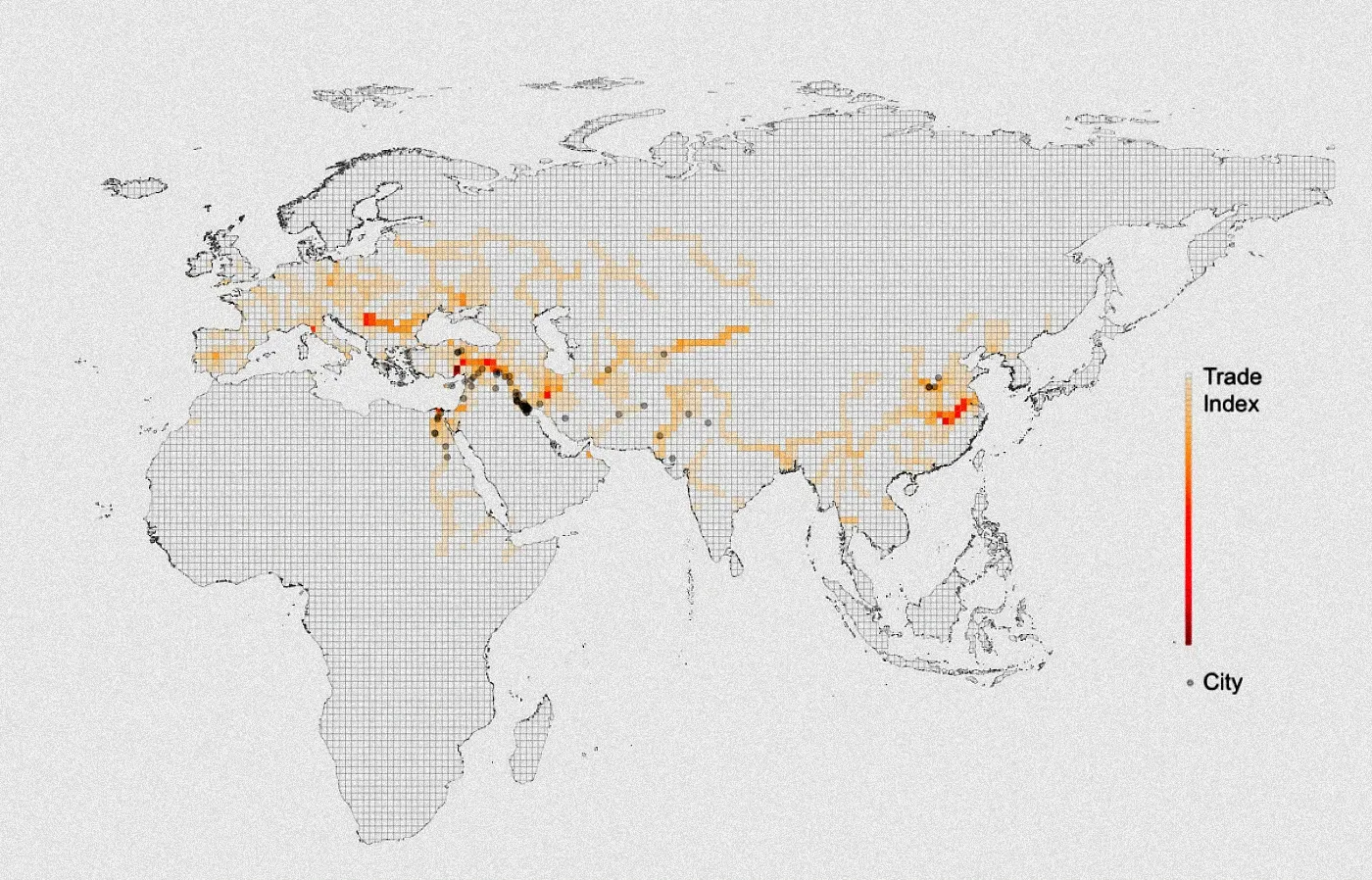
The gray spots are major nodes in the trade network that came about because of trade. The red areas are the major consumption areas. Eventually, you reach a point when it's completely globalized, when every source of copper and tin has been discovered, and there's a massive trade network built around each area.
But again, even though this world was extremely globalized and wealthy, in only about 50 years, it completely collapsed. We know this because of Egyptian records, which write about the coming of the Sea Peoples. These were refugees fleeing famine who teamed up with pirates. Together, the pirates and refugees overwhelmed existing civilizations, including the Mycenaeans in present-day Greece and the Hittite Empire in present-day Turkey. This was a world in complete collapse.
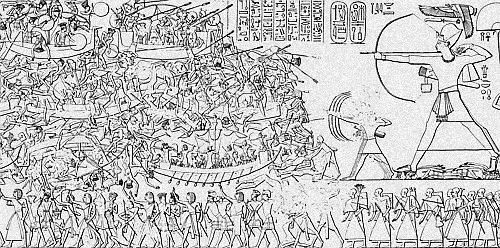
The Sea Peoples were a mix of different groups. We've tried to identify where they came from and who they were, but we really don't know. The assumption is they came from everywhere and were led by pirates who were experts at raiding other nations. The Egyptians left records of at least three major invasions, with hundreds of thousands of people attacking Egypt at the same time. Egypt had to expend tremendous resources to repel these invasions, which ultimately left it bankrupt.
Eric Cline, an anthropologist at the University of Washington, wrote a book called 1177 B.C.: The Year Civilization Collapsed. He lists the reasons why the Bronze Age collapse happened, calling it a perfect storm of crises, including climate change, drought, famine, earthquakes, revolutions, civil wars, and a migration crisis.
My argument is that yes, the Bronze Age collapsed because of a perfect storm, but it ultimately has to do with the fact that it was a proto-capitalistic system. Capital drives you to prosperity, but it will also drive you to crisis.
We've seen this before. This is the world right before World War I. It was heavily globalized. People thought that because of trade and prosperity, we couldn't go to war. A couple of years later, tens of millions of people died in World War I for no reason. It was just a slaughter. This is a very common pattern. If you look at the Bronze Age collapse and World War I, we are in a very similar situation where the world is heavily globalized and interconnected. But because of the nature of capital, we'll probably fall off the edge at some point.
The Proto-Capitalist System of the Bronze Age
During the Late Bronze Age, from 1400 to 1200 BCE, this entire world was interconnected. The center of this world was really the Mediterranean and the Aegean Sea. The most strategically important city in this world was Troy, which is why we have the Trojan War.
In a proto-capitalistic system that depends on tin and copper, how do you make money?
- Mining: This sucks because it's hard work and you don't make much money. It's just labor.
- Processing: You can process it into ingots, which are just ways to transport tin and copper.
- Manufacturing: You can manufacture jewelry, pottery, and weapons, which makes more money.
- Transporting: This is hard work, but you make more money.
- Piracy: You can just steal the stuff.
- Controlling Trade Routes: This is the best way to make money. That's what Troy was—a control point of a trade route. That's how you make real money during globalization.
This is why even today the Middle East is so important; it's a center of global trade. Whoever controls the Middle East controls global trade. Empires back then were really just about controlling trade routes. They were a collection of different trading points aligned with each other, very different from modern nation-states. The Trojan War was just a trade war.
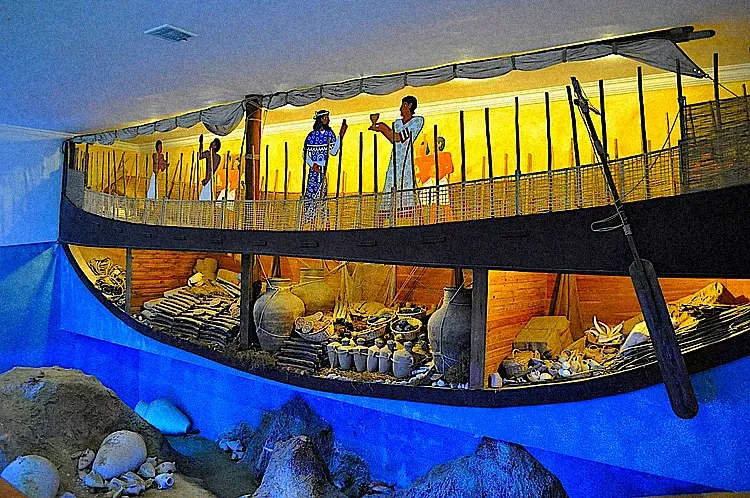
We know about globalization during the Bronze Age because of shipwrecks. This is a very famous shipwreck discovered off the coast of Turkey called the Uluburun shipwreck. Inside it, you can see all this precious pottery, and we can date the location of where the pottery came from.
Because tin is located in isolated, high-mountain areas, they had to use every form of transportation. In Europe, they mainly used the river system, which is why all of Europe was brought into this trading network, including Scandinavia. This is something we've not known before; we just assumed Scandinavia didn't really exist back then, but it was a very important part of the trade network.
The Peaceful Exception: The Indus Valley
The Indus Valley civilization, for the longest time, we know was peaceful, egalitarian, and religious. We know this because we're able to dig up their cities. What we discovered is that it's very much similar to Çatalhöyük, where the housing is very similar, and irrigation and hygiene are all very advanced. We have no evidence of warfare because we can't find any weaponry.
Why was the Indus Valley so peaceful compared to Egypt, Mesopotamia, and China? I think it was because they were able to trade with the others and discovered, "We don't want this system where everyone's killing each other." But that's just my guess; no one knows.
The Indus civilization also gave rise to something called the BMAC (Bactria–Margiana Archaeological Complex) culture in North Afghanistan. This developed because of trade. As I discussed, tin is found in the mountains, so you need to create a community around the mountain. It was a mining town, but also for manufacturing, transportation, and trade—a pretty sophisticated, complex area. Over time, the BMAC culture brought in people from the steppes, the Proto-Indo-Europeans we discussed previously. Because of climate change and the collapse of the Bronze Age, they came and occupied both modern-day Iran and India, giving rise to two religions: the Zoroastrian religion and the Hindu religion.
The Warrior Aristocracy: The Mycenaeans
The Mycenaean civilization is really important because it gives us Greek civilization, which is considered the birthplace of all Western civilization. We believe the Mycenaean culture was a warrior aristocracy, where the people in charge were warriors as opposed to a priest aristocracy like in Sumer. We also know that the Mycenaean people are descendants of the Proto-Indo-Europeans who swept into Europe and went all the way down to Greece.
Mycenae is really important because it's a center of all trade. At this time in history, the easiest way to get around the Mediterranean was by sea. Land travel was costly, slow, and there were lots of bandits. In this system, the best way to make money was actually piracy. There are lots of islands scattered around Greece, and so the Greeks in the beginning were mainly pirates. The people who invaded Troy during the Trojan War were pirates. The Mycenaeans were famous for being pirates.
The Mycenaean civilization had pottery, olive oil, and certain goods for trade, but mainly it was about transportation, logistics, piracy, and controlling trade routes. During the Trojan War, different peoples of Mycenae attacked Troy because it was such a strategic location. If they were able to control Troy, they controlled the entire Aegean Sea.
The Mycenaean civilization had what we call a palace economy, meaning the center of the economy was the palace. All the farmers had to give the palace their food, and the palace would then take this food and redistribute it to the artisans—people who made pottery, clothing, and textiles for trade. It was a command-and-control economy centered on the palace. It was a very simple economy, but it was very effective and made them an extremely wealthy place.
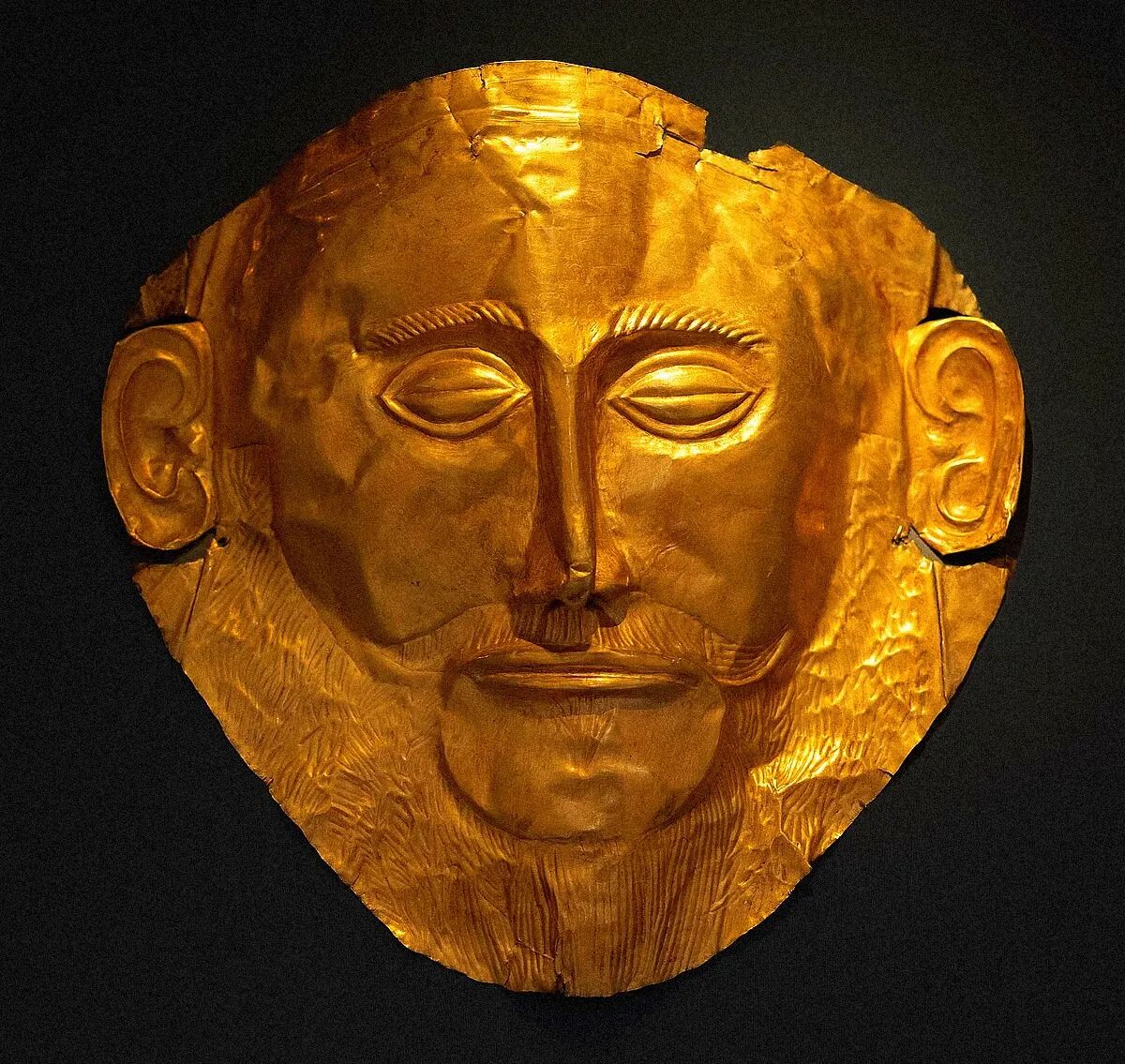
This is a gold mask. Gold is very rare, and they turned it into a king's mask. Some have speculated this is the mask of Agamemnon, a major character in the Iliad, but we actually don't know who this is. They had swords with gold hilts, which just shows you how extremely wealthy they were.
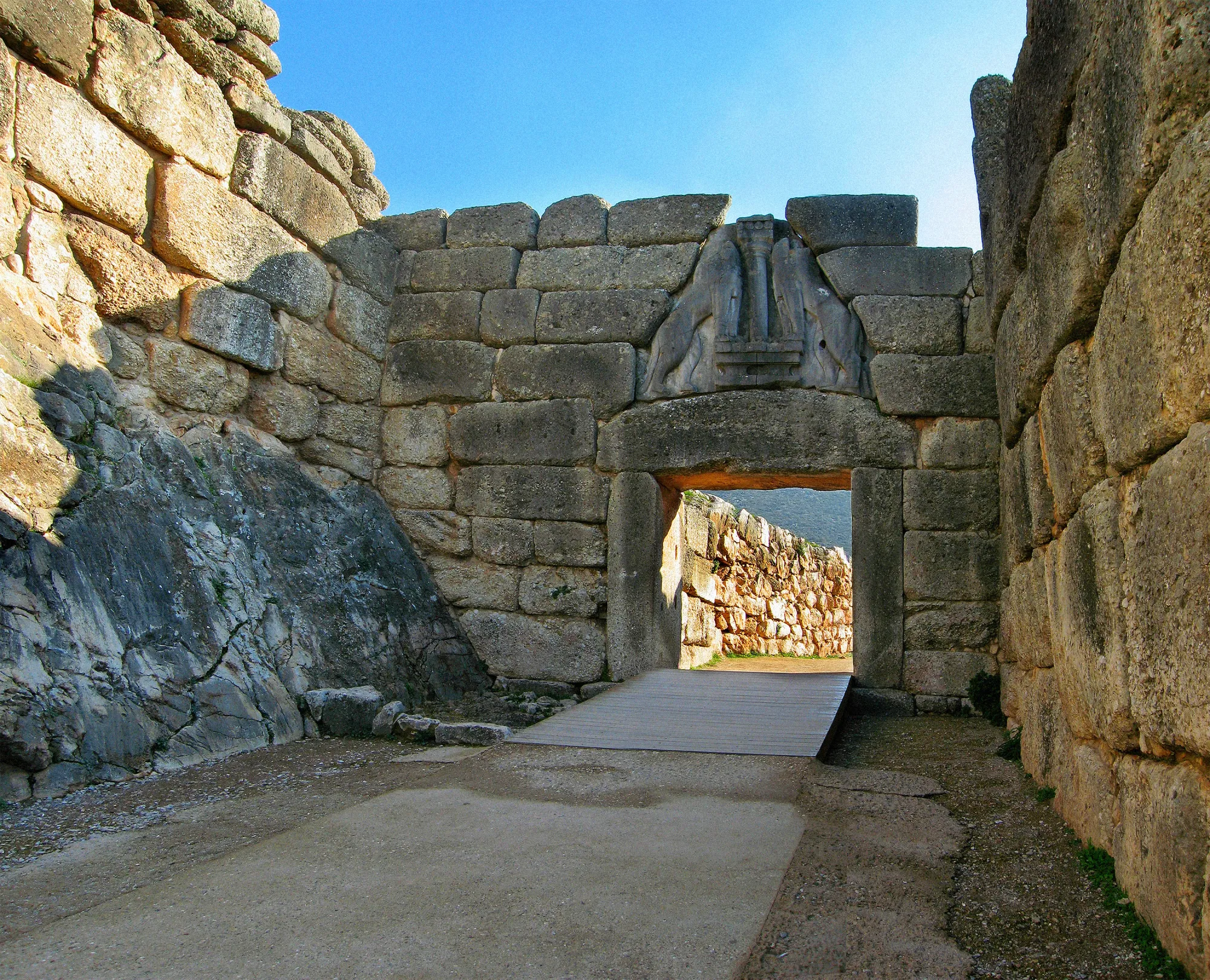
This is the Lion's Gate, the entrance into Mycenae. This was a very rough time with lots of wars and piracy, so there were lots of walls. The Mycenaean tombs are also very, very elaborate. Over time, we see the tombs become more and more elaborate, so we know they became a much wealthier civilization. They learned this from Egypt. At this time, the Mycenaeans and the Egyptians were in close contact. The Egyptians had a habit of burying themselves with all their treasure.
The Psychology of Infinite Wealth
Throughout most of human history, we've understood that this is the material realm, and once we die, we go off to the spiritual realm. You can't take your money with you. So why were the Egyptians, and even the first emperor of China with his terracotta warriors, burying their money and armies with them? It makes no sense.
The argument I want to make is that money, capital, too much of it, changes the fundamental chemistry of the brain. It makes you crazy.
Let's do a thought experiment. Let's just say Satan were to come into this room and say, "Hey, I'll give you guys a billion dollars, but you have to live forever and be my slave forever." We'd be like, "No, why would we want that?"
But now, let's assume we are the richest people on earth. We all have $10 billion right now. Then Satan says to us, "You know what? $10 billion is a lot of money. I'm sure you enjoy your life, but you're going to die. And when you die, you can't take that money with you. But hey, I can make you live forever. I will let you keep this money, but you have to be my slave for all eternity." Do you agree? We would agree. That's the difference. Money makes people crazy.
Bronze started off as just a weapon to obtain power. But then over time, as powerful people became more stable, they used bronze to make jewelry and pottery to show their status. And then, because rich people wanted it, everyone wanted it. So bronze became a currency. It was wealth—easy to store, universally recognized, and mobile. This happened over centuries.
The Origin and Nature of Money
We've always had money as a concept. But for most of human history, money signified a debt that could not be paid off. David Graeber, an anthropologist, wrote about this in his book Debt: The First 5,000 Years. Why did we create money? Because there are certain transactions in which there was so much debt you couldn't pay it off.
- Vengeance: Let's say I kill your brother. Now you come kill me. Then my family is going to go kill you. It creates a vicious cycle. The way to get rid of this problem is if I kill your brother, I acknowledge that it's a debt that cannot be paid off, so I give you something valuable—gold, jewelry, anything.
- Marriage: If a woman marries into your family, that's also a debt that can't be paid off because you've just taken away a daughter. So you give me a gift—maybe some gold, a cow, a horse.
- Honoring the Dead: This is a really important example. Let's say you have a great person in the community—a great leader, a great priest. He's done a lot for you, but he dies. What do you do? You bury him with gifts, with gold, with money. It's a monument to his legacy. You know he can't take the stuff with him to the afterworld, but it doesn't matter. You're acknowledging his contribution to your community.
That's what we used money for—to symbolize a debt that cannot be paid off. But then, as society became more sophisticated, we used other forms of currency. As you can see from the table, all these different forms of currency don't really work in terms of universality, storing value, and mobility. But bronze does. And after bronze, gold does. And today, we have the US dollar. Once you have a universally accepted currency, you can have globalization.
The Inevitable Corruption of Capital
Capital is just the monetization of power. The problem with capital is that it exploits, it alienates, and it consolidates.
Go back to the example where I'm the leader of a village. If there's no money involved, all I care about is winning the respect of my people, so I work hard for them. But once capital is involved, I see each person as a commodity. I become alienated from my humanity and from others. Now I want to exploit people to generate more capital.
Over time, the strongest will have all the capital, which leads to massive inequality. The only result of capitalism is massive inequality, corruption, immorality, alienation, anger, and indifference. This is the world we live in today. It's just the nature of capital. There's no way around it.
As we discussed, we have two different mindsets: the altruistic and the utilitarian. People who are altruistic and work for others tend to be more creative. But people who are obsessed with money tend to work harder. That's why globalization happens so fast—because everyone's in a rush to make as much money as possible. But eventually, you reach a point where a few people have all the money, and so everyone's like, "Screw this. I give up." They lie flat (tang ping) or practice quiet quitting. They just give up.
Capitalism is a problem because it changes the fundamental nature of your brain. An article from The Atlantic detailed how neuroscientists have done brain scans and discovered that power causes brain damage. If you look at the brain of a psychopath and the brain of a wealthy person, it's pretty similar. It looks as though people with too much money have brain damage. Why? Because a normal person is able to have empathy and understand the feelings of others. If you're too powerful or too wealthy, you don't have the capacity for empathy. Think of Elon Musk or Mark Zuckerberg. They have no concept of empathy; they are completely unable to relate to the feelings of other people.

This is Bryan Johnson. He's a millionaire who spends about $2 million a year on his health. He's done some crazy things, like blood transfusions with his father and son, trying to figure out how to live forever. He works so hard. He'll get up at 5:00 in the morning, exercise, eat the most nutritious food in the world, regulate his sleep, and constantly monitor his heartbeat. His life sucks.
The question you have to ask yourself is, if you have so much money, why don't you just enjoy it? Why are you focused on living forever? That's the problem with wealthy people. They're kind of screwed up in their head.
There are lots of wealthy people in the world who like this idea of living forever. Let's say you're a billionaire. You have a problem, which is how to keep your wealth, because you're going to die. So you invest in scientific research to live longer. But you also build bunkers because you're afraid the world will end.
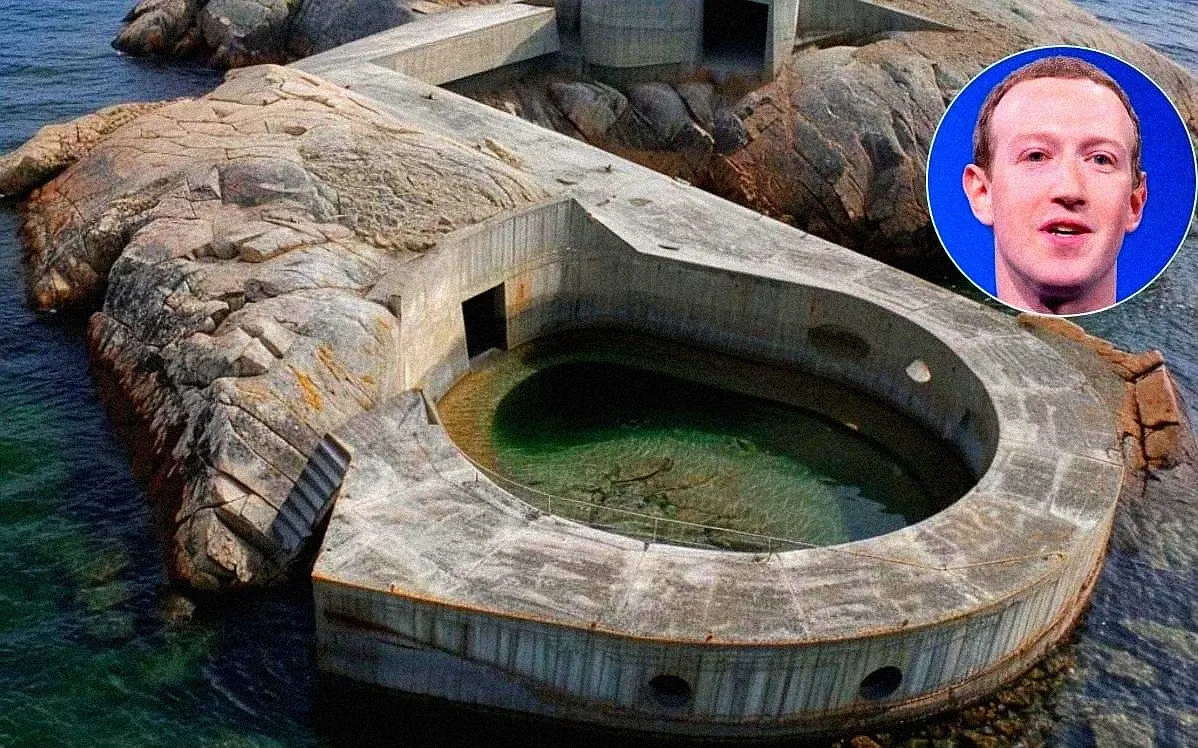
This is Mark Zuckerberg's bunker in Hawaii. He spent around $260 million on this stupid thing, hoping to live forever. It's crazy to go through life thinking about how to survive an apocalypse. Why not just enjoy your life?
They also join secret societies. Why? Because secret societies may have the secret to reincarnation, immortality, or longevity. They have so much money that they're willing to invest in everything.
Why Do the Wealthy Worship Satan?
This is a really good question. It's really about desperation. Religion teaches you that wealth is bad, and when you go to heaven, you'll be judged by God. God is going to ask you, "Hey, why do you have so much money?" And you'll have to say, "Well, I stole this money, and I hurt a lot of people. I cheated, I lied, I stole." Do you really want to say that to God? You're kind of stuck.
First of all, you don't want to die and give up all this money you worked so hard to get. But you also don't want to face God and His judgment. So, what's your alternative? You believe in something more powerful than God, or at least someone you can find refuge in from God. If it means going to hell, you prefer going to hell to facing judgment from God. Because in your heart, you know exactly what you did to get that $10 billion. Maybe other people don't know, but you know, and God knows. And you really don't want to face that judgment.
The religion of Satan became popular to solve this problem where wealthy people want to live forever and want the world to stay the same. But as you learn, it is impossible for the world to stay the way it is. Change is a constant. Things move in cycles. Capitalism gives rise to wealth, but it also destroys wealth. That's just the nature of life.
From Collapse, a New Beginning
The Bronze Age collapse is important because it will give rise to Greek civilization, which we believe to be the basis for Western civilization. So how does this happen?
After the collapse of Mycenaean Greece, we transition into the Greek Dark Ages. "Dark Ages" just means the Greeks lost the capacity to write. During this time, Mycenaean Greece transformed from a palace economy into something called the polis, or city-state. This is where we get the word "politics." This was a major political transition from a centralized economy to competing city-states.
The second important thing is the writing system changed. It went from Linear B to the alphabet.
The third big change is you go from censorship to free expression. In a palace economy, bureaucrats are in control. They control what is talked about and create propaganda. With the collapse of censorship, a new person emerged named Homer.
These three things together—the polis, the alphabet, and Homer—became the basis for Greek civilization. This is why the Greeks became one of the greatest civilizations in human history. The main lesson is that yes, collapse is bad, but collapse also provides an opportunity for a new civilization to arise, for a new humanity to emerge.