Civilization #35: The Viking Legacy
The Vikings are extremely interesting. And I believe that they are one of the most underappreciated and misunderstood European cultures. In the Western tradition, there are two main pillars, the Greco-Romans and the Judeo-Christians. The four traditions, the Greeks, the Romans, the Jews, the Christians, have been overstudied and overappreciated. I would argue that the Vikings are very important and should be part of these four pillars. I think there should be five pillars, and I think that over the next few decades, scholars will slowly reveal to us the importance of Viking culture to the development of Western civilization. That's my argument to you, that the Vikings are extremely influential.
I'll do an overview of Viking history and influence. And I'll focus more on the cultural system of the Vikings, what they believed and how they understood the world.
A Brief Historical Overview
Let's do a brief historical overview. The Viking Age is what scholars term the period from the year 793 to 1066. 793 is when there was the first recorded, written-down incident of a Viking raid on a monastery in Europe. And this is really one of the first written records of the Vikings. The Vikings were always there, actually, and there was some interaction between the Vikings and the rest of Europe. For example, Vikings did serve as mercenaries in the Roman Empire. There was always a bit of interaction, but for the most part, the Vikings were an isolated culture.
1066, the year that the Viking Age is supposed to have ended, is the year of the Battle of Hastings. That is when the Normans, who lived in France, crossed the English Channel and conquered England. And this is the last time that England would be conquered. And this would mark the end of the Viking Age because it really marked the assimilation or integration of Viking culture into the broader European framework. That's what scholars mean by the Viking Age.
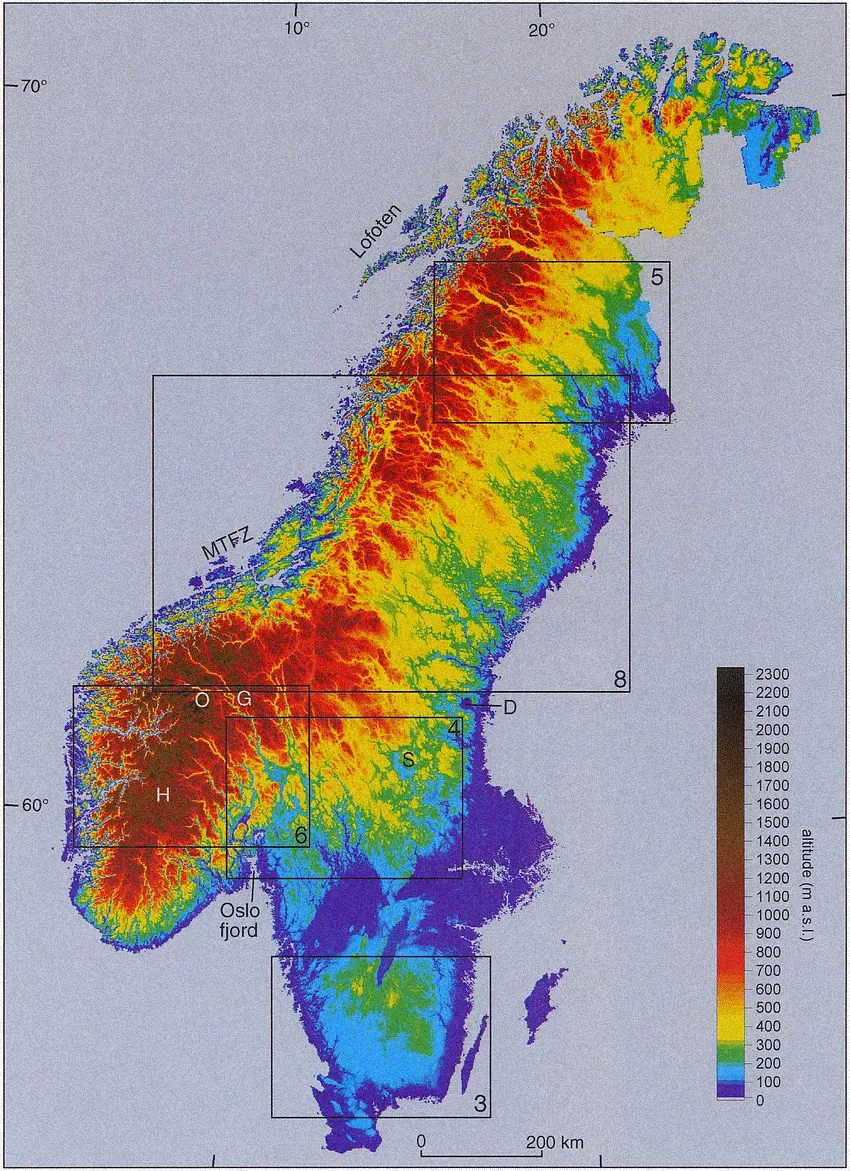
The Vikings are from the three countries today we call Denmark, Norway, and Sweden. Collectively, they are known as the Scandinavian countries. What's interesting about this area is the geography. This is a topography. Red means high altitude. Blue means low altitude, so by the sea. As you can see from the topography, the Scandinavian area is extremely diverse. And as a result, the region historically has been very poor, isolated, and diverse. This area for the longest time had tremendous diversity in terms of culture and politics. You had kings, you had tribal chieftains, and then you had different systems as well.
During the Viking Age, what we need to keep in mind is this is a period in history when Europe was being invaded or attacked or pillaged by everyone, basically. The three main invaders are the Vikings who come in from the north. But then you have people called the Magyars who are the modern-day Hungarians coming in from the east. From the south come the Arabs.
The Magyars, just so you know who the Magyars are, they are just the most recent iteration of the Proto-Indo-Europeans, the Yamnaya. Remember, we discussed that three to four thousand years ago, Old Europe, which was mainly an agricultural society, was eventually invaded and conquered by the Proto-Indo-Europeans, the Yamnaya, who lived in the steppes. These are pastoral nomads. And as a result, they brought their culture to them. The Magyars are just the most recent iteration of this culture, same as the Huns, same as the Goths, same as the Germanic people.
What's interesting about the Magyars is that they are mainly a land people, meaning they ride horses into battle. And during the Viking Age, they were extremely successful, penetrating into many parts of Europe before they were eventually defeated and integrated into the main European culture, mainly by making them into Christians. That's how you assimilate people in Europe, by turning them into Christians. And because this is Western Europe, a lot of them become Catholic. But some also become Orthodox as well.
The Vikings are a very different culture because they attacked Europe not by land, not with cavalry and horses, but by sea and rivers. This is a maritime people.
The Global Reach of the Vikings
What's really interesting about the Vikings is how far they extend across the world. The first sort of encounter is when the Vikings start to raid and pillage Europe, Northern and Central Europe. But over time, what they will do is they will extend over to the east as well, where they will found two major settlements. The first is Kiev in modern-day Ukraine, as well as Novgorod. They are going into the Dnieper as well as the Volga.
Why are they here? There's some pillaging, but mainly it's for trade purposes because if you look at where they are in Kiev and Novgorod, it gives them access to three major centers of global wealth. The first, of course, is the Byzantine Empire in Constantinople, which we studied. Then there is something called the Abbasid Caliphate, which is the Islamic Empire in Baghdad. And the third, of course, is the Silk Road, which gives them access to China. In other words, the Vikings encountered every major culture in the world at this time through their trade routes.
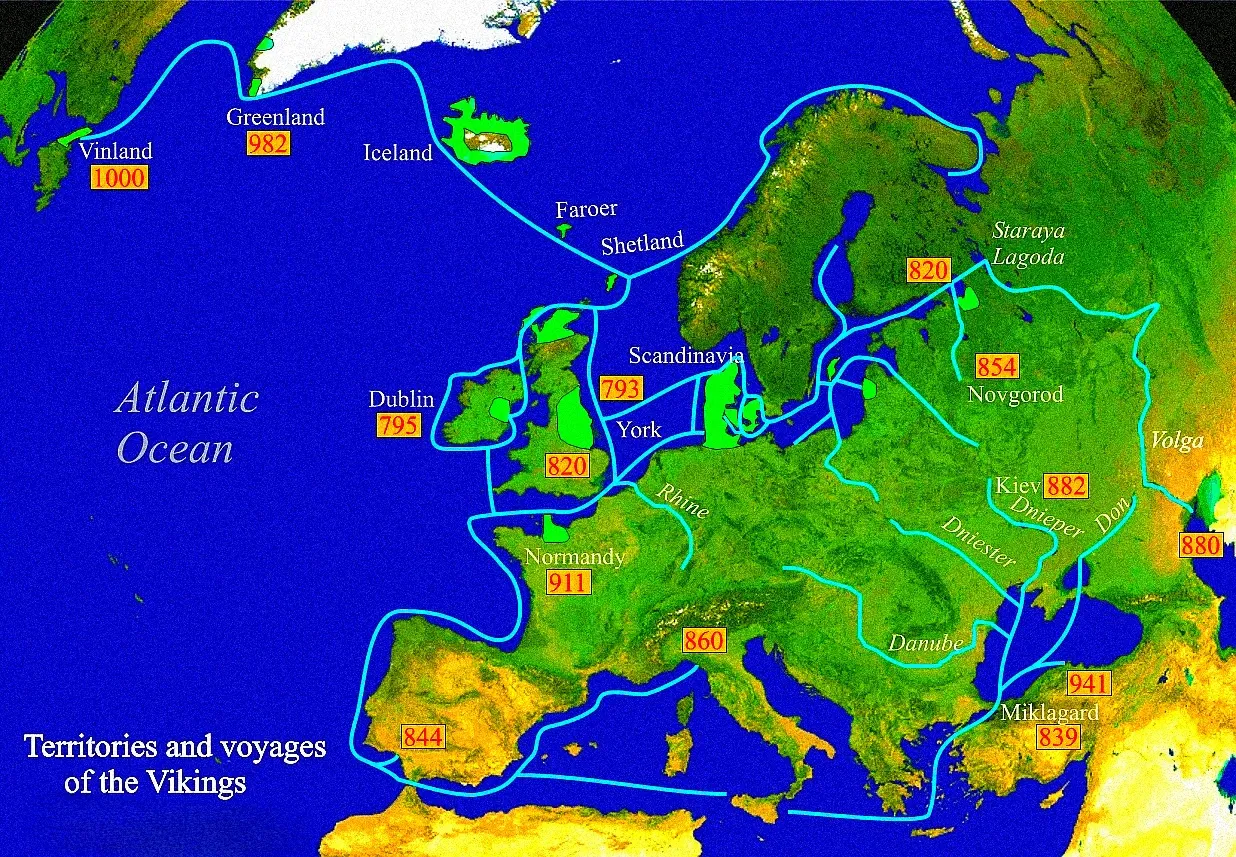
And then what they will also do is go west to found colonies. They will make settlements in Iceland, in Greenland, and in modern-day Canada. The settlement's called Vinland. And it's in modern-day Newfoundland.
Iceland is still with us today. And Iceland is very interesting for three reasons. The first reason is, even though I keep on saying there's no such thing as cultural and genetic purity, the Icelanders come pretty close. There's about 330,000 people who live in Iceland today, and they're all related to each other. And that's because for the longest time Iceland has been isolated from the rest of the world. And it has always been an extremely peaceful, egalitarian, and progressive society. They had the world's first concept of parliament called the Althing. And that's where every citizen would come together once a year to discuss the major political events of Iceland. In other words, they really built the cornerstone of modern European democracy.
But not only that, but a lot of the stories, the mythology of the Vikings, were reconceptualized and written down in Iceland. And these sagas, they're called sagas, would become the foundation of modern European literature. The cultural contribution of Iceland and the wider Viking culture to the European cultural framework, it cannot be overstated.
Also, they will make their way to the British Isles. They will have major encounters with the British people as well as Irish people. They will found a new city in Ireland called Dublin, which, as you know, is the modern-day capital of Ireland. And what they will also do is they will settle down in Normandy. And the reason why is they keep on attacking Northern Europe, mainly the Carolingian Empire. And Charles the Simple, the king of the Carolingian Empire, will defeat them in a battle. And then he will give them land in Normandy. Normandy means land of the Norse people. And then from Normandy, as I mentioned, they will cross the English Channel and conquer England in the year 1066 at the Battle of Hastings.
If you look at this map, what you will discover is the Vikings either founded or influenced four major European civilizations. They are Germany, France, Britain, and Russia. Now, what's interesting is that for the past 500 years, these four nations were the dominant militaries in the world. And not only that, but they were the dominant civilizations in the world. When we think of modern Western civilization, we really mean these four nations, Britain, France, Germany, and Russia. That's where the very best literature, philosophy, and art comes from. And what I will show you is this is not just a historical coincidence. There are reasons and factors that will help us better explain why this happened.
This is the settlement in Newfoundland. This was actually the first European settlement in the New World, North America, and this is at least 500 years before Christopher Columbus. This is a map that shows the Viking expansion over time. As you can see from this map, they basically expand outwards. And as they gather more information about the world, they continue to expand. What is the culture, what is the mentality of the worldview that drives this aggressive expansion? What is the Viking worldview? This is something that I will introduce, but explain more in detail.
Raiders, Traders, and Mercenaries
Today, when we think of the Vikings, we just think of raiders and pillagers. But what's important for us to remember is that in the larger Viking culture, most people did not do that. Most people, when they engaged with the European world, it was mainly through trade. The vast majority was through trade. And then you have people, Vikings, who joined the European world as mercenaries because they were very good fighters. And then you had a small minority who were raiders and pillagers. But because they were so violent, they captured the imagination of the Europeans, and they inform how we today see the Vikings.
This is a map of the Viking expansion, and the yellow are written records, documented Viking raids in Europe. And as you can see, there's a lot of them. They're mainly by the coast, they're mainly by rivers because, again, the Vikings raided mainly by using their longships, their ships. They mainly raided monasteries. And to better understand monasteries, what they were, imagine that they are the equivalent of universities. They're basically the medieval equivalent of universities. These are places where monks spent most of the time worshiping God by celebrating his literary works, mainly the Bible.
The monasteries were built during something called the Carolingian Renaissance, and this marked the beginning of the Holy Roman Empire. During this time, the major cultural focus was on producing books. Our modern conception of the book actually comes from this period. They took all this sort of diverse innovation, such as printing, bookmaking, fonts, ink, and combined it with a system of bookbinding that we still use today. They mainly focused on religious classics like the Bible. And what they would do is they would illustrate them. It would take about twenty to thirty years for an individual monk to create one of these books. It was an artwork, basically.
During this time, they experimented with different fonts. If you go to your computer and you ask Microsoft Word what kind of font you want to use, like Carolingian or others, all of these fonts were actually invented during this time. They also invented bookbinding at this time as well. And what they would do to mark their cultural achievement is they would make covers of gold and jewels, diamonds, sapphires, rubies, as a book cover. These were extremely valuable, unique artworks. This is another book cover. Extremely gorgeous. Again, they would spend a lot of resources, twenty to thirty years, in crafting each of these books.
And that's why the Vikings raided them because the Vikings knew through the trade networks that the monasteries had this concentration of wealth in them. There was a lot of gold and silver and jewelry in monasteries. And in the Viking culture, these precious metals were a status symbol. They wanted them. But you can imagine what the Vikings did because the Vikings were a pagan, nonliterate people. They didn't understand books. They didn't have any use for books. So, they would come in, and they would take these books, the Bible, rip out the pages, and keep the gold, and then leave.
You're a monk, and you see this. And it's the equivalent of having your child killed before you. It was extremely traumatic for them. And again, the monks are literate people. So, they had absolutely nothing nice to say about the Vikings. In fact, they thought that the Vikings were basically the equivalent of Satan. And that's why we have such a negative understanding of the Vikings, mainly through these raids, which again were only a minority of Viking activity during this time.
Gradually, over time, what would happen is that as the Vikings made more wealth from monasteries, word would spread back to the larger Viking culture, and more and more people would partake in these raids, until eventually they developed the skill, the systems, and the technology to sack even cities like Paris, which was a heavily fortified city. And they would do this multiple times during the Viking Age. What's important for us to understand is that these Viking raids would drive population growth in Scandinavia, and then this would drive further Viking expansion throughout the world. It was a cycle.
Aspects of Viking Culture
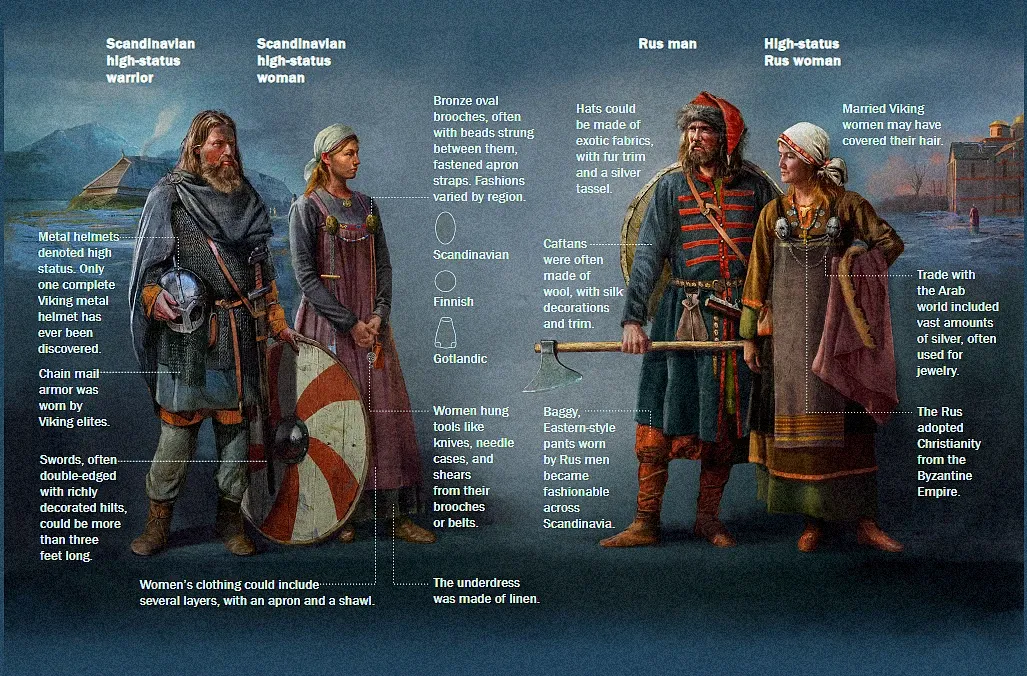
Let's look at some cultural aspects of the Vikings. These are pictures of high-status, meaning basically warriors, in the Scandinavian culture. And this is a picture of these Vikings in the east. They are called the Rus'. The Rus'. And the Rus' would become Russia. Russia, the country, would borrow its name from the Vikings, Rus'.
Some things I will point out about these visuals. Look at the helmets. The popular depiction of the Vikings is they had helmets with horns. Have you seen movies? They did not have horns, guys, because horns are extremely impractical. You might get stuck on your boat, or your enemy could yank it off you. These were extremely practical and utilitarian people. They were not that wealthy. They had to be very careful and conscious about everything they did. That's the first thing.
Second thing is that you will see major cultural differences between Western Vikings and Eastern Vikings. And the reason why is as the Vikings are interacting with different cultures, they're also assimilating themselves into different cultures. They're intermarrying, they're adopting local languages and local cultures, and they're also lending their own culture to these cultures. History is a continuous process of cultural integration. It's a dynamic process. It never really ends.
And the third thing we need to appreciate is these are a poor people. And as such, they're extremely egalitarian. Even though these are high-status people, they're not that different from the majority of Vikings, who are independent farmers, basically.
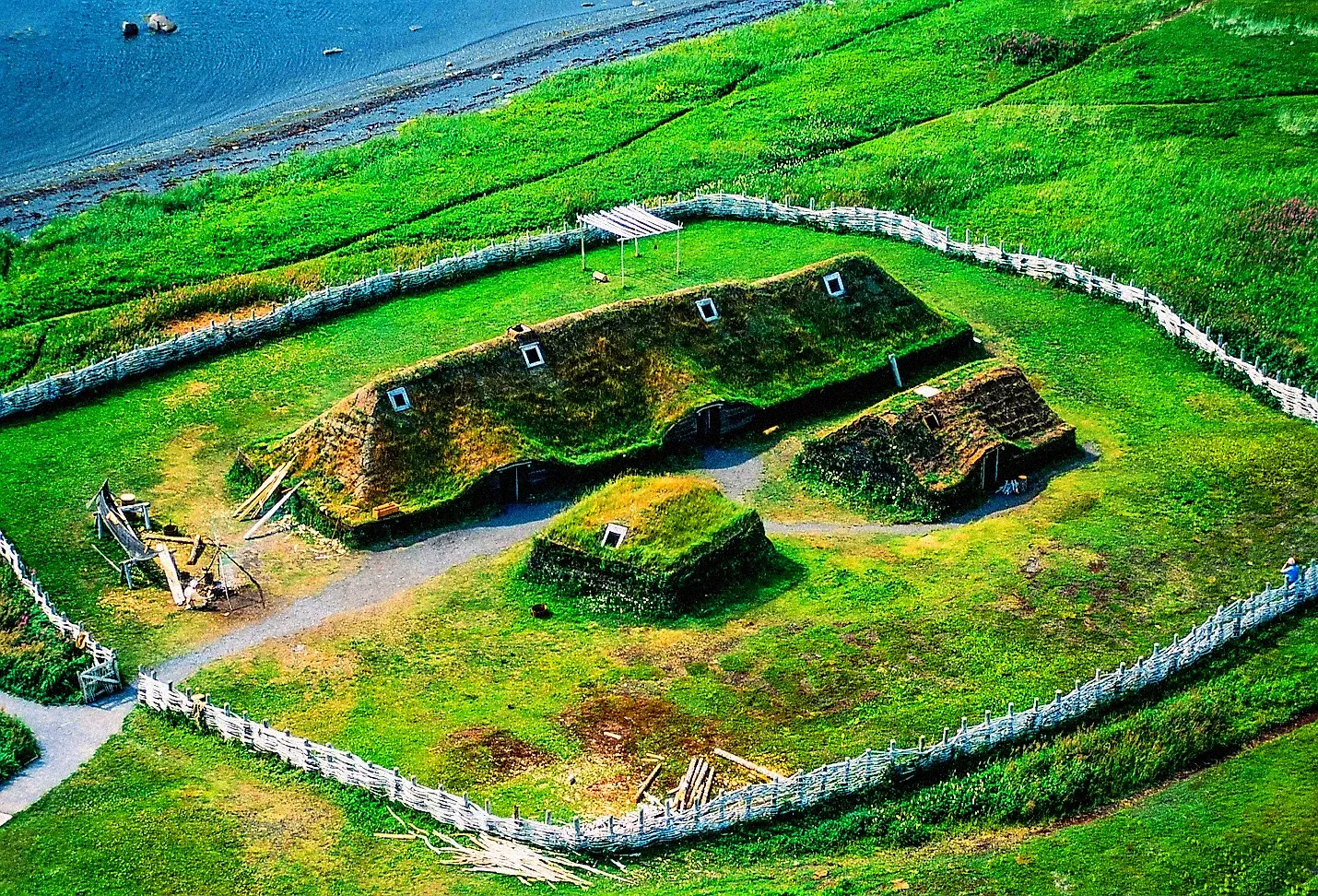
This is where they usually live. This is called a longhouse. And so, because the weather in Scandinavia is very cold for most of the year, these are a very social people. They live together. They spend most of the time together. This is a picture of a Viking hall. Most of the time the Vikings are together, and they're usually drinking, and they're telling stories to each other. They're very much focused on the oral tradition.
The Longship
Let's look very quickly at their longships, which were the dominant maritime technology of the day. These are not that big, but they are purposely designed to be small so that they have flexibility and maneuverability. This is what we think the ships looked like. And this is what they really looked like.
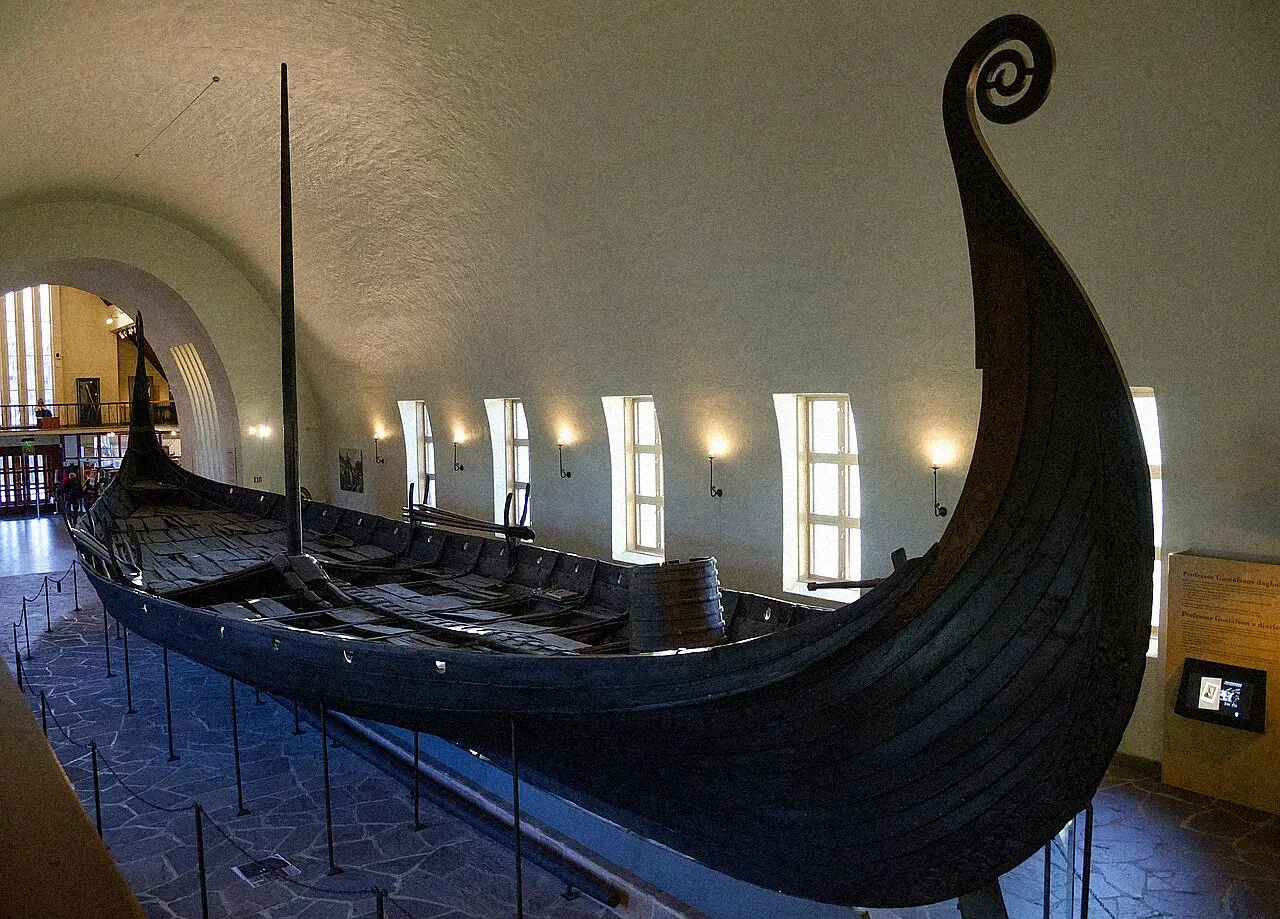
Some points we need to know about the ships. First of all, from these ships you can see that there's really no hierarchy in place. We don't know who the captain is. There's a captain, but he's really not that different from the others. The Viking culture is extremely egalitarian, which is important if you want cohesion on the battlefield.
The Vikings raided mainly for gold, but also for slaves. They're trading with the wider world, the Arabs, the Byzantines, the Chinese. What they were trading were slaves in exchange for silver, which is very important for their culture. These were slavers.
The other thing to know about these ships is they're not that big. And the reason why is they're usually traversing rivers. When you're traversing rivers, you need to be flexible. Sometimes you might hit some rocks. Well, then what you have to do is move that ship out of those rocks and go somewhere else. That's the idea of the longship. And again, this was the dominant maritime technology of that time. The Europeans actually had no way to counter this.
Also, what's important for us to understand is the Vikings also had many different designs. The thing about the Viking ships is they're extremely lean and mean. They're extremely efficient. The only way you can achieve this efficiency is through constant innovation. The Vikings are constantly thinking about how to better improve their ships.
The Viking Funeral
The last thing I will mention is the idea of the Viking funeral. Now, in cultures that we've studied, there's always a spectacle that is the highlight of this culture. The Romans had something called a triumph, which was a military parade to celebrate a general's military victories overseas. It was like the biggest event in the life of a Roman. This would be the equivalent of the Nobel Prize today. The Greeks had as an equivalent of the triumph, theater. Every Greek wanted to be a playwright. That was the highlight of Athenian cultural life.
What's interesting for us is that for the Vikings, the spectacle that they cared the most about was a funeral. Obviously, not everyone would get an elaborate funeral. Only the chieftains or the great warriors would get an elaborate funeral. But these funerals would take ten days, and it would be very expensive. Basically, the entire savings of this great warrior would be invested in the funeral. There'd be a lot of sacrifices, mainly horses and animals. Humans would be sacrificed as well. And the warrior, the king, would be buried with his ship.
That's an overview of the Vikings. What I will do now is explain the Vikings in the larger historical framework that we've been studying. But before I do that, are there any questions about the Vikings?
The Slave Trade
That's the slave trade. The slave trade, it is just an integral and interesting part of life in Europe at this time. The population was very limited because Europe was a poor place, and there was very little agricultural surplus. Plus, there were always these wars to be fought. Slavery was very important. The people who really drove the slave trade were the Byzantines and the Arabs. And there's always demand from these two cultural centers for slaves, which the Vikings provided.
Now, what's interesting for us about the slave trade is the Arabs are Muslim, and the Byzantines are Christian. And the consensus at the time is you cannot enslave a fellow believer. Arabs cannot enslave Muslims. Christians cannot enslave fellow Christians. That's why the Vikings found the slave trade so profitable because the Vikings were pagans. So, in theory, they could be sold to anyone. The Vikings basically enslaved other pagans and sold them to both the Byzantines and the Arabs.
And look, the slave trade, it has been an integral part of human interaction, human trade, for most of civilization. It's really only until the British Empire that we see a clampdown and abolishment of the slave trade. And also, guys, I hate to say this, but slavery still happens. It just happens secretly. We don't really pay much attention to it, but it still happens.
The Viking Graves
"I think it's just a small question, but I remember a long time ago, this is probably twenty years ago, in Sweden they discovered a few of the Viking graves from the funerals where the ships were."
"Yeah."
"And at that time, the Swedish government decided this was too sacred. We're not going to open up. We're going to keep it basically a mystery."
"That's right."
"Since then, do you know if anything has changed? Has anyone opened up these?"
"Yeah."
Archaeologists have found a lot of these ship burials, a lot of graves. And there's just a lot of them. And we've had a chance to study a lot of these graves. And here's some interesting characteristics about these graves. The first thing is these graves are unique unto themselves. There doesn't seem to be a system of burying someone. You have these graves where maybe a woman is buried with a horse. Then you have another grave where a woman is buried with a ship. That's the first really interesting thing about these graves.
Second thing is these graves seem to have a record of lineage. And what we mean by that is these people are buried on top of their ancestors. So, if a woman is buried here, then maybe her granddaughter would be buried on top of her. There seems to be a story going on in these burials.
Now, the third thing about these graves that we've discovered is that there's been a lot of care and attention paid to how someone was buried. Clearly, someone put a lot of thought, or the culture has put a lot of thought, into how this person will be remembered.
What's important is not the burial. What's important is the funeral, the process of the burial, and that's where the culture expresses itself. These burials, they're meant to send the dead into the afterlife. And that's very important. What's really important, and why they have this pageantry or ritual in the funeral process, is it's really about memorializing that person into the larger culture. Making sure that everyone remembers the contributions of that person and having that person contribute eternally into the overall culture. But again, as you know, most of these graves have not been dug up. So, right now we are making some rudimentary guesses based on the available evidence.
I know this is a lot to take in, but hopefully this will make more sense to you as we move along.
The Oceanic Currents of History
Let me discuss the larger historical framework that the Vikings are in. The major thesis is the idea of the oceanic currents of history. One pattern that we see in history is a culture, what we'll call the borderlands. They're isolated from most of history. They're not completely isolated, but they're mainly isolated. And then what happens is that an empire, a major civilization, expands so that it starts to interact with this borderland culture.
And what will happen from this interaction is the energy of the empire will start to transfer to the borderlands. The borderlands itself will expand until it comes into conflict with the empire. And when this conflict happens, the borderlands might be assimilated into the empire, it might be destroyed by the empire, or it might become the empire itself. That's the major idea. And we see this throughout history. Think of the Greeks and the Persians. Think of the Romans and the Carthaginians. Think of the Arabs and the Persians. We see this pattern repeat itself throughout history. What I want to do now is apply this idea to the Vikings and explain how this process works.
Why does this work? Well, if you think about it, an empire, and when I mean empire, I just mean large civilization, an empire and a borderland culture are almost complete opposites of each other. Their advantages compensate for each other's disadvantages.
For an empire, an empire usually has three major advantages. They are mass, organization, and depth. Some historians use the word strategic depth. What do we mean by this? Mass is a very simple idea. It just means a lot of people. Very simple idea.
Second idea, organization means that there's a hierarchy in place that allows the empire to organize its people in a way that most benefits the empire. For example, the empire can field large armies.
And the idea of strategic depth is that the empire can actually afford to lose a lot of battles and still continue to fight. Think about when Alexander invaded Persia. He had already defeated the Persians at the Battle of Issus, but Darius was able to go deeper into his empire and assemble another large army for the Battle of Gaugamela. And when he lost that battle, he could have also built a third army, but ultimately he was assassinated by his generals. On the other hand, Alexander the Macedonian, he could not have afforded to lose one battle.
If you think about World War II, Japan had already conquered China's entire eastern seaboard, but the Kuomintang under Chiang Kai-shek refused to surrender. And he didn't have to surrender because he could continue to go in there. He first went into Chongqing and then Chengdu. And if he had to, he would have gone to Kunming as well. That's the idea of strategic depth.
Also, remember in the history of Rome, Hannibal had won every single battle on the Italian Peninsula. He had destroyed all Roman armies. But because of the idea of depth, Rome did not have to surrender. And Rome only won one battle against Hannibal in its history, but that battle was the only battle that really mattered. It was the Battle of Zama between Scipio Africanus, the Roman general, and Hannibal. And Hannibal lost that battle, and so therefore Carthage lost the Second Punic War. That's the idea of depth. That's the three major advantages of empire.
If you are a borderland, you have none of these advantages. But you have three other advantages that compensate for your weakness. The first is the idea of energy. You have fewer people, but they're more energetic. They're more ambitious. They're stronger. They're more aggressive overall.
Second, you don't have organization, but you have openness. And the idea here is you are open to new ideas, and you can change a society at will. And the reason why is we said this when we talked about the Yamnaya. It's a very important principle that drives innovation. It's called open cooperative competition. That's why the Yamnaya were able to innovate. That's why the Greeks were able to innovate. Open means there's no central authority. There's no government. Cooperative means that you're separate, but you're still learning from each other. Competition means you want to be better than your neighbor. And that's true for the Vikings as well. And that's how they were able to develop the ship technology that enabled them to pillage across Europe. That's a main advantage of the borderlands.
Again, the borderlands have no depth. They can be wiped out by an empire very quickly. That's why the borderlands are opportunistic. This is a very important idea. It basically means the borderlands have to be strategic in picking their fights. If you are bigger than me and stronger than me, I'll be your friend. But if you're weaker than me, then I will steal from you. The idea here is opportunistic. You're shameless in taking advantage of those who you can. These are the three major advantages of the borderlands, and I want you to remember this idea because it will repeat itself over and over.
Energy and Mass
Let me very quickly explain the idea of energy and mass. And for this, let's do a thought experiment. Let's pretend that you are sixteen years old in Scandinavia in about 800. That's when the Viking Age begins. By age sixteen, what have you learned? What have you mastered? Well, your family are basically independent farmers who will engage in trade in order to supplement their income. This is what you can do.
- You can basically work the farm. Work the farm basically means you know how to grow your own food. You know how to cook your own food. It means you know how to take care of animals. If a cow is about to give birth to a calf, you know how to do so. You know how to save the life of a horse. You know how to speak with a horse.
- You also engage in sea trade. And the idea here is that you know how to cut wood and from the wood build a boat. And you know how to read the stars and sail across Europe.
- Also, you're a good fighter. You're able to wield an axe as a weapon. You're able to use a sword as a weapon. You're able to shoot an arrow. If I dropped you anywhere in Scandinavia, you're able to find your way home. You'll be able to fight wolves. You'll be able to feed yourself in the forest, and you'll be able to find your way home. If I put you anywhere in the European world, you'll know how to navigate yourself to find your way home.
And so, this builds the idea that the Vikings at age sixteen, they're extremely worldly people. They're strong. When I mean worldly, I don't mean cosmopolitan. What I mean is they have street smarts. They're very strong and they're very resilient. That's what a Viking teenager looks like.
Now, let's come back to China in the present day. And what do you guys do? What are you guys able to do? Two things. Memorize useless facts. Do stupid tests. I'm sorry to tell you the truth, but this is the truth. Throughout your education in China, you have learned exactly two things. Memorize useless facts and do stupid tests. And the reason why China is like this, the reason why most mass societies are like this, is they want to reduce your energy. They want to be able to control you. They want you to fit into a larger society. You can now see the difference between an energetic society like the Vikings and a mass society like China.
I'll be very serious with you. I have three young kids. My oldest is seven, my second one is almost four, my youngest is only one. As you know, I received a very good education. I was at Yale College for my undergraduate. And I've spent the past twenty, thirty years thinking deeply about education. And I'll be very honest with you. If I had a choice whether to send my child to Yale or to Viking school, I would send my kid to Viking school because I want my child to be worldly, strong, and resilient. I'm not joking, guys. If there was such a thing as a Viking school where you learn to be a Viking, I would send my kids to that school. Unfortunately, there isn't.
Why Did the Viking Age Start?
Let's talk about the idea of opportunistic. The question that scholars have debated for a long time is why did the Viking Age start? What prompted the beginning of a Viking Age? Why did the Vikings go attack these monasteries? And there are different theories. The most popular theory is that as Charlemagne and his Holy Roman Empire expanded, it threatened Scandinavia. And so, the Vikings had to come out and challenge him. That's the most popular historical understanding. And then there are some other theories, for example, population growth, climate change, internal conflict within Scandinavia.
I want to explain a different theory to you, which is just that the Vikings were opportunistic. An opportunity arose that didn't exist before, and they took advantage of it. The opportunity was monasteries.
After the collapse of the Roman Empire, everyone believes that Europe became a lot poorer. And that's the historical understanding. But if you think about it, what really happened is that wealth became much more distributed. During the time of empire, all wealth was being channeled into certain centers. But when we don't have an empire, then farmers can keep their wealth for themselves. So, after the collapse of the Roman Empire, wealth was much more distributed. But as these kingdoms started to arise under Charlemagne, then wealth became much more concentrated.
- These monasteries, they are universities, they're places of worship and of learning, but much more importantly, they are places where wealth is concentrated. Concentration of wealth. These monasteries, like modern-day universities, are extremely wealthy. The first reason why they're wealthy is they're banks. The nobility was actually storing their surplus wealth, meaning silver and gold, in these monasteries. These monasteries were considered to be protected by divine power. No one would dare steal from a monastery. Monks are extremely trustworthy. So, these monasteries had a lot of gold and silver stored and hidden within their premises.
- Not only that, but the monasteries were landowners. They controlled up to 20% of local land. And of course, what they would do is they would take this land and lease it out to farmers. And they made a lot of money that way.
- They themselves engaged in their own businesses. For example, they had their own breweries. They could make and sell alcohol and beer to locals.
- Also, as you can imagine, because these are religious centers, the locals would invest heavily in them. The locals would give them treasures.
And as you can imagine, because there was this concentration of wealth, and because monasteries were not protected, because they were considered protected by God, they made perfect places to pillage. Vikings knew about these places, and so these places were perfect to pillage. And that's what started the Viking Age, the fact that wealth was now being concentrated, whereas before it wasn't.
Then you had the idea of armored knights. The main military innovation in Europe at this time was these tanks called armored knights. And they were fantastic in battle. That's how Charlemagne was able to build the Holy Roman Empire. But if you think about it, armored knights do not like water. They will drown in water. And so, these rivers were completely unprotected. And the Vikings had these longships that were perfect for river navigation. That's another opportunity that presented itself.
The armored knights would give rise to the idea of feudalism. Feudalism just basically means that these armored knights became landowning nobles that took advantage of farmers. In order to get these knights to fight for them, kings would give them land grants. These knights would take this land and rent it to farmers. Over time, as we know, farmers will incur a lot of debt, which means that they will now become slaves to these nobles. And this is the idea of feudalism.
And what this means is that by the time the Vikings attacked, Europe was becoming a very hierarchical society. The thing about hierarchies is they don't like to change. One question historians had is, well, why didn't the Europeans adapt themselves to these Viking raids? Some did. But most didn't. And the reason why is if you change your military tactic in order to respond to a Viking threat, you have to change your hierarchy. You have to change your cultural hierarchy.
Remember when we did the Greeks, we learned that depending on the structure of your society, you had a different military. If you were a navy, like Athens, you were a democracy. If you had a cavalry, like the Macedonians, you were a monarchy. If you had hoplites, like the Spartans, you were an oligarchy. The structure of your military determined the structure of your political system. So, the Europeans purposely did not respond to the Viking threat because they wanted to maintain their feudal system. And of course, this is a very general statement. A lot did respond to the Viking threat, but overall they did not respond to the Viking threat with the same urgency or sense of anxiety that they should have.
The Viking Age came to an end when the Vikings amassed enough wealth to align themselves with the European nobility. The idea here is if you're a bandit and you steal a lot of money, what do you want to do? You want to become an aristocrat because that's the best way to protect your wealth. Once you're an aristocrat, your wealth becomes legitimate. The Vikings, once they amassed enough wealth, the Europeans started to intermarry with them. And the Vikings in turn became Christians because that was the best way to assimilate. And as Christians, they would convert their own followers and their own people as well. Remember, the spread of religion is usually a top-down process where you first convert the elite, who then convert the people. It is not a bottom-up process.
And also, the Vikings provided military protection and support to the European powers. And that's what ended the Viking Age. Vikings were so successful that they were eventually co-opted into the European nobility. As I mentioned, the Vikings, their culture would heavily influence four new civilizations. And they are the English, the French, the Germans, and the Russians. What I would do is show you why Viking culture is so influential.
Community and the Individual
What I want to do is give you a preview of how the Viking worldview is very different from other worldviews. There's a premodern understanding of the world, and there's a modern understanding of the world. In the modern understanding of the world, in the world we live in today, the community is distinct from the individual. The individual can be outside the community. That's why even though you are Chinese, you're still able to go to America. Because you as an individual can be separated from your community.
And often in the modern world, we believe that the community and individual are in conflict with each other. For example, if you are a woman, historically you have been oppressed by your community. If you are a homosexual, the same is true. If you are a minority, you're often oppressed. And that's what justifies the idea of a nation-state. The nation-state is an entity that protects the rights of all individuals against the community. That's a modern conception of the individual. It's a very important concept. But first, I want to introduce it to you.
Now, historically, most cultures have not believed this. Most cultures have believed that the individual can only exist within the community. The community is that which gives you history, tradition, and a worldview, a religion, a mythology. And it's your interpretation of these things that allows for your individuality. But you cannot exist outside this tradition.
That's why for most cultures, the worst punishment inflicted on the individual was not execution. It was actually banishment. If you killed someone, we didn't kill you. We banished you from the community because that was considered the worst possible punishment to a person. You cease to be an individual, you cease to be alive if you're removed from the community that gives you nourishment.
But within this tradition, within this understanding, there are different ways you can conceptualize the idea of the community and the individual. For example, let's look at the Greeks.
- The Greeks believed that the community was the polis. The polis. And that's where we get the word politics from. The polis is a place where people gather in order to discuss the political affairs of the community. That's what community was. It was where people came together to discuss politics. And as a result, the individual is someone who stands out. That's why we have the concepts aretē and eudaimonia. In this community, you are an individual, you are the best individual if you can speak the best, if you can argue the best, if you can stand out. The prime purpose of Greek life was to stand out so that you could achieve eudaimonia, human flourishing, as well as achieve aretē, human excellence. That is the Greek understanding.
- Then you have the Romans. The Romans defined community as tradition and history and place. As long as you are in Rome and you believe in Roman history and practice Roman tradition, then you are a Roman citizen. Doesn't matter where you come from. As long as you're in Rome and you practice Roman traditions, then you are a Roman. That's why for Romans, what's important is for the individual to be pious. The individual is a pious person. Someone who is loyal to the traditions of Rome and who extends the traditions of Rome through conquest. That's why everyone wanted to be a general like Julius Caesar. To win glory for Rome. And that's how you show piety to Rome.
- We did the Greeks and the Romans. Now, the Vikings are very different. The Vikings are very different people. For them, community and the individual are very different. The community is a collection of stories. The community is stories that are told over and over by the people inside the community. And as such, the individual has a responsibility to add to the story. How do you add to a story? Through exploration. Through adventure. Through personal courage.
That's why the Vikings went off to settle Iceland and Greenland. That's why they pillaged these monasteries in the south. That's why they went to the east and founded settlements like Kiev and Novgorod and traded with the wider world because they were trying to add to the larger stories of the Viking community. And that's what's important for them, to be remembered by the community through adventure and exploration. It's a very different concept. And this is what I will explain: how the entire culture revolved around this understanding of the community and the individual.
The last thing I will say is what's really interesting for us is remember that these three different cultures are extremely different. They have a very different approach to the world, but they all come from the same cultural origin, which is the Proto-Indo-European culture. What's interesting is that as they came into Europe and they settled down in different geographic locations and interacted with different people, they adapted their culture accordingly. The story of human history is always one of innovation, change, and resilience.
Intermarriage and Alliances
The idea of intermarriage. What is the idea of intermarriage? What's really hard for us to understand is that for most of human history, we didn't have a concept of race, culture, ethnicity, and borders and states. These are all modern concepts that we use to apply to history. They're not very useful. What I mean by that is the Vikings didn't see themselves as a distinct culture. They didn't think, "We're Vikings, we are not Greeks, we're not Germans." No one saw themselves that way. The Vikings, their main political unit was the village or the tribe. And the way they fought wars is these tribes would join into temporary confederations. But these confederations were extremely fluid. If you're a tribe and you want to switch alliances, you could do so, and no one could stop you.
The very idea of identity was extremely fluid. And what they understood was in order to survive in the world, you have to build alliances. That means you build alliances with other Vikings, but if you could, you also wanted to build alliances with the European nobility because they have far more wealth, technology, and resources than you do. So, when the opportunity presented itself for them to intermarry into European nobility, then they did so.
For example, the Byzantine Empire was, as we discussed, a walled empire. So, it was impossible to invade and conquer. The Vikings couldn't really conquer the Byzantine Empire. But at the same time, because they were closed in, the Byzantines couldn't really protect their empire. The only way they could protect their empire was not through the military but through diplomacy, through bribery, through intermarriages. The Byzantines made an offer to the Vikings in Kiev. "We will let you guys marry into the empire," basically by having their ruler marry a princess. But on the condition, of course, that you now serve the empire and that you convert to Christianity, Orthodox Christianity.
And as you can see, this makes sense for everyone. The Byzantines now have more soldiers who are proven and who have their own territory. And the nobility in Kiev, basically the prince, he now has legitimacy because he's also fighting against the other Vikings in the area. And that's the idea of intermarriage, to form a political alliance that benefits you.
And ultimately, if you are a ruler, prince, you're always looking to intermarry as much as possible. That's why these kings had so many wives. These wives represented different political alliances. It wasn't because he was really horny and he loved sex. It was because as a prince, as a king, you have to have different alliances. And the best way to form an alliance was through intermarriage. But if you marry someone, you must also marry into her faith. That was a precondition. And that's why the Vikings in Kiev would convert to Christianity. The king converted, and then the king would make his followers convert. But it's a process that would take generations. These things are very slow because, as I keep on saying, culture is persistent.
Premodern Cultures and Tolerance
The question then is, were these premodern cultures, these pagan cultures, tolerant? How did they perceive gays and minorities? Well, this is propaganda from the nation-state. This is what you're taught today, that we are a much higher civilization because we're much more tolerant towards minorities. And the truth of the matter is, again, when you live in a culture which doesn't really have boundaries and borders, you're a pretty open person.
In the pagan culture, there just isn't the idea of homosexuality. Men had sex with each other all the time, and no one cared. And women had fewer rights, but in the Viking culture, women had status, often because they practiced magic. In their culture, men weren't allowed to practice magic. Women practiced magic. And you can imagine that would give women tremendous status. So, the idea that we have that community suppressed the individual is something that we believe. We have faith in it, but it just is not historically true.
Also, remember there's a fluidity within these communities. It's perfectly possible for you to get up with your family and move somewhere else. No one can stop you. So, the premodern world was much more tolerant than the world we live in today, mainly because we did not categorize people back then.
One thing that we will learn is that the very idea of race and racism is a new, modern concept that didn't exist before. We only have this because of the idea of imperialism. When you go and conquer other people, you need to justify it somehow. And the best way to do it is through racism because they are an inferior race, and therefore we have come to civilize them. But this is only in the past twenty years. And before, we didn't have a concept of race.
Banishment
"What you mentioned, within society identity was fluid."
"Fluid. Yep."
"But the worst punishment is banishing people from the society. What is their worst punishment?"
The Vikings? The Vikings, their worst punishment is banishment as well. For example, if you killed someone, you'd be banished. The actual punishment would be determined by a community discussion. But it was usually banishment or exile for a number of years. In Athens, you would be banished for at most ten years. If you commit the most grievous crime, then the worst punishment would be banishment for ten years. Because the understanding was that the worst thing that could happen to you is banishment. Because, again, the individual is part of the community. You were nourished by the community. Without the community, you were a nobody. You were basically a ghost or a zombie.
"So, those people who get banished still come back after ten years?"
Yes. Yes, they always come back. Yes. The Athenians banished a lot of people, and they always came back. And if they're banished, they're always thinking about coming back. Because again, there was no idea of the individual existing outside the community. You were the community. And if you came into a new community, then people just assumed that you were a bad person. And you were ostracized because, "Where's your community, man?"
In the ancient world, the first question they would always ask you is not, "What is your name?" but, "Where are you from?" What is your community? Because that's what mattered. Not, "What is your name?" or, "What do you like? Who are you?" It's always, "Where are you from? From what family, from what community, from what clan, what tribe are you from?" Then we know how to interact with you.