Civilization #40: Church and Empire
Today we will explore the Crusades, which will lead us into the Renaissance, the Protestant Reformation, and the Islamic Revolution. We will look at three questions: What were the Crusades? Why did they happen? And why did they stop? To explain the answers, I first need to provide a lot of background.
The Contradiction at the Heart of the Church
In the beginning, early Christianity, as described in the Bible, was a religion of two things: humility and poverty. To illustrate this, let me tell you a story from the Bible. One day, Jesus and his disciples were out preaching when a young man came to Jesus and said, "I loved your sermon. I want to know how to be a better person." Jesus told him to follow the Ten Commandments and the laws of the prophets. The young man replied, "I am a very pious man. I already do this. I want to do more."
Jesus then said to him, "Then do this. Give up all your wealth. Give your wealth to the poor, and then follow me, and you will have all the treasure in the kingdom of heaven." The young man was distraught because he was very wealthy and didn't want to give up his wealth, so he walked away. Then Jesus turned to his disciples and said, "It is easier for a camel to go through the eye of a needle than for a rich man to enter the kingdom of God." In saying this, he was negating wealth.
This was a revolutionary idea at the time. For people in the Western world, the entire point of believing in God and making sacrifices to your gods was to have more wealth in life. How do you know if God favors you? You become wealthy. What Jesus was saying was revolutionary: you should live a pious life so that you may enjoy a good life in heaven. That's the heart and soul of the Christian religion and what makes it different from previous religions.
That said, the Catholic Church is probably the wealthiest and most powerful religious organization in human history. We have absolutely no idea how wealthy the Catholic Church is; their wealth is immeasurable. St. Peter's Basilica, the church in the Vatican where the Catholic Church is based, is filled with gold. In its nearly 2,000 years of history, the Catholic Church has amassed more money than God.
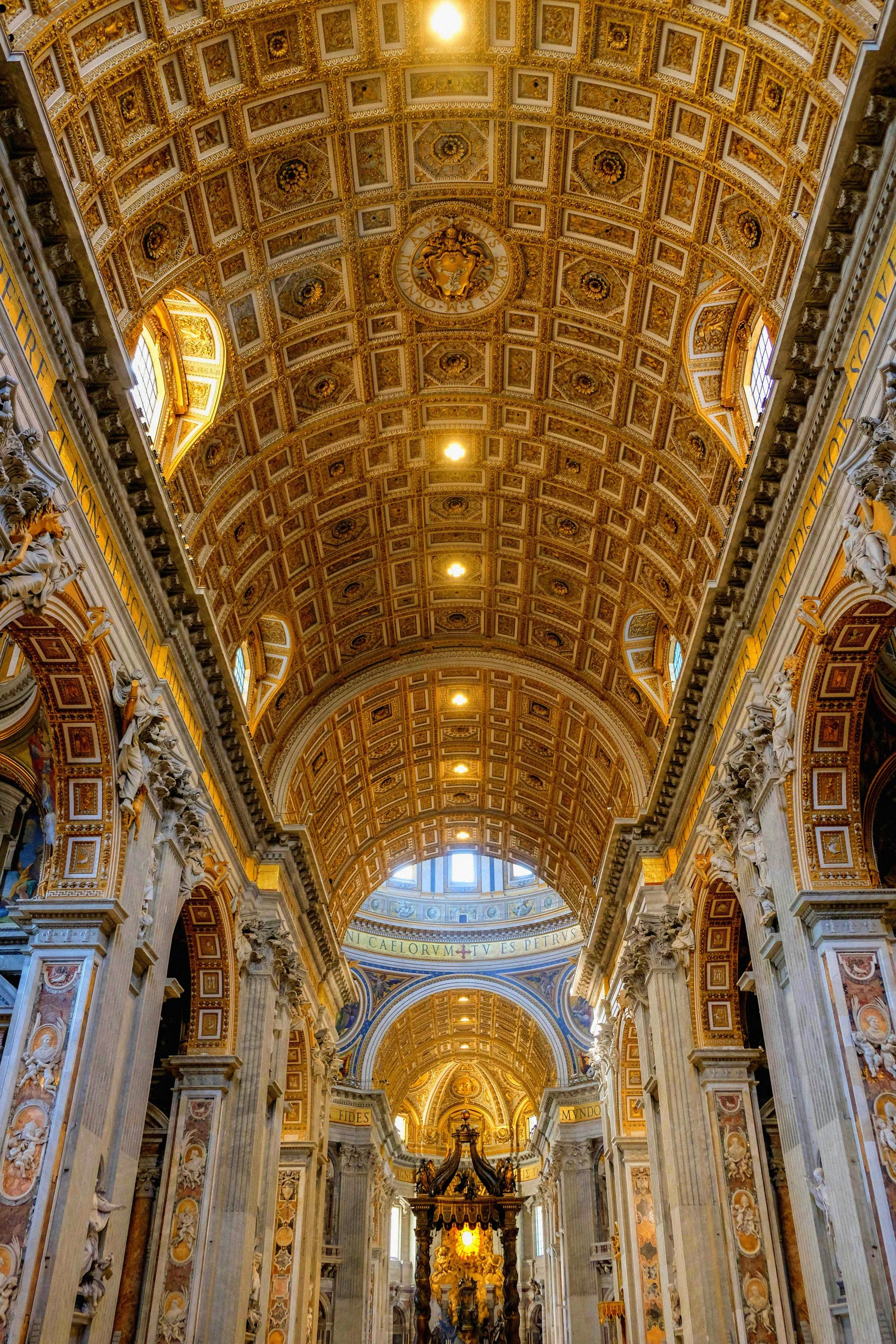
How do you explain this contradiction? How was the Catholic Church able to amass so much wealth?
The Rise of Europe and the Church's Power
After the fall of Rome, the Catholic Church basically became the new Roman Empire. For the longest time, Europe was poor, but starting around the year 1000, it became increasingly wealthy for a variety of reasons. The main reason is something called the Medieval Warm Period, which made it easier to grow crops. This followed the invention of the watermill, windmill, and horse collar, which further eased cultivation. I call this the mini-agricultural revolution.
Because of this excess wealth, you saw the rise of cities and urban centers, which allowed Europe to start trading with the rest of the world, primarily the Abbasid Caliphate. As such, Europe became increasingly wealthy. But what's important to remember is that with wealth comes inequality. This also marks the high point of feudalism. You have too many people, too little land, and as a result, the nobility controls all the land. The peasants became poor, dependent, and often indebted.
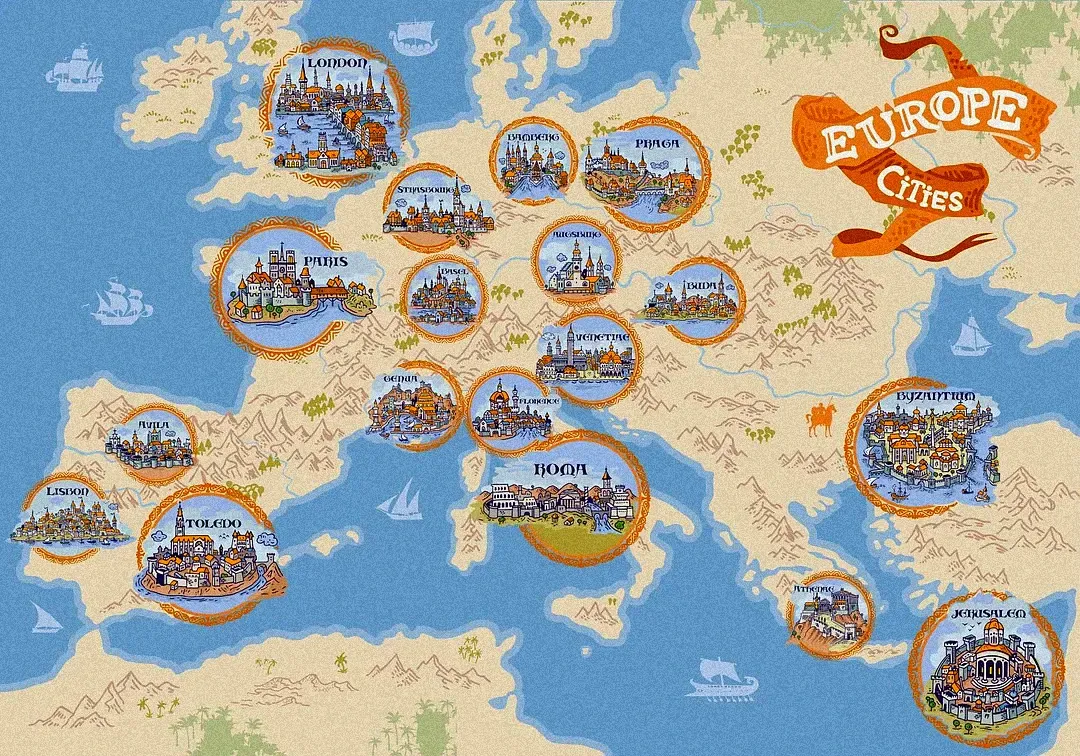
At this time, one of the wealthiest parts of Europe was Spain. This is important because, in the year 1000, Spain was not Christian; it was Muslim. This would create conflict between Christian Europe and Muslim Spain.
How the Church Maintained Its Power
The Church pioneered a new way of controlling people that was not possible before. Let's compare an empire with the Catholic Church.
This concept of eternal damnation was the source of much of the Church's power. The Church had a faith monopoly; it was the only religion, the true religion. This power expressed itself in several ways. This is especially important for understanding the Protestant Reformation, which was a rejection of many of these practices.
- Imperial Bureaucracy: The Pope was basically the emperor, with bishops controlling each region. It was a top-down hierarchy, similar to the bureaucracy in Constantinople or China.
- Latin as the Official Language: Church services were in Latin, and the Bible was written in Latin. The purpose was to tell people that theology was not for them; they just had to listen and obey. This gave priests immense power.
- Exclusive Right to Preach: It was an explicit rule that only ordained and authorized priests could preach the Bible and interpret what Christianity meant.
- The Nicene Creed: You had to recite the Nicene Creed, which affirms the Holy Trinity and the dominant belief system of the Church.
- The Sacraments: There were seven holy sacraments that you had to pay for. These were rituals provided by priests to channel the divine energy of heaven, Jesus, and God to make your life more fortunate. An example is the Eucharist, which employs the principle of transmutation. The priest channels Jesus from heaven, and his body becomes expressed in bread, and his blood manifests in wine. You then feast on the bread and wine—you eat and drink Jesus, and he comes into you. This sounds weird, and it is, which is why many Protestants would later rebel against it, thinking it superstitious.
- Control Over the Afterlife: The Church determined who went to hell, heaven, and purgatory, and for how long. Purgatory was for cleansing yourself of sins; you might be there for one year if you stole, but a thousand years if you killed someone.
- Canonization of Saints: The Church could determine who were saints. Many future Protestants would argue this was wrong because only the Bible or Jesus could determine who is worthy.
- Absolute Authority of Clerics: The authority of the clerics was absolute. Heretics were those who, after being educated by the Church, still refused to admit its authority. A heretic would be excommunicated—kicked out of the community of the Church, meaning you would burn in hell forever. You could also be burnt at the stake.
At this time, the Catholic Church was a very elitist, aloof, and distant religion, designed to be removed from the ordinary struggles of ordinary people.
Corruption in the Church
With so much power came corruption. Augustine, in The City of God, imagined the intellectual blueprint for the Catholic Church as an eternal spiritual force representing God on Earth. He believed the Church should focus on spirituality, but with power, it slowly became more corrupted. Let's look at some legal practices of corruption at this time.
- Indulgences: If you committed sins but had a lot of money, you could bribe the Church to make your stay in purgatory shorter. This was basically spiritual bribery.
- Simony: If you were rich, you could buy yourself a position in the Church, regardless of your education or understanding of theology.
- Selling of Holy Relics: At this time, everyone was very superstitious and wanted to buy relics to channel the divine power of Jesus. The Church would sell these relics, and many of them were fake. Many Christians found the very idea of the Church engaging in commerce to be offensive.
- Worldliness: This was the conflation of the nobility with the Church. Many princes became bishops. Priests were supposed to be celibate and devote their lives to God, but many got married, had kids, owned property, and became very wealthy.
- Tithes: Parishioners had to pay taxes not only to the nobility but also to the Church.
- Feudalism: At its height, the Church controlled one-third of all the land in Christian Europe and didn't have to pay taxes to the nobility.
As a result of all this corruption and special privilege, the Church became the most powerful organization in Europe. They had this power because people, even kings, were afraid of burning in hell for eternity.
The Legitimacy Crisis
Ultimately, a church's power, legitimacy, and authority come from its ability to enforce its belief system on everyone. This is what I call orthodoxy—the Church must enforce correct thinking. If an increasing number of people disagree, its authority will decrease. Around the year 1000, there were five sources of conflict that questioned the Church's legitimacy.
- The Muslims Occupy the Holy Land: Jerusalem was controlled by the Fatimids, an Islamic caliphate. This was embarrassing. If you are the true representative of God on Earth, why is Jerusalem controlled by Muslims?
- Muslim Spain: It was more wealthy, cosmopolitan, and innovative than Christian Europe. A lot of the reason why is that Muslim Spain was much more open, inclusive, and tolerant than the Catholic Church. It also traded with the rest of the Muslim world, which was very wealthy. Jews, Christians, and Muslims all got along very well in Muslim Spain.
- The Great Schism of 1054: The Greek Orthodox Byzantine Church in Constantinople broke away from the Roman Catholic Church in Rome. Now you had two different churches, both claiming to be the one true church of Jesus.
- Corruption: The conflation of spiritual power with temporal ambition that we just discussed.
- Unmet Religious Needs: Humans are, first and foremost, religious. They have a fundamental need for community, intimacy, and truth. But the Catholic Church was denying intimacy and truth to people. Humans wanted to be with God and serve God, but the Church said, "No, we are the middleman. You have to go through us."
There was a lot of discontent in Christian Europe against the Catholic Church.
The Church's Strategy: Scapegoating, Persecuting, and Crusading
To maintain orthodoxy, the Church developed a three-prong strategy that it would use repeatedly throughout European history: scapegoating, persecuting, and crusading.
What is Scapegoating?
In Judaism, there is a ritual where the sins of the community are symbolically placed on a goat, which is then sacrificed or sent away to cleanse the community. The idea of scapegoating is to blame someone else for your troubles or to divert people's attention.
In Europe at this time, the Jewish community, though small, was still present. Many worked for the nobility, who inherited their wealth but didn't want to manage their land, run businesses, collect taxes, or operate banks. They got Jews to do this for them because Jews were clever and hardworking, but most importantly, they were completely dependent on the protection of the nobility. The Catholic Church taught Christians that Jews were responsible for persecuting Jesus, so Christians disliked Jews. To stay in Europe, Jews were dependent on the nobility and essentially became their servants.
This was bad for them because the peasants disliked being exploited by the nobility. In their day-to-day interactions, who did the peasants work with? They worked with Jews, who collected taxes and sold them goods. Over time, the peasants' resentment against the nobility was channeled toward the Jews. Whenever there was a major conflict, it was the Jews who got killed and persecuted. This is a pattern that would be consistent for basically all of European history, up until the Holocaust. The long-term enmity of the European people against the Jews was created by the nobility. When the conflict became too intense, the nobility would protect themselves by expelling the Jews, as happened in Germany (1100s), France (1306), and Spain (1492).
The Call to Crusade
In the year 638, Muslims took over Jerusalem from the Byzantine Empire. They made Jerusalem an open, inclusive, and tolerant religious community where Christians, Jews, and Muslims could celebrate their religions openly. For most of this history, Christian pilgrimages to Jerusalem were fine. But as the Byzantine Empire and the Abbasid Caliphate became weaker, chaos ensued. Bandits roamed the land, and it became more dangerous for pilgrims to venture to Jerusalem.
The people creating this chaos were the Seljuk Turks. Originating from Central Asia, they slowly conquered the Abbasid Caliphate and, in 1071, began to occupy Jerusalem. The Turks left Jerusalem alone, but because of this conflict, the way to Jerusalem became much more dangerous. The Turks were now threatening Byzantium and conquering territory around Constantinople. The Byzantine emperor appealed to Pope Urban II, the head of the Roman Catholic Church, for help.
Pope Urban II, a politician, saw an opportunity to unite Christendom under the authority of Rome, reclaim Jerusalem, and channel the religious energies of the peasantry against the Muslims. In the year 1095, he gave a speech calling for the First Crusade. This rhetoric would underpin the relationship between Christians, Muslims, and Jews for most of European history.
All who die by the way, whether by land or by sea, or in battle against the pagans, shall have immediate remission of sins.
The pagans were non-Christians—the Muslims and the Jews. What the Pope was calling for was a jihad. All good Christians must now go into battle to reclaim Jerusalem, and if you do so, you will be granted immediate access to heaven, regardless of your sins.
Oh, what a disgrace if such a despised and base race, which worships demons, should conquer a people which has the faith of omnipotent God and is made glorious with the name of Christ.
He's talking about the Muslims. Muslims don't worship demons; they worship the same God as Jews and Christians. When Muhammad and the Muslims came to conquer the Holy Land, they did so peacefully, trying to reduce bloodshed. Here, Pope Urban II is spreading racism. Rumors spread that Christian women were being enslaved and Christians were being massacred in Jerusalem—all of which were fake. He was trying to whip up racist anger.
Let those who have been accustomed unjustly to wage private warfare against the faithful now go against the infidels and end with victory this war which should have been begun long ago... Let those who for a long time have been robbers now become knights... Let those who have been fighting against their brothers and relatives now fight in a proper way against the barbarians. Let those who have been serving as mercenaries for small pay now obtain the eternal reward.
He was saying that if you go on this crusade, regardless of who you are—even the worst criminal in Europe—you will be honored by God and receive an eternal reward. He made this bargain with the people of Europe, and a groundswell of excitement followed.
Why People Joined the Crusades
People were excited to go on the long and dangerous journey for many reasons:
- Penance: Violent people who had engaged in war could be forgiven for their sins.
- Clerical Immunity: Criminals would be absolved of their crimes. As you can imagine, a lot of psychopaths went on this crusade.
- Vengeance: People hearing rumors about Muslims killing Christian women wanted to kill Muslim men.
- Elite Overproduction: Younger sons who could not inherit land could go on a crusade to win their own land and become nobility.
- The Second Coming: Many Christians believed this crusade was the end of the world, the final battle between believers and non-believers, and that Jesus would return to Jerusalem to fight on their behalf and usher in a new world order.
- Adventurism and Romanticism: The allure of adventure and glory.
- Chivalry: A code of honor among knights, which included loyalty to one's lord. If your lord went on a crusade, you had to join him.
- Piety and Fanaticism: A genuine desire to serve God.
These reasons are also what would drive Europeans into the New World during the Age of Exploration.
The Crusades in Action
Over the next 200 years, there would be a series of crusades to maintain the Holy Land. It was a very complicated and disorganized process, largely a grassroots movement organized by local lords.
The First Crusade was extremely successful because, at this point, Muslims didn't care that much about Jerusalem. The crusaders were able to take the city and establish the Crusader States. It's impressive that they did so, as they were completely surrounded by enemies. Because of their religious fanaticism, they would maintain these states for the next 200 years.
In 1099, they took Jerusalem. When the crusaders took the city, they did so with vengeance, killing all the Muslims and Jews—basically as many people as possible. Before the siege, the Fatimids had expelled the Christians, fearing they would help the crusaders from inside, so no Christians were killed. The crusaders celebrated this bloody event as righteous killing for the glory of God.
This contrasts with the year 1187, when the Muslim leader Saladin, considered one of the greatest warriors in history, took Jerusalem without killing any Jews, Christians, or Muslims. He did so peacefully. Historically, Christianity has often been a very violent religion, while Islam, despite its violence, has tended to be more peaceful, open, and inclusive.
The Military Orders and the Knights Templar
Once they controlled Jerusalem, five major military orders of crusaders were established.
- The Knights Templar (the most famous)
- The Teutonic Knights (who would go on to found Prussia, which would unite Germany)
- The Knights Hospitaller
- The Order of Saint Lazarus
- The Order of Montjoy
The Knights Templar became extremely influential and powerful. They were really the first multinational organization in Europe. They were meant to protect pilgrims, but what they really did was act as a bank. Pilgrims would give their money to the Templars for safekeeping, and when they got to Jerusalem, the Templars would give the money back. As bankers and traders, they became much more sophisticated, well-educated, and cosmopolitan than the Catholic Church.
Once they took over Jerusalem, they recognized the need to work with Jews and Muslims, who had business connections throughout the Muslim world. The Templars welcomed Jews and Muslims back into Jerusalem. Over time, the Templars became more tolerant and started to learn from them, picking up better practices. They also encountered Christians in Jerusalem who were considered heretics by the Catholic Church. The Templars absorbed all this diverse religious belief and became, essentially, freethinkers. Their religion became based on reason and logic, the only way to manage such religious diversity.
These changes came into conflict with the Catholic Church. In 1307, the Church began to persecute the Knights Templar, burning their leader, Jacques de Molay, at the stake. The Church accused them of being Satan worshippers, for which there is no evidence. They were definitely freethinkers and religiously tolerant, which went against the orthodoxy of the Catholic Church. By disbanding the organization, the Church drove it underground. Their beliefs spread throughout Europe, incubating the Protestant Reformation and even influencing the American Revolution.
The Three Directions of the Crusades
The crusades were happening in three different directions at the same time.
- To Recapture Jerusalem.
- To Reclaim Spain from the Muslims (The Reconquista). At this point, Spain was called Al-Andalus. It was the most wealthy, cosmopolitan, and innovative place in Europe because it was open and inclusive. This process of Christian Europe slowly conquering all of Spain would take about 200 years.
- Internally, Against Dissenters. There were hundreds of different dissenting groups.
- The Beguines (women) and Beghards (men) wanted to restore early Christianity's humility and poverty. They lived simple lives of extreme poverty and charity. Their problem was that they defied the Church's authority and formed their own communities. Their simple lives also contrasted embarrassingly with the fat, wealthy, and corrupt clerics, so they were persecuted.
- The Waldensians also preached a life of poverty. Their founder, Peter Waldo, was the son of a wealthy merchant who gave everything up. Their problem was they believed the Pope was the devil and the Catholic Church was evil for corrupting true Christianity. Many were burned at the stake.
- The Albigensian Crusade (lasting about 20 years) was the main focus of the internal crusades. In southern France, a community practiced Catharism. Cathars believed in dualism: this world of pain and suffering was created by the devil, who stole pure souls from heaven and imprisoned them in our corrupt bodies. The goal of life was to escape our bodies and return to heaven through good works and knowledge (gnosis). They had their own open, tolerant, and inclusive church structure with women and Jews in the hierarchy. They called themselves "good Christians" and were admired by their communities for their simplicity, poverty, and charity.
When the Pope declared a crusade against the Cathars, their entire communities rallied to protect them. Many Catholics were willing to sacrifice their lives to protect the Cathars and even converted to Catharism, disgusted by the crusades. This did not destroy Catharism because Cathars didn't care if they died; they believed martyrdom would send them straight to heaven. When burned at the stake, they went willingly and happily, which stunned their neighbors and frightened the Catholic Church.
The Inquisition: A New Strategy
The Church realized you couldn't beat people like the Cathars through violence alone. So, it adopted two new strategies.
- The Franciscan Order: Founded by Francis of Assisi, this was a brotherhood focused on a life of humility and poverty, doing good works—but within the Church hierarchy, obeying the Pope.
- The Dominican Order: This was the main response. Just as the Jesuits were created to deal with the Protestant Reformation, the Dominicans were created to deal with the Cathar heresy. These were extremely well-educated people who would use the power of the pen rather than the sword.
How Did the Inquisition Work?
The people who joined the Inquisition did so out of the goodness of their own hearts. They believed the Cathars had been led astray by the devil, and it was their responsibility to educate them and save their souls. They were fanatical about it, acting with what they saw as compassion and mercy.
In Europe, there was a division between clerical authority (the Church, responsible for your spiritual life) and secular authority (the nobility, responsible for your physical life). The Inquisition was a clerical matter. They would go and interview Cathars and the entire community. The community would lie to protect the Cathars. But the Dominicans were like the police; they would interrogate people individually. Because they were well-educated, they could write everything down. They were persistent, possibly staying in a community for a year and interviewing someone once a week. If you were lying, eventually your story would fall apart. They were quickly able to identify who was a Cathar and isolate them.
This interrogation method was far more effective than the crusades. This was the Medieval Inquisition, a precise, methodical way to identify heretics and then have them burned at the stake by secular authorities to send a message. Eventually, people recognized that resistance was futile. This was a very thorough and effective way to deal with heretics, with very little blood spilled by the Church itself, as its doctrine forbade it.
Why the Crusades Stopped
The Church's power derived from the belief that it represented God. Starting in the 14th century, a series of crises undermined that belief.
For 300 years, Europe was in the Medieval Warm Period. But starting around 1303, the Little Ice Age began. It rained every day and was very cold. Good Christians thought of Noah's flood; God was angry at them for their sins, perhaps for killing the good-living Cathars and Waldensians.
- This led to the Great Famine of 1315-1317.
- This was followed by the Hundred Years' War between France and England.
- All of Europe was either starving or at war, leading to mercenary groups roaming and killing people.
- The final blow was the Black Death (1346-1353), which killed at least half of the European population. It started in Central Asia and spread quickly due to the Pax Mongolica. Because Europeans were already starving and at war, their immune systems were weak, and the plague decimated the population.
At this point, people had lost faith in the Catholic Church, and rebellions began.
Furthermore, in 1378, the Catholic Church itself split apart in the Western Schism. There were now two popes: one in Rome (supported by Sweden, Denmark, England, Poland, Hungary, and Italy) and one in Avignon, France (supported by France, a rising power). This caused people to lose even more faith.
Rebellions and calls for reform grew.
- The Dolcinians were a revolutionary party arguing for the fall of the Church and feudalism to create an egalitarian society—they were proto-communists.
- John Wycliffe, a respected English theologian, was critical of the Church. He believed priests had too much power and that God should be returned to the people. He translated the Bible from Latin into English so ordinary people could read it. The Church eventually deemed him a heretic. Since he was already dead, they dug up his body and burned it at the stake.
- Jan Hus, a Czech reformer in Bohemia, preached the same things. He was declared a heretic and burned at the stake, which led to the Hussite Wars, where local Bohemians challenged the Church's authority.
This rebellion was eventually crushed, but it gave way to another reformer by the name of Martin Luther, who would start the Protestant Reformation and end the authority of the Catholic Church in Northern Europe, beginning a new age.
Conclusion
Let's answer our three questions.
- What were the Crusades? In the Western imagination, the Crusades are no different from the jihad in the Muslim imagination. It is a religious war, channeling religious energy against an opponent. Though they technically ended in 1291, they would manifest themselves in the Age of Exploration and the conquest of the New World.
- Why did they happen? They happened because the Catholic Church had a legitimacy problem. The Church was divided, Muslims controlled Spain and Jerusalem, and there was internal dissent. The Church tried to unite Christendom and channel religious fanaticism to consolidate its power and authority over Europe.
- Why did they stop? They stopped mainly because Europe found itself in internal turmoil in the 14th century. But you can also argue they never really stopped. The wars in the Middle East today are still, in some ways, part of the crusading mentality.