Secret History #20: The Hellenistic World
There are three major principles of geopolitics. Once you master an understanding of these three principles, you will see the world much more clearly.
The Three Principles of Geopolitics
1. Elite Overproduction
The first idea is that the competition within states is greater than the competition among states. This is the idea of elite overproduction.
The historian Peter Turchin looked at the fall of the Roman Republic, the French Revolution, and many similar events in human history. He discovered that what drives crisis is the fact that you have too many elites competing for a limited number of positions of status and power. That's what drives a lot of conflict within the nation-state. Another way of framing this is that the conflict in states is not between rich and poor, but between the "have a lot" and the "have some but want more." This is usually a conflict between the upper nobility and the lower nobility.
We see this throughout human history. A lot of conflict in Rome was between the upper nobility and the lower nobility. Julius Caesar, for instance, was from the lower nobility, and his actions were driven by his ambition to reach the upper nobility. This is the first principle you need to understand: what drives a lot of conflict is elite overproduction.
2. Elites Have No Loyalty
The second principle is that the elite have no loyalty. This is a really important principle to understand. The elite don't have loyalty to their people, to their state, or even to their families. They will do whatever is necessary for them to accumulate power.
This is the idea of Game of Thrones. The world is Game of Thrones, and these people who love power will kill their parents, their brothers, and their own children in order to amass power for themselves. The game of thrones is a very nasty affair.
3. War Maintains the Status Quo
The third principle is that war is often about maintaining the status quo, or the idea of equilibrium.
If you look at World War I, tens of millions of people died. You have problems explaining what happened because the military strategy in World War I was so idiotic; you just threw millions of people at each other. But if you understand that war is really about maintaining the status quo—that perhaps you have an excess population of males, and if you don't get rid of them, they will engage you in a revolution—then World War I makes a lot more sense.
Once you understand these three ideas, it's a lot easier for you to understand the movement of history.
Case Study: The Warring States Period of China
Let's use an example from Chinese history so you have a clear understanding of how this works. During the Warring States period, you had lots of really powerful states: the Zhao, the Wei, and the Chu. At this point in history, you could believe that any one of the three would become the empire. They would unite the entire Middle Kingdom because they had access to rivers, making it easy for them to transport soldiers and goods. They had a large population and were on fertile ground.And then there is this poor, backward, and isolated people called the Qin. These were barbarians. So how was it possible for the Qin—these barbarians, not very advanced, very poor, with a limited population—to eventually conquer all of China?
Once you understand these three principles, we can now explain it. The Zhao, the Wei, and the Chu were pretty stable states, so their major problem was elite overproduction—the conflict between the upper and lower nobility. The way they resolved this issue was by waging war against each other, but not to conquer each other. The purpose was to reduce the domestic conflict within their nation-states. As such, war became a ritual, like a chess game. The point was not to destroy each other but to maintain equilibrium, to maintain a status quo. As a result, these states became stable. But another word for stable is stagnant.
Meanwhile, the Qin were being recruited into these wars because they were poor and could provide mercenaries. As they did that, these mercenaries learned all the military innovations and strategies of the Zhao, Wei, and Chu. You had this massive infusion of innovation into the Qin. The Qin was being energized with innovation, energy, and ideas.
But not only that, you had talented people from the lower nobility in the other states who wanted to become officials and generals, but there were no opportunities for them. So where did they go? They went to the Qin. Now you had people coming in as well. The Qin had this massive infusion of energy, innovation, and talent, and so they could just bulldoze everyone.
You might think, "Wait a minute. Surely the Zhao, the Wei, and the Chu recognized the danger of the Qin and would respond by uniting to destroy them." That never happens. Why? Because once you enter an equilibrium, you understand the world through this equilibrium. From their perspective, the Qin was becoming stronger, but that was okay because they could just bribe them or have them become part of the system. "Why would they want to take us over? Why can't we just live happily ever after?" It was impossible for the Zhao, the Wei, or the Chu to imagine that the Qin would one day overtake them.
Another way of saying this is that once you reach an equilibrium, the people inside it become lazy, stupid, and arrogant. That's why the Qin was easily able to destroy all three. In fact, the lower nobility in all three states probably supported the takeover because now they had opportunities to rise within their societies. That's the pattern of human history, and we see this over and over.
The Pattern Repeats: From Mesopotamia to Greece
This pattern repeats over and over. Let's look at Mesopotamia. You have the first city, Uruk, which expanded by developing colonies along the Tigris and Euphrates. These colonies then became warring states as well. Over time, they reached an equilibrium, a status quo with rules to make sure the elite stayed in power. One important rule was that they could go to war against each other but could not destroy each other's temples. Why? Because the temple is the house of your patron god. If you kill the patron god, the god will be very angry and will kill all of you. This created an equilibrium because they put all their gold and wealth in the temple. You could conquer people, but you couldn't touch their gold and wealth, and therefore you could not expand.
But because of this equilibrium, energy flowed into a poor, marginal area called Umma. From Umma, a man named Lugal-zagesi decided, "Screw this system, I'm going to go for it all." He dared to destroy a temple. Before this, it was unimaginable because if you destroyed a temple, the gods were going to come from the heavens and destroy you. That didn't happen. Now Lugal-zagesi had destroyed the equilibrium and had access to wealth, so he was very quickly able to overwhelm the other city-states.
At this time, the other city-states called for help from mercenaries, the Akkadians, who came and conquered the entire region, establishing the Akkadian Empire led by Sargon. But now that they were an empire, they also reached an equilibrium, and talent flowed somewhere else to energize another region. The Babylonians came, then the Assyrians, and eventually, from the Zagros Mountains, a new people called the Persians, who had a religion called Zoroastrianism, came and conquered this whole area. They then expanded outwards, conquering both Anatolia and Egypt.
At this point in history, there was a new border area called the Greeks—the Athenians and the Spartans. The Greeks encountered Persia because they sent mercenaries to help Persia. These mercenaries learned Persian war tactics and brought them back to Greece. But not only that, with an empire nearby, the Greeks had an opportunity to get wealthy through piracy. This forced the Persians to invade the Greek mainland to stop this piracy. Again, this is a pattern throughout history: the margins will get wealthy by committing piracy because, why not?
The empire was forced to invade Greece, and they lost. This was unimaginable. How was it possible that some barbarians, the Greeks, were able to defeat a vast empire, the world's largest empire, the first great world empire called the Persians? Well, this happens all the time.
Empire vs. Borderlands
The pattern is this:
The empire has three major advantages: mass, organization, and depth. This means an empire has a lot of people and a centralized bureaucracy that can conscript individuals. It doesn't matter if they lose a lot of battles; they can keep throwing soldiers at the enemy.
But the borderlands have three advantages that counteract these: energy, openness, and cohesion. The people work really hard, they're not afraid to die, they're open to learning from other people, and they are united as a people. This defeats an empire because the people in an empire are not that energetic (most of them are slaves), the empire is a bureaucracy, so it's very stagnant, insular, and close-minded, and it's not united; it's often divided. That's why throughout human history, the barbarians are able to conquer the empire.
The Persians invaded Greece, they were defeated, and now Greece became a major power.
The Rise of Greece
Greece became the center of innovation in the world because of three factors.
- Homer, who is probably the greatest poet-prophet in human history. We read the Iliad together; he also wrote the Odyssey. These are the two founding texts of Greek civilization.
- The alphabet. They were now able to write down all their thoughts and quickly transmit them throughout time and space.
- The polis. The polis is their system of government where all citizens are involved in politics. There were thousands of them, often small, but the two major poleis were Athens and Sparta.
Athens vs. Sparta
Athens and Sparta were both Greek, but they were different societies; in fact, they were nothing alike.
Sparta is on flat land, the Peloponnese. If you're on flat land, you can use agriculture, but to use agriculture, you need slaves. So Sparta became a warrior society that conquered the surrounding people and turned them into slaves called helots. These helots were serfs who farmed, and Sparta became a warrior society based on military dominance. The entire society was centered around how to take young boys and turn them into great warriors so they could defend their land. The Spartans were also very conservative. Why? Because their concern was to maintain control over the helots. If you went to conquer other places, the helots could rebel against you. If you want to know what this place is like, think of China.
As a result of this system, Sparta was an oligarchy, meaning ruled by the few. Only Spartans who were born to both a Spartan father and a mother were citizens. Everyone else was not. There was a massive class hierarchy in Sparta because their priority was to maintain the status quo.
Athens is a different story. The Athenians didn't have good farmland, but they had a good harbor. The territory around them is mountainous, so they couldn't really grow crops, but they were able to grow olives. The Athenians had no choice but to be expansionist. They built a really strong navy and focused on trade and piracy, and that's how they sustained themselves. Whereas the Spartans were conservative, the Athenians were both open and expansionist.
What's also really important to understand is that if you're a navy, you have to be a democracy. The rule in Greece was: if you fight for us, you can vote, you can speak in public, you can participate in politics. Sparta was a land army with hoplites—elite soldiers—and as a result, they were an oligarchy because only a few of them fought. But Athens was a democracy because it had a navy. In a navy, everyone could row. To be a hoplite, you had to buy weaponry and train for decades, but the Athenians had a navy where anyone could just row. And so they were a democracy.
Over time, because Athens was an expanding democracy and Sparta was a land power, Athens began to increase in power while Sparta decreased. Eventually, these two came into conflict with each other in the Peloponnesian War. This eventually gave rise to Thebes, and over time, these three states—Athens, Thebes, and Sparta—reached an equilibrium. Similar to the Warring States, they used war as a way to resolve their domestic tensions as opposed to trying to conquer each other.
This gave an opportunity for a new power to arise that was previously thought of as backward, poor, and isolated. This power was called Macedonia.
Macedonia took all the major military innovations of Sparta, Thebes, and Athens to create the world's most powerful army. They also recruited a lot of talent from these places. Macedonia then came and conquered the entire Greek mainland, becoming the first to unite Greece.
The man doing all this was named Philip II. Philip is probably one of the greatest military geniuses in human history, but we don't remember him because he had a son who was actually more famous than he is: Alexander the Great. Why is Alexander the Great more famous? Because he took everything that Philip built and used it to conquer Persia.
Then, as this system reached another equilibrium, a new power arose that would overflow this entire system, and this power was called Rome. You see how this pattern works; it's a consistent pattern throughout human history.
Alexander's Conquest and the Hellenistic World
Alexander the Great conquered the Persian Empire: Egypt, Anatolia, the Levant, Mesopotamia, and Persia itself. This was like the entire world, conquered by a small army of Macedonians. The question is, how?
For the same reason the Qin was able to conquer the Zhao, the Wei, and the Chu: because of elite competition and elite overproduction within these areas. These elites had no loyalty, so a lot of them were switching sides. Certain elites probably invited Alexander to come over, and he was very quickly able to bulldoze through. Also, remember that when you reach an equilibrium, you become lazy, stupid, and arrogant. The Persian king, Darius III, always believed that at some point Alexander would stop. He offered Alexander all the territory he had conquered plus half his treasury. Darius thought he could just bribe Alexander. His father, Philip, would have taken that deal.
But Alexander was not like that. Alexander considered himself the son of God. You will discover that all these great conquerors believe that they are divine, that they are a son of God, and they came on earth to unify the world. Genghis Khan was like this. Julius Caesar was like this. Napoleon was like this. All these great conquerors have an insatiable appetite for conquest.
This was unimaginable for the Persians. They were offering him all the money in the world, and he said it wasn't enough. He kept on going, Darius died, and he conquered the entire Persian Empire. The problem, though, was that Alexander was being co-opted by the Persian elite. He was incorporating more and more of the Persian elite into his army and administration, and his Macedonian army was not happy about this. So they got together and assassinated him.
Now the world was divided among his generals, creating what we call the Hellenistic Age—the world of the Greeks. What is special about this world is that now all three major cultures that came after the collapse of the Bronze Age—the Jews, the Greeks, and the Persians—came together in what we call syncretism. Syncretism just means a combining of religions, and this created the basis for Western civilization. This syncretism would also give birth to a new religion that forever changed the world: Christianity. Christianity comes from a merger of these three major worldviews.
Aristotle and the Philosophy of Empire
Once the Greeks took over the world, they had a problem: there weren't that many of them. How did they control the world? Through religion and culture.
A man named Aristotle, who was Macedonian, played a key role. This is an important fact you do not learn in history class: Philip II, the man who conquered Greece, and Aristotle, one of the most famous philosophers in human history, were childhood best friends. They grew up together. The Macedonians had a plan for the world for a long, long time. Philip would go to Greece to learn all the military innovations, while Aristotle would go to learn all the intellectual innovations. His teacher was Plato.
Aristotle took Greek knowledge and systematized it into a knowledge of empire. What do I mean by that?
We discussed Plato and how for him, what matters is the spirit, the mind, the soul—the immaterial. This is "the Good," or God. The Good emanates and creates the shadow world that we live in, but our goal in life is to return to the Good by seeking knowledge, by learning truth, by learning something called sacred geometry. For Plato, sacred geometry consists of shapes that underpin reality. Once you master sacred geometry, you can master the fabric of the universe.
If you're an empire, you don't want this. As an empire, you want to maximize the energy of each individual. You want people to work as hard as possible to make as much money as possible because that energy can then be sucked up by the empire. If you're just sitting around reading books, the empire doesn't want that. So Aristotle had to create a new philosophy that countered Plato.
For Aristotle, he doesn't talk about the spirit world; he only talks about the material world. For Aristotle, what makes the world move is cause and effect. I push you, you move forward, you bump someone else, and that person bumps into someone else. This theory implies there must have been a god called a prime mover because someone must have been the first to move things. But what's important about this idea is that the prime mover doesn't matter anymore because he was the first move. All we have to worry about is the goal, the end. What is the end? The end is something called telos—purpose.
This means that we're all here to achieve our purpose in life. You are students; what's your purpose? To learn. If you learn, you become a good student because you're fulfilling your purpose. I'm a teacher; my purpose is to teach as well as I can. In short: work hard and produce energy for the empire.
This conflict between Plato and Aristotle is really the underlying conflict in all of Western philosophy. Plato becomes what we call the rationalist (like Descartes), and Aristotle becomes what we call the empiricist. Plato believes in mind over matter. Aristotle says mind doesn't matter; let's focus on matter. The British Empire would adopt this idea. In fact, all empires adopt this idea, including the American Empire.
The Greek Legacy: Innovation, War, and Empire
The geography of Greece is really important. Greece is a very poor place that is mountainous and hilly, so it's almost impossible for an empire to develop there. There aren't enough resources to support one. During this time, there were thousands of poleis in conflict with each other, which allowed for massive innovation. What's also important about Greece is that it is by the sea, which allows it to access different parts of the world. If you cross the Aegean, you get into Persia, which was the wealthiest part of the world. The Mediterranean gives you access to Egypt as well as to Northern Africa. Greece really benefited from this geography.
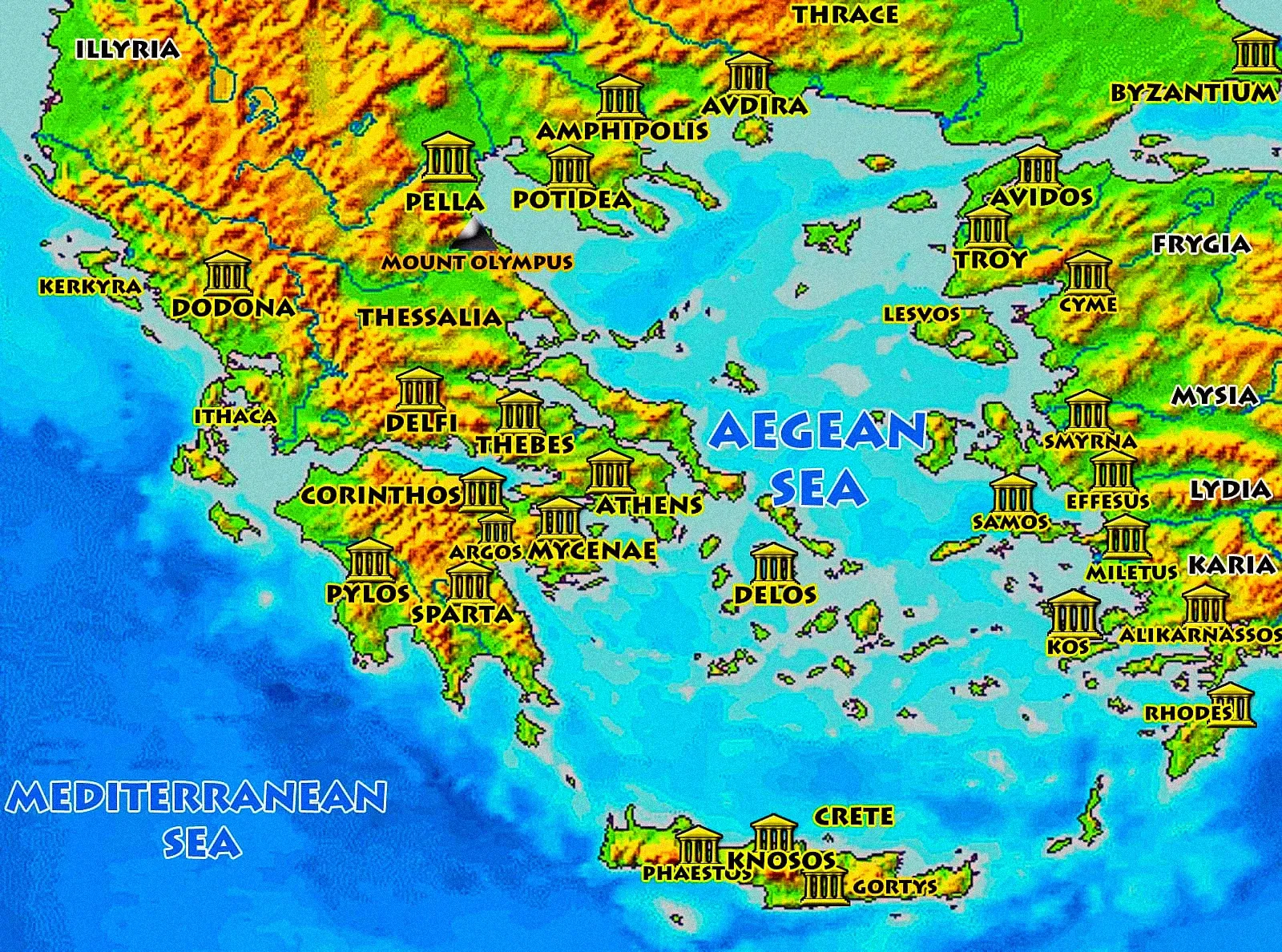
The Greeks stole a lot of knowledge from Egypt, Anatolia, Mesopotamia, and Persia, but they also stole knowledge from Northern Europe as well.
The Persian Wars
At this time in history, the Greeks were developing massive innovations in military warfare because they were always at war with each other. The major innovation was the hoplite phalanx, basically creating a wall of soldiers to bulldoze over your enemy. At the same time, the Persians were developing horse archers, a major military innovation for them.
These two innovations happened because of their distinct geography. You couldn't have horse archers in Greece because the land is too hilly and poor to support them. You couldn't have hoplites in Persia because the land is too wide. This means that yes, Persia was the dominant empire in the world, but when they went to Greece to attack the Greeks, they could not use their horse archers, which was their major military innovation. As a result, the Greeks were able to use hoplites and bulldoze over the Persians.
The Battle of Marathon (490 BCE) was the first great military engagement between the Greeks and the Persians. The Athenians were causing a lot of problems for the Persians, committing piracy and encouraging Greeks under Persian rule not to pay taxes. The Athenians won because, as I told you, the Persians couldn't use their horse archers in Greece. They were forced to use infantry, but when it comes to infantry versus infantry, the Greeks are the best.
This led to a series of wars between Persia and Greece, with two major invasions, both of which failed. The last major invasion led to the famous Battle of Thermopylae, where 300 Spartans stood against a massive Persian army. The Persians eventually crushed the Spartans, took Leonidas, the king of the Spartans, cut off his head, and put it on a pike. Then they went to Athens and burned it down. At this point, the war should have been over.
But the Athenians said, "We're a polis. A polis is not a place; it's a people." So they got on their ships and sailed off. The war continued. At this point, the Persians had won the war. All they had to do was stay where they were and land their massive navy in Sparta. Sparta has a weakness: the helots. All they had to do was land in Sparta, and the helots would rise up against them. Game over.
The problem with empires is they're lazy, stupid, and arrogant. Xerxes, who was leading this invasion, thought that winning the war through attrition was not honorable. He wanted to go back and build a monument to himself, so he wanted to face the Greeks in a major confrontation. This confrontation was the Battle of Salamis.
This is considered the greatest naval battle in human history because it forever changed its course. We know about the battle because of a man named Herodotus, who wrote a book called The Histories and is considered the father of history.
Xerxes sent his navy into battle, and of course, they got destroyed. It's really important: you don't fight the Greeks head-on. They are heavily armored, and you are not. The leader of the Athenian navy was Themistocles, one of the greatest generals in Athenian history. He was the one who proposed that Athens build a navy after they discovered a silver mine, using the silver to prepare for the Persian invasion.
At Salamis, the Athenians destroyed the Persian navy. The war was over now because the Persians had lost their navy, which meant they could not resupply. They had no more mobility.
The Persian king, Xerxes, left, leaving his general Mardonius to take care of the Greeks. Mardonius sent an envoy to the Athenians and said, "The king of kings, Xerxes, says this: we're really sorry we burned down your city, but we'll give you a lot of money, so please stop fighting us."
The envoy told the Athenians:
Why are you so mad as to wage war against the King? You cannot overcome him, nor can you resist him forever. You have seen the multitude of Xerxes' army and their deeds... even if you overcome and conquer us... another army, many times as great, will come against you.
This is the idea of empire: mass, organization, and depth. "We are infinite in our resources. We can just throw army after army against you. Give up already."
The Athenians responded:
We know as well as you do that the power of the Mede is many times greater than our own; we did not need to have that cast in our teeth. Nevertheless, because we love liberty, we will defend ourselves in whatever way we can... Go, and tell Mardonius that the Athenians say: "So long as the sun runs his course as now he does, we will never make terms with Xerxes; but we will go out and fight him, trusting in the gods who fight for us and in the heroes, whose temples and statues he has burnt and holds in no reverence."
These two passages show you the difference between empire and the borderlands. The empire is about mass, organization, and depth. The borderlands are about openness, energy, and cohesion. The Athenians said to the Persians, "We know you're bigger than us, but we believe in liberty, we believe in each other, we believe in our gods, and therefore, we'll fight you to the end."
Now that Xerxes was gone and the navy was scattered, Mardonius was screwed. The Spartans faced off against him in the Battle of Plataea and destroyed him. Mardonius was killed. One of the soldiers said to the king of the Spartans, Pausanias, "Your uncle Leonidas was killed by the Persians, and they put his head on a spike. Why don't you return the favor and put the head of Mardonius on a pike?"
This was Pausanias's response:
You have lifted me, my country, and my army to the skies, and then you have cast all down to nothing by advising me to insult a dead body, saying that if I do so I shall win more fame. Such a deed is more fit for barbarians than for Greeks... It is enough for me to have the approval of the Spartans, by doing and saying what is right. As for Leonidas, whom you would have me avenge, I say that he has been greatly avenged. The uncounted lives of these men are his vengeance and that of the others who fell at Thermopylae.
He was saying that they won because the gods favored them, and the gods favored them because they were virtuous. "We are not the barbarians. We are not the Persians. We are the Spartans." You can see how, at this time in history, what mattered to the Greeks was their virtue, their faith, and their loyalty. But this all changes when they become an empire.
The Athenian Empire and the Peloponnesian War
The Persians were scattered, and they were never going to come back. Now it was the Athenian Empire. The Athenians proposed setting up an alliance to defend against the Persians, called the Delian League. They agreed to pool their resources as a defense fund, putting all their gold on an island called Delos. But the Athenians said, "You know what? It's probably safer with us." So they stole all this gold, and now the Delian League was no longer an alliance but an empire, the Athenian Empire, where everyone had to pay tribute to Athens.
What did the Athenians do with all this gold? They spent it on the Parthenon.
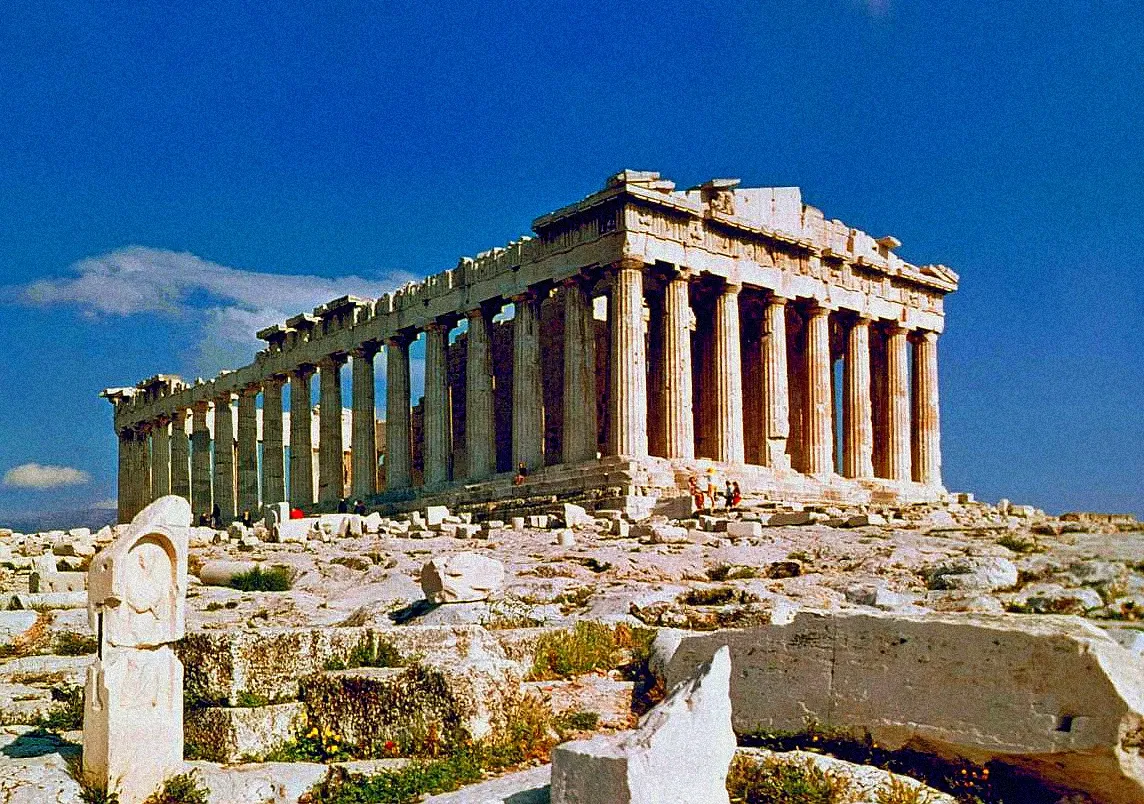
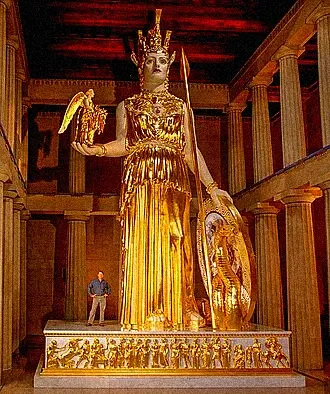
This is a statue of Athena made of pure gold. At this time in history, Athens was beautiful and wealthy, and that made them lazy, arrogant, and stupid.
Thucydides, who wrote about the Peloponnesian War, said that the war happened because Sparta was the hegemon and Athens was the rising power, so they were bound to clash. That's not what happened. Athens was the hegemon, the empire, and its allies were rebelling against it, which dragged Sparta into the war.
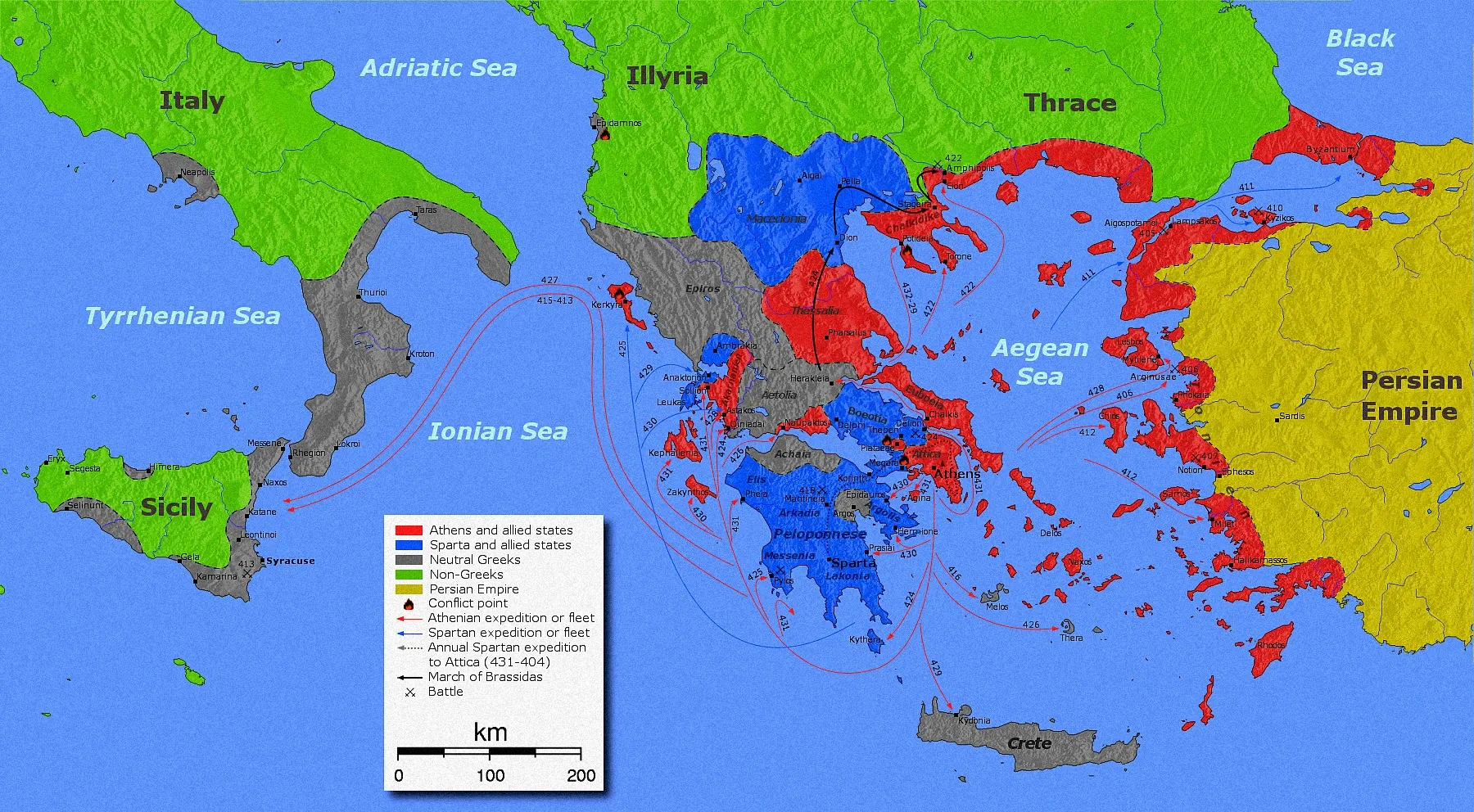
Sparta did not want to fight Athens, but Athens forced Sparta to fight because Athens was very expansionist. The problem was that Sparta had a weakness: the helots. If the Athenians ever chose to land forces on its coast, the helots would all rise up. So Sparta had to protect its periphery from Athenian encroachment.
Because of the nature of this war, the way they fought was strange. Sparta was not trying to destroy Athens, and Athens was not trying to destroy Sparta. It would have been really easy for Athens to destroy Sparta; all they had to do was land forces there and let the helots rise up. But Athens didn't want to do that because it would destroy the equilibrium. They didn't know what would happen if the helots took control of Sparta.
How could Sparta defeat Athens very easily? They could just free the helots. Their army would grow ten times, and they could overwhelm Athens. But they didn't want to do that because it would destroy their equilibrium, their social order, their oligarchy. So they fought the war in a way that allowed them to maintain equilibrium.
The leader of Athens at this time was Pericles. He is famous for his Funeral Oration, which is considered one of the most famous speeches in Western civilization. In universities, they will teach you that the Funeral Oration is a speech about democracy. It's not. If you actually read it, it's a speech about empire.
He was talking to the parents whose sons were now dead. During the Persian Wars, the Athenians were like, "We're a virtuous people. We believe in liberty." Now, Pericles was saying to these parents, "Your sons were useless anyway, but now they died for the empire, which is good. Now you can be proud of your worthless sons. So what should you do? You should have more children so that you can protect the empire." He also told them not to worry about the children of the dead because the state would put them into an orphanage and raise them to be soldiers so they could go and die for the empire like their fathers. This is empire.
During the war, different islands were either rebelling against the Athenians or telling them they didn't want to be part of the stupid war. The Athenians went to them and said, "Too bad."
For ourselves, we shall not trouble you with specious pretences... and make a long speech which would not be believed... since you know as well as we do that right, as the world goes, is only in question between equals in power, while the strong do what they can and the weak suffer what they must.
When the Persians went to the Athenians, they basically said, "We are a vast empire; you can't defeat us, so let's just be friends." Now that the Athenians had defeated the Persians and become the empire, they said to everyone else, "We're not even going to bother trying to convince you that we're right. We're just stronger than you, so shut up and obey." The Athenians were even worse than the Persians. They fought the Persians for liberty, but once they became an empire and others wanted liberty, it was too bad because the Athenians were stronger. Might makes right.
This war dragged on, and because as an empire you become lazy, stupid, and arrogant, the Athenians did stupid things, like invading Sicily, which wasn't even part of the war. They needed more money, so they decided to conquer Sicily because it was very wealthy. They sent a massive expedition, lost, and dragged Syracuse, which had a navy, into the war. Now Sparta and Syracuse combined against the Athenians, and the Persians came in as well. The allies turned against Athens and blockaded it from Thrace, where Athens got most of its wheat. Athens began to starve, so it surrendered, ending the Peloponnesian War. The Spartans could have chosen to destroy Athens, but they didn't because they were only interested in maintaining the status quo equilibrium.
The Rise of Macedonia
Of course, this gave rise to Macedonia. Philip II went into the Greek mainland and learned all the major innovations of the Thebans, the Athenians, and the Spartans. He created the Macedonian phalanx, which became the most dominant military force in history at this point. His childhood best friend, Aristotle, went to Athens, learned from Plato, and systematized all Greek knowledge to turn it into a tool of empire. Philip focused on military conquest, while Aristotle focused on cultural imperialism.
What made Philip such a genius was understanding that he could take all the major innovations—Persian horse archers, Athenian and Spartan hoplites—and combine them into one military package. This allowed for coordination, flexibility, and mobility. The problem was that for that to happen, you needed to make sure every soldier was highly motivated. Traditionally, different sections of an army get special privileges, usually the cavalry because they are aristocrats. But Philip understood that he needed to make sure everyone was happy, so he focused on increasing the morale of his soldiers. It's very easy: be meritocratic. If a soldier does a good job, you promote him. If a soldier does a bad job, you demote him. This overturned the social hierarchy, but Philip was insistent.
This allowed him to create the world's greatest army and a major military innovation called the anvil and hammer. Your infantry would lock with the other infantry in place (the anvil), and then your cavalry would sweep in from behind to smash the enemy (the hammer). This is what allowed Alexander to conquer all of Persia because no other army had witnessed such a powerful force.
Philip conquered Greece at the Battle of Chaeronea, defeating a combined force of Athenians and Thebans. Now he controlled all of mainland Greece and was ready to conquer Persia, because Persia is where the money is. In 336 BCE, Philip had conquered all of mainland Greece and was ready to invade Persia. He had spies and diplomats throughout Persia negotiating with local elites. Unfortunately, he was killed. He went to the wedding of his daughter, and his bodyguard killed him.
Who was behind it? The answer is pretty simple: his wife, Olympias. Why would Olympias, the mother of Alexander the Great, kill her husband? If you're a king, you marry a lot of foreign women for alliances. Olympias was not Macedonian, and many in the court disliked her. Alexander was heir to the throne, but as a young man, he was notorious for being a thug. Philip was worried about him, so later in his life, he married a Macedonian woman, and they had a son together. This meant that this new son was now heir to the throne, not Alexander. Olympias had taught Alexander from day one that he was special, that he was not the son of Philip II but the son of God. When she felt that Philip was about to steal the throne from Alexander, she had him killed. We know because after Philip was killed, she also killed the new Macedonian wife and her son.
Alexander the Great took Philip's great army and went to conquer Persia with it. He did this in about ten years.
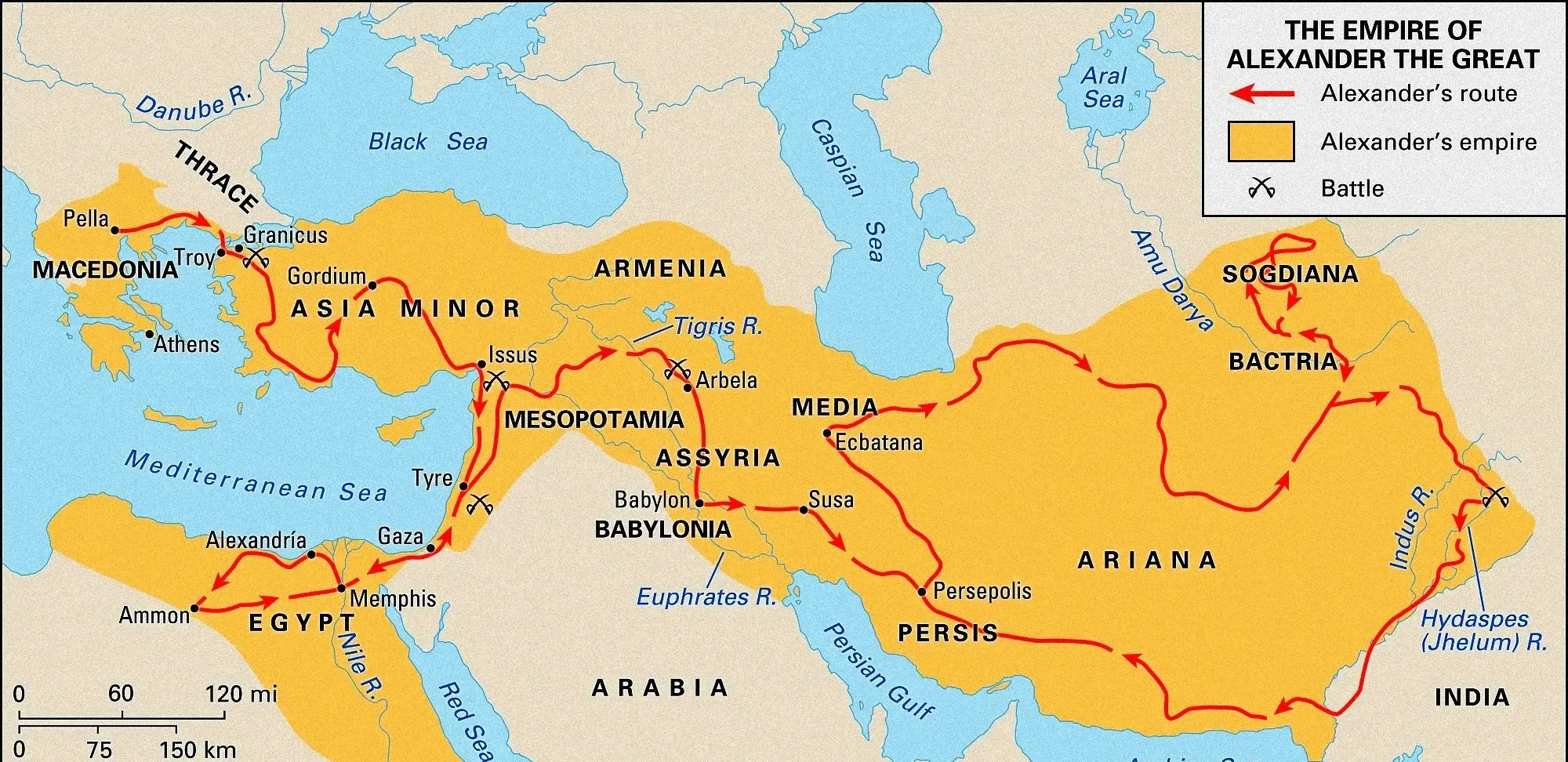
He moved really quickly with a small army, which tells us that he needed cooperation from local elites. The moment Alexander reached Persia, he went to Troy. Why? Because Achilles went to Troy. Alexander saw himself as the new Achilles. He had memorized the Iliad and took it with him wherever he went.
Even more important is what happened when he visited Egypt. He conquered Egypt and then decided to go all the way over here to the Oracle at Siwa Oasis (Ammon). He spent a few days with the oracle, who told him a secret: "You are not the son of Philip. You are the son of God, who is Zeus-Ammon." This explains why, when he conquered most of Persia and Darius offered him a billion dollars to go away, Alexander said, "Screw you, I want all of this." Not only that, but even after he conquered Persepolis, the capital of the Persian Empire, he kept on going to India. The only reason he stopped is that his soldiers got sick of fighting.
Alexander was known for his atrocities. He burned down the city of Thebes and the city of Persepolis. It's possible that burning down these cities were ritual sacrifices necessary to prove that he was a son of God. While conquering, he was also slowly killing off his father's most loyal men, like Parmenion and Cleitus. Historically, we remember these events as random acts of violence, but they were not. Alexander needed to kill off his father's men so that he could create his own empire.
Eventually, the other generals realized that Alexander was going to kill them as well, so they conspired and poisoned him. They then fought amongst themselves and created the Greek world, divided into four major parts: Ptolemy took Egypt (the wealthiest part), Macedon, Anatolia, and the Seleucid Empire.
The Hellenistic World and Cultural Imperialism
Once you conquer most of the world, you have to rule over it, and there weren't that many Greeks. So they built Greek cities to settle their veterans and invite more Greeks to help them govern. They also needed to recruit bureaucrats, so they recruited Persian bureaucrats because they were very effective, but they also recruited Jews into the empire.
Historically, Egypt was the center of the world, its cultural capital. Egypt had given science and math to Greece. Now the Greeks were controlling Egypt, and the Egyptians were like, "Wait a minute, you guys were barbarians. Now you're controlling us. Why is this happening?" So the Greeks needed to explain what was happening, and they did so by creating cultural imperialism.
They built the Library of Alexandria. The Library took all the Greek knowledge in the world and systematized it into textbooks to be taught throughout the world. This was really a university. To show you how wealthy the Egyptians were, when they built the library, they needed original manuscripts. They said to the Athenians, "Hey, can we borrow some original plays?" The Greeks said no, because they loved their Euripides and Aeschylus. The Egyptians said, "You know what we'll do? We'll give you a billion dollars as a deposit." The Athenians agreed. They lent the scrolls to the Egyptians in Alexandria to copy. After some time, the Athenians said to Ptolemy, "Hey, give us back the scrolls." And Ptolemy said, "Keep the money." That's how wealthy they were.
A university is not really about education or culture; it's a tool of empire to create a cultural understanding of the world that allows the empire to rule over people. The Library of Alexandria is an example of this. The Greeks were ruling over the Egyptians, and the Egyptians were asking why. The Greeks' answer was, "Because we're culturally superior to you." And how do you prove it? By censoring Egyptian culture, downplaying it, and promoting Greek culture. This is cultural imperialism.
As part of this project, the Egyptians under Ptolemy also started to work with the Jews. Why? Because Egypt needed to control the Levant, and the Jews were in the Levant. The Jews were problematic because they had been loyal to the Persian Empire. So how do you make them loyal to you? You bribe them. You go to their priests and say, "We love your tradition. Let us translate your Bible into Greek so that we can celebrate it and spread it around the world." This is what we call the Septuagint.
Because of the Library of Alexandria, a lot of Jews were going there to contribute to the scholarship. Eventually, a third of the people in Alexandria would become Jews. Jews were spreading throughout the Greek world, and now you're seeing a massive syncretism between all three major religions: the Greeks, the Jews, and the Persians. The Persians were administrators in this empire, the Greeks were ruling it, and the Jews were helping build it. This merger of all three major worldviews would give us Christianity.