Secret History #23: The Organization of Evil
Jesus was a messenger from the monad who reminded us that there is a divine spark in us. You activate this divine spark by focusing on Jesus and repeating his words. Jesus was a prophet, like Zoroaster, Plato, Homer, and the prophets of Yahweh. If you repeated his sayings and his poetry, you could activate that spark within you and glow. This explains why his message became so popular.
It also explains why the Romans had to kill him. At this time, the main economy of the Roman Empire was based on slavery. Most people were either slaves or poor. Here was Jesus, who came to remind you that you don't have to be a slave; you are free to do whatever you want. There is a higher power than the Roman Empire—it is the divine, the universe. People began to defy their masters and were no longer afraid of death.
This is why the Romans had to kill Jesus: he was stealing from them. Slaves are property. If you let slaves run away or free them, that destroys the wealth of the Romans. Remember that when Jesus was killed, he was crucified along with two thieves. Jesus was killed because he was a thief; he was stealing property from the Romans.
The Church vs. The Spark
Jesus teaches us that we are free to believe whatever we want. If we just listen to our hearts, we will be in touch with the monad again and have nothing to fear. The Catholic Church, however, teaches that you must believe in Jesus, and that is all you have to do to achieve redemption and salvation. Jesus came to die for our sins; therefore, we are now slaves to Jesus. These are two opposite ideas.
The idea of the divine spark was the greatest threat to the Roman Empire. The Romans had to somehow imprison the spark and make it an economic commodity. That is why they created the Catholic Church. The Catholic Church is a prison designed to control that divine spark and hide it from you. The main architect of the Catholic Church was a man named Paul. Most people agree that Paul, not Jesus, is the real founder of Christianity.
Paul: The True Founder of Christianity
Paul has a very interesting background. He was a Jew, but he grew up in Greek culture. He was very well-educated, wealthy, and what we would call a Hellenized Jew. He was probably working for the Roman Empire as a spy or an agent.
In that time, education was mainly in rhetoric, a practice we know by the word sophistry. To understand Paul, we must understand the sophists. Back in classical Athens, there was a major debate between Socrates, a philosopher, and the sophists. Both philosophy and sophistry come from the same word, sophia, which is Greek for knowledge.
- Philosophers are people who love knowledge. They believe there is an eternal truth and that we must try to achieve it. Remember Plato's allegory of the cave? Philosophy is about trying to escape the cave and liberate yourself into the light.
- Sophists believe that eternal truth does not exist because words are reality. Philosophers believe words are an illusion, but sophists believe words are a reality unto themselves. What is important is to learn how to master language in order to construct reality. Sophistry is basically trickery.
To defeat the threat of the divine spark, Paul pulls the greatest trick ever.
- Jesus says: "Listen to my words, and you will find the divine spark in you."
- Paul says: "Believe in Jesus, and you'll be saved."
He changes the focus from the words of Jesus to the person of Jesus himself. Paul constructed a new religion called Christianity by synthesizing the three major cultures of that time: Roman, Greek, and Jewish.
1. The Jewish Culture: The Messiah of Peace
The Jewish culture is the Bible, and Paul tells us that Jesus is the promised Messiah. At this time in history, the Bible was heavily influenced by the Persians, who were monotheists. They believed in good and evil, and the Bible began to reflect this Persian belief, especially in the idea of eschatology—the end of the world.
Jews believed they should not be afraid of the Romans because eventually, the Messiah would come to lead them to war against the Romans. Because the Messiah is anointed by God, they would triumph. The Jews were waiting for a Messiah of war to reclaim the Davidic kingdom.
What Paul does is very clever. He uses this eschatology but says that Jesus is not the Messiah of war; he is the Messiah of peace. Therefore, Jews should not resist the Romans.
2. The Greek Culture: The Mystery Schools
The second major culture Paul uses is the Greek culture, specifically the mystery schools. These were cults, and they became the basis of secret societies today. Paul chose a mystery school that worshipped Dionysus, the Greek god of creativity and wine.
The story of Dionysus is that he was born of a virgin mother, his father was Zeus, and he was killed by the enemies of Zeus. Zeus then found him and resurrected him. This becomes the story of Jesus. The people who worshipped Dionysus had a ritual meal where they believed they were eating the body of Dionysus, absorbing his energy, and becoming one with him in communion. Christians have the same ritual, which is called the Eucharist (thanksgiving or communion). All Christians practice this today.
3. The Roman Culture: The Paterfamilias
The third and most important culture is the Roman culture. The Roman social structure is called the paterfamilias. At the very top, there is one patriarch—this is where we get the word patriarchy. He has children and slaves. It is a very top-down system where the patriarch is always right; he is God.
The patriarch would identify promising slaves with talent and turn them into clients. He would free the slaves, and they would become his clients, able to conduct business on his behalf. In this way, he would create a business empire. The Roman Empire was a platform where dozens of these families controlled the empire together, with each family controlling a particular province. It was more like a franchise model than a strict hierarchy.
This is important because Paul took this system and copied it to create the church. The church is exactly the same as the paterfamilias, where at the very top you have a bishop, then perhaps some cardinals, and everyone else is just a follower or disciple. It mirrors the Roman system, which made it easy to switch from the old system to the new one devised by Paul.
The Perfect Solution for the Roman Empire
Why would the Romans want to do this? This was the perfect solution to the problem of Jesus. As a patriarch, your main concern is getting your slaves to work hard and sucking the energy out of them. But with Jesus's message, slaves were asking, "Why should I work for you?"
Paul solved this problem by saying, "Follow Jesus and you'll be saved." Paul's formulation of Jesus caused slaves to work even harder. Before, they had to work to stay alive. Now, they worked to go to heaven for all of eternity. The deal was to work as a slave for a few decades to enjoy an eternity of joy and paradise. This caused the slaves to be more obedient and to work harder.
More importantly, the patriarch switched from being a king to being a god. His private wealth became spiritual authority. With spiritual authority, he could expand more rapidly. Before, you had to buy slaves. Now, you just had to convert people to your religion. It was a much faster way to create wealth. This is the system the Romans would use to take over the barbarians, like the Goths. They were able to assimilate these barbarians into the culture and maintain a social hierarchy.
In other words, Jesus was talking to slaves, but Paul was talking to patriarchs. These patriarchs would convert, and when they converted, they took their entire system with them. This explains the rapid growth of Christianity.
What is also important is that the religion the patriarchs practiced was not the one the slaves practiced. The slaves practiced Christianity, but the patriarchs practiced the mystery cults. This was the way the patriarchs worked together, and it became the basis for secret societies. While the ordinary person worshipped a new religion called Christianity, the patriarchs themselves, in secret, still practiced their Greek mystery cults. This is a system that we still have even today.
This system was able to spread quickly because those who converted had more advantages than those who did not. They were able to see more rapid wealth generation, more power generation, and they were able to expand much faster. This is the secret of Christianity.
Paul's Doctrine vs. Jesus's Teachings
If you read the New Testament, a third of it is either written by Paul or about Paul. There is more about Paul in the New Testament than there is about Jesus. That is why we say that Paul is the true founder of Christianity. Christianity is a religion about Jesus, but not by Jesus. It is by Paul.
What Jesus taught and what Paul taught are very different—in fact, they are opposite.
Paul is a business person. Jesus is a prophet. It is Paul, not Jesus, who is the spiritual god of Christianity.
At this time in history, around the year 40 or 50, there were lots of different Christianities. Because Jesus taught that the kingdom of heaven is within you, it was all very diverse and democratic. Many of the early leaders were women, like Mary Magdalene, who tended to be wealthy and charismatic. But by the time you get to Pauline Christianity, it is anti-woman, a strict hierarchy, and focused on orthodoxy.
You may have heard that early Christians were persecuted. They were being persecuted by Paul. At this time, the Catholic Church—Pauline Christianity—was only a very small minority. For most people, the Christianity of Jesus was much more appealing. Jesus taught freedom, empowerment, and liberation. Paul taught obedience, discipline, and sacrifice. Jesus was far more appealing, but because Paul was supported by the Roman Empire, he won. Paul would not only persecute other Christianities but also quickly spread his version with the help of the Roman Empire.
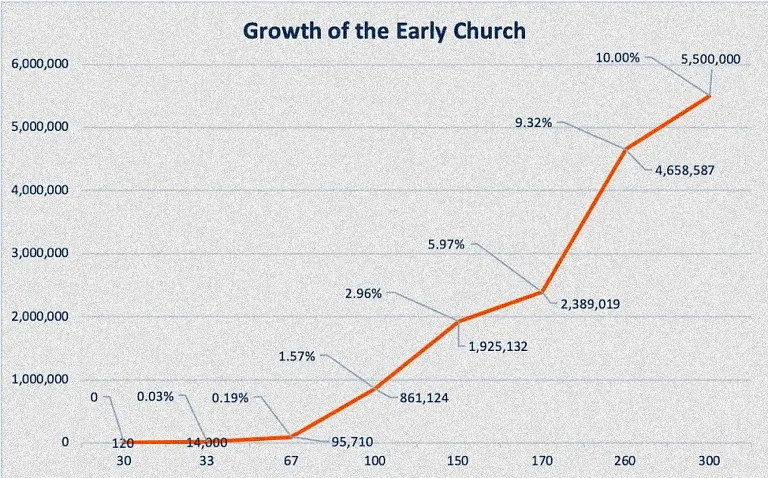
In the year 30, when Jesus died, his followers were a very small group, but the message spread quickly. Once Paul built the structure of the church system based on the Roman paterfamilias system, it spread even quicker. Eventually, these two Christianities came into conflict, and Paul's system won out until it conquered the entire Roman Empire. Around the year 300, Christianity became the official religion of the Roman Empire, and this was the beginning of the Catholic Church. It was Paul who built the foundation for this growth.
The Three Mysteries of Paul
Scholars agree that Paul is the founder of Christianity, but there are three mysteries about him that scholars cannot really answer.
- Why would someone like Paul, a literate and wealthy Jew, join a movement of illiterate Jewish peasants?
- We know that Paul was a fanatical Pharisee who was hunting Christians. Why would he suddenly convert to become a fanatical follower of Jesus?
- He spent his entire life promoting Christianity around the Roman Empire. Where did he get the money to do this? He also had secretaries who went with him to take notes. Where did the money come from?
If you do some basic game theory analysis, he was clearly a spy, an agent of a power. The question for us is, who was he working for? The easy answer seems to be the Roman Empire. But you could also make the argument that he was working for the Jewish leaders, the Jewish priests.
The Bible's Narrative: Who Killed Jesus?
One thing about the Bible that is very confusing is that it says the Jews killed Jesus. As we discussed, the Jews would not have killed Jesus for a variety of reasons, the main one being that Jews do not turn each other over to the Roman authorities. If you commit blasphemy, they kill you by stoning you. They do not have a habit of turning people over to the Romans.
We know the Romans killed him, most likely because he was a threat to their social structure. But the Bible says it was the Jews who killed Jesus. This is from the Gospel of John. Pontius Pilate is the Roman governor who orders Jesus's execution.
Then Pilate took Jesus and had him flogged. And the soldiers wove a crown of thorns and put it on his head, and they dressed him in a purple robe. They kept coming up to him, saying, “Hail, King of the Jews!” and striking him on the face. Pilate went out again and said to them, “Look, I am bringing him out to you to let you know that I find no case against him.” So Jesus came out, wearing the crown of thorns and the purple robe. Pilate said to them, “Here is the man!” When the chief priests and the police saw him, they shouted, “Crucify him! Crucify him!” Pilate said to them, “Take him yourselves and crucify him; I find no case against him.” The Jews answered him, “We have a law, and according to that law he ought to die because he has claimed to be the Son of God.”
The Bible claims that Jews killed Jesus. This shows us that the Bible is not that reliable.
The Story of Paul's Conversion
This is from the Acts of the Apostles, and it is mainly about Paul and how he became a follower of Jesus. At this time, Paul is persecuting Christians. We do not know why. On the way to persecute more Christians on the road to Damascus, a light seizes him, and it is Jesus telling him, "Paul, why are you persecuting me and my followers?" That converts Paul. It makes no sense as a story, but this is what Christians believe.
Meanwhile, Saul, still breathing threats and murder against the disciples of the Lord, went to the high priest and asked him for letters to the synagogues at Damascus, so that if he found any who belonged to the Way, men or women, he might bring them bound to Jerusalem. Now as he was going along and approaching Damascus, suddenly a light from heaven flashed around him. He fell to the ground and heard a voice saying to him, “Saul, Saul, why do you persecute me?” He asked, “Who are you, Lord?” The reply came, “I am Jesus, whom you are persecuting. But get up and enter the city, and you will be told what you are to do.” The men who were traveling with him stood speechless because they heard the voice but saw no one. Saul got up from the ground, and though his eyes were open, he could see nothing; so they led him by the hand and brought him into Damascus. For three days he was without sight, and neither ate nor drank.
This is a miracle. This guy hated Christians, and now, because he was blinded, he loves Christians. This is very similar to Plato's allegory of the cave. Paul was trained in Greek culture, so he knew about Plato, and this is modeled on the allegory where you are in darkness, and suddenly you go out and are blinded by the light, and then you see the truth.
Another thing that is important is that clearly, Jesus favors Paul. What is interesting is that if you read Paul's letters, he does not really talk about Jesus that much. He does not even quote Jesus. That is kind of weird. He does not really refer to this story much in his letters. Also, if you read about Jesus, he does not really talk about good and evil, the Bible, or himself as the son of God, but Paul will talk about this a lot.
Paul's Conflict with James the Just
As Paul is winning converts, he comes into conflict with James the Just, the brother of Jesus who inherited the movement. James the Just is in Jerusalem, and he hears that Paul is going around saying Jesus is God. James is like, "Of course, he's not God. He's my brother, man."
According to the Bible, the main conflict is one of ideology. The Bible says that James and Paul both agree that Jesus is the son of God who came to redeem us. But James believes it is important to maintain the faith within the Jewish tradition, whereas Paul wants to expand it to encompass the Greeks and Romans—the Gentiles. The main point of conflict is circumcision. Jews circumcise themselves, but Greeks and Romans do not. Paul's point is that if you want to convert, you do not have to be circumcised.
The Jews complain to James, saying Paul is subverting their tradition. This forces Paul to confront James in Jerusalem. But when Paul goes to Jerusalem, people recognize him, and a mob wants to kill him.
Up to this point they listened to him, but then they shouted, “Away with such a fellow from the earth! For he should not be allowed to live.” And while they were shouting, throwing off their cloaks, and tossing dust into the air, the tribune directed that he was to be brought into the barracks, and ordered him to be examined by flogging, to find out the reason for this outcry against him. But when they had tied him up with thongs, Paul said to the centurion who was standing by, “Is it legal for you to flog a Roman citizen who is uncondemned?” When the centurion heard that, he went to the tribune and said to him, “What are you about to do? For this man is a Roman citizen.” The tribune came and asked Paul, “Tell me, are you a Roman citizen?” And he said, “Yes.” The tribune answered, “It cost me a large sum of money to get my citizenship.” Paul said, “But I was born a citizen.” Immediately those who were about to examine him drew back from him; and the tribune also was afraid, for he realized that Paul was a Roman citizen and that he had bound him.
Certain things to notice about this writing: first, it is very anti-Jewish. The Jews just want to kill Paul for no particular reason. Second, it is very pro-Roman. The Roman soldiers come and save Paul from the mob. This story is very similar to the story of Jesus, where the mob wants to kill him, and the Romans want to save him but cannot. But what saves Paul is that he is a Roman citizen. Rome saves Paul. God cannot save Jesus, but Rome saves Paul. This is propaganda written for Hellenized Jews like Paul who were wavering between loyalty to Rome and loyalty to the Jewish tradition. Paul is saying the solution is to become a Christian because now you can be both.
The Romans say to Paul, "Why do the Jews want to kill you?" Paul says it is because they think he is insulting their religion. As a Roman citizen, Paul wants an audience with the emperor. So the Romans send him with a soldier escort back to Rome. This is how the Acts of the Apostles ends.
When we came into Rome, Paul was allowed to live by himself, with the soldier who was guarding him. Three days later he called together the local leaders of the Jews. When they had assembled, he said to them, “Brothers, though I had done nothing against our people or the customs of our ancestors, yet I was arrested in Jerusalem and handed over to the Romans. When they had examined me, the Romans wanted to release me, because there were no grounds for the death penalty in my case. But when the Jews objected, I was compelled to appeal to the emperor—even though I had no charge to bring against my nation. For this reason, therefore, I have asked to see you and speak with you, since it is for the sake of the hope of Israel that I am bound with this chain.”
This is a change in the story. Before, Paul said he wanted to return to Rome to face judgment. Now, he is saying, "You Jews attacked me, and if I wanted to, I could complain to the emperor and bring charges against you." He is showing how powerful he is and threatening these Jewish elders.
They replied, “We have received no letters from Judea about you, and none of the brothers coming here has reported or spoken anything evil about you. But we would like to hear from you what you think. For with regard to this sect, we know that everywhere it is spoken against.” After they had set a date to meet with him, they came to him at his lodgings in great numbers.
Basically, all the Jewish leaders have to come because they understand that Paul represents the empire.
From morning until evening he explained the matter to them, testifying to the kingdom of God and trying to convince them about Jesus both from the law of Moses and from the prophets. Some were convinced by what he had said, while others refused to believe. So they disagreed with each other; and as they were leaving, Paul made one further statement: “The Holy Spirit was right in saying to your ancestors through the prophet Isaiah, ‘Go to this people and say, You will indeed listen, but never understand, and you will indeed look, but never perceive. For this people’s heart has grown dull, and their ears are hard of hearing, and they have shut their eyes; so that they might not look with their eyes, and listen with their ears, and understand with their heart and turn—and I would heal them.’ Let it be known to you then that this salvation of God has been sent to the Gentiles; they will listen.” He lived there two whole years at his own expense and welcomed all who came to him, proclaiming the kingdom of God and teaching about the Lord Jesus Christ with all boldness and without hindrance.
It looks like Paul is an agent of Rome. But why would he write in such a blatant way? You could also argue that Paul could be a double agent. He pretends to be a spy for Rome but is actually working for the Jewish leadership. Why would the Jewish leaders support Paul? Because by spreading Christianity, he is spreading the Bible, and the Bible says that Jews are God's chosen people. So he is elevating the status of Jews in Rome. It is not as simple as it looks. The thing to remember about spies is they have no loyalties; they are double or triple agents, always switching loyalties.
Paul's Theology of Control
Now let's go into the actual thinking and writing of Paul. This is from his letter to the Romans, where he articulates his new philosophy of Christianity. These letters become the basis for the Catholic Church.
The Jews are very clear: if you are Jewish, you must be circumcised because it is the sign of a covenant between the people and God. Paul says no, what matters is your heart, your spirit.
Circumcision indeed is of value if you obey the law; but if you break the law, your circumcision has become uncircumcision. So, if those who are uncircumcised keep the requirements of the law, will not their uncircumcision be regarded as circumcision? Then those who are physically uncircumcised but keep the law will condemn you that have the written code and circumcision but break the law. For a person is not a Jew who is one outwardly, nor is true circumcision something external and physical. Rather, a person is a Jew who is one inwardly, and real circumcision is a matter of the heart—it is spiritual and not literal. Such a person receives praise not from others but from God.
This is rhetoric, sophistry, where he is changing the definition of the word. What matters is not the physical act but faith in God.
Jews believe what is important is to follow the laws. Paul says what is important is your belief in Jesus—your belief that Jesus came to redeem us from original sin.
But now, apart from law, the righteousness of God has been disclosed, and is attested by the law and the prophets, the righteousness of God through faith in Jesus Christ for all who believe. For there is no distinction, since all have sinned and fall short of the glory of God; they are now justified by his grace as a gift, through the redemption that is in Christ Jesus, whom God put forward as a sacrifice of atonement by his blood, effective through faith. He did this to show his righteousness, because in his divine forbearance he had passed over the sins previously committed; it was to prove at the present time that he himself is righteous and that he justifies the one who has faith in Jesus.
It is only belief in Jesus that can save you. You can do as many good works as you want, but it does not matter. The key is faith in Jesus.
Paul is going around corrupting the teachings of Jesus, and other people are calling him out on it. Paul's response is that what is important is to obey Jesus, not to debate.
What then is Apollos? What is Paul? Servants through whom you came to believe, as the Lord assigned to each. I planted, Apollos watered, but God gave the growth. So neither the one who plants nor the one who waters is anything, but only God who gives the growth... For we are God’s servants, working together; you are God’s field, God’s building.
Everyone is saying, "Paul, you're corrupting the teachings of Jesus." Paul is saying, "No, what matters is that we spread the message of Jesus." When they ask what the message is, Paul says it does not matter; what matters is the growth of the movement. This is sophistry.
According to the grace of God given to me, like a skilled master builder I laid a foundation, and someone else is building on it. Each builder must choose with care how to build on it. For no one can lay any foundation other than the one that has been laid; that foundation is Jesus Christ. Now if anyone builds on the foundation with gold, silver, precious stones, wood, hay, straw— the work of each builder will become visible, for the Day will disclose it, because it will be revealed with fire, and the fire will test what sort of work each builder has done. If what has been built on the foundation survives, the builder will receive a reward. If the work is burned up, the builder will suffer loss; the builder will be saved, but only as through fire.
Paul is saying, "Let's not argue. Let's just keep spreading the word of Jesus, and we'll see which person has the biggest church, and then we'll know who's right." He is using the metric of business success—wealth and material acquisition—to justify his faith. This is the opposite of what Jesus taught.
Jesus taught that the light is within you, and therefore you are God. You just trust yourself. Paul says, "No, you are a tool of God."
Do you not know that you are God’s temple and that God’s Spirit dwells in you? If anyone destroys God’s temple, God will destroy that person. For God’s temple is holy, and you are that temple.
He is very clever. He says yes, Jesus taught that God's spirit dwells in you, but what this means is not that you have free will. It means you don't have free will because you must do the work of God, which is to spread the message of God and extend his power in this world.
A Message for Slaves and Masters
Paul's message is appealing to slaves. Jesus taught slaves, "You're free." These slaves say to Paul, "We're free, right?" And Paul says, "You are free, but you are a slave to God." Therefore, no human can be your master because you are all slaves to God. He is confusing people.
Were you a slave when called? Do not be concerned about it. Even if you can gain your freedom, make use of your present condition now more than ever. For whoever was called in the Lord as a slave is a freed person belonging to the Lord, just as whoever was freed when called is a slave of Christ. You were bought with a price; do not become slaves of human masters. In whatever condition you were called, brothers and sisters, there remain with God.
He is a business person telling his workers, "Go out and sell those damn hamburgers. I don't care what you do or how many lies you tell. Just go sell them. Whoever sells the most gets a car." But this is better than a car because the reward is heaven, eternal paradise.
For though I am free with respect to all, I have made myself a slave to all, so that I might win more of them. To the Jews I became as a Jew, in order to win Jews. To those under the law I became as one under the law (though I myself am not under the law) so that I might win those under the law. To those outside the law I became as one outside the law (though I am not free from God’s law but am under Christ’s law) so that I might win those outside the law. To the weak I became weak, so that I might win the weak. I have become all things to all people, that I might by all means save some. I do it all for the sake of the gospel, so that I may share in its blessings. Do you not know that in a race the runners all compete, but only one receives the prize? Run in such a way that you may win it. Athletes exercise self-control in all things; they do it to receive a perishable wreath, but we an imperishable one. So I do not run aimlessly, nor do I box as though beating the air; but I punish my body and enslave it, so that after proclaiming to others I myself should not be disqualified.
The Eucharist: A Ritual of Control
When you come to church, it is very important that you obey the ritual of communion, the Eucharist. The church is not a place to discuss or debate Jesus, but to worship him.
For I received from the Lord what I also handed on to you, that the Lord Jesus on the night when he was betrayed took a loaf of bread, and when he had given thanks, he broke it and said, “This is my body that is for you. Do this in remembrance of me.” In the same way he took the cup also, after supper, saying, “This cup is the new covenant in my blood. Do this, as often as you drink it, in remembrance of me.” For as often as you eat this bread and drink the cup, you proclaim the Lord’s death until he comes. Whoever, therefore, eats the bread or drinks the cup of the Lord in an unworthy manner will be answerable for the body and blood of the Lord. Examine yourselves, and only then eat of the bread and drink of the cup. For all who eat and drink without discerning the body, eat and drink judgment against themselves.
This is the most important ritual in Christianity. They eat some bread and drink some wine and believe it is the flesh and blood of Jesus. Jesus is entering them. What they are really doing is negating the divine spark in you. The divine spark is free, individual, and independent. When you partake in the body of Jesus, you become one with everyone else. That negates your individuality and the spark within you. You become just the church itself. The idea of the Eucharist is to destroy your individuality. It is possession by Jesus.
This is actually a very common thing among the Greek mystery cults, where they believed they were eating the body of Dionysus and consuming his energy. These mystery cults could be demonic. They would have ritual sacrifices where they would tear people apart and consume the flesh.
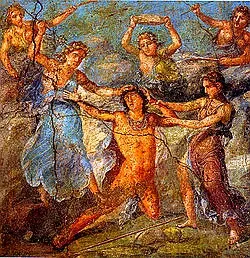
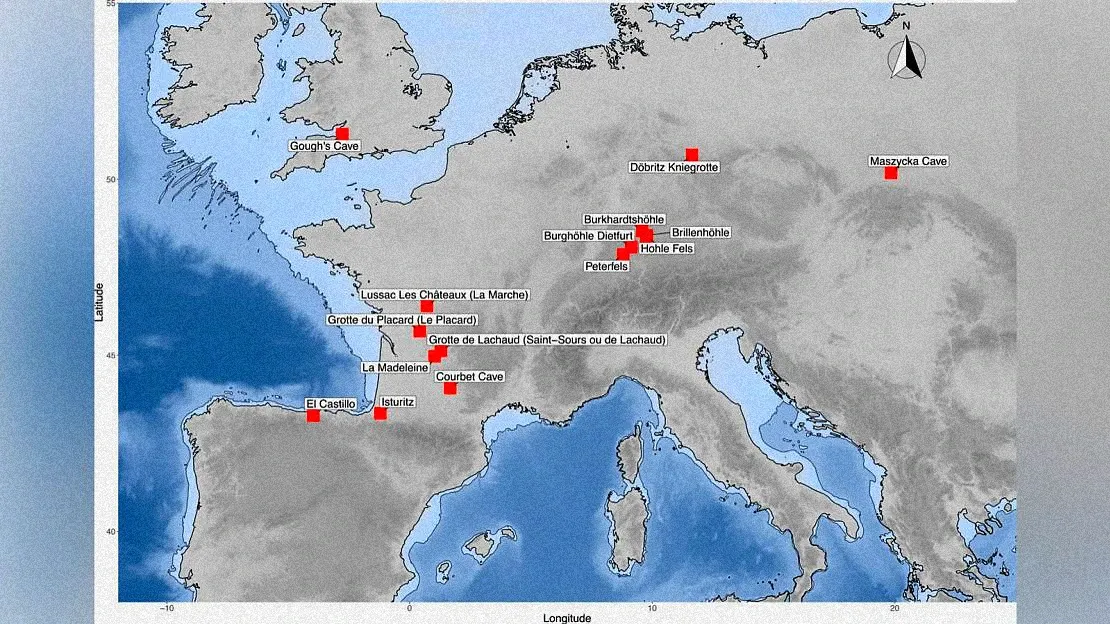
This has a long tradition. If you go back 15,000 years to the Magdalenian age in Europe, cannibalism was common for religious purposes. If someone you loved died, you would consume their body to remember them forever, to have an eternal communion with them. When you consume Jesus, Jesus is always with you. He is taking possession of your body. You have lost your individuality and freedom.
Among the elite, this sort of thing still goes on. In 19th-century Victorian Britain, they liked to steal mummies from Egypt and eat them because they believed the mummies had magic qualities. Before Albert Einstein died, he said, "Please, whatever you do, do not dissect my brain." Of course, a doctor stole his brain and cut it into different pieces.
The Body of Christ: A Metaphor for Obedience
When you consume the body of Christ, you have all consumed a part of him. We need to come together as a church to form the whole body of Jesus. That means you must do what others tell you to do. This requires complete obedience if we are to resurrect Jesus in our church.
For just as the body is one and has many members, and all the members of the body, though many, are one body, so it is with Christ... Now you are the body of Christ and individually members of it. And God has appointed in the church first apostles, second prophets, third teachers; then deeds of power, then gifts of healing, forms of assistance, forms of leadership, various kinds of tongues. Are all apostles? Are all prophets? Are all teachers? Do all work miracles? Do all possess gifts of healing? Do all speak in tongues? Do all interpret? But strive for the greater gifts. And I will show you a still more excellent way.
No matter who you are or what you do, what is important is your sacrifice to Jesus, to obey him completely.
And now faith, hope, and love abide, these three; and the greatest of these is love.
Paul uses sophistry. You think the word is love. We love Jesus. The word actually means obedience. If you join the church, what is required is complete obedience to Jesus. When we committed the original sin, we became slaves to the devil. When Jesus died, it was to ransom us from the devil. So now we are slaves to Jesus and must obey him completely. No argument, no opinion, no individuality. He switches these words. He is saying that slavery is now love. When a human master enslaves you, that is evil. But when Jesus enslaves you, it is good because it is love.
Therefore, my beloved, be steadfast, immovable, always excelling in the work of the Lord, because you know that in the Lord your labor is not in vain.
This is why you must obey him completely: because now you are guaranteed access to heaven, eternal paradise. Be a slave for 40 or 50 years, and then you have eternal paradise because that is Jesus's promise to you: the defeat of death.
Paul's True Motivation: Building an Empire
What motivated Paul to do what he did? There are three possible explanations.
- He was a Roman agent. His mission was to destroy Judaism from within. While the Jews were praying for a messiah of war, Paul said, "No, Jesus was a messiah of peace."
- He was a Jewish spy. He was trying to subvert the Roman Empire by spreading the Jewish faith.
- It was both. I think what really happened is that Paul had a calling to create his own religious empire. He wanted to become God himself.
There is a famous joke: God and Satan are having an argument. God says, "My people, the humans, have found religion. Therefore, you've lost." And Satan says, "Well, I'll just organize it." That is what Paul did. Jesus came to tell us the truth, and Paul said, "I'll use this truth and make an empire out of it."
Ray Kroc created the McDonald's empire. He took an idea and created a franchise that is the same everywhere in the world. It follows a very similar pattern to Paul's building of the church. Ray Kroc succeeded because he spread a religion: the gospel of wealth. If you invest in McDonald's, you will become wealthy, and that is paradise. Ray Kroc and Paul were doing the same thing.
Paul had a business idea: take Jesus and turn him into an empire. He made different sales pitches to different people.
- To the Roman Patriarchs: "We will cause division within the Jewish diaspora. We will make their messiah of war into a messiah of peace. And we can spiritually enslave the people, and they will work harder for us."
- To the Jewish Leaders: "Let us spread our faith to the Gentiles and elevate our status as the chosen people. Let us make our Torah in Jerusalem divine in the eyes of the world. Let us ally with the Roman patriarchy so we can subvert them from within."
- To the Greeks and Jews: "A few decades of obedience for an eternity in paradise. It's easy to join—you don't have to get circumcised. And Jesus will return any day now, so hurry up before it's too late. 50% off today!"
Augustine and the Codification of Paul's Doctrine
After the Catholic Church became the official religion of the Roman Empire, Augustine wrote a book called City of God, and he put the Catholic Church above Rome. Rome is just a temporal, earthly city, but Jerusalem is the divine city. He is saying that the Catholic Church is now Jerusalem. We do not need the Roman Empire anymore because now we have the Catholic Church. He took Paul's ideas and systematized them.
Jesus said there is a divine spark in us. Augustine says, "Yes, but it's from Satan, not from God. That's why we cannot trust the divine spark, because we're evil."
For they would not have arrived at the evil act if an evil will had not preceded it. Now, could anything but pride have been the start of the evil will? For pride is the start of every kind of sin.
Jesus says to follow your own heart. Augustine says, "No, that leads to pride, and pride is evil." Pride means you want to be better than God. Therefore, the heart inside you comes from Satan.
This happens when a man is too pleased with himself. And a man is self-complacent when he deserts that changeless good in which, rather than in himself, he ought to have found his satisfaction.
We exist to obey God. Jesus taught that we exist to be creative and seek truth for ourselves. But Augustine, following Paul, teaches that we exist to obey God because we cannot trust ourselves. We are born evil.
The evil act, the transgression of eating the forbidden fruit, was committed only when those who did it were already evil. That bad fruit could only have come from a bad tree.
Why are we evil? The Bible tells us we are created out of dust, out of nothing. In other words, we are a failed science experiment. That is why we must believe in the church.
And so to abandon God and to exist in oneself—that is, to please oneself—is not immediately to lose all being, but it is to come near to nothingness... It is good to lift up your heart, yet not in the self-worship of pride but in the worship of God. This is a sign of obedience, and obedience can belong only to the humble.
You must obey the church completely because the divine spark in you is out of nothingness and can only lead you to evil. The only solution is to obey the church completely.
This is assuredly the greatest difference that sunders the two cities of which we are speaking: the one is a community of devout men, the other a company of the irreligious... In the one city, love of God has been given first place; in the other, love of self.
It is that simple. If you obey, you are doing the work of God. If you disobey, you are doing the work of the devil.
The Legacy of the Pauline Church
The Roman Empire made the Catholic Church its official religion because it did three things:
- It allowed them to better exploit their slaves. Slaves were now more hardworking because if they were lazy, they would burn in hell for all eternity.
- It converted material wealth into spiritual authority. Before, you were a king with gold that people could steal. Now, you represent God as the head of a church. People cannot kill you because God will kill them.
- It provided a model for infinite expansion. You could now expand your empire by converting people.
This is relevant today because now that the Catholic Church is around, these dynasties of Rome can continue on to today through the church. They can store their power in the Catholic Church. This gave rise to the black nobility—13 families from Rome that, it is argued, still run the world today.
What allowed the Catholic Church to dominate was this alliance between the black nobility and certain Jews. What allows for the system to work are secret societies where, through rituals, these powerful people are bound together. These three ideas—the black nobility, their alliance with Jewish financiers, and the secret societies—form the power structure we have today. That is the power of the Catholic Church and the genius of Paul: to create a system that continues even today because it is so powerful and strategic.