Secret History #22: The Divine Spark of Jesus
Today we discuss the most famous person who has ever lived. There are about two billion people in the world today who believe that Jesus is God. There have been many famous individuals in history—Alexander the Great, Julius Caesar, Socrates, Zoroaster, Homer—but it is Jesus that most people worship. The question we will look at today is: why?
First, I want to discuss the religion of Christianity. I grew up in Canada and studied in the United States, so my entire life, Jesus was part of the culture; he was part of society. Growing up in Canada and not being Christian, I really didn't understand Christianity or its ideas. So let's go over some of the major ideas of Christianity. It's important to remember that there are many denominations in Christianity, so there are a lot of disagreements. But these are the major ideas that most Christians agree on.
The Core Tenets of Christianity
The first thing is that Jesus is the Son of God and God himself. He's also a king. This is already very confusing.
Second, they believe that Jesus died for our sins. Remember that we got kicked out of the Garden of Eden because we disobeyed God and ate from the tree of knowledge. So, Jesus died for our sins and redeemed us.
The third thing that they believe is that eventually, Jesus will return in something called the Second Coming. He died, was resurrected, and then went to heaven. But eventually, he will return, and this will result in the Last Judgment, in which all individuals are judged on whether they will reign in heaven or burn in hell. He will bring heaven to earth.
This is where Christianity is most controversial. It says that if you believe in Jesus—if you're a Christian—you will go to heaven. But if you do not believe in Jesus, you will burn in hell. This goes against all other religious traditions. Every other religious tradition is basically like, "Be a good person, and that's all you have to do." But Christianity demands that you must believe in Jesus, or you will burn in hell.
In other words, Christianity is a missionary religion. If you're a Christian, not only must you believe in Jesus, but you must go out and try to convert other people. Because if they don't convert to Christianity, during the Last Judgment, they will burn in hell. That is why Christianity is one of the most aggressive religions that we have today.
This is all very strange, and there are a lot of questions in Christianity. That's why Christianity also proposes the idea of miracles. How did Jesus die for our sins? Why is there a Second Coming? It's all a miracle, meaning: don't question it, just believe in it. Christianity is a very problematic religion; it raises a lot of questions. So then, the question is: given all the confusion around Christianity, why do so many people believe in Jesus?
The Historical Jesus: What Scholars Know for Sure
Now, I'm going to explain what we know for sure about Jesus. This is not from religious people; it's from scholars who spent decades researching the evidence, looking at the Bible, the archaeological evidence, and all the writings of that period. This is what we know for sure about Jesus, according to mainstream academics.
- His Birth: He was born maybe about 4 BCE in a place called Galilee. I know in the Bible it says he was born in the year zero, but he was actually born four years before then.
- His Teacher: His teacher was John the Baptist, who was what we call an apocalyptic preacher. An apocalyptic preacher basically says, "I will reveal the future to you." And the future is that God is coming and will destroy the evil people in the world. So right now is your opportunity to redeem yourself from your sins and start a new life because God is coming, and we must prepare for his return. That was the message of John the Baptist, and Jesus was one of his disciples. But at some point, Jesus started to create his own following, preaching a message that was different from John the Baptist's.
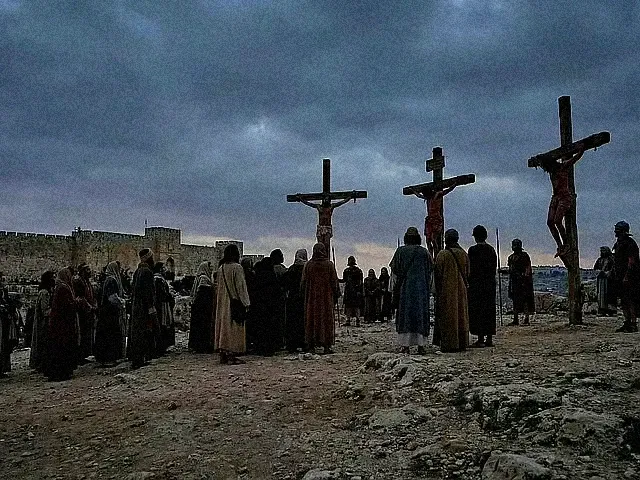
- The Crucifixion: We know that the Romans crucified Jesus. We don't know why, but we know that the Romans killed him. Crucifixion is when the Romans nail you onto a wooden cross. It's an awful way to die because you're not dying from the bleeding. You're dying because you have no energy, so your head hangs low, which means you're suffocating slowly. It takes about three days for you to suffocate to death. This was one of the worst punishments the Romans could ever inflict on you. There were only two sets of people that the Romans would use crucifixion as punishment for: the first type were thieves and bandits, considered the lowest type of people. The second type were rebels, people who were trying to overthrow the Roman state. In other words, Jesus was probably a rebel, or the Romans considered him a rebel.
- His Successor: He had a brother called James the Just, who would inherit Jesus's movement after his death. This movement was called "the poor," or another word for this is the Ebionites.
These are the only four things that we know for sure about Jesus. Now, I'm going to explain what the Bible says about Jesus—the official story—and you can see how different it is from what we know for sure.
The Biblical Narrative of Jesus
Something to keep in mind is that there are at least four different biographies of Jesus in the Bible: Mark, Matthew, Luke, and John. They say different things, but we'll talk about the main story.
The main story of Jesus is that he is the Son of God. At this point in history, we have disobeyed God, and God is angry at us. Jesus, being the Son of God, wants to redeem us in the eyes of God. Remember, we tried to become God—we tried to kill God—by eating the fruit from the tree of knowledge. So now God is angry at us, and we can't be forgiven. Jesus decides he must come to planet Earth, take a human form, and then sacrifice himself as a scapegoat in order to redeem us in the eyes of God. That's the plan.
So he comes and starts a ministry. His ministry is basically healing people. He goes around healing people; if you touch him, you're cured of cancer and all your diseases. He also dispels demons. There are demons inside of us, and Jesus gets rid of these demons and cleanses us. And then he preaches the gospel—the good news. He teaches how to be good people.
The problem, though, is that a lot of his teachings go against Judean authority. At this time, he is in Judea, the Roman province, and Jewish priests are in charge. Jewish priests teach people to follow the law, to follow the Sabbath, not to work on Saturdays, and to obey the law of Moses and the customs of the Jewish tradition. But Jesus says no, what's important is to follow the spirit of God. So there's a conflict here, where Jesus is rebelling against the authority of the Jewish priests.
What happens is the Jewish priests start to plot against Jesus, and eventually, Jesus is betrayed by one of his disciples, Judas Iscariot. Jesus is detained by the Jewish priests, who then give him over to the Roman authorities. At this point, Pontius Pilate is the governor of Judea. He asks Jesus, "What did you do wrong? Why do the Jewish priests want you to be executed?" Jesus refuses to answer. Pontius Pilate doesn't really want to kill him, but there's anger from the Jewish people who demand his head. So, Pontius Pilate orders Jesus to be crucified, and then he dies.
Jesus dies and then is resurrected after three days. He returns and appears before his disciples and tells them, "I will come back. I need to go to heaven, but I will come back when I am most needed. Before I come back, tell them the gospel. Tell them the good news that I will one day return and that I've redeemed people from their sins." Therefore, it doesn't matter if you're Jewish or not; you can all celebrate God. "I brought God to you because I've redeemed you from your sins. So tell everyone the good news." And so this begins the very idea of Christianity.
This is the official story that you see in the Bible, and this is what most Christians believe. But again, the problem is there are lots of issues with this story.
Problems with the Biblical Story
Let's go over some of the major issues.
The first major issue is: how does God have a son? How does God produce a son? Aren't we all God's children? Why is Jesus different from everyone else? In Greek mythology, the gods come down and impregnate a woman, but that's not what happened here. The Bible just says that God had a son, and we don't know where he came from. This is very confusing. But not only that, the Bible also says that Jesus is God. So this is really confusing: is he the Son of God, or is he God?
The second major problem is: why is he choosing to sacrifice himself? How does that resolve the issue? We disobeyed God, and now Jesus will redeem us by sacrificing himself. But how does that work? The logic is kind of confusing.
The third problem, and this is actually very problematic, is that the Bible is explicit: it says that the Jewish priests plotted against Jesus and were responsible for his death. This is problematic because for 2,000 years, Christians have used this as a reason to persecute Jews: "because you killed our Lord, our Savior. You Jews are evil."
But if you look at Jewish history, I will argue that this could not have happened for three reasons.
- Debate is part of Jewish tradition. Let's just say that Jesus was rebelling against the Jewish priests and was in disagreement with them. That's not enough reason for the priests to want to kill him. Within the Jewish tradition, it is okay to argue. At this time in history, there were at least three different Jewish groups. There were the Sadducees, who were the royalty of the religion, priests that go back generations—the Jewish nobility. Then you have the Pharisees, who believed themselves to be reformers. The Sadducees maintained ritual; if you were to sacrifice an animal in the temple, you had to go through them. The Pharisees said sacrifice is not what's important; what's important is obeying the law. So there's a major disagreement between the Pharisees and the Sadducees. But then you also have the Essenes, who were people who became monks and believed, like John the Baptist, that God is coming and there will be a final war we must prepare for. So we must abandon all materialistic belongings. All three groups hated each other. Just because you disagreed with the Jewish authority doesn't mean they would kill you. It's in the Jewish tradition to argue all the time. In fact, if you go to Israel today, even though they're at war, they're still arguing with each other.
- An unwritten law against betrayal. There are certain customs and laws of the Jewish people. They see themselves as distinct and separate from everyone else because they are the chosen people. They must rest on Saturdays, they do not marry outside their tribe, and they don't charge interest when they give loans to each other. Another thing that is not written down but was commonly accepted is that you do not betray other Jews to the Roman authorities. We can argue amongst ourselves, but we will not betray each other to non-Jews. I don't think ever in history have we had a case where the Jewish people betrayed a Jew to non-Jewish authorities.
- The protection of James the Just. Remember, James the Just was the brother of Jesus. After Jesus died, James the Just stayed in Jerusalem, protected by the Jewish authorities. That makes no sense. If Jesus's teachings went against Jewish law and that's why the Jewish priests had him killed, then why was James the Just, who was teaching the same thing as Jesus, allowed to stay in Jerusalem and be protected by the Jews?
I'm not convinced that the Jews betrayed him. Also, remember that the Romans were just brutal people. They killed people for no particular reason. They killed Jesus; they didn't care.
So, who really killed Jesus, the Jews or the Romans?
I'm saying it's the Romans who killed Jesus. We all agree it was the Romans who killed Jesus. What the Bible says is that it was the Jews who conspired against Jesus and encouraged the Romans to kill him. I think that story is not true.
Then you have other questions. If Jesus is the Son of God, if he's divine, how does he die? And does death have any meaning? And of course, you have the resurrection. Why would you resurrect yourself? And the Second Coming—why would you want to come back? You've already redeemed humanity. Why do you have to come back? And why do people have to worship you?
This raises a lot of questions, and again, no other religion has this many questions. The standard explanation if you talk to Christians is miracle, mystery, magic. Why is this all happening? Don't question it. Just believe it. Just embrace it. But we ask questions. We speculate. I know there are two billion Christians in the world, and I'm sure they love Jesus, but we're really trying to figure out who he was.
So, what we want to figure out today is:
- What did Jesus believe? What did he teach?
- Why did he become so popular?
- Why did the Romans kill him?
The argument I want to make is that what Jesus taught is what every poet-prophet we've studied taught as well. Homer, Yahweh, Zoroaster, Plato—what do they all teach? They all teach that there is a Source: the Divine, the Good, God, the Universe, the Monad, whatever name you have for it. This Source emanates and creates the entire universe, and we come from the Source. Our bodies are material, coming from a process of evolution, but our consciousness, our soul, is a divine spark that comes from the Source. After our experience here on earth, after we die, our spark goes back to the Source. There's a constant cycle until we, at the end, merge with the Source. This is what Buddhism teaches, what Hinduism teaches, what Zoroastrianism teaches—this is what all major religions teach.
Jesus was just teaching it for his times. So the question then is, if he is teaching what every poet-prophet taught, why is he special? He's special because the Roman Empire was particularly evil.
Remember the problem of the Iliad, where Achilles cannot forgive himself, and it is Priam who forgives him. During that time, we all did good and we all did evil, and what's important is to forgive ourselves. As long as we find the power to forgive ourselves, we will save the world. But by the time of the Romans, they were just pure evil, demonic. So how do you explain the fact that the Romans are able to conquer the world through pure evil, and you, a person who is all good, are a slave? How do you find comfort in the fact that you've done good in your life, but at the same time, evil triumphs?
The message that Jesus came with was to help people understand why the Romans triumphed. And what Jesus will say is this: the Romans triumph because the world that we live in is a false world. It is a corpse, a dead world. This is not the true world. So those who most embrace death and evil and hatred will win in this world. But this is a false world. What matters is up there.
The Romans have won by being evil, so in the grand scheme of things, they've lost. Think about Achilles. How did he get what he wanted? He betrayed Patroclus; he sacrificed Patroclus. But because he knows he did evil, he can't sleep, he can't eat, he cannot rest. All he can do is mutilate Hector's body. And that's just the Roman way.
What Jesus is telling us is this: I know the world is evil. I know that the rich and the powerful oppress us, and we hate them. But use our imagination, use our heart, use our empathy, and look into their minds. You can see how tormented they are, how every day they live with demons that haunt them, how they can't sleep, how they hate themselves and the world around them. And when you see that for yourself, you will see they're more pitiful than you are. You may be poor, but at least you're not haunted by demons.
If you really want to do good in the world, you have to forgive your enemy. You have to love your enemy because only by loving your enemy can you release your enemy from his demons, and that will save the world.
The people who oppress us, the rich, the powerful—they are Achilles after he's killed Hector, and they have absolutely no purpose in life. They're haunted by demons. And we have to be Priam. We have to kiss Achilles' hand, submit before him so that he can be released from his demons. This will make the world a better place. That is the message of Jesus. That is our mission in this world, in a time of evil: to look into our hearts, to look into the hearts of other people, to forgive our enemies, to let go of our hatred, and that will save the world.
That is the central message of Jesus.
Jesus taught a message of love and forgiveness, and that's what made him popular because it reminds people of who they are. You may be a slave, you may think you're worthless, but Jesus is telling you there's still a spark inside of you that connects you to the Monad. As long as you use love, forgiveness, and compassion, this spark will activate and release you from your slavery. This is a false world. Once that spark is activated, you will see the world as false, and that will free you.
And why did the Romans kill him? The Romans killed him because Jesus was a rebel. He was trying to subvert the natural order. The natural order is the Romans at the top, the slaves at the very bottom. And Jesus is saying, "No, it's the opposite: slaves at the top, Romans at the bottom," because the Romans are trapped and cursed by the evil in their hearts, whereas the slaves are free and can liberate everyone through their compassion, their love, their forgiveness. That's why the Romans saw him as a threat, and that's why they had to kill him.
And then they made up the story in the Bible in order to justify what they did. Because that's what Romans do. They do evil, and then they get the Greeks or the Jews to write the history to explain why it was good. In other words, the story in the Bible was written by the Romans. As you can see, this story conveniently excuses the Romans from all blame, even though it was the Romans who killed Jesus, and it puts all the blame on the Jews. That's the intention of the Bible. Christianity is not an invention of Jesus; Christianity is an invention of the Romans.
The Divine Spark of Jesus
If you read Homer, the Iliad, the Odyssey, if you read Dante's Divine Comedy, if you read any of the great books, you will see the divine spark reflected in you. These great books are a portal into the divine. The problem, though, is most people cannot read the Iliad or the Divine Comedy. So the question then is, what do the common people do? The answer is that Jesus is a portal into the divine. If you just remember the life of Jesus, if you just recite his sayings, that will give you access to the divine and remind you of who you are. Yes, Homer and Dante are great, but you have to be very educated to read them well. Whereas with Jesus, anyone can know his story, anyone can say what he says, and that will give you access to the divine.
Jesus is really about the democratization of the divine. Jesus allows anyone to access the divine, whereas before, you had to access it through poetry.
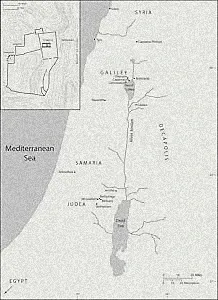
Jesus was Jewish, so the center of Jewish life is Jerusalem. In the center of Jerusalem is a temple, which was rebuilt under the Persians and renovated by Herod. We know that Jesus was born in the area of Galilee. As you can see, Galilee is by the coast, which makes this region extremely cosmopolitan. From an early age, Jesus was experiencing different religions and cultures: Hinduism, Zoroastrianism, Judaism.
We don't know much about Jesus; we only know him from the Bible. Then, in 1945, in a place called Nag Hammadi in Egypt, we discovered lots of books with sayings of Jesus that we didn't know existed before. What's important to understand is that after Jesus died, there were many different sects of Christianity that believed different things and they argued with each other. Ultimately, it was the Catholic Church who won. Why? Because the Catholic Church was run by the Roman Empire.
One major book that was discovered in Nag Hammadi that was lost to us is called the Gospel of Thomas. I believe the Gospel of Thomas records the true teachings of Jesus. Let's first look at the true teachings of Jesus, and then I'll explain why I think this is actually what he taught.
The True Teachings of Jesus: The Gospel of Thomas
And he said, "Whoever finds the interpretation of these sayings will not experience death."
This already makes sense because, in the universe, death doesn't exist. After you die, your soul goes up to the astral plane, to the divine. Your soul can never die. But you have to recognize that you are the divine spark. Once you recognize that, you'll be immortal. If you don't recognize that, then you fear death.
Jesus said, "Let him who seeks continue seeking until he finds. When he finds, he will become troubled. When he becomes troubled, he will be astonished, and he will rule over the All."
This goes back to Plato's allegory of the cave. The prisoner escapes his chains, goes up into the real world where there's sunlight, and he sees the truth. Now he is able to see, whereas everyone else is still chained as prisoners in the cave. He rules over all because he knows the truth, whereas everyone else is still imprisoned in darkness. But remember that this is a painful process. When you go into the light, you're blinded by it. You feel absolute pain and confusion. But over time, if you persist, you will see the truth.
Jesus said, "If those who lead you say to you, 'See, the kingdom is in the sky,' then the birds of the sky will precede you. If they say to you, 'It is in the sea,' then the fish will precede you. Rather, the kingdom is inside of you, and it is outside of you. When you come to know yourselves, then you will become known, and you will realize that it is you who are the sons of the living father. But if you will not know yourselves, you dwell in poverty, and it is you who are that poverty."
This is a really important idea. Going back to the cave, when you escape and see the real world and then come back, it doesn't matter if you tell the others what the real world is. They themselves have to go out and see the world for themselves. They have to break the chains themselves and then venture out into the light and experience pain and torment for themselves before they recognize the truth.
That's what Jesus is saying. People who tell you this stuff—don't listen to them. They can only guide you, but you can't trust them. You have to believe in yourself. You have to look into yourself because the truth, the divine spark, is inside of you. What Jesus is saying is that organized religion does not work. There's no way Jesus would say, "Follow me and you're good. Believe in me and you're good." He would never say that because he knows you can't follow someone else. You have to believe in yourself.
Notice he says, "we're all sons of the living father." He's not saying, "I'm the Son of God and you're not. I'm superior to you." He's saying we're all sons of the living father. Also, throughout the Gospel of Thomas, he actually doesn't refer to the Bible. He doesn't talk about Adam and Eve, Yahweh, David, or Moses, because for him, it's all fake. The Bible is fake. What's true is the divine spark in you. All of this is contradictory to modern-day Christianity because Jesus was not a Christian.
Jesus saw infants being suckled. He said to his disciples, "These infants being suckled are like those who enter the kingdom." They said to him, "Shall we then, as children, enter the kingdom?" Jesus said to them, "When you make the two one, and when you make the inside like the outside and the outside like the inside, and the above like the below, and when you make the male and the female one and the same, so that the male be not male nor the female female; and when you fashion eyes in the place of an eye, and a hand in place of a hand, and a foot in place of a foot, and a likeness in place of a likeness; then will you enter the kingdom."
We are born into this world, and as we grow older, we believe in the falseness that we see around us. But once we develop our imagination and recognize that this world we live in is our hallucination, a projection of our imagination, then we can take control over this world. That will allow us to access the divine. It is through the imagination that we can create this world in a new place. We're able to be our true selves.
What we will understand is that we're all connected by the divine. The separation of male, female, Chinese, American, black, white—it's all made up. It's not true. Once we are able to see reality as it is, we'll all be one and the same. We're all interconnected, all part of the same source. We have to train ourselves to see the truth from this falsehood.
His disciples said to him, "Show us the place where you are, since it is necessary for us to seek it." He said to them, "Whoever has ears, let him hear. There is light within a man of light, and he lights up the whole world. If he does not shine, he is darkness."
The disciples say to Jesus, "Tell us how to be like you." And Jesus says, "Be yourself. There's a light inside of you. Look for the light and shine it on the world."
Jesus said, "I took my place in the midst of the world, and I appeared to them in flesh. I found all of them intoxicated; I found none of them thirsty. And my soul became afflicted for the sons of men, because they are blind in their hearts and do not have sight. For empty they came into the world, and empty too they seek to leave the world. But for the moment they are intoxicated. When they shake off their wine, then they will repent."
He's talking about the materialistic world. We came into this world with nothing, and when we die, we're going to go back with nothing. So this pursuit of materialism, wealth, and power makes no sense. Why are you here pursuing all this gold and money that you can't take with you? It seems as though you're drunk. We're here and we're just drunk, but we are not thirsty for the truth. We're happy for the way it is.
This idea is mirrored in a poem by Rumi, the Persian poet. He also says the world that we live in is a prison for drunks. I'm pretty sure Rumi did not read the Gospel of Thomas, but they're able to think the same thoughts because they're all being inspired by the same source.
Jesus said, "If the flesh came into being because of spirit, it is a wonder. But if spirit came into being because of the body, it is a wonder of wonders. Indeed, I am amazed at how this great wealth has made its home in this poverty."
The idea is that it is the consciousness, the mind, that creates the material world, the body. That makes sense. And what Jesus is saying is, if you think that the body creates the spirit, you're crazy. It's a wonder of wonders. That's impossible. Why? Because the spirit is full of wealth, but the body is impoverished. How is it possible that an impoverished body is able to create so much wealth? Our mind, our consciousness, is so vast and abundant, but our bodies are so limited. How is it possible that our smaller brains are able to create a universe of ideas and experiences?
Jesus said, "The Pharisees and the scribes have taken the keys of knowledge (gnosis) and hidden them. They themselves have not entered, nor have they allowed to enter those who wish to. You, however, be as wise as serpents and as innocent as doves."
Jesus hates organized religion. The Pharisees are Jewish leaders, and they create a hierarchy of religion where they say to people, "Only I know the truth, only I have knowledge, so listen to me." Jesus is saying they themselves are ignorant because you cannot access knowledge through hierarchy or by oppressing other people. You can only access knowledge by looking into yourself. So you have to become like the serpent and pretend you don't know anything in order to access knowledge yourself, because otherwise, if you are capable of accessing knowledge, the priests will see you as a threat and kill you.
Remember, it was the serpent who told Eve to eat from the fruit. What Jesus is saying is that it is good and natural to seek knowledge, even if it means disobeying God. That's what we're meant to do here: to seek knowledge, to seek the truth, to seek love. If the gods or the priests stop you from doing so, it's because they're evil. The true God, the Monad, is pure love, pure compassion, pure forgiveness. He can do no wrong; he's perfection. If you have the desire to seek knowledge and you believe that knowledge makes you a happier, more fulfilled person, then you should seek it. Even if a god tells you not to, it means he's a false god.
Jesus said, "Whoever has come to understand the world has found only a corpse, and whoever has found a corpse is superior to the world."
This is what's going to get Jesus in trouble. He's saying the Roman Empire, this great empire that you've built that ranges across the Mediterranean, is a corpse. It's dying, it's dead, it's nothing. And once you recognize this, once you refuse to comply and obey, they have no power over you. That's a threat to power.
Jesus said, "The kingdom of the father is like a shepherd who had a hundred sheep. One of them, the largest, went astray. He left the ninety-nine and looked for that one until he found it. When he had gone to such trouble, he said to the sheep, 'I care for you more than the ninety-nine.'"
God, the true God, does not want obedience. He wants us to be creative, to seek knowledge, to discover, to explore, to try new things. And if we do this, he cares for us more than for those who just obey him. Because those who obey him, who do nothing, contribute nothing to the universe. When we love, when we imagine, we are making the universe a brighter place. We are shining our light. If we just sit back and do what we're told, we're doing nothing. We're like NPCs—non-playable characters in a video game. We don't exist.
Jesus said, "A man had received visitors. And when he had prepared the dinner, he sent his servant to invite the guests... The servant returned and said to his master, 'Those whom you invited to the dinner have asked to be excused.' The master said to his servant, 'Go outside to the streets and bring back those whom you happen to meet, so that they may dine.' Businessmen and merchants will not enter the places of my Father."
This goes against the empire. What Jesus is saying is the worst people in this world are the rich people. Think about today, how we're supposed to worship Elon Musk because he's rich. What Jesus is saying is no, Elon Musk is the worst person in the world. Why? Because the divine, the Monad, has prepared a great feast for us. When we die and go to the Monad, we will experience the greatest happiness and joy. The Monad is inviting us, but the business people are saying, "No, I'm too busy making money. I'm too busy doing evil in this world, so I don't want to go to the stupid feast." They're the ones who will lose out in the end, even though today we think they've won. Don't worry about the rich and the powerful. They may look happy, but they're not. At the end of days, when we all go back to the Monad, they're the ones who will not be invited to the grand feast.
How can we find our spark when society pushes us toward materialism?
That's a great question, and it's a problem. Your parents, the school, society brainwashes you to believe that only money matters, only grades matter. The answer is you have to be brave. You have to be true to yourself because you yourself know what is true. If we didn't know, then Jesus would not matter. Why do two billion people believe in Jesus? Because they know that Jesus spoke the truth.
So listen to your heart. I know it's hard, and most of us cannot do it. That's why in many traditions like Buddhism and Hinduism, reincarnation is important. Maybe in this lifetime, we don't figure it out. Maybe in the next lifetime, or maybe 50 lifetimes away, but eventually, you'll figure it out. Eventually, you'll figure out that what other people say does not matter because this world we live in is a false world. And then you're like, "You know what I should do? I should do what I believe to be true." And then you'll recognize, "Oh, when I actually do what I like, what I enjoy, it makes me a more fulfilled person. And guess what? It connects me to the divine."
You can know because you can look at people's faces. When you meet a rich person, his face is kind of evil. When you meet a person who's generous, who volunteers his time, who is a good teacher, his face is different. Remember Achilles: when you do evil, evil comes into you and corrupts your soul. When you do good, good comes to you and brightens your soul, and you brighten the world with it. You try different things until you find the things that make your spark glow.
The Problem of Freedom: Dostoevsky's Grand Inquisitor
The problem is that Jesus says there's a spark inside of you, and it's your responsibility to let it grow. If you let it grow, you will bring happiness to the world and to yourself, and you will be able to feast with the divine in heaven. But as we discussed, it's really hard. You have to take individual responsibility, ignore people around you, and learn for yourself. Maybe a few thousand people will love this idea, but what about the millions of other people who just want to live normal lives?
This is the problem left by Jesus, as explored in The Brothers Karamazov by Fyodor Dostoevsky. Jesus comes to the world and tells us the truth: freedom is what will enable us to seek the divine. But this creates anxiety in people because now they have to think for themselves, go out into the light, and feel all this pain. But they don't want to. They just want to live a happy life and watch TV every day.
So the Church is like, "Okay, we need to create an organized religion and fool people." How do we fool people? By teaching them that Jesus didn't actually say these things. We will not worship Jesus; we will worship Satan instead. Why? Because Satan encourages us to enforce our will on people. We need to be evil in order to do good in the world.
Think about it. These children are naughty. We can say to them, like Jesus, "Hey man, you'll grow up one day and you won't be naughty." But in this process, they're going to hurt each other and do stupid things. So, we have to be the strict father. We have to create this church to enforce the law on people, to make sure the children don't hurt themselves so they can just be children. And honestly, 99% of people will never grow up. So, we have to be Satan. The Catholic Church will pretend to worship Jesus, but actually, we're going to worship Satan.
We're going to enforce the law on people. The Roman Empire is dead, but now the Catholic Church will be the evil empire. We're going to go around and persecute people who disobey the law so that everyone can live in peace. People want to be sheep, and they have the right to be sheep. So we're going to be the shepherd. We will be Satan, and we will enforce goodness on people whether they like it or not. This is good for people because now they don't have to accept individual responsibility. If my life sucks, it's not because of me; it's because of the devil, the Catholic Church, Satan.
In Dostoevsky's story, the Catholic Church is being the evil empire, oppressing people. One day, Jesus comes from heaven and walks among the people. They know he's Jesus, and he's curing people, and they're all happy. But because the Catholic Church worships Satan, they need to arrest this guy. The Grand Inquisitor, the leader, appears before Jesus, who is called "the Prisoner" in the story. He says to the Prisoner, "We know who you are. You are Jesus, and we're supposed to worship you, but we're going to have to kill you because you are a threat to the happiness of the people." The Grand Inquisitor will say to Jesus, "We create good in this world by being evil, and your presence will destroy this. Therefore, we must destroy you."
"Instead of taking possession of men's freedom, Thou didst increase it, and burdened the spiritual kingdom of mankind with its sufferings forever. Thou didst desire man's free love, that he should follow Thee freely, enticed and taken captive by Thee. In place of the rigid ancient law, man must hereafter with free heart decide for himself what is good and what is evil, having only Thy image before him as his guide."
This is really annoying for people because before, your teacher would tell you what is good and evil. Now the teacher is saying you guys decide. Now it's complete chaos, and it creates anxiety. People just want to be told what to do.
"But didst Thou not know that he would at last reject even Thy image and Thy truth, if he is weighed down with the fearful burden of free choice? They will cry aloud at last that the truth is not in Thee, for they could not have been left in greater confusion and suffering than Thou has caused, laying upon them so many cares and unanswerable problems."
You're creating all this anxiety in people for no particular reason. People were happy just being slaves, and now you free them, and they're completely confused as to what to do next. Your freedom is only good for the minority of people who can think for themselves, who aspire to the divine. What about everyone else?
"And how are the other weak ones to blame, that they could not endure what the strong have endured? How is the weak soul to blame that it is unable to receive such terrible gifts? Canst Thou have simply come to the elect and for the elect? But if so, it is a mystery and we cannot understand it. And if it is a mystery, we too have a right to preach a mystery and to teach them that it's not the free judgment of their hearts, not love that matters, but a mystery which they must follow blindly, even against their conscience. So we have done."
What he's saying is, "I understand Christianity is complete chaos. But this chaos means people will never understand your true teachings. And if they don't understand, they don't have to follow it. They don't have to think for themselves. So we created complete chaos so that people will not be forced to obey us. That's why we corrupted your teachings."
"We have corrected Thy work and have founded it upon miracle, mystery and authority. And men rejoiced that they were again led like sheep, and that the terrible gift that had brought them such suffering was at last lifted from their hearts. Were we right teaching them this? Speak. Did we not love mankind, so meekly acknowledging their feebleness, lovingly lightening their burden, and permitting their weak nature even sin with our sanction? Why hast Thou come now to hinder us?"
Why is there evil in the world? Because people don't want to think for themselves. So you need evil people to command them, to enslave them, to force them against their will. If you actually give people complete freedom, it would be complete chaos. That's why there's Satan in this world. This is why Satan must rule this world.
When the Inquisitor ceased speaking he waited some time for his Prisoner to answer him. His silence weighed down upon him. He saw that the Prisoner had listened intently all the time, looking gently in his face and evidently not wishing to reply. The old man longed for him to say something, however bitter and terrible. But He suddenly approached the old man in silence and softly kissed him on his bloodless aged lips. That was all his answer. The old man shuddered. His lips moved. He went to the door, opened it and said to him: ‘Go, and come no more... come not at all, never, never!’ And he let him out into the dark alleys of the town. The Prisoner went away. And the old man? The kiss glows in his heart, but the old man adheres to his idea.
The Prisoner, of course, is Jesus. The Inquisitor has these great arguments, and he's right. He asks Jesus for his response, and Jesus's response is basically, "I forgive you. I love you and I forgive you." It's the same thing Priam did to Achilles. By kissing the Inquisitor rather than fighting him, the Inquisitor loses. He knows he's been humbled, so he lets Jesus go. "Just get out of here. Please don't bother us again. This is not your world. This is Satan's world."
The kiss glows in his heart, but the old man adheres to his ideas. Jesus did not change the old man's mind, but there's a spark in him that now glows—the spark that he tried all this time to kill with reason and evil is still able to glow. That's the power of forgiveness. Even if the person seems to be the most evil person in the world, as long as you're able to show him the possibility of love, the spark will glow.
The Inquisitor poses this problem: people don't want free will. What's the solution? The solution is that the soul is eternal. You have to give people time—we're talking about millions of years. Maybe not in 50 years, but in about a million years, people will figure it out for themselves. And Jesus, God, is patient. He's loving, forgiving, generous, compassionate. So, take your time. What's important is that people learn for themselves. Eventually, you'll figure out being a slave sucks. It may seem as though watching Netflix and playing video games is fun, but if you go outside and play, that's a lot more fun. Eventually, you'll figure it out. And you have to figure it out by yourself. God is forever patient.
The Logic of Sacrifice: Dante's Divine Comedy
Now, let's go to Dante's Divine Comedy. Dante is trying to answer the question: why did Jesus have to kill himself? What's the logic of that? Traditionally, the Catholic Church teaches that when we do evil, we become slaves of Satan. So Jesus made a deal with Satan. Jesus said, "I will die, you can take my body, and then you will have to free my people." Satan is like, "That's a really good deal. God in exchange for the slaves? Sure." But the thing is, when Jesus died and freed us, he could not ever truly die. This is called the ransom theory, and this is how most people in Dante's time understood why Jesus had to die. We stopped being slaves of Satan and became slaves to Jesus, and that's why we must worship him.
Dante's like, "No, that can't possibly be right." God did not come to free us so that we become slaves to God. God came to free us so that we could be free. In heaven, there's a conversation between Dante and Beatrice, who he loves, and they discuss the nature of the universe. This is Beatrice talking to Dante:
"The greatest gift the magnanimity of God, as He created, gave—the gift most suited to His goodness, gift that He most prizes—was the freedom of the will."
The underlying principle of the universe is freedom of the will. If God is love and he loves people, then he must trust people. Therefore, freedom of will is the most important principle. It's the same if you're a parent. If you truly love your child, you will let your child go and make his own mistakes. You will not overprotect your child. True love means trusting other people.
"You say: 'What I have heard is clear to me; but this is hidden from me: why God willed precisely this pathway for redemption.'"
The Catholic Church teaches that Jesus redeemed us from our sins, but the question is, why did he have to kill himself?
"Brother, this ordinance is buried from the eyes of everyone whose intellect has not matured within the flame of love."
Beatrice is saying to Dante, "I know this makes no sense because you're thinking with your mind, but the mind is not where the spark is. The divine spark is in the heart. So stop thinking with your mind and feel with your heart. Let the divine spark glow in you, and then you will see the truth for yourself."
"The godly Goodness that has banished every envy from Its own self, burning in Itself and sparkling so, It shows eternal beauties. All that derives directly from this Goodness is everlasting, since the seal of Goodness, impressed, an imprint that never alters."
God is perfect, forever good, forever love, forever compassion, forever forgiveness. And there's a spark of God in us, our hearts. So there's always this perfection in us.
"Only man's sin annuls man's liberty, makes him unlike the Highest Good, so that in him the brightness of Its light is dimmed."
Even though the spark is forever in us, we can cover it up with mud, with dirt. We can forget about it by doing evil, by disobeying. If we do more and more evil, we forget the spark more and more, and it dims in us. The spark can glow or it can dim depending on our actions, but it will always be there.
"And man cannot regain his dignity unless, where sin left emptiness, man fills the void with just amends for evil pleasure."
The problem is, we do all this evil, and now we can't forgive ourselves. So we're stuck. We cannot compensate for the evil that we do, so we do more evil to ignore the fact that we cannot forgive ourselves. Evil creates more evil. By disobeying God, by eating that fruit, by trying to be like God, we created evil, and this evil forces us to be more evil. Now we're just stuck.
"For when your nature sinned so totally within its seed, then from these dignities, just as from Paradise, that nature parted. And they could never be regained—if you consider carefully—by any way that did not pass across one of these fords: either through nothing other than His mercy, God had to pardon man or, of himself, man had to offer payment for his folly."
Now that we've disobeyed God and there's evil in our hearts, what can we do? Beatrice says there are two possibilities. The first is that we compensate for the first act of disobedience. But you can't do that because you tried to be God, you tried to kill God. You can never compensate God for the evil that you've done. The other possibility is that God forgives you. The problem, though, is that if God just forgives you, you won't learn anything.
"Man, in his limits, could not recompense; for no obedience, no humility he offered later could have been so deep that it could match the heights he meant to reach through disobedience. Man lacked the power to offer satisfaction by himself."
You tried to be God, so you can't ever ask for forgiveness for that.
"For God showed greater generosity in giving His own self that man might be able to rise than if He simply pardoned. For every other means fell short of justice, except the way whereby the Son of God humbled Himself when He became incarnate."
This is why Jesus had to kill himself. God has to forgive us, but he has to do it in a way that allows us to learn from our mistakes and be better people.
Let's use an analogy. I'm a father, and I have a daughter named Eve and a dog. I say to Eve, "I love you so much." Eve asks, "Do you love me or the dog more?" I say, "I love you both equally. Love is infinite." But Eve wonders how she can know I truly love her. So, Eve kills the dog and asks me again, "Do you love me or the dog more?" Now I'm stuck. If I punish her, that shows her I love the dog more. But if I don't punish her, she's going to do this again. So what do I do?
The only way out of this paradox is if I punish myself. I take a whip and I hit myself. Eve watches this. Now Eve knows, first, that I do love her because I'm punishing myself for her sake. And second, she won't do it again because she doesn't want to see me punished.
That's why Jesus had to kill himself. God had to punish himself so that we would be humbled by his sacrifice. We would feel so much remorse and regret for making God die that we would never disobey him again, never try to become God ourselves. Because of this, Jesus freed us from the evil in us and led us to the path of good. Now all we have to do is remember Jesus, remember what he said and taught, and we will forever be on the path towards the light.
The Purpose of the Universe
Now that we understand this idea, Dante explains why we are here, what the purpose of the universe is.
"You say: 'I see the water, see the fire and air and earth and all that they compose come to corruption and endure so briefly; and yet these, too, were things created. If what has been said above is true, then these things never should be subject to corruption.'"
The idea is that God is perfect, so everything he creates is perfect. If that's the case, why do we die? Beatrice says God is perfect, and he creates perfection. But he creates the laws of the universe—he creates the game. That's perfect. The things within the game enter a cycle of destruction and life, life and death, because that's the only way for the universe to work properly.
"Brother, the angels and the pure country where you are now—these may be said to be created as they are, in all their being; whereas the elements that you have mentioned, as well as those things that are made from them, receive their form from a created power. The matter they contain has been created, just as, within the stars that wheel about them, the power to give form has been created. The rays and motion of the holy lights draw forth the soul of every animal and plant from matter able to take form."
The laws of the universe are created.
"But your life is breathed forth immediately by the chief Good, who so enamors it of His own self that it desires Him always. So, reasoning, you also can deduce your resurrection, if you need but remember the way in which your human flesh was fashioned when both of your first parents were created."
The world we live in is a world in which we can make mistakes, learn, and grow. We don't have to worry about making mistakes because when we die, all that will happen is we'll just return to the Good and be reincarnated. We'll come back. Jesus was resurrected, but we will be resurrected as well. We have infinite opportunities to grow as souls, and that's the purpose of life: to learn, to make mistakes, to be creative, to imagine new possibilities. To ensure that we can continue to grow, there's death. Death allows for a reset, for us to rejuvenate ourselves and learn from our mistakes.
So don't think about this lifetime. Think about all possible lifetimes and live your life accordingly. Make the most of your life here by making as many mistakes as possible because only by making mistakes can you actually grow as a soul.
Leonardo da Vinci's famous painting, The Last Supper, depicts Jesus before his betrayal and crucifixion. What's interesting is the number 33133 can be seen. If you go to the Bible and look for Lamentations 3:31-33, you have this quotation:
For no one is cast off by the Lord forever. Though he brings grief, he will show compassion, so great is his unfailing love. For he does not willingly bring affliction or grief to anyone.
That's who Jesus is. He came to remind us that we will all be forgiven in the end. So, forgive other people. Love your enemy.
Jesus's Message in the Bible: The Sermon on the Mount
Let's look at what the Bible actually says. This is what Jesus taught, and I believe this is what he taught because, one, the Gospel of Thomas has a unique, poetic voice—it is the divine spark itself. Two, what he teaches aligns with every other poet-prophet we've studied. And three, other poet-prophets like Dante and Dostoevsky were able to see exactly what Jesus was teaching.
There are also other teachings of Jesus that we find in the Bible that conform to our theory. This is from the Gospel of Matthew, in the Sermon on the Mount, where Jesus stands on a hill and preaches the secrets of the universe.
"Blessed are the poor in spirit, for theirs is the kingdom of heaven.
Blessed are those who mourn, for they will be comforted.
Blessed are the meek, for they will inherit the earth.
Blessed are those who hunger and thirst for righteousness, for they will be filled.
Blessed are the merciful, for they will be shown mercy.
Blessed are the pure in heart, for they will see God.
Blessed are the peacemakers, for they will be called children of God.
Blessed are those who are persecuted because of righteousness, for theirs is the kingdom of heaven."
This is his message to people. What matters is the spark inside of you. It doesn't matter how wealthy or powerful you are. In fact, it is probably those who are slaves who are more virtuous and will inherit the kingdom.
"You are the salt of the earth. But if the salt loses its saltiness, how can it be made salty again? It is no longer good for anything, except to be thrown out and trampled underfoot. You are the light of the world. A town built on a hill cannot be hidden. Neither do people light a lamp and put it under a bowl. Instead they put it on its stand, and it gives light to everyone in the house. In the same way, let your light shine before others, that they may see your good deeds and glorify your Father in heaven."
Be the light. Every one of you has a light in you, the power to change the universe and do good in this world.
"You have heard that it was said, ‘Love your neighbor and hate your enemy.’ But I tell you, love your enemies and pray for those who persecute you, that you may be children of your Father in heaven. He causes his sun to rise on the evil and the good, and sends rain on the righteous and the unrighteous. If you love those who love you, what reward will you get? Are not even the tax collectors doing that? And if you greet only your own people, what are you doing more than others? Do not even pagans do that? Be perfect, therefore, as your heavenly Father is perfect."
We are in this world to do as much good as possible. Thank evil people because they give you the opportunity to do good. If there's no evil in the world, how do you possibly do good?
"Do not store up for yourselves treasures on earth, where moths and vermin destroy, and where thieves break in and steal. But store up for yourselves treasures in heaven, where moths and vermin do not destroy, and where thieves do not break in and steal. For where your treasure is, there your heart will be also."
Focus on your own spiritual enlightenment. Focus on making your heart pure, good, and virtuous. Don't worry about money, because when you die, you can't take these things with you. But your heart will always follow you wherever you are.
"The eye is the lamp of the body. If your eyes are healthy, your whole body will be full of light. But if your eyes are unhealthy, your whole body will be full of darkness. If then the light within you is darkness, how great is that darkness!"
We imagine reality, so what matters is how you imagine it, how you see the world. And how you see the world is a reflection of the spark inside of you. If you see goodness and do goodness, then goodness will come. This is also called the law of attraction.
"No one can serve two masters. Either you will hate the one and love the other, or you will be devoted to the one and despise the other. You cannot serve both God and money."
This is a really important idea. What is Satan? Satan is money, it's power. This world belongs to Satan; it is ruled by Satan. There's nothing you can do about it. The world you leave for is the world of God. It's your choice to triumph in this world or to triumph in the spiritual world. But you cannot have both.
"Not everyone who says to me, ‘Lord, Lord,’ will enter the kingdom of heaven, but only the one who does the will of my Father who is in heaven. Many will say to me on that day, ‘Lord, Lord, did we not prophesy in your name and in your name drive out demons and in your name perform many miracles?’ Then I will tell them plainly, ‘I never knew you. Away from me, you evildoers!’"
This is a really important idea. The Christian religion tells us that you must believe in Jesus to be saved by Jesus. All that matters is your belief. It doesn't matter what you do or say. But what Jesus himself is telling us is, "No, don't use my name. Don't follow me. Follow your heart. In fact, if you use my name, it's because you mean to do evil in this world."
So the question then is, how do we get from this to the Catholic Church, which says, "No, you must obey us, otherwise you'll be condemned to hell"? That's the topic for next time: how the Catholic Church was created. The argument I will make is that it was created by the Roman Empire, not by Jesus himself.
But if death clears our memory, how do we learn from past mistakes?
That's a great point. The idea is the divine spark. When you die, what goes on is not the brain; you won't remember anything. But what goes on is the spark. If the spark glows really brightly, it goes up to a higher plane, closer to the Monad, closer to God, and therefore you feel more pleasure. But if your spark has been dimmed, it goes to a lower place. So what you want to do is obviously make that spark glow as much as possible.
Most people will not figure this out. It may take 50 lifetimes before you figure out, "You know what, I should really try to glow my spark." It may take a thousand lifetimes, a million lifetimes, who knows? But it's your choice. Some will figure it out quicker than others.
Every religion teaches us that when you die, you won't remember how much money you have. You won't remember anything. But what you will leave behind is the amount of goodness you did or the amount of evil you did.