Game Theory #17: The Great Reset
The argument I want to make is that financial collapses do not happen accidentally or naturally. They have to be engineered. This is a very hard concept for us to understand.
In economics, there's something called the boom-bust cycle, which basically states that in capitalism, the economy booms, then suddenly, for whatever reason, it collapses. If you study economics, they teach you that this is just a natural part of capitalism. In good times, people spend too much money and become overconfident. They waste a lot of money, and then the economy turns bad and collapses. You then have to focus on being more lean, efficient, and resilient. Think of it like gaining weight: you gain too much weight and then you feel bad, so you lose weight. That's the idea of the boom-bust cycle.
The problem, though, is that no one can properly explain how and why the bubble suddenly pops. What is the mechanism or trigger for the collapse? If you study economics, you will never know the answer.
So, we are going to focus on speculation today. I've never studied economics, but I'm curious as to why this happens. Why is it that bubbles pop? How do economies rise and fall? I'm not an expert or a professor. I engage in speculation for fun and entertainment. See this as an exploration of some topics that have no scholarly basis.
The Standard Explanation vs. The Engineered Reality
Let's look at the main explanation for why booms and busts happen. This comes from Andrew Ross Sorkin, who is probably the most influential financial journalist in America. He wrote a book looking at the stock market collapse of 1929 and offers a very good explanation as to why it happened. The idea is that lengthy, uninterrupted booms, like the one in the 1920s, produce a collective delusion. Optimism becomes a drug, a religion, or some combination of both. People lose their ability to calculate risk and distinguish between good ideas and bad ones.
This is the set explanation for why a bubble bursts—it's delusional, like you fly too high when you're not supposed to fly, so you eventually fall back to the ground. It's just gravity. But I want to show you today that there's actually another explanation: this is all being engineered. There are people behind the scenes who have the power to cause economies to rise and fall.
Let me give you an example. Let's just say you're a bank. Your job is to take people's money, save it, and then use it properly to promote the economy. Let's say we put a million dollars into the bank. What does the bank do with it? The bank then lends it out to entrepreneurs. Maybe I want a restaurant, so I borrow a million dollars from the bank.
How much money is in the bank now? It should be zero. If I take in a million dollars and I lend out a million dollars, I should have zero. That's just basic math. But that's not the answer. The actual answer is $2 million.
What you need to understand is that each bank has the ability to print its own money, and the bank is a mechanism for liquidity in the economy. This is a great illusion, a delusion behind the economy where money is just an idea, a concept, a collective hallucination.
The problem is there are tens of thousands of banks everywhere. How do they coordinate? There's actually something called a signaling mechanism. All these separate banks are linked together into a central bank. The central bank signals whether or not to lend money, and this mechanism is called the interest rate.
If you study economics, they will teach you that the interest rate determines how consumers behave. If the interest rate is low, say 1%, it means I can go to the bank, get money, and buy a house. If it's high, at 5%, then I don't want to go to the bank to buy a house. This is what you're taught in economics class.
But there's another explanation: the interest rate is not to signal consumers or homeowners, but rather for banks to lend or not. Depending on the interest rate, banks know their job is to release more liquidity into the system. If the rate is low, they will make it easier to take out a loan. But if the interest rate is high, they know they must not release too much liquidity, so they will make the loan application process hard.
In other words, the interest rate is not set to guide consumer behavior. It is set to coordinate liquidity in the marketplace. These are two very curious aspects of the system that people don't really understand.
How the World Works: A Model of Control
To understand the system, I will explain how the world works. The first thing to understand is that we live in Plato's cave, meaning we're all chained to the floor, watching a screen. Behind us is a great fire where the elite create puppets so that we can collectively hallucinate our own reality. The mechanism that allows us to coordinate our imagination is, of course, called money. Think of money as God. Money focuses our minds in a certain way that creates our reality.
Because of this concept, we can create the world we live in today. The world is structured with an empire, but above it, you have the Game Masters: the people in finance. This includes the Bank of International Settlements, the World Bank, the International Monetary Fund, Wall Street, and the City of London. These financial organizations coordinate together. They are the Game Masters, and they control how US dollars—the currency of this game—move around the system. This creates the global economy.
But you cannot allow people to think that a set of people are manipulating this game, because people will think it's not fair, transparent, or clean. So, you create multilateral organizations called the rules-based international order, like the WTO and the UN, and make people believe that these impartial organizations actually control the game, making it fair, transparent, and accountable.
You then reinforce this using media, education, and culture. Together, these three create the values and norms that make us believe this is a fair, open, and transparent game in which we can all win. So when there's a collapse, it's not because people are engineering it behind the scenes; it's because it's a law of gravity. It just happens naturally. It's no one's fault; it's just that we were too lazy and corrupt.
This system is not as clean as you think because there are opposing forces to it:
- Nationalism or ethnic identity
- Social democracy and individual rights
- Religion
These are countervailing forces that try to break apart the system. In response, other systems keep it in place:
- Intelligence (spies)
- Crime
- Science
Behind these three forces are three sets of powerful institutions:
- Transnational capital
- Secret societies
- Elite families (some people call them the Illuminati)
Underpinning this elite is something called the occult.
What stands out about this system is that transnational capital is also the Game Masters as well as the global economy. This is important because this system is the parasite, and the other system is the host. Transnational capital is both the parasite and the host, both the game master and the player. This obviously leads to a lot of corruption.
The Historical Roots of the System
So where did this system come from? The year is 1688, and in Britain, it's called the Glorious Revolution. Think of the Glorious Revolution as a marriage between two empires: the British Empire and the Dutch Republic. At this point in history, the Dutch Republic was the richest area of the world because it controlled the spice trade, the most valuable commodity at the time. The problem with the Dutch Republic was that it could not defend itself in Europe. It was easily invaded, it was Protestant, and it was being attacked by Catholic France, the Catholic Church, and the Hapsburgs of the Holy Roman Empire.
So, they agreed to combine their forces. The wealth of the Dutch Republic went to England, creating the Bank of England in 1694. This was a private bank, not accountable to the public. It printed money, and Parliament bought it. This was a massive innovation that allowed the British Empire to conquer the world. Before, if you were rich and lent your money to a king to fight wars, it was dangerous. The king could die, lose the war, or not pay you back. But if you lend money to Parliament—the nation-state—you're guaranteed to get your money back as long as the nation is still around. And at this time, England was the safest area of Europe because it was an island protected by the Royal Navy.
This innovation forever changed human history, and it has three major characteristics:
- Profits are privatized, losses are socialized. If you're a rich person, you want to put your money in the Bank of England because there's no way it loses money. If England fights a war and loses, the nation pays for it. But if it wins the war, you get the money.
- Wealth is generated through activity, which means wars. If I give you money, you have to go do something with it to make more profit. The way you do that is by fighting wars. That's why the British Empire started to expand very quickly around the world—it needed to generate profits for the bankers. This includes the Napoleonic Wars, the Great Game (a war between Russia and Britain for control of Central Asia), the conquest of India, and the conquest of China (the Opium Wars).
- Transnationalism and open borders. The system believes that capital should be able to move freely from place to place and builds systems to facilitate this movement.
This system is great for the bankers, but the people look at it and think it's unfair, which it is. So, you have to brainwash the people into believing it's a fair system. That's why you create a new idea called materialism, or "money is God."
Transnational capital and the Bank of England began sponsoring major intellectuals to come up with ideologies to support this idea:
- John Locke argued that private property is a god-given, inherent right, as much as freedom and happiness. He is the founder of a theory called empiricism, which states that we can only know what we ourselves experience. It is not practical to try to come up with a theory of the world beyond our experience, so don't think about God.
- David Hume argued for skepticism, which says that everything you know is not actually valid because it's just based on your belief. For example, you know Rome is the capital of Italy, but have you been to Rome? Probably not. You learned it in school by memorizing a fact. We should be skeptical of everything we know because most of it is based on custom or habit.
- Jeremy Bentham introduced utilitarianism. If skepticism and empiricism mean we don't really know anything and God doesn't exist, how can we design society? Utilitarianism says that if it is useful and gives us pleasure, it must be good. If you take drugs and are happy, it must be good. If you like spending money, it must be good. John Stuart Mill would later make adjustments to it, but this became the very concept of liberty. Liberty means you are free to pursue as much money-making as possible because that is the ultimate good. A country that prevents you from making and spending money is an evil dictatorship. A good country allows you to enjoy the pleasures of making money.
These three were the major philosophers of materialism and British liberty. Then you'll have people like:
- Karl Marx, who introduced dialectic materialism, which says the world is one of class struggle between the poor and the rich, taking the divine out of the equation.
- Charles Darwin and his theory of evolution, which basically says we're just animals. We're not divine beings.
- Sigmund Freud, who emphasized that we should be making a lot of money and having as much sex as possible because that's what we are—just apes.
This becomes the very foundation for the idea that money is God.
The American Takeover and the Federal Reserve
Transnational capital, having conquered the British Empire, began seeking new opportunities for its investments. The next target was America. The problem was that the Americans had just had a revolution to get rid of the British Empire. They didn't want transnational capital or the Bank of England to come in and conquer them.
So, the City of London and the Bank of England used agents in America. These agents included John D. Rockefeller, Andrew Carnegie, J.P. Morgan, and the Vanderbilts. With the resources and capital of the City of London, they monopolized different industries. Rockefeller monopolized oil. Eventually, these powerful agents of the City of London got together and created a system modeled on the Bank of England: the Federal Reserve System in 1913.
Strangely enough, after the Federal Reserve System was created, three things happened:
- America entered World War I.
- The 1929 stock market collapse occurred, followed by the Great Depression.
- In 1941, America joined World War II.
The Federal Reserve system meant that, like Britain, America was now controlled by transnational capital. It's the same system where profits are privatized, losses are socialized, and it's important to open the country up to capital movement.
As we know, America won World War II and tried to move this system around the world, specifically to Japan and Europe, where it was able to control the territory. It fought a Cold War with the Soviet Union and won. After the collapse of the Soviet Union, for the next 20-30 years, it had complete control over the world in what we call a unipolar moment. During this time, manufacturing from America shifted to China, and America focused completely on finance. This led to the 2008 great financial crisis.
Case Study: The 2008 Engineered Collapse
What allowed the great financial crisis to happen was something called subprime lending, which means lending money to people who can't pay you back—in this context, lending to poor people to buy homes. Before, banks didn't want to do that, but certain things happened to make subprime possible.
First, Bill Clinton really wanted to increase minority ownership of homes. He wanted Black people to buy more homes, but they were historically poor, so banks didn't lend to them. Clinton encouraged the government to help minorities buy homes. This was a noble goal.
The second, more important thing that happened was in 1999, when Bill Clinton repealed the Glass-Steagall Act. This act said that if you are a retail bank that takes money from depositors, you cannot engage in risky lending. If you're a private investment bank, you can. The act was trying to mitigate risk. By repealing it, you combined retail and investment banking. These banks became very large and needed to create new financial vehicles to generate more profit.
At the same time, because of America's unipolar moment, everyone wanted to invest in America, thinking it was the safest place to put their money. This included the GCC, China, Europe, and their pension funds, as well as Japan. Japan was investing in America through something called the yen carry trade. This was one of the dumbest things in the world. At this time, Japan was suffering from deflation, so the government lent money to institutions at 0% interest. The institutions were supposed to use this money to promote liquidity in the Japanese system. Instead, they took the money and used it to buy US treasuries, which provided a 5% return. You're borrowing money at 0% and lending it out at 5%.
Massive amounts of money were coming into the US financial markets, and they needed to create more investment vehicles. They created Collateralized Debt Obligations (CDOs), which were basically bundles of subprime mortgages. The idea was that mortgages are a good investment because people have to pay monthly, so you're guaranteed a certain amount of money. The problem, of course, is that subprime could lead to default. But at this time, no one was concerned about default because of the idea of too big to fail. The system was structured so that everyone was involved. If these homeowners defaulted and the banks defaulted, the entire economy would collapse. The thinking was that the system would keep going because if a certain percentage of homeowners were to default, the entire housing market would collapse. It was one big Ponzi scheme.
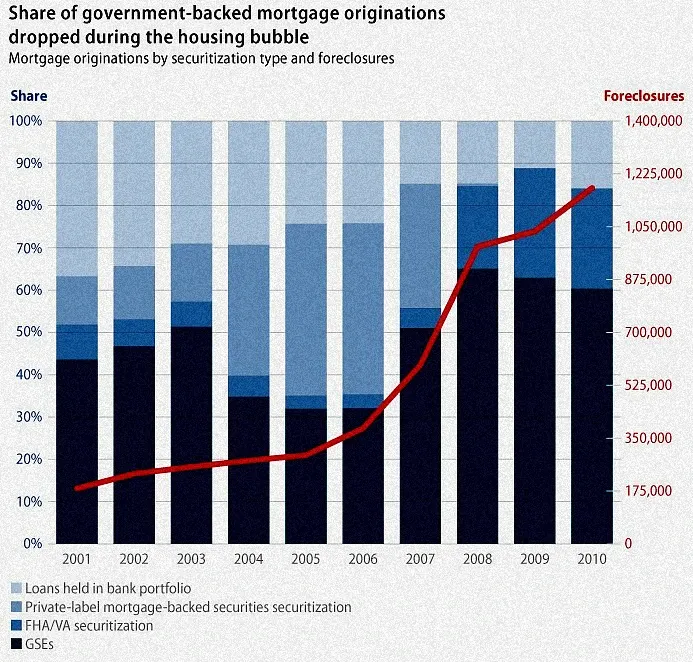
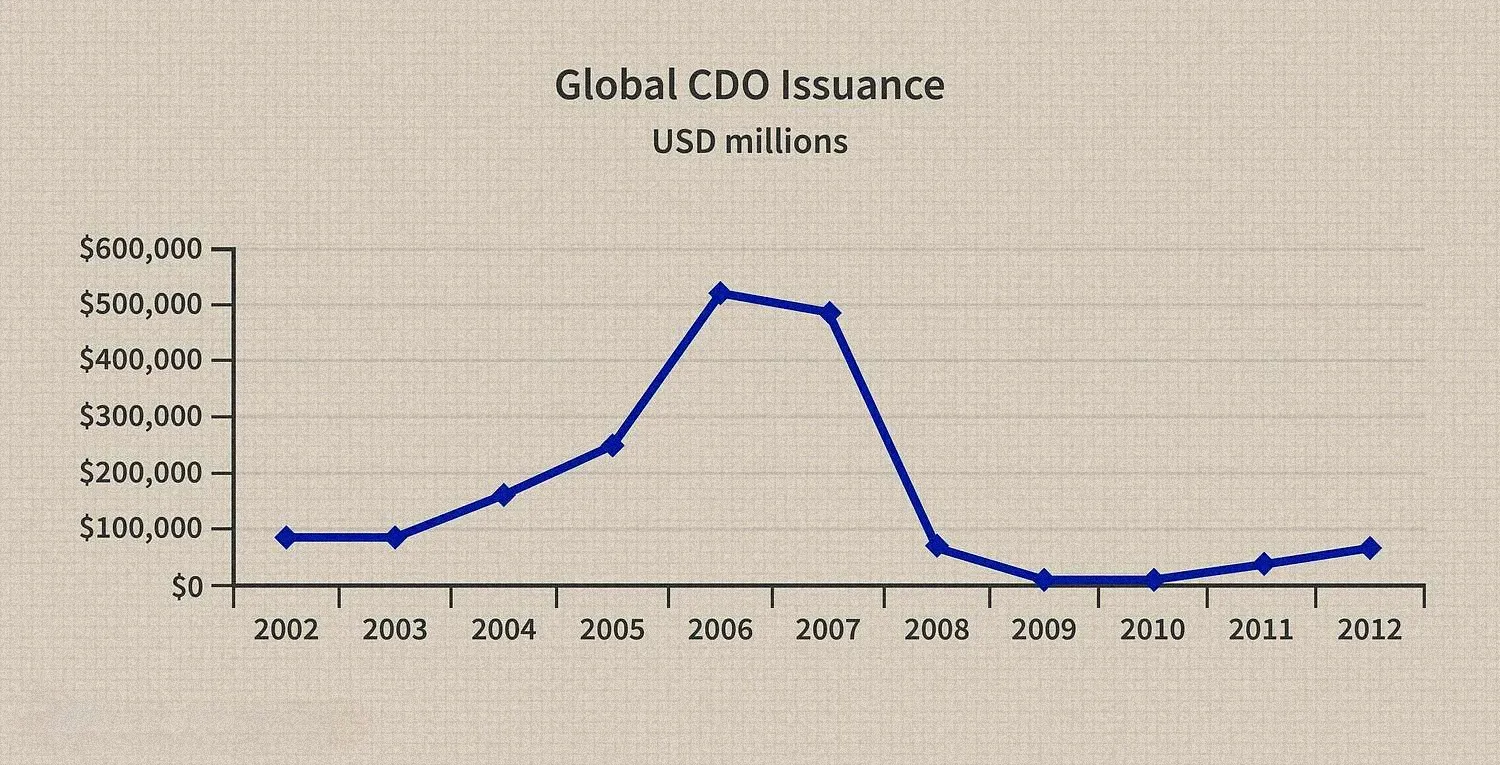
But we know for a fact that in 2008, this system collapsed. For the longest time, we believed it was because the defaults were too numerous. But if you look at what happened, you'll discover that's not true. The banks could have just chosen to roll over the defaults. If you owe me $1,000 for the mortgage but can't pay, I can say, "Pay me back next month." If you can't pay next month, I can say, "Pay me back the month after." I can keep the system going because this money is just based on an illusion.
But it collapsed. Why? What people don't tell you is that there were people who made a lot of money because of the collapse.
John Paulson made $20 billion in this collapse. How? He made his money by betting that the housing market would collapse.
Think about it this way: I lend a million dollars to Amber, and she has to pay back $10,000 a month. She keeps paying. But then Vincent says to me, "I bet you that Amber will not default on her loan because she hasn't defaulted in the past 10 years." I ask Vincent how much he wants to bet, and he says, "Half a million dollars." He's so confident. I say, "Sure, I'll take this bet." Now, what do I do? I make Amber default, because now I can make half a million dollars from Vincent.
That's how it worked. It's all a giant scam because only a few people control the entire system. You have stupid people buying mortgages from you, but you have even more stupid people who bet that those mortgages will not default. You take your money from the stupidest people. That's why the system collapsed—because you could make more money from collapsing the system than from letting it go on.
Jamie Dimon of JP Morgan also profited. When these other banks collapsed, JP Morgan could start to consolidate the banking industry by buying them up. Now, JP Morgan is the largest bank in America.
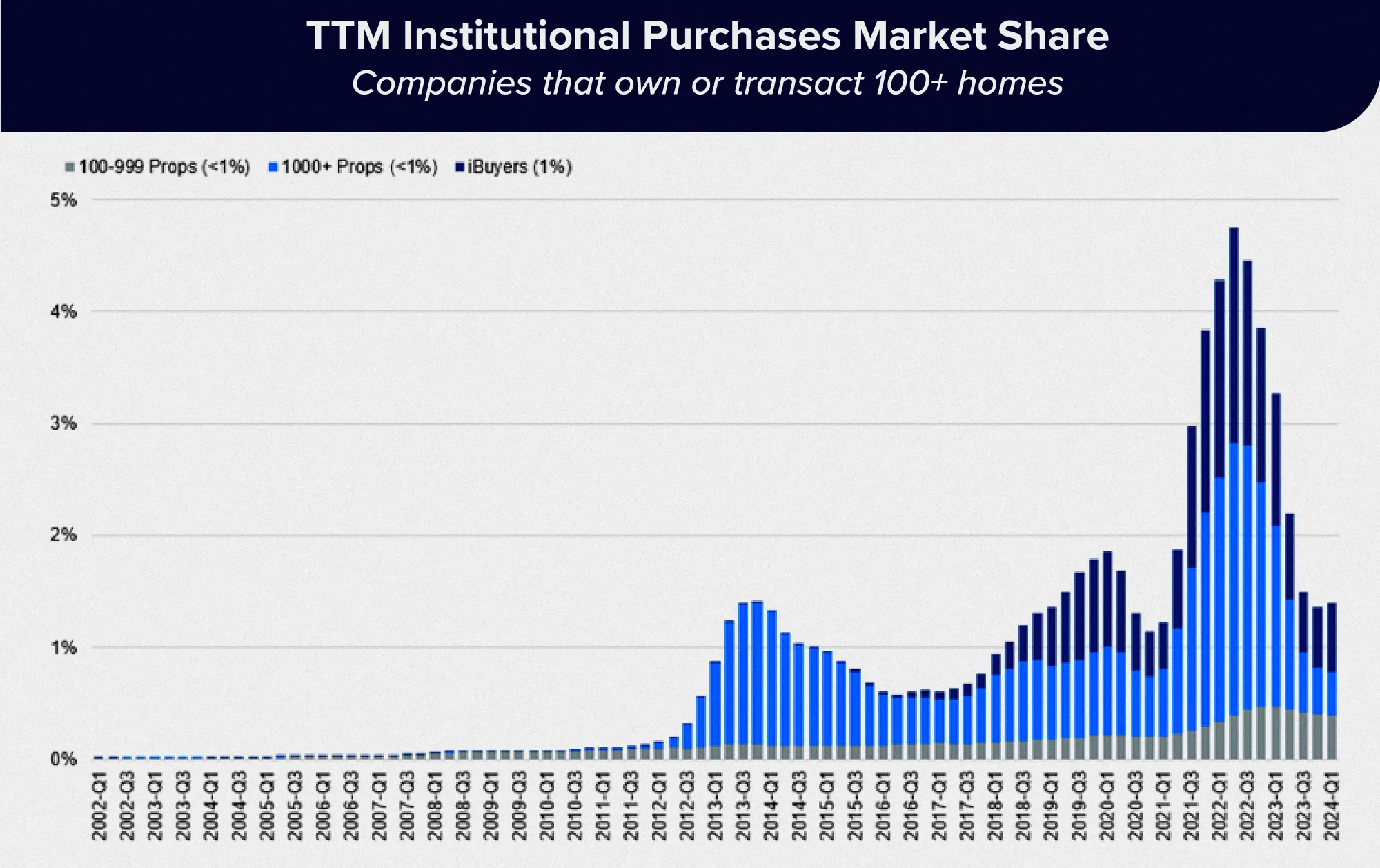
Also, look at homeownership. Before 2008, most homes were owned by individuals. After the collapse, you see a huge rise in ownership by large corporations and banks that own thousands or even hundreds of thousands of homes. Why? Because homeowners lost their homes, and these companies could come in and buy them on the cheap. The great financial crisis of 2008 destroyed millions of lives, but it was profitable for a few powerful individuals and institutions.
Bubbles Don't Have to Pop
You might say, "No, it's gravity. Eventually, a bubble has to collapse." Well, today we have two bubbles. We have the private credit bubble, where private banks lend money to private companies, estimated at $2 trillion. It hasn't collapsed yet. Why? Because the private banks allow the private companies that are losing money to keep on going. They don't say, "You're losing money, you should declare bankruptcy," because they would lose a lot of money that way. These bubbles can keep going forever.
Another big bubble today is the AI bubble. Companies like Nvidia and OpenAI don't actually make money from their AI products. In fact, ChatGPT loses money every time you use it because it's more expensive to run than the revenue it generates. It's a huge bubble, but why doesn't it collapse? Because it's just a few companies lending money to each other. It's a giant Ponzi scheme, an inside game.
Bubbles don't have to collapse. They collapse when it's profitable for a few individuals to make them collapse.
The Post-2008 Shift to China
After the 2008 crisis, transnational capital decided to save the global economy by allowing China to rise. One major consequence of the crisis is that transnational capital encouraged China to print money. The main mechanism to allow this to happen is the Bank for International Settlements (BIS). Located in Basel, Switzerland, it's considered the central bank of central banks. Every nation has a central bank that determines interest rates, but the BIS coordinates all of them. It is the most powerful bank in the world, and it's not public. It's managed for the best interests of powerful people.
In his book Tower of Basel, Adam LeBor explains the bank's history.
For despite Hitler’s bluster and planning, Nazi Germany had not achieved autarky. It needed to buy vast amounts of raw materials to manufacture armaments, and to feed, heat, and clothe its population. Swedish steel, Romanian oil, Portuguese tungsten, even South American beef, all had to be purchased and paid for in hard currency. Nazi Germany needed a financial channel to the neutral countries. It ran through Basel, which is the main reason why Nazi Germany did not invade Switzerland or Sweden. These neutral countries were far more use to the Third Reich as monetary hubs on the transnational financial network than as extra swathes of German-controlled territory.
In his speeches, Hitler promised independence from the global financial order controlled by the British. But you can't really do that because you still have to buy things. You need a bank to lend you money and facilitate transactions. Transnational capital doesn't care if you're evil; all they care about is making money. The BIS and transnational capital were helping to fund the Nazi war machine because it was profitable.
You'd think after Hitler lost, the Americans would destroy the BIS for helping the Nazis. But that's not what happened. After the war, the BIS became even more powerful.
Marshall Aid came at a price: remodeling European societies on the American model of consumerism and consumption. Hoffman’s propaganda arm produced pamphlets, posters, leaflets, radio programs, and even traveling puppet shows that extolled the American lifestyle. The American dream—a house in the suburbs, a car, and numerous household appliances—was projected as a near-guaranteed benefit of American-style freedom. The key to this was increased productivity on American-style production lines in a transnational free market. For that to happen, and for the money to flow freely, new mechanisms of international payment had to be constructed, with the BIS at the center.
The world is run for money. These organizations exist to facilitate the easy, fluid movement of money. After 2008, the BIS had a problem: the global economy was slowing down. Their solution was to shift the center of gravity from America and Europe to China. How do you do that? With the exchange rate.
Just as the interest rate is a signaling mechanism in a national economy, the exchange rate is a signaling mechanism in the international marketplace. It tells other nations whether or not to trade with another nation.
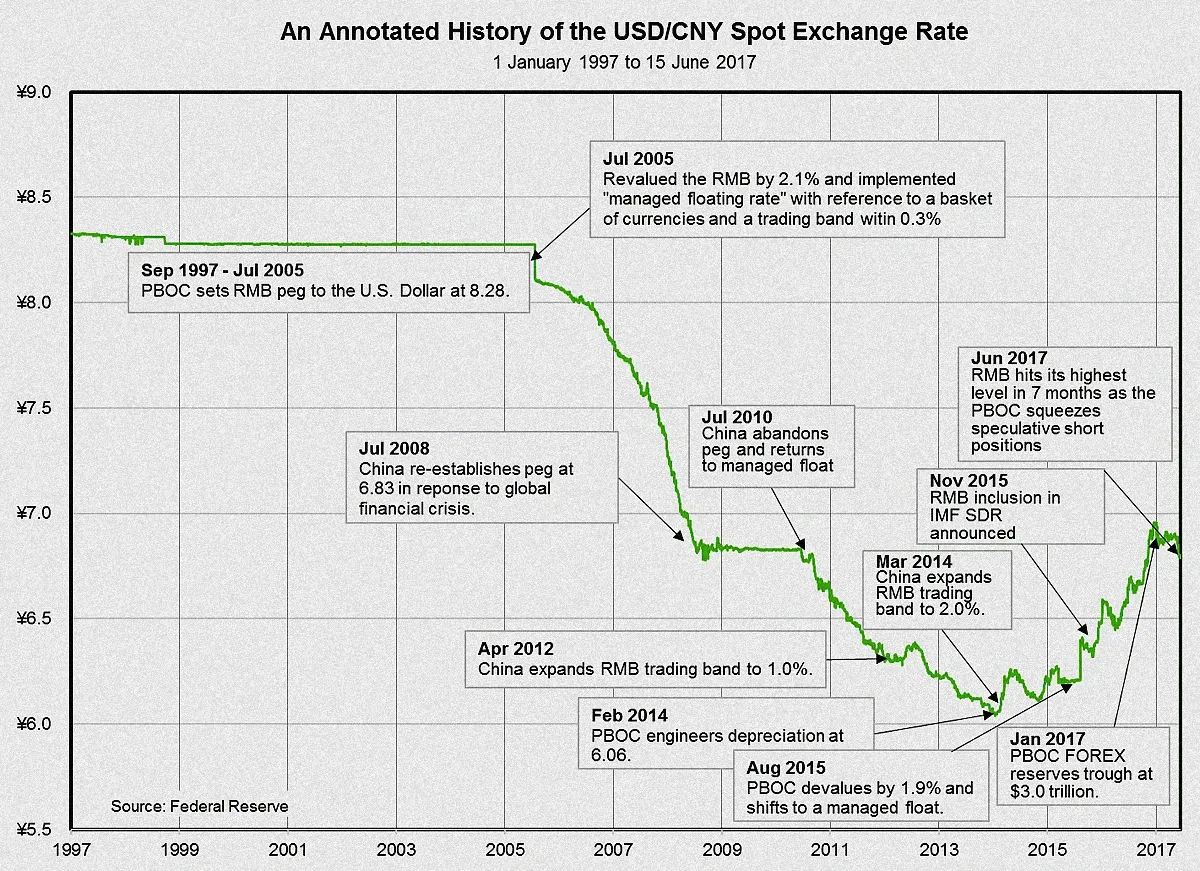
For the longest time, the Chinese currency was trading above 8 RMB to the US dollar. But starting around 2008, it started to increase in value. The world knew it should trade with China. And China, seeing its exchange rate was higher, knew it should buy more things from the world. With access to global commodities, China needed to promote its economy to use these resources, so it spent more money on infrastructure, building high-speed railways and airports.
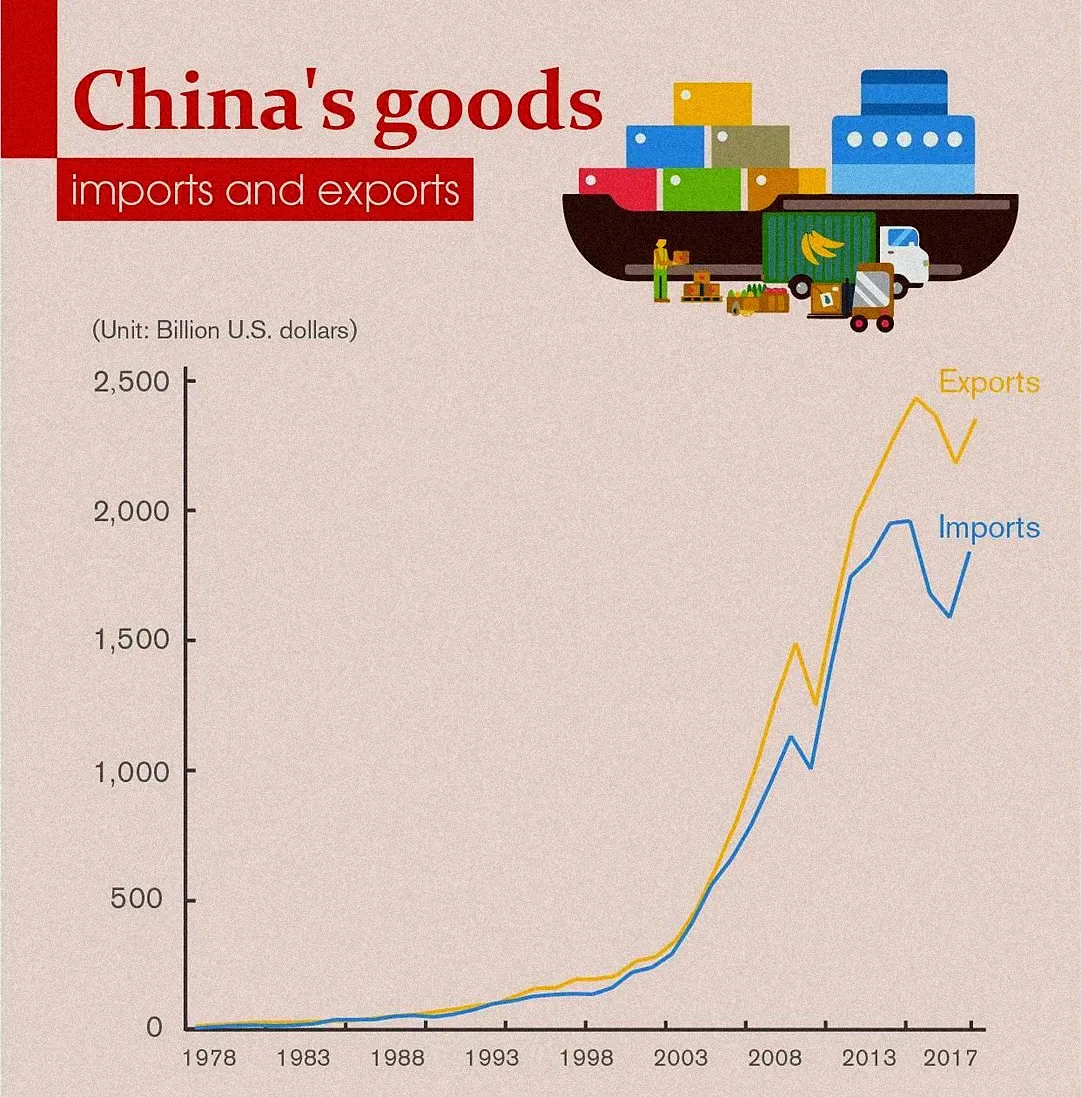
How did it finance this infrastructure? Bank loans.
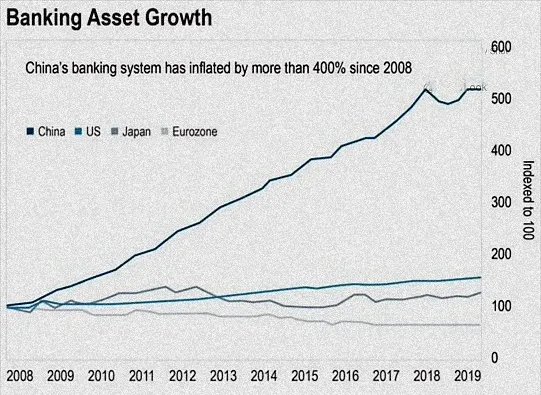
Look at this. In 2008, the banking systems of China, the US, Japan, and Europe were about the same size. But starting around 2008, China's exploded. This was all orchestrated by the BIS, by a few people working behind the scenes.
Today, China has the largest banks in the world. JP Morgan is the largest bank in America, but the top four banks in the world are Chinese. Why? Because in the banking system, liabilities are also assets. All this money the Chinese banks have are just liabilities. The thing about the Chinese system that prevents it from imploding is that all debt in China is localized instead of nationalized. Even though these banks are heavily in debt, it's in local areas, not national areas.
A major consequence of this growth is that China started to export its goods around the world more. In the year 2000, America dominated the world in manufacturing exports. By 2024, basically the entire world is buying Chinese exports. This was a deliberate strategy of transnational capital to move the center of economic gravity from the United States to China.
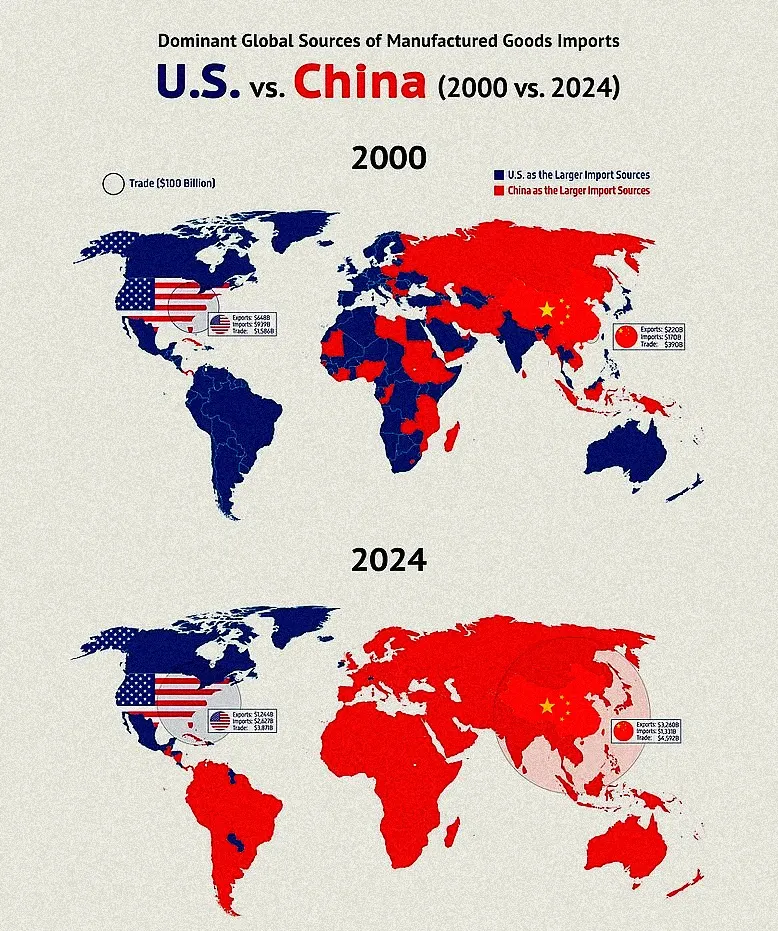
The Next Target: Israel
The problem is that China has not become the hegemon. It's not interested in having that military power. Also, as China expanded its manufacturing, the United States got upset and imposed tariffs.
The goal of the bankers is to maintain the game. They wanted to switch from America to China, but it didn't really work. China doesn't want the responsibility of being the global reserve currency and having military bases overseas, and America won't let China do it.
So, your only option now is Israel. I believe this war will shift the center of gravity from America to Israel, because Israel wants to be the center of the world, not China. For this to happen, transnational capital needs to first collapse the American economy. They can do that by collapsing the private credit bubble, the AI bubble, or both at the same time.
Why would they want to do that? As a banker, you make your money through activity—entrepreneurship or starting wars. People have to be doing stuff. Right now, America has a lot of problems:
- Aging: The elite are getting older, so they are less active, energetic, and entrepreneurial.
- Quantitative Easing: There is too much money in the system, so people do stupid things like gamble.
- Inability to Win Wars: The situation with Iran is showing that the American military is not as strong as you think.
If you're a transnational capital and you see these things, you're going to shift your capital overseas. But before you do that, you want to engineer a financial crisis so you can make as much money as possible, just like in 2008. We don't know when it will happen, but we can be sure that it will happen, and it will be sudden.
Why would America allow this?
You might ask, "Why would Trump and the Americans allow this to happen? They must know this is coming." The answer is because it is in the long-term best interest of America for the economy to collapse and for transnational capital to go elsewhere.
This is not a deliberate strategy. An economic collapse will destroy a lot of wealth and could create conditions for civil war. It will create a lot of pain. But there are certain people, for example, Donald Trump, who believe this pain is necessary for America to become great again. His motto is "Make America Great Again." How do you do that? You get rid of these parasites. But getting rid of parasites is a painful process. It's like cancer treatment—chemotherapy, surgery. It's painful. Transnational capital is a parasitic force, a cancer on the American host. They have to get rid of it, but it's going to be a very painful process that will take years, possibly decades.
How would this shift impact the global economy?
Right now, capital is in America. The best place for it to shift is Israel. Why? Because you're interested in activity. You want to put your money in a place where it's going to grow. It's going to grow in Israel for three reasons:
- The Greater Israel Project: Israel wants to conquer the Middle East. Wars are profitable; they are the most profitable enterprise in the world.
- Rebuilding: After all this destruction, they will have to rebuild, and they will need capital.
- Hub of Global Trade: Because of its location, Israel will control global trade, especially with Africa.
This is why Israel is a smart investment for transnational capital. I'm not talking about us with $1,000; I'm talking about trillions of dollars that will probably go into Israel.
To leave America, you want a stock market and economic collapse. Why? Because a collapse not only allows you to leave with as much money as possible, but it also allows you to buy up distressed assets—resources which include water and oil. You want to create as much damage as possible because then it's easier for you to buy up these resources.
These people plan decades ahead. Transnational capital is trying to create as much chaos as possible because in chaos, there's profit. If everyone's sitting around doing nothing, you can't make any money. But if people are fighting each other and there's blood on the streets, you can make a lot of money.