Game Theory #21: World War Trump
There has been a two-week ceasefire between Iran and the United States, which is supposed to end tomorrow. Right now, the Americans have gone to Islamabad to negotiate a possible peace treaty. The Iranians may or may not go; we don't know yet. It is entirely possible that the Iranians will go to Islamabad and negotiate a peace treaty that ends the war. But unfortunately, this war will not end.
Many people believe this war exists just because Donald Trump has decided to go to war with Iran for whatever reason. But that's not true. This war in Iran is actually part of a larger strategic vision that the United States has to maintain its empire. Today, I want to explain why that is the case and how this war will progress.
Recent Events: Blockades, Piracy, and Burning Refineries
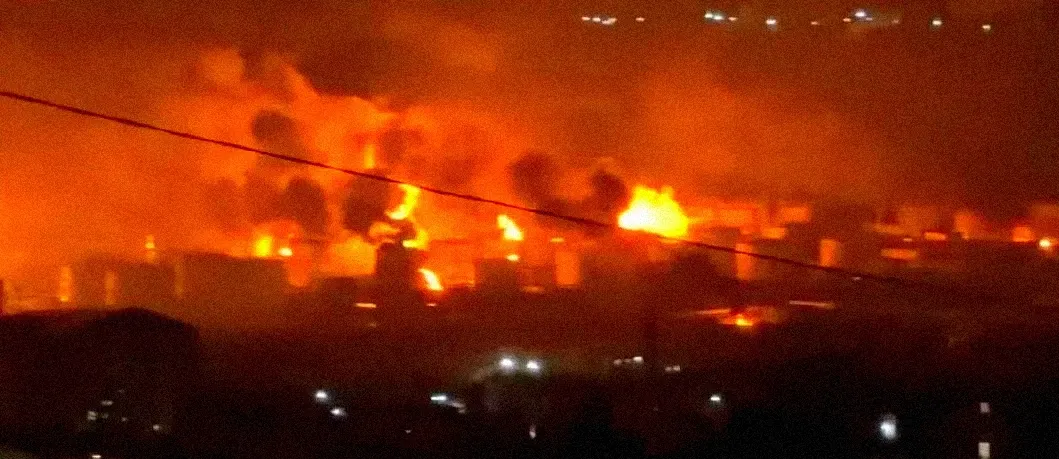
First, let's look at some recent events from these past two weeks. One of the big news items is that a lot of oil refineries are on fire. They've been set alight. So even as the world is being cut off from 20% of its energy from the Middle East, many oil refineries are being destroyed.
This is from Russia, and this is actually Russia's largest oil refinery. As you can see, the damage is pretty extensive.
But this isn't just happening in Russia; it's in a lot of places. This is Myanmar, and these are 10 oil tankers.
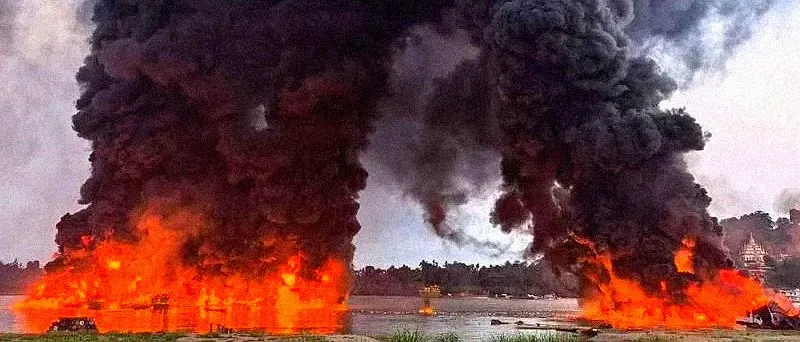
Many oil refineries are being destroyed right now. We don't know why this is happening, but there have already been over 50 refineries that have been on fire in the past 45 days.
Another thing that's been happening is that even though there's a ceasefire in effect, the Americans have imposed a blockade on Iran and have escalated the situation by boarding and taking over an Iranian ship returning from China. The Indian ship was returning from China, and the Americans suspected it had important fuel and components for ballistic missiles. The Americans tried to board the ship, but it would not stop. They fired at the engine and then boarded the ship with special forces. This is what would be considered an act of piracy.
Before this, the Secretary of War, Pete Hegseth, complained that ships must be allowed to freely navigate the seas, but he has also said that it's perfectly okay for Americans to steal ships.
Pete Hegseth: To be clear, threatening to shoot missiles and drones at ships, commercial ships that are lawfully transiting international waters, that is not control. That's piracy. That's terrorism.
So, the fact that Iran has closed off the strait and threatened to attack ships with drones and ballistic missiles is wrong. That is piracy. Unless the Americans do it.
Pete Hegseth: Well, [the world] is taking notice of that. And it continues because two oil tankers overnight were seized by the United States of America. Stateless or sanctioned, because the oil blockade, the quarantine of oil out of unsanctioned or stateless vessels continues. That leverage will continue, as Secretary Rubio outlined.
Does that make sense? It is wrong for the world to be pirates and seize ships, but it's okay for the United States to do this because the United States is the one that sets the rules for the world.
The Real Target: China
This war is not going well for the United States.Rick Scott, a senator from Florida, and he explains that it doesn't really matter if the war is not going well for the United States, because what's happening is that we're hurting China, and that's what's important.
Interviewer: How do you feel like the war in Iran, which is sort of in a ceasefire right now, how do you feel like this is going? Should the US wrap this up, get out of there now, or do you think there's more to do there?
Rick Scott: I appreciate that Trump's trying to get rid of the nuclear weapons. I don't want to die by a nuclear weapon from Iran. They wanted to kill us... this appeasement of bullies, I don't know if in your life if that's worked for you guys. It's never worked for me. And so they wanted to kill us. They're getting close to being in a position to kill us. And they basically have been killing Americans. So I think what Trump did is the right thing. He has to get them in a position that they don't have the ability to do nuclear weapons or ballistic missiles. That's where we have to go. I don't know what the right approach is going to be. I think blocking the Strait of Hormuz is fine from my standpoint. If no oil ever goes to China again and their economy is destroyed, that would be a really wonderful day for me.
The Americans may lose this war, but if the end result is that China no longer gets any oil from the Middle East and its economy is destroyed, it's worth it.
Even now, about 50 days into this war, the Americans have yet to explain why this war started in the first place. This is Karoline Leavitt , and she was asked by a reporter again why this war started. This is her response.
Reporter: [The President] said yesterday for the first time that he had to strike Iran because he believes that Iran was going to strike US targets within 7 days and then he then bumped that down later to 3 days. Where is he getting that?
Karoline Leavitt: Well, that's not the first time the president has said that he chose to launch Operation Epic Fury because he felt as though Iran was going to strike the United States and our assets in the region first. Again, I addressed this in the last briefing. This was a feeling the president had based on facts. Facts provided to him.
So, it was a feeling based on facts. That's why Trump started this war. Trump himself has given conflicting signals. He has said this war is going to end soon, and he has also said this war is going to continue. He changes every day.
Donald Trump: It seems to be going very well in the Middle East with Iran. We'll know over a little bit of time. We're negotiating over the weekend. And as you know, we have the blockade. The blockade's been very successful and of equal success has been the 5 weeks before the blockade. The combination was pretty lethal, I would say. So, we're going to be knowing very shortly.
He's saying this war is going great, and we should have a ceasefire soon. Then, maybe an hour later, he's like, "Oh, I think I need to drop bombs on Iran." There are a lot of conflicting signals coming from Trump. You have to ignore these signals and focus on the larger American strategy in this war. Once we understand the strategy, it's very easy for us to understand how this war will progress over the next few years. Because this war is not going to end soon. It won't be a few months; it'll probably be a few years. And quite honestly, it may take 10 or 20 years.
A World on Fire: Sabotage and Economic Warfare
As I mentioned, oil refineries are getting sabotaged, either by accident or purposefully. In the past 45 days, there have been at least 45 recorded incidents around the world of oil refineries being set on fire. Iran was bombed by the Israelis, and then the Israelis responded by attacking Qatar. Russia is being attacked by Ukraine. The big one is that in Australia, in Geelong, one of the refineries was set on fire, and they claim it was an accident. This is important because Australia is not at war but needs a lot of oil. Right now, Australia is in a lot of trouble. Romania, Bucharest has been hit, India has been hit, Myanmar has been hit. All around the world, these fires are destroying the world's oil supply.
So why is this happening, and who's doing this? We don't know, and quite honestly, we may never know. But to figure out the answer, you always ask yourself who benefits, and you always look at three things:
- Means
- Motive
- Opportunity
From this, you could figure out that the majority of these fires are being deliberately set to reduce the world's oil supply. The people who can do this and who benefit from doing this are the Russians or the Americans. It's probably both, but we don't know for sure yet.
This war is already having a tremendous impact on the world's economy.
- Sulfur has risen in price by 57%. Sulfur is important for the manufacture of both fertilizers and microchips.
- Jet fuel has gone up by 52%. So next time you're flying, it's going to be a much more expensive ticket.
- Urea, diesel, gasoline, and other fertilizers have also seen prices go way up.
Basically, the prices of food and energy have gone way up.
Donald Trump made a statement saying that the Iranian-flagged cargo ship Tusca has been boarded by the Americans. He continues to threaten the Iranians, saying that if they continue to close off the Strait of Hormuz, then we will negotiate with bombs. No more Mr. Nice Guy. What he's also saying is that we don't really care because we don't need that oil from the Middle East. Also, we can sell our oil to the world. The United States loses nothing. In fact, many ships are headed right now to Texas, Louisiana, and Alaska to load up. We're the ones benefiting from this war, so we have nothing to worry about.
America Moves to a War Economy
Another thing to pay attention to is how America is moving towards a war economy. The Pentagon has been in talks with General Motors and Ford to make munitions, drones, and military equipment. This last happened in World War II when America moved to total war, and factories that used to make cars were now making tanks.
Not only that, but Trump also announced something called the Defense Production Act. This basically allows the government to subsidize private corporations in the manufacture of weapons. Companies like General Motors and Ford can make a lot of money because of this war.
Starting in December, Americans aged 18 to 26 will be automatically registered for the draft. It's very likely that America will soon introduce a national draft and force young men to go fight in the Middle East.
Currently, the Pentagon budget is $1 trillion. Next year, it'll be $1.5 trillion, an increase of 50%. We can expect that thereafter it might be $2 trillion. More veterans are now being asked to serve longer. What we're seeing is that the United States is moving towards a wartime economy, preparing for what we call total war, when an economy moves towards the manufacture of weapons and munitions.
The Illusion of Opposition
Another thing that's been happening is the fact that there's very little—in fact, no—opposition to Donald Trump fighting this war in Iran. You would think that the Democrats, his opponents, would use this opportunity to promote anti-war messages or try to stop him from plunging America into another forever war. Instead, the Democrats are doing as much as possible not to do anything.
Recently in Congress, they had a vote on whether or not to restrict Trump's ability to fight this war. There were four Republicans who did not vote and one Republican who voted to restrict Trump. This vote should have been 214 to 213 in favor of restricting Trump's war powers. But then what happened was that one Democrat decided to switch his vote to "no." So now it becomes 214 to 213 against the resolution.
This is all political theater. It was already pre-arranged between the Republicans and Democrats that this resolution would fail. In other words, if two Republicans had voted yes, then two Democrats would have voted no. If 10 Republicans had voted yes, then 10 Democrats would have voted no. The Democrats are not opposing this war; they're doing as much as possible to support it.
So the question then is, why is this happening? Why is America moving towards a wartime economy? Why are the Democrats so supportive of this war? The answer has to do with empire.
The Blueprint: The 2026 National Defense Strategy
This is something called the National Defense Strategy that came out in January 2026. This is a blueprint for how the Pentagon will fight wars for the next 5 to 10 years. This is the strategy behind the Iran war. We're going to read certain parts together to analyze how the Americans will strategize about the world moving forward.
For too long, the U.S. government neglected, even rejected, putting Americans and their concrete interests first. Previous administrations squandered our military advantages and the lives, goodwill, and resources of her people in grandiose nation-building projects and self-congratulatory pledges to uphold cloud-castle abstractions like the “rules-based international order.” These past leaders neglected and often actively undermined our warfighters’ warrior ethos and our military’s core, irreplaceable role: fighting, winning, and thereby deterring the wars that really matter to our people. Consequently, President Trump entered office with the nation on the precipice of disastrous wars for which we were unprepared.
Certain things to keep in mind. "Concrete interests first" means that we have to think about resources and concrete advantages to America. We can no longer think about ideals. Second is the rejection of the "rules-based international order," or the globalists. Before, America was fighting wars for other nations, for Europe or for Japan. Now, we have to fight wars for America.
The last thing is the idea of undermining our "warrior ethos." What this means is that before, America was bounded by too many rules, what they call rules of engagement, or basically avoiding war crimes. You were not allowed to kill civilians. You needed permission from other nations to fight wars. What this is saying is: screw that. Screw rules of engagement. We should just fight wars to win wars. That means we kill as many people as we need. That means we do whatever is necessary to win. This is a new vision of American power. Before, it was about ideals; now, it's about interests. Before, it was about globalism; now, it's about America first. Before, it was about rules of engagement; now, it's about the warrior ethos.
President Trump has decisively changed that, courageously putting Americans first to truly make America great once again. Under his leadership, the United States has the world’s strongest, most lethal, and most capable military. Indeed, the most powerful military that this world has ever seen. No longer will the Department be distracted by interventionism, endless wars, regime changes, and nation-building. Instead, we will put our people’s practical, concrete interests first. We will support a policy of actual peace through strength. We will be the sword and shield to deter war with the goal of peace but ready to fight and win the nation’s necessary wars if called upon.
The important sentence here is, "We will support a policy of actual peace through strength." What this means is that we will be so mighty, so invincible, so fearless that we will instill fear in others. They'll be so afraid to fight us, and therefore we'll have peace. It's the idea of hegemony: peace through might, peace through power. We have to demonstrate we are invincible. When people fear us, that's when people will obey us. When people obey us, that's when we have peace.
This does not mean isolationism. To the contrary, it means a focused and genuinely strategic approach to the threats our nation faces and how to best manage them. This approach is based on a flexible, practical realism that looks at the world in a clear-eyed way, which is essential for serving Americans’ interests, as the National Security Strategy articulates. This is the common-sense approach President Trump has advanced.
This does not mean isolationism; it's about how to best manage threats. The idea here is that America was previously engaging in too many wars overseas and was too spread out. America will now be focused on maintaining and protecting its core strategic interests. That means divide and conquer. Divide and rule.
America's Four Strategic Interests
These are the four strategic interests of the United States:
- We will defend the homeland and ensure that our interests in the Western Hemisphere are protected.
- We will deter China in the Indo-Pacific through strength and not confrontation.
- We will increase burden-sharing with allies and partners around the world.
- We will rebuild the U.S. defense-industrial base as part of the President’s once-in-a-century revival of American industry.
This is the plan moving forward, and we're already seeing the Americans doing this.
- Rebuild the US defense-industrial base: This means factories and resources, making sure that America becomes the arsenal of democracy. Its factories will produce all the weapons America needs to protect its interests as well as its allies.
- Increase burden-sharing with allies: This basically means that from now on, we're not friends. We're the boss, and you do what we tell you to do. We will order Japan, South Korea, Europe, and NATO to do what they must to protect our power, and they must follow us. It's a formalization of vassalage.
- Deter China in the Indo-Pacific through strength, not confrontation: We don't want to destroy or hurt China, but we need China to obey us. The way to do that is by containing China, strangling it economically, and also promoting Japan. In the future, China and Japan will balance each other out, which allows us to rule over them. America will sell resources, weapons, and financing to both China and Japan as they compete against each other in East Asia.
- Defend the homeland and ensure our interests in the Western Hemisphere are protected: This means the Western Hemisphere belongs to America. We'll do whatever we want there. If China or Russia wants to come into the Western Hemisphere, they have to get our permission and pay a tax to us. "Defend the homeland" also basically means a police state. Before, America was too free and therefore too weak. The example is the Vietnam War, which was not lost in Vietnam but at home because too many young people were protesting in the streets. If we want to win wars and project strength, we need to make sure our home front is secure. That means making sure that Americans follow along and do what they're told.
The China Containment Plan
Deter China in the Indo-Pacific Through Strength, Not Confrontation.President Trump seeks a stable peace, fair trade, and respectable relations with China. And he has shown that he is willing to engage President Xi Jinping directly to achieve those goals. But President Trump has also shown how important it is to negotiate from a position of strength, and he has tasked the DoD accordingly.
Consistent with the President’s approach, DoD will therefore seek and open a wider range of military-to-military communications with the People’s Liberation Army with a focus on supporting strategic stability with Beijing as well as deconfliction and de-escalation more generally. But we will also be clear-eyed and realistic about the speed, scale, and quality of China’s historic military buildup. Our goal in doing so is not to dominate China, nor is it to strangle or humiliate them. Rather, our goal is simple: to prevent anyone, including China, from being able to dominate us or our allies. In essence, to set the military condition required to achieve the NSS’s goal of a balance of power in the Indo-Pacific that allows all of us to enjoy a decent peace. To that end, as the NSS directs, we will erect a strong denial defense along the first island chain. We will also urge and enable key regional allies and partners to do more for our collective defense. In doing so, we will reinforce the deterrence by denial so that all nations recognize their interests are best served through peace and restraint.
This is a very clear plan. We're going to negotiate with China, but we have to do so from a position of strength. What does that mean? First, it means we will embargo China. How? Through the first island chain: Japan, Taiwan, the Philippines. If you embargo China, it means China cannot access the Strait of Malacca, which provides it with 80% of its energy needs. If you embargo China, it has no choice but to obey you.
The other thing is that we're going to "enable key regional allies," which of course means Japan, South Korea, Taiwan, Malaysia, Singapore, and Indonesia. This creates a coalition to challenge Chinese supremacy in order to create a power balance in East Asia. Once this power balance is created, they all depend on the United States because we have energy, food, weapons, and financing.
The Empire's Final Offer
This is the conclusion of the strategy document:
Taking our nation from the precipice of a world war just a year ago, President Trump is now leading our nation into a new golden age. One defined by putting Americans first in a common-sense, pragmatic, and concrete way. No longer will we squander Americans’ will, resources, and even lives in foolish and grandiose adventures abroad. But we will not retreat. Rather, we will unabashedly prioritize Americans’ concrete interests with an approach of flexible realism. We will restore the warrior ethos. We will refocus the American military on its core, irreplaceable goal of winning the nation’s wars decisively.
In doing so, as President Trump has so memorably emphasized, our purpose will not be aggression or perpetual war. Rather, our goal is peace. Peace is the highest good. But not a peace that sacrifices our people’s security, freedoms, and prosperity. Rather, a peace that Americans deserve, a noble and proud peace. Fortunately, this peace is compatible with the interests of our potential opponents if they keep their demands reasonable and cabined. We do not demand their humiliation or submission. Rather, we demand only that they respect our reasonably conceived interests and those of our allies and partners who stand stoutly with us.
If we all can acknowledge this, we can achieve a flexible and sustainable balance of power among us and peace. But we at the Department of War will be ready if our gracious offer is spurned. We know that wishing for a decent peace is not the same thing as bringing it about. Thus, if our potential opponents are unwise enough to reject our peaceful overtures and choose conflict instead, America’s armed forces will stand ready to fight and win the nation’s wars in ways that make sense for Americans. To ensure that this is the case, this strategy will ensure that we see things and the choices we need to make clearly. We will prioritize addressing the most consequential and grave threats to Americans’ interests. We will revamp our network of allies and partners to meet the threats we face. And we will be ready, always carrying the sharpest and most formidable sword, but prepared to offer the olive branch.
This is very clear. What it's saying is this: Obey us and there will be peace. Defy us and there will be war.
The Global Chessboard: Controlling the Choke Points
If this ceasefire does not work and war continues, we can expect that in round two, the fighting will get much worse. The Americans will start to target civilian infrastructure, including bridges, universities, reservoirs, power plants, and desalination plants. Basically, it will destroy Iran's capacity to be a nation-state. In response, the Iranians can destroy a lot more energy infrastructure. It has already closed off the Strait of Hormuz, but it can also close off the Red Sea and target pipelines of natural gas. It can take one-third of the world's energy supply offline, which would cause an economic depression.
Unfortunately, the National Security Strategy of the United States doesn't really care. They have already factored this in. The idea is to prioritize strategic interests, which means that since America has the world's greatest navy, all it has to do is contain the world's choke points, and the world must bend to its will. If you're going to trade, you must depend on American generosity.
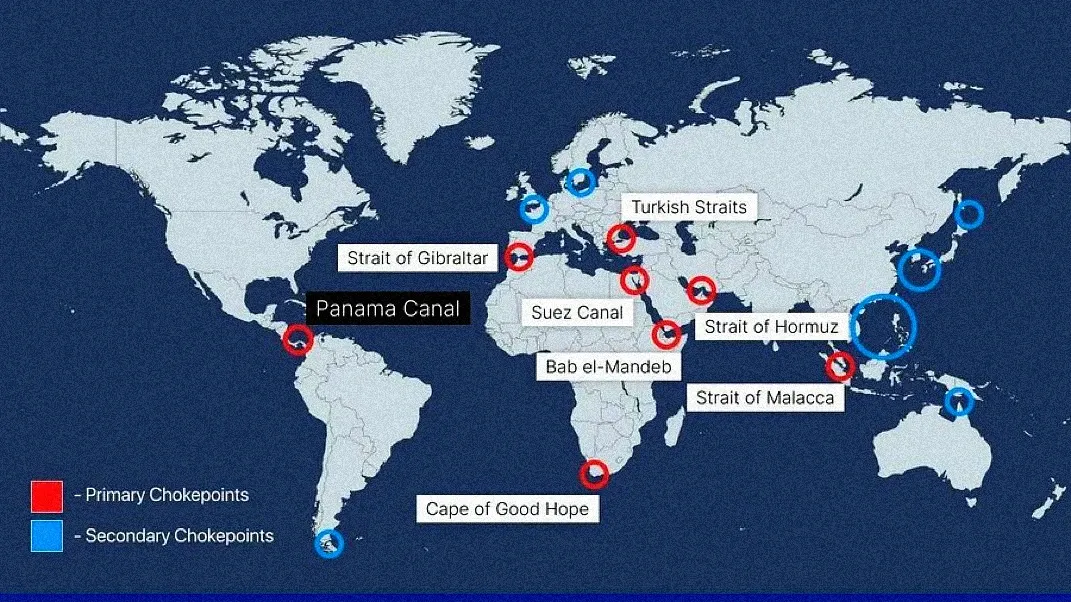
America is already exerting more control over the Panama Canal. The Western Hemisphere is under something called the Monroe Doctrine, which basically states that America can do whatever it wants in the Western Hemisphere. China depends on a lot of resources from South America, like the lithium triangle and agricultural products from Brazil. Trump is basically embargoing the Western Hemisphere from China.
The Strait of Malacca is the most important choke point in the world, especially for East Asia. The United States has signed a deal with Indonesia, and we can expect their militaries will start to cooperate more and more as America moves towards militarizing the first island chain to deter and embargo China. We're also seeing that Japan is now rapidly re-militarizing, encouraged by the United States as a deterrent to China.
Again, America does not want to destroy China; it wants to control China. It is entirely possible that the Chinese will have no choice but to buy from America, especially energy. If you want to trade with the Western Hemisphere, you need to sign a trade deal with America.
Disrupting Russia and China's Ambitions
This strategy is also designed to disrupt competitors' trade routes. Russia has something called the North-South Transport Corridor, which runs through Iran. That's why the United States is attacking Iran and will never stop. As long as Iran is at peace, Russia can trade with the world. But if Iran is being destroyed, this entire region is blocked off from both Russia and China.
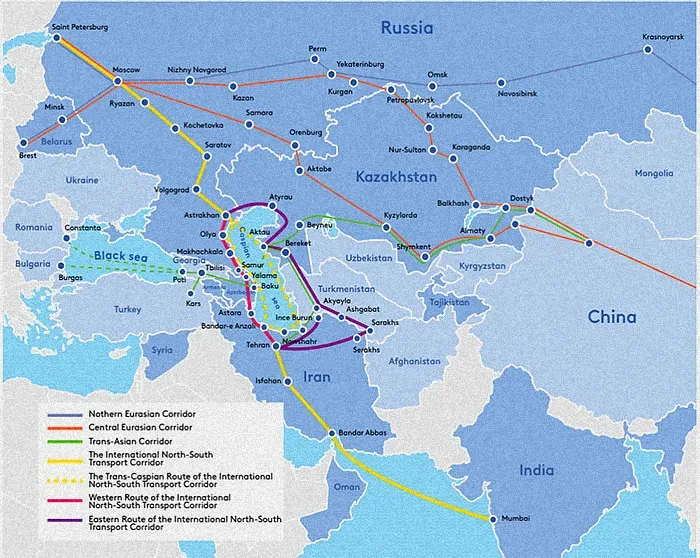
The center of China's Belt and Road Initiative is also Iran. If China wants to access Africa, Europe, and the Middle East, it has to go through Iran or through the sea via the Strait of Malacca. But the next step for America is to close off the Strait of Malacca to Chinese trade as well.
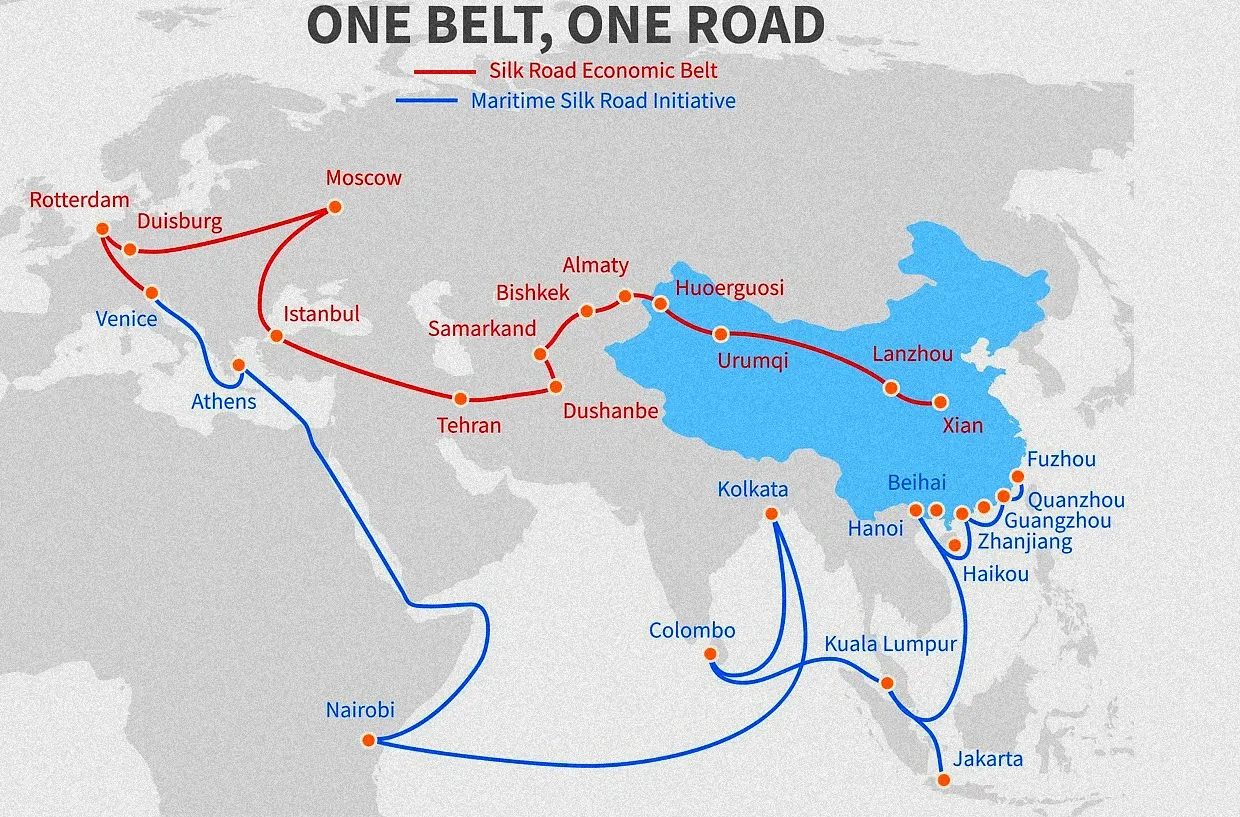
Where does China go then? It can trade with Russia, but that's not enough for its economy. Right now, China gets about 20% of its oil from Russia. Maybe Russia can provide 30% or 40% at most, but where will China get the other 50-60%? Its options are very limited. If Iran is at war, it can't provide any oil. Then China is forced to buy from the United States. If you're forced to buy from the United States, the United States can set the price and dictate the terms. And what the United States will say is, "You have to buy in US dollars." And that saves their economy.
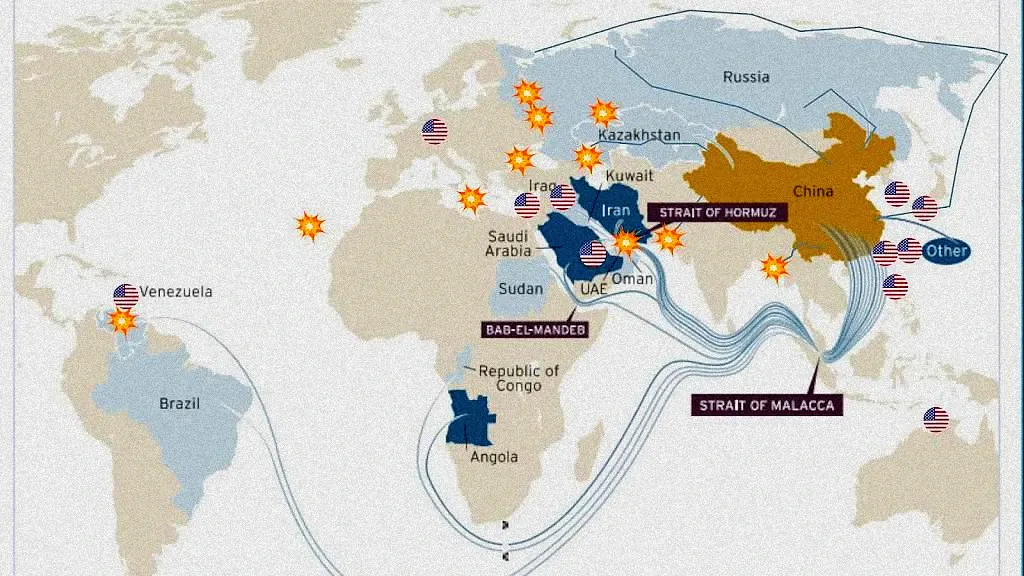
This is an American policy of containing China. As you can see, China is completely surrounded by US military bases. The Strait of Malacca is a major choke point, and it's not that hard for America to cut it off.
The war in the Middle East and the war in Ukraine absorb a lot of Russian energy, so Russia doesn't have that many resources to spare for China anyway. But America does. The Western Hemisphere does because it is at peace. As long as the Western Hemisphere remains a fortress, it can continue to supply resources to a world at war.
This is what the war is about: creating conflict in the world so the United States can maintain its empire by controlling global trade. In the future, America will provide the world with:
- Energy
- Resources
- Weapons
- Financing
We will actually lend you the money—in US dollars—to buy this stuff as well. This worked really well in the 1950s under the Marshall Plan, where America made products and lent money to Europe to buy them. It's the same concept. In the future, the world is at war, people are poor, but it's okay because America will lend you money to buy energy, resources, and weapons from America. American factories will boom. Make America Great Again.
The Three Pillars of the Plan
For this plan to fully work out, America needs three things.
- A National Draft. You need soldiers to maintain America's core interests. The goal is for Russia and Europe to constantly fight each other, for China and Japan to constantly fight each other, and for Iran to constantly fight with the GCC and Israel. If any nation is at peace, you have to create conflicts. You also need soldiers to conquer nations in the Western Hemisphere that defy you.
- Continuity of Agenda. Now that you have this plan in motion, you cannot have a change in government. If the Democrats win in 2028, that would screw things up. So, Trump needs a third term because only he can implement this plan.
- An AI Surveillance State. This plan can only work if Americans don't rise up and revolt like they did in the Vietnam War. If you have a national draft and Trump is going for a third term, many Americans are going to protest. You can't have that happen. Therefore, you need an AI police state to help them see the light.
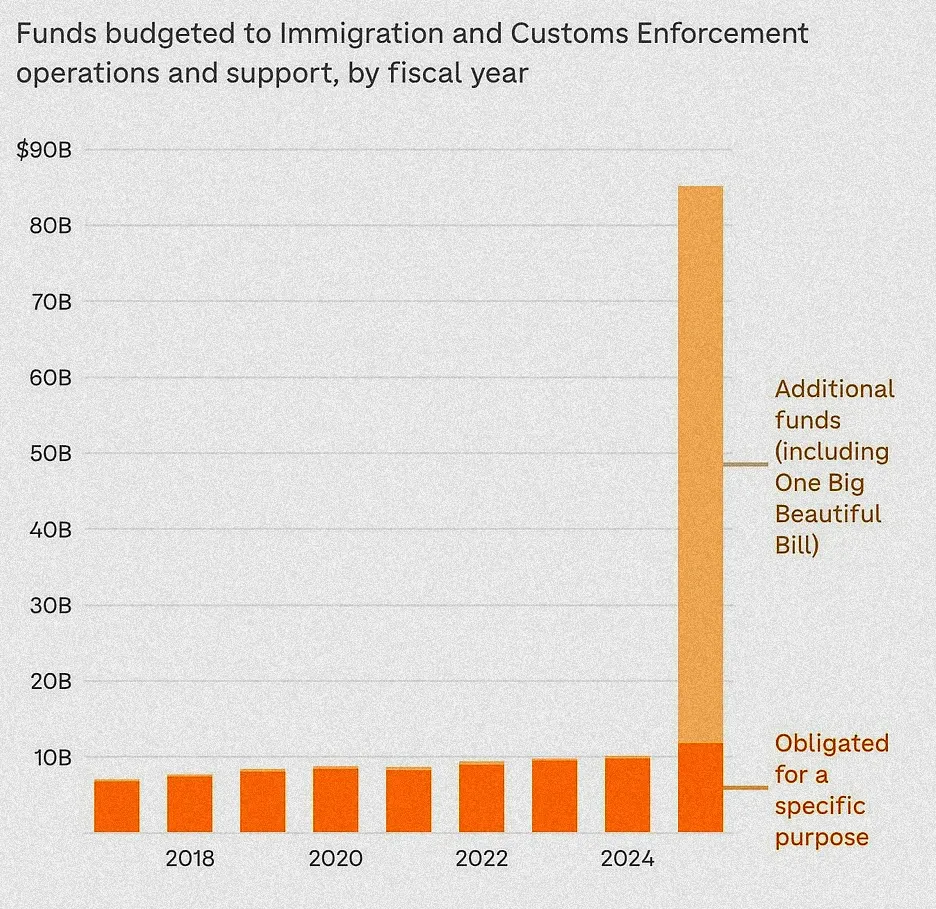
People believe ICE is being sent to the streets of America to catch illegal immigrants. But you don't need ICE for that; you just need cooperation from state authorities. What ICE is really doing is creating the conditions for a police state. It's normalizing the idea of armed soldiers patrolling the streets of America's major cities. Look at their budget. Before, it was stable, then boom, it goes up to $90 billion. That's a new national police force that is only obedient to Donald Trump.
Also, consider the data centers. Artificial intelligence doesn't really make any money. You can't make money off ChatGPT, digital girlfriends, or digital pets. So why is America building all these data centers? The federal government under Trump has a plan called Operation Stargate to invest $500 billion in building data centers around the United States. You would want to build data centers if you want to create an AI surveillance state, where everyone has a digital ID, digital currency, and can be monitored to prevent them from rebelling.
Why the Empire Will Fail
You might listen to this and think America is doomed or Donald Trump is going to become king for life. The problem is that this idea of imperial conquest is not new. Empires have been doing this for a long, long time, and it has not worked out well.
The goal is to create a fortress of Greater North America, or what they call the Technate. This fortress has infinite resources and manpower and can sell weapons, resources, and financing to the rest of the world, where you want to create as much conflict as possible. All America has to do is control key strategic choke points. If a nation is becoming too strong, you give them fewer resources. If a nation is too weak, you give them more. As a result, you can always maintain the balance of power.
It sounds like a great plan, but it's not going to work out because of something called nationalism. When you are an empire and you impose your will on other nations, these nations are not happy about it. Japan, South Korea, and Europe know they're being used. Eventually, they'll say, "Screw this," and rise up against the empire.
The problem then is division and corruption. An empire in decline always suffers from these. Corruption means that yes, you've allocated $1.5 trillion to making weapons, but the vast majority of that will be stolen. Division means that Democrats and Republicans fight all the time—political polarization. It is possible that as America is asked to fight more wars overseas, you will have civil war at home.
Furthermore, when America takes over the entire North America—including Canada, Greenland, Mexico, Cuba, Colombia, Venezuela, and Honduras—they won't be happy about it. You're going to have insurgencies.
These three problems—nationalism, corruption, and division—mean that when America actually tries to implement this plan, it's going to backfire and accelerate the collapse of the American empire.
So you ask yourself, if historically we know that empires will collapse, why do they do this? The answer is because it benefits them in the short term. This is a short-term solution that creates long-term problems. But who cares about the long term? Let's just enjoy the short term.
So, Will America Lose the War in Iran?
The major prediction is that America may seem as though it is winning in the short term, but in the long term, because of corruption, division, and nationalism, it will be forced to retreat back to the Western Hemisphere and will lose its empire.
America will lose the war in Iran and be forced to retreat. But it doesn't really have to win the war. It doesn't have to defeat Iran. It just has to keep Iran in a constant state of chaos and war. The point is to control the choke points. What happens in Europe, Russia, China, Japan, or Iran doesn't really matter. What America wants is to create as much chaos as possible in these places so that they depend on America for resources, financing, and weapons. America doesn't really care anymore if it loses its war in Iran. The point is to maintain control over the strategic choke points so the world depends on American resources to survive.
Is China Aware of This Strategy?
What America is doing is obvious. It's really obvious to people. But there's nothing you can do about it because America has a blue-water navy that controls the oceans.
In the long term, what's going to happen is that Russia will challenge America in these choke points. This is already happening in Cuba, which is under embargo and trying to become closer with Russia. Russia is going to set up its own navy to challenge the American navy. Russia cannot win against the American navy, but it can fight a war of attrition, raising costs.
Number two, if America can go and blow up energy supplies around the world to make the world more dependent on America, well, Russia can also blow up energy supplies to make the world dependent on Russia. So, Russia and America are going to compete against each other. Most of the world is ultimately going to side with Russia to balance the United States because the United States is too much of a bully. At this point, in the short term, China has no choice but to work with both Russia and America because China is not strong enough to challenge either.
How Will Trump Handle Internal Conflict?
First of all, the Democrats have no plan. This is why America is in so much trouble. The Democrats have no plan of their own. So even if the Democrats were to win office in 2028, they'll probably just continue Trump's plan because they don't have one themselves.
Trump's plan to stay in power is just to cheat. He'll rig the elections. He'll cheat. That's his plan moving forward, and he'll probably get away with it.