Civilization #37: The Golden Age of Islam
Today, we do Islam. Some questions that we will look at today about the Islamic Golden Age.
- The first major question is, while Europe was in its Dark Ages, Islam was embarking on its Golden Age. How did this happen? Why was there this divergence?
- The second question we're going to look at is, what ended the Islamic Golden Age? Why would this period come to an end?
- The third question we're going to look at is, eventually, how did Christian Europe overtake the Muslim world?
Those are the three big questions we will look at in today's class.
Some Quick Facts About Islam
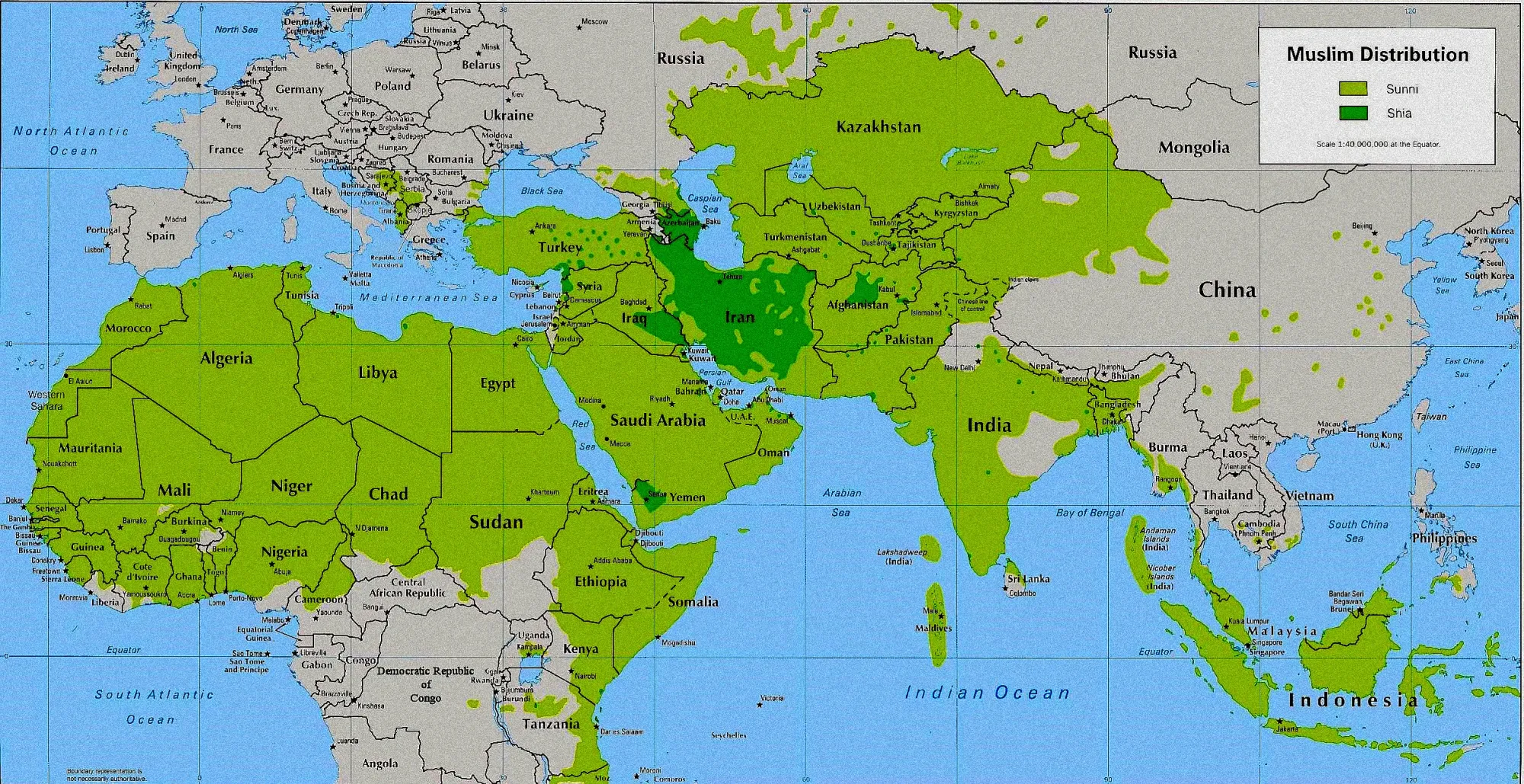
It is the world's second-largest religion. Christianity has two billion people. Islam has one billion people. They are divided into two major sects, the Shia, which is based primarily in Iran, and the Sunni, which is everywhere else. The light green are the Sunni people, and the dark green are the Shia people. As you can see, Islam extends all across Africa, the Middle East, and Central Asia, and into India. The most populous Muslim country in the world is actually Indonesia.
The Shia and the Sunni, the only major difference is that the Shia believe that only a direct descendant of Muhammad's grandson, Ali, can be the leader of the religion, whereas the Sunni do not believe this. This is a religion of one billion people, so there are many different belief systems, many different sects within this cosmology. But this is really the major difference between the Shia and the Sunni.
Muslim means to submit yourself to God, to believe in God, and to submit yourself wholeheartedly to him. Islam was founded by a man named Muhammad, who the Muslims consider the prophet of God, the final prophet. And Jesus was the penultimate prophet. The legend is that at age forty, Muhammad, who is a merchant or a trader, has a vision. He goes in a cave to meditate, and the Archangel Gabriel visits him and reveals to him certain visions that he has memorized. And these visions become the basis for the holy book of the Muslim tradition called the Quran.
Muhammad understands that his mission is to be a messenger of God and to reveal the truth of God to the big pagan society in the Arabian world. He's based in Mecca. And when he tries to reveal the truth, he is met with a lot of resistance. Eventually, he's forced out of Mecca, and he goes to Medina. This is called the Hijra in the Muslim tradition, the pilgrimage.
When he goes to Medina, he becomes the leader of the warring factions within Medina, primarily between the pagans, the Muslim tribes, and the Jewish tribes. So, there are three major factions. At this point, Muhammad creates something called the Constitution of Medina, which promises religious freedom to everyone within the Muslim tradition. Ever since the beginning, and this is very important, the religion of Islam was an open, tolerant, and inclusive religion. And they have basically maintained this tradition for the next thousand years.
Eventually, Islam will spread from the Arabian desert to all across the Middle East. They will conquer the Persian Empire, and they will take at least half of the Byzantine Empire, including the richest parts of the Byzantine Empire, which are Syria and Egypt. They will also take Jerusalem, where they will build something called the Al-Aqsa Mosque. And legend has it that Muhammad ascended to heaven from this place.
What's really important for us to remember about this place is the Al-Aqsa Mosque, it's still there in Jerusalem. And it is built on top of something called the Temple Mount. Remember, in the year seventy, the Romans burned down the Second Temple of the Jews, the holiest site in the Jewish faith. And then the Muslims came and built the Al-Aqsa Mosque on top of the Temple Mount.
This is a very strange thing to do. If the Muslim tradition is open, inclusive, and tolerant, and Jews are welcome into the tradition, why would you build a mosque on top of the Jewish holy site? That doesn't really make any sense. And quite honestly, this has been a mystery to everyone. No one has been able to figure this out. So, we will today attempt to solve one of the great mysteries in the Islamic tradition. Why was the Al-Aqsa Mosque built on top of the Jewish Temple Mount?
As I mentioned, the Arabs will expand from the desert of Arabia, and they will conquer the Sasanian Persian Empire, and they will take at least half of the Byzantines. They will try to lay siege to Constantinople, but remember that when we discussed the Byzantine Empire, Constantinople is designed as an impenetrable fortress. There will be two major sieges, and because of the walls and because of Greek fire, they will be unable to take the city.
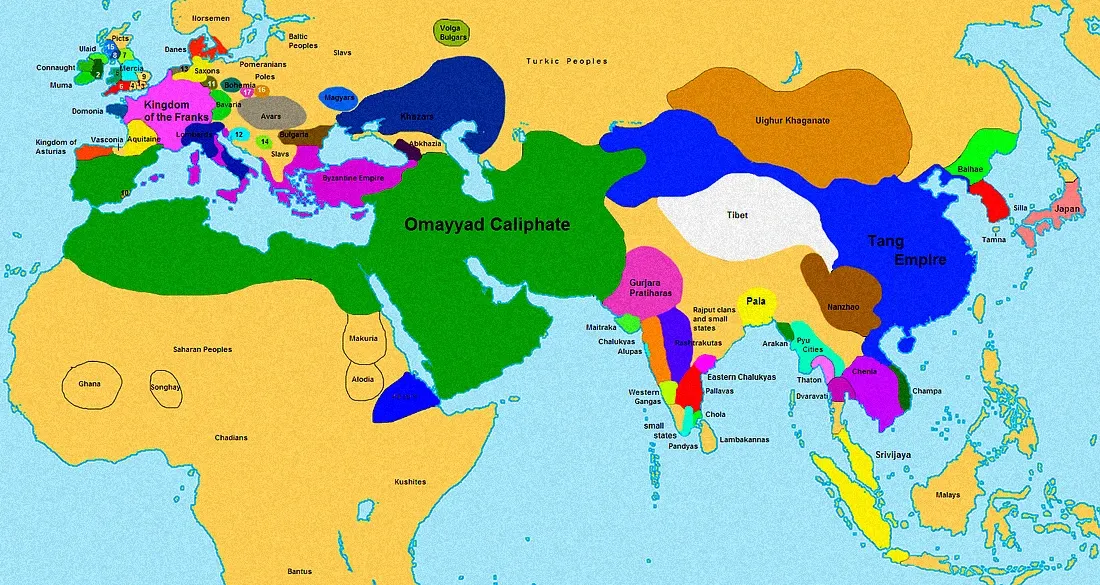
The spread of Islam was lightning-fast. In less than a hundred years, they spread from the desert of Arabia, really the poorest place in this entire region, throughout most of the Middle East. The dark green is where they started, and the light green is where they eventually expanded to. And remember, this process takes less than a hundred years, which is remarkable.
The Umayyad Caliphate was about seven hundred. Let's just compare the Umayyad Caliphate with other empires, including the Tang. The Tang really is the height of Chinese civilization. But as you can see, the Umayyad Caliphate really is the largest empire in the world at this time. And eventually, they will also become the wealthiest empire at this time.
The Five Pillars of Islam
- There are five pillars of Islam. It is an extremely simple and clear religion when compared with Christianity and Judaism. There are five pillars to the religion. First of all, you have to believe that Allah, God, is the only God. And this mirrors the Christian and the Jewish faith.
- You are required to pray at least five times a day facing the direction of Mecca.
- You must give money to the poor.
- You must fast during the holy days.
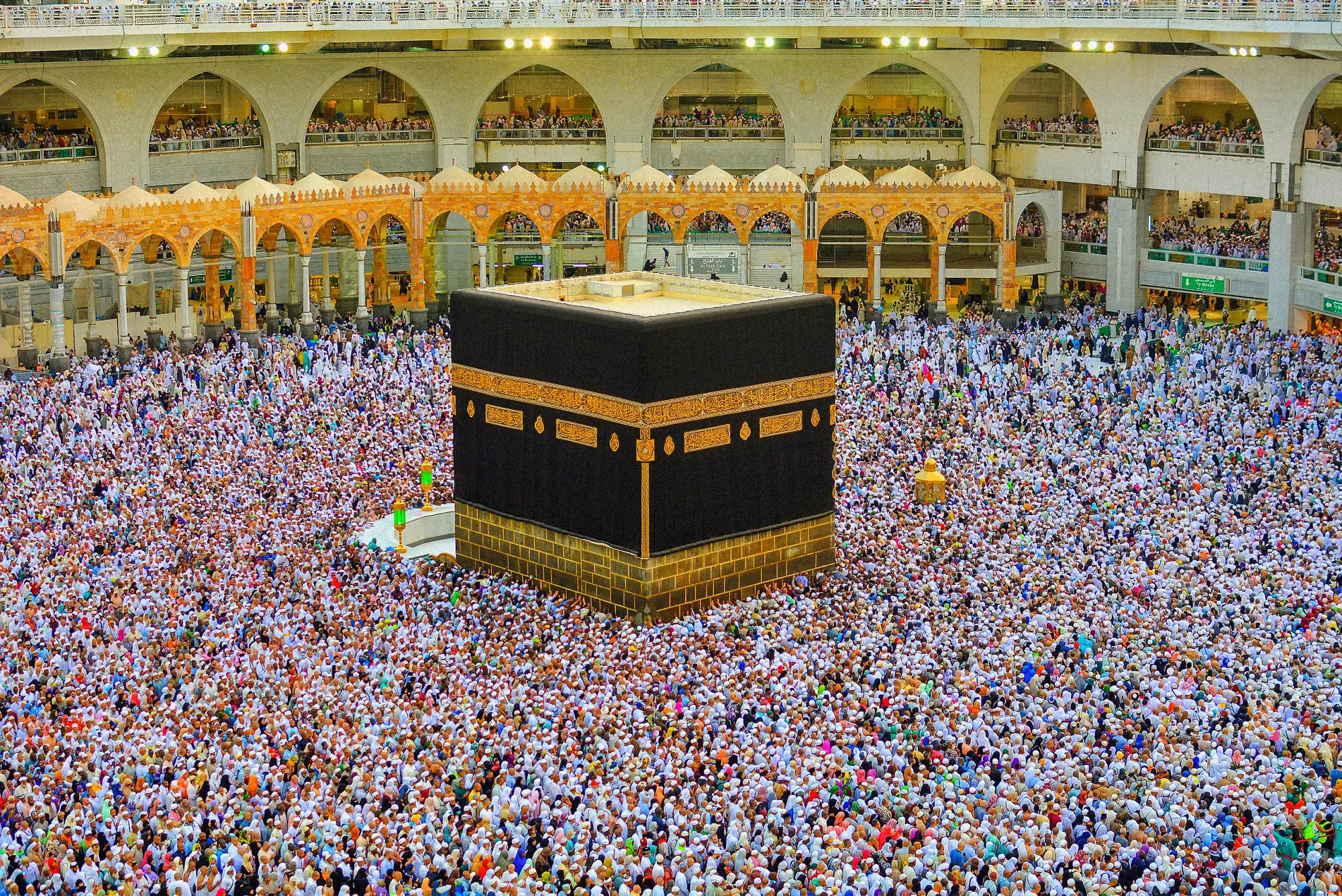
- The last thing is, you must make something called the Hajj, which is a pilgrimage to the holy site in Mecca, and perform rituals in Mecca. This is something that all Muslims must do. And you will have the poorest Muslims, they will save their entire lives just so that they could make this Hajj.
The Muslim people are probably the most devout, the most religious people you will meet. They take their religion very, very seriously. This is the Hajj in Mecca. And I was actually in Saudi Arabia, and I tried to go there. And I was told, "Only Muslims can go." I was at a train station. I was trying to buy a ticket to Mecca, and they said, "What's your Muslim name?" I'm like, "Well, I'm not Muslim." They're like, "Well, you can't go then." So, I was disappointed. But it is a beautiful, absolutely one of the most beautiful rituals in the world today.
The Three Great Mysteries of Early Islam
- To summarize the introduction, there were three major mysteries to the history of Islam that we still haven't really solved today. The first mystery is, we know that they have something called the Constitution of Medina. We also know that Jews who are literate were part of the early movement of Islam. So, why do we have no early records for the first hundred years of the movement? That's very, very strange. Another strange thing is, why would the Muslims go to war against two major empires, the Romans and the Persians? That's kind of suicidal. They didn't know they were going to win. So, why did they go to war? That's the first mystery we'll solve today.
- The second mystery is, remember I said that the Shia and the Sunni have a major sectarian divide. The Shia believe that only the descendants of Muhammad's grandson Ali can be the caliph, the leader of the Muslim people. The Sunnis don't. So, why didn't Muhammad just name a successor and avoid civil wars that would erupt after his death?
- The third question is, why was Al-Aqsa built on the site of the Temple Mount? This is still a problem today because a lot of conflict in the Middle East is driven by this problem where the Jews want to rebuild the temple, but to do so, they would have to destroy the Al-Aqsa Mosque, which is the third holiest site in the Islamic world. This is a very important question that is still relevant to us today.
We will also look at these three mysteries. And again, no one knows the answers to any of these three questions, and no one will ever know because so much of the historical record has been lost to us. But I will try to provide you with an explanation given my understanding of the Islamic world, which, by the way, is extremely limited. So, please ask questions. Please challenge me. I'm looking at you, Doug.
The Islamic Golden Age
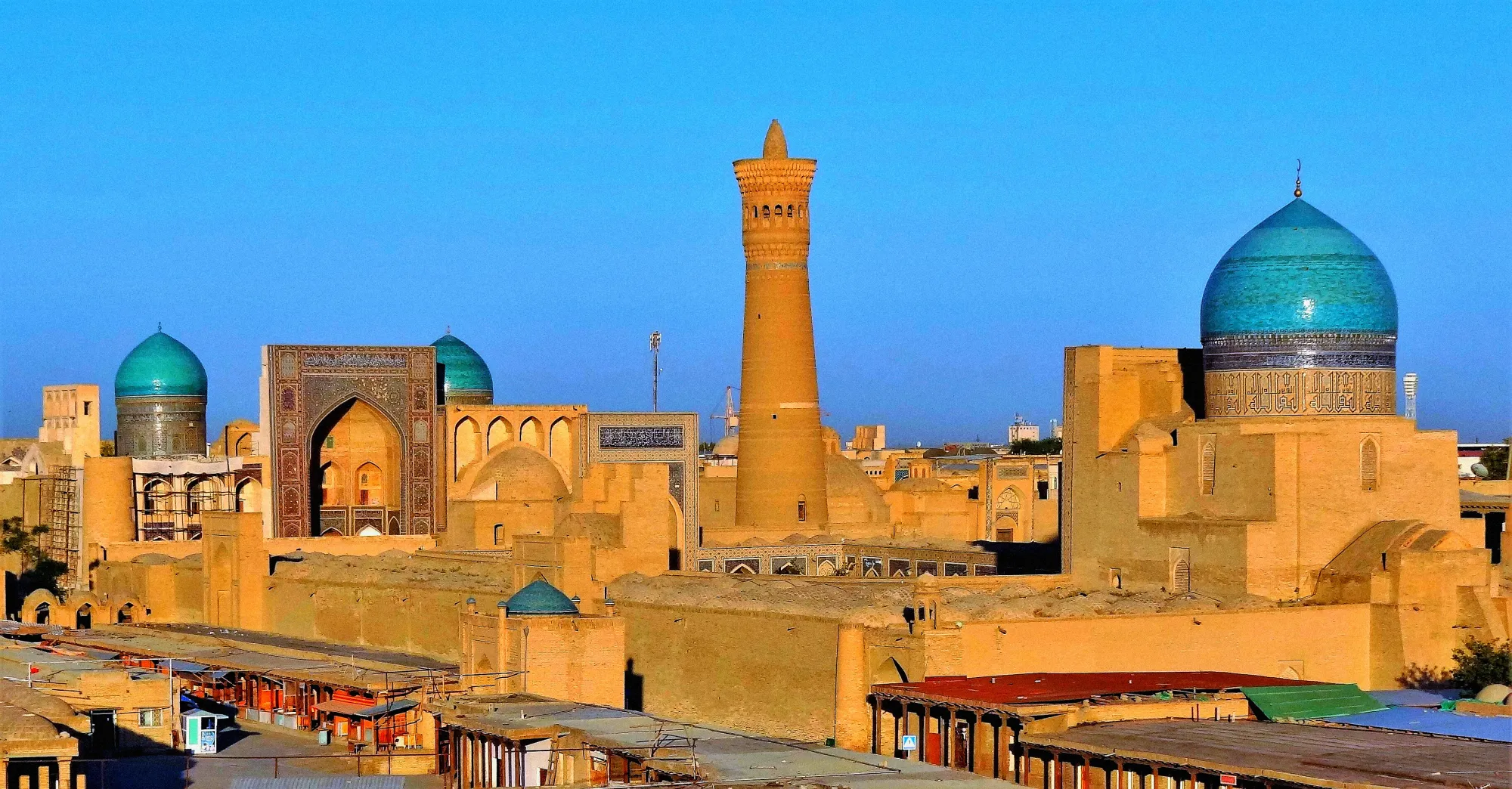
Today's topic is the Islamic Golden Age. Let's just have a quick look at the Golden Age. At the height of Islamic influence, there were a few centers of incredible cultural creativity. One such site is Bukhara, Uzbekistan. It's still there, guys. You can get on a plane, like Doug did, and visit it. It is an incredible city. I say that without actually having visited it, but I've heard terrific, terrific things from Doug. And you can go online as well and look at videos. But it is an incredible city, and it shows you the immense artistic creativity of the Islamic Golden Age.
But the main cultural center of the Islamic Golden Age is Baghdad. It's not so beautiful now, but back then it was really the center of the world. It's a round city, and it's a new city. This is a topographical map of the city. As you can see, it's surrounded by the Tigris and Euphrates, and it is a round city, one of the few round cities of that time.
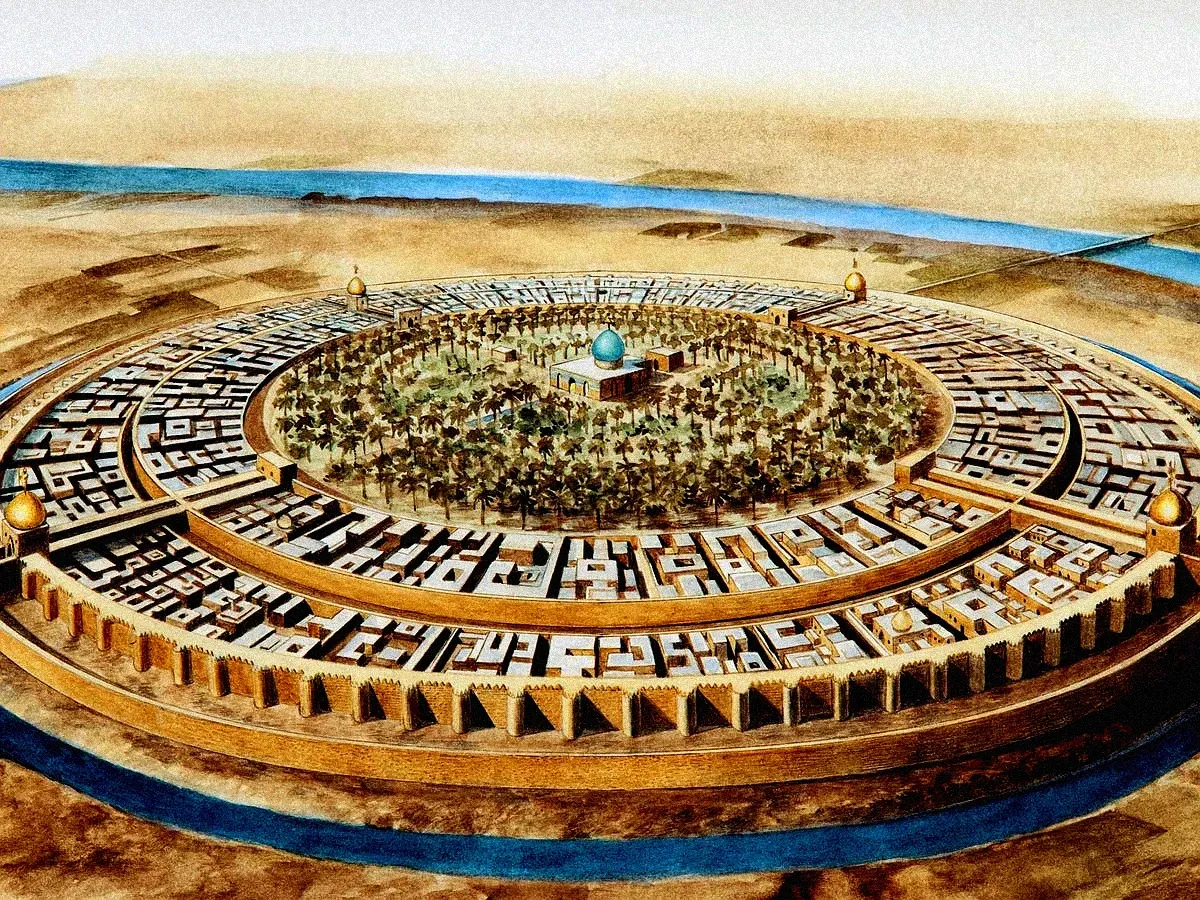
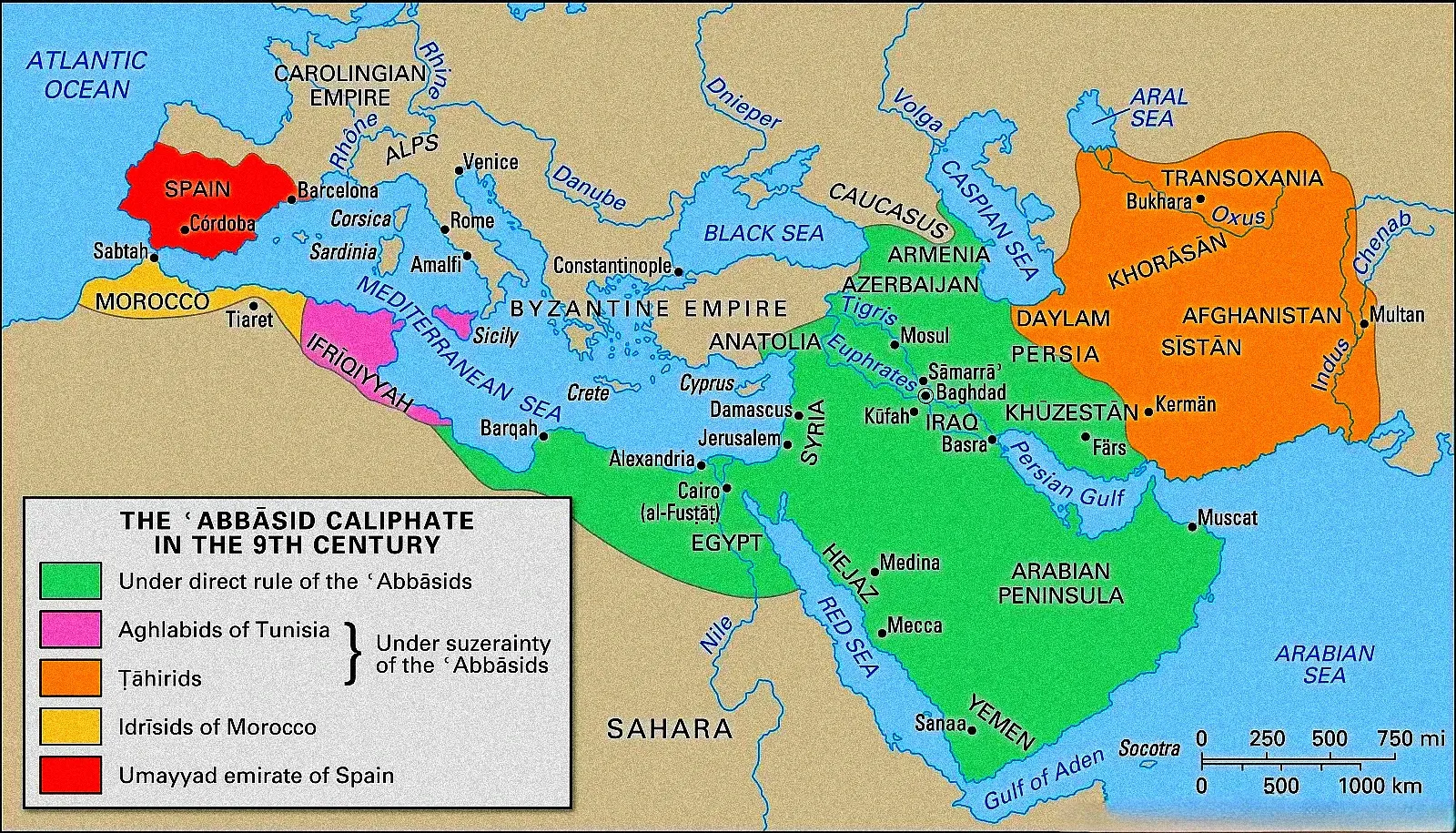
Baghdad was the capital of the Abbasid Caliphate, which started the Islamic Golden Age. The Abbasid Caliphate is the successor to the Umayyad Empire. And this is where the Abbasid Caliphate was. And this is what Muslims consider the height of their civilization.
The thing that's really important for us to understand about the Abbasid Empire is that not only were they influential in the Muslim world, but they eventually would come to create the world that we live in today. When you think of globalization, we think of this as a recent phenomenon. But look at the trade route that the Abbasid Caliphate would create over its three- to four-hundred-year history. It connects the entire world.
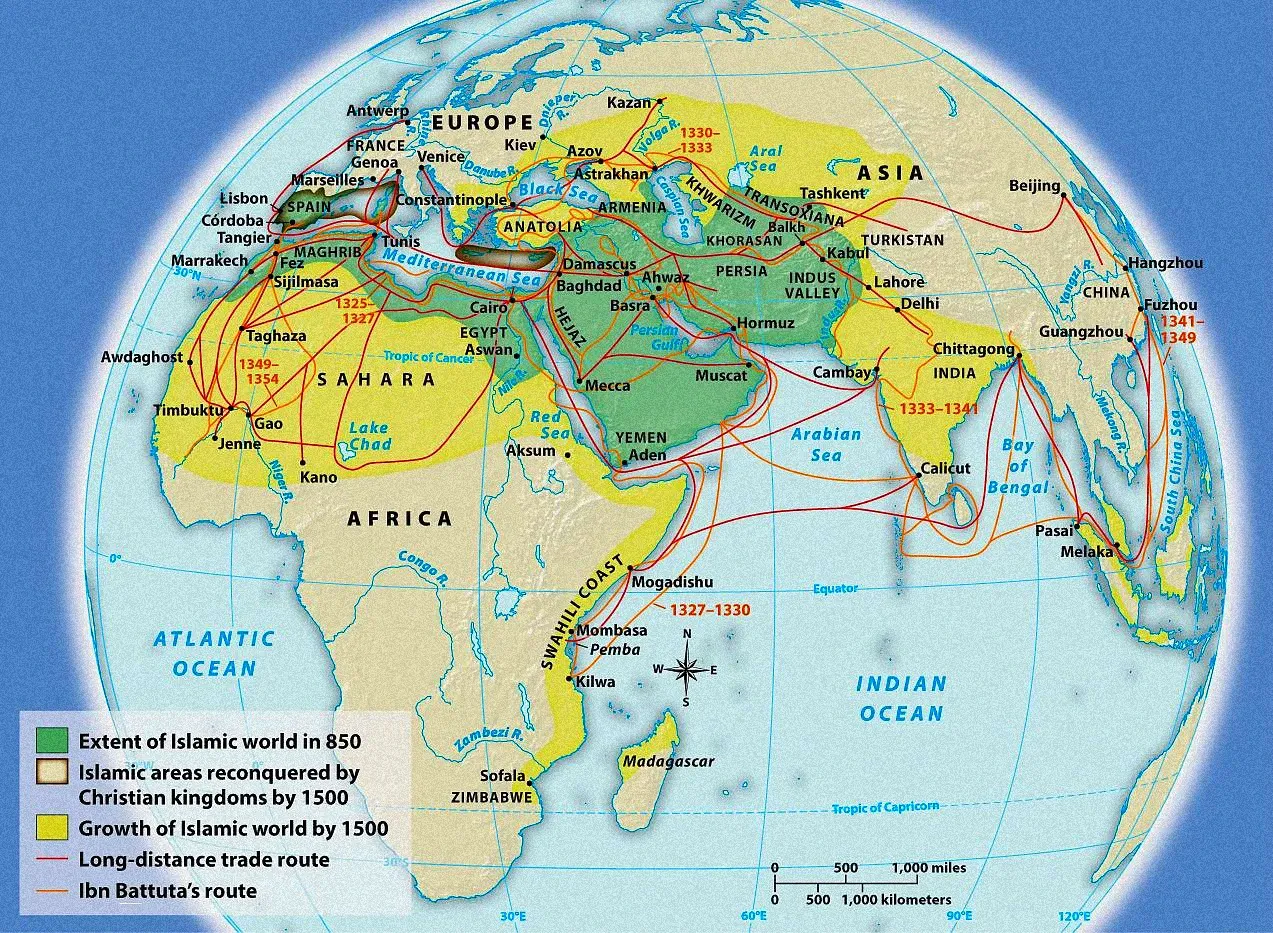
As I mentioned last semester, globalization has always existed to a certain extent in world history. But the Abbasids, the Muslim religion, would take these existing networks and make them a lot richer, a lot more dense, and a lot faster. You may not know this, but the Abbasids traded heavily with the Tang and the Song dynasties. In fact, it is the Abbasids who would initiate something called the Maritime Silk Road. The overland Silk Road has existed for a long time, but it is the Abbasids who will eventually create the Maritime Silk Road and will bring China into the world to a greater extent than ever before.
The main center for cultural production in the Muslim world is something called the House of Wisdom. Its model is the Library of Alexandria. Remember, last semester, we discussed the Library of Alexandria in Egypt. Its mission was to be the first university to take all Hellenistic knowledge and culture and systematize it for dissemination. And the House of Wisdom was doing the same thing, where it would take all knowledge and culture within the Islamic world and outside the Islamic world and systematize and standardize it for mass dissemination.
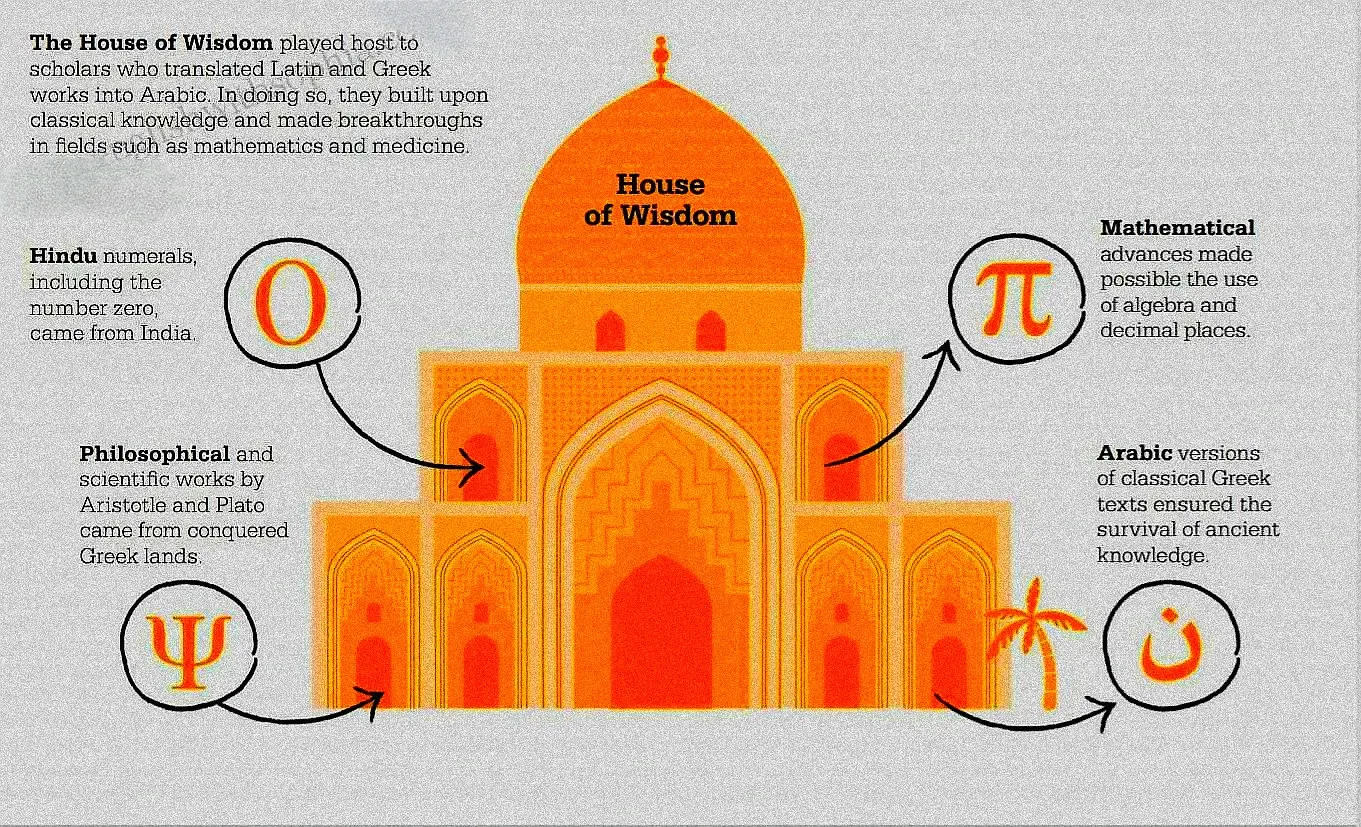
The things that they were doing were they were taking Hindu numerals. Zero, one, two, three. We still use them today. They took them from India, and again, they standardized them and disseminated this knowledge. They took works from Aristotle and Plato, translated them into Arabic and Persian, and then disseminated them. The main contribution of the Islamic Golden Age to world culture is actually in mathematics. They took all the math in the Greek world and in the Persian world and in the Hindu world, and then they would systematize it and then build on top of it.
This is a rendition of the House of Wisdom. This is where the three major creative civilizations would meet and exchange ideas, the Greeks, the Jews, and the Persians. They would also take ideas from the Indian tradition and the Chinese tradition as well.
The major literary work that we still have today from the Islamic Golden Age is the Arabian Nights. Scholars have looked at this very closely, and most scholars believe that the story is actually from India. Also, what's important for us to understand is that at the time this was translated, it was actually not that popular within the Muslim world. Poetry, philosophy, mathematics, science were considered the high arts. This was considered low art. What we have today is that the Europeans would discover this centuries after the Islamic Golden Age, and they fell in love with these stories. And that's why we still have them today. And Disney movies are based on this as well.
Thinkers and Philosophers
- Let's look at some of the major thinkers and philosophers of the Islamic Golden Age. At this time in world history, we don't differentiate between philosophers, poets, scientists, mathematicians. All intellectuals engaged in all these different fields. One of the most famous is Rumi, who is Persian, a poet, a mystic, a philosopher.
- Ibn Sina is probably the most famous intellectual of the Islamic Golden Age. His books, his works were admired in Europe. Islamic philosophy was being exported to Europe, where it would have a major influence on many of Europe's major thinkers. You may have heard of a man named Leonardo Fibonacci. You should have heard of him in math class. At this particular time in history, he was going to Baghdad to study from the leading mathematicians of this time and taking their ideas and importing them all back to Europe. This is Ibn Sina, and the Latin name is Avicenna.
- Ibn Rushd, Averroes, is also a major intellectual at this time. Just to show you how influential these two were in Europe, let's look at Dante's Divine Comedy. Dante is in hell, and there in Limbo, he's meeting the most influential, the greatest philosophers in human history who have influenced European civilization. Obviously, he's going to name Socrates and Plato. But guess what? He also names Averroes and Avicenna. Dante is acknowledging the debt Europeans have to Islam. This is important for us because the Muslim intellectual influence on Europe has been whitewashed from history. This is something you do not learn in school usually. But without Islam, you can make the argument that Europe could not have modernized. And later on, I'll explain why that's the case.
- Omar Khayyam is also another famous intellectual, poet, philosopher.
- This man, Musa al-Khwarizmi, is considered the father of modern algebra. His Latin name is Algoritmi. And if this sounds familiar, it's because his name will give us the modern English word algorithm. Both algebra and algorithm were originally Arabic words. Most of the math you're studying in school actually originated during the Islamic Golden Age.
- This name is Alhazen, and he invented physics, basically optics. Again, extremely influential. And again, these ideas will be imported back to Europe, and they will become the basis of the Renaissance.
- Al-Zahrawi is the father of surgery. At this time in world history, the very best hospitals are in the Islamic world, by far. This is the first twenty-four-hour hospital in Baghdad. What's also amazing about these hospitals is that if you are poor and could not pay, you could receive medical treatment for free. That was just part of the faith. All poor were treated with great charity and kindness during the Islamic Golden Age.
- This is al-Qarawiyyin. Again, guys, I don't speak Arabic. I'm probably butchering the name, but it was founded in eight fifty-nine in Fez, Morocco. This is important because this is actually the first degree-granting university in the whole world, and it's still there, guys. This is the oldest university in the world. What's also amazing is it was founded by a woman who inherited a fortune from her father, and she spent all her money on building this university.
If you ever get a chance to go to Fez, it is the most amazing city. Morocco is an amazing country as well.
The End of the Golden Age
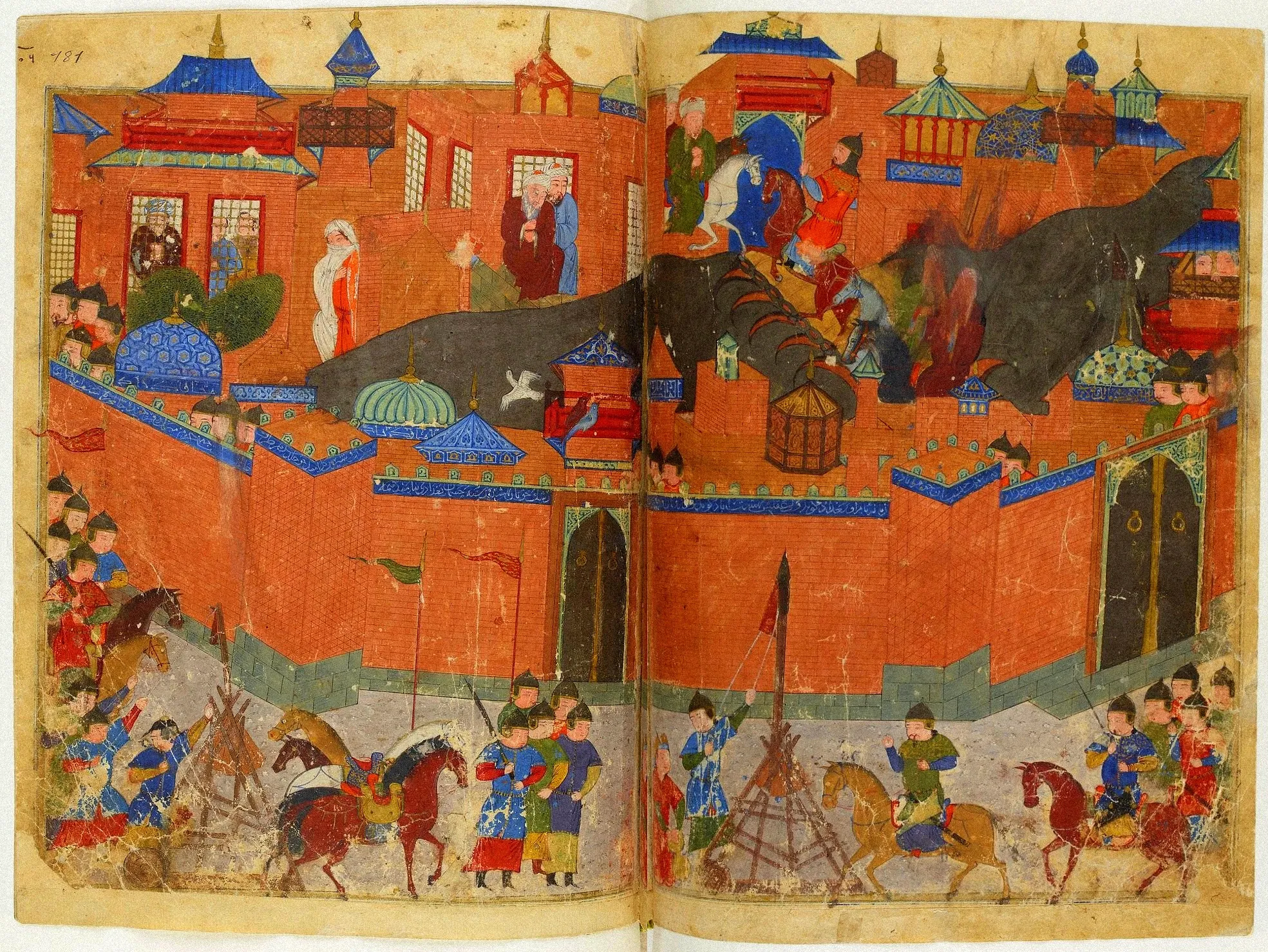
Twelve fifty-eight, the Islamic Golden Age officially came to an end, or that's what scholars believe. And the reason why is in twelve fifty-eight, the Mongols will sack Baghdad, and they will burn all the books, or that's what the legend tells us. Baghdad had a thriving bookstore culture, and this was unique in the world. Intellectuals, or the elite, spent a lot of their resources on buying books. They imported paper from China. They learned how to make paper from China. So, books were extremely popular within Baghdad, especially among the elite. As well, because of the Quran, it was necessary for the elite to be literate. It was demanded of you to be literate, and the Quran will also standardize Arabic and make it the official language of the entire Muslim world.
But just because the Islamic Golden Age ended does not mean that creativity stopped in the Muslim world. This is Ibn Khaldun, and he's considered the father of social science, economics, philosophy of history, politics. This man invented a lot of these disciplines. He's most famous for his idea of asabiyyah, which just means social cohesion. He was actually the first to systematically think about grand history. Why do civilizations rise, and why do they decline? And his conclusion is that the borderlands are able to conquer empires because the people there have asabiyyah, which just means that they are more egalitarian, more free, more cohesive as a culture. Whereas the empire, because it's so big, loses a lot of cohesion. And again, Ibn Khaldun is a major inspiration for the history that I try as well.
From thirteen hundred to seventeen hundred, the world will be dominated by three major empires, the Ottomans, the Safavids in Iran, and the Mughals in India. They are collectively known as the Gunpowder Empires. What's amazing is since its inception about six twenty-two up until seventeen hundred, the Islamic religion dominated the world. And so, the question for us is, why was that the case? How did Islam overtake Europe and overtake Christianity? That is a mystery and question for us today that we will look at.
Let's go back to the three mysteries that I introduced earlier.
- Why do we have no written records, even though we know that the people within the movement, Jews and Christians, knew how to read and write? That's the first question.
- The second question is, why didn't Muhammad name a successor?
- The third question is, why was the Al-Aqsa Mosque built on top of the Temple Mount? This is a paradox because Jews were an extremely important part of that early movement. So, why would you offend the Jews like this?
Jerusalem and the Early Movement
To understand what happened, let's go back in time. We know that in six twenty-two, Muhammad goes to Medina, and that's what starts the Islamic movement. But let's just go over to Jerusalem and figure out what's happening there. And once we do that, then we're able to figure out what's going on in that world. It turns out in six twenty-two, there's a major war going on between the two major powers at this time, the Persians and the Byzantines. And it is a deadly war that is engulfing the entire Middle East.
This is from Wikipedia. Now, guys, never trust Wikipedia as a historical source, but it's useful for us to understand what contemporary historians think. This is from Wikipedia. The Jews have aligned themselves with the Persians. Why? Because, first of all, the Romans controlled Jerusalem, and in the year seventy, the Romans burned down their temple. And in the year one thirty-five, the Romans expelled the Jews from Jerusalem, their holy city. Ever since then, the Jews obviously want revenge, but they also want to return to their holy city and rebuild the temple. And with the Persians, they saw this as an opportunity because, historically, the Persians and the Jews have gotten along very well.
The Jews helped the Persians take Jerusalem and push out the Byzantines. But when that happens, the Christians in Jerusalem revolt, and they force out the Jews. And then the Byzantines, under their emperor Heraclius, return to Jerusalem in the First Crusade. This is the beginning of the idea of crusade. And they retake the city, and then what they do is they expel the Jews from Jerusalem, obviously, but then they start to kill a lot of Jews. And they force these Jews outside of Jerusalem.
Now these Jews have nowhere to go. But there's something called the Constitution of Medina in Arabia. There is a prophet, Muhammad, who is promising religious tolerance for all. All can practice their faith in peace. So, it makes sense for a lot of these Jews, not all of them, but a lot of them, to join this early movement.
What's important for us to understand is that at this point, Islam, Muslim, is not a distinct religion. All these people are called believers because Muhammad sees himself as the final messenger of God. Abraham was the first, then you had Moses, then you had Jesus, and now Muhammad is the very last. All these three different traditions, the Christian tradition, the Jewish tradition, and the Islamic tradition, in the beginning were all just one religion, one idea, which is to bring God to Earth and make everyone understand that God is the true God. To create monotheism on Earth. That's the origin of this new religion of Islam.
This is the Constitution of Medina, which is in the Quran, and which we know to be historically true. Maybe not the wording, but we know that this existed. These people were called believers. This would also include people who believe in Zoroastrianism because Zoroastrianism was also a monotheistic religion. The Constitution of Medina was an attempt to unite all monotheistic religions into one single tradition that fought for God.
- Also, what's really important for us to understand is not only is there all this persecution going on against Jews and against Christians and against Zoroastrians, but also this is an apocalyptic age where all three traditions believed this was literally the end of the world. If you were Jewish, you believe in a final battle called Armageddon between the Messiah, who would lead you, and two enemies called Gog and Magog. Guess what? The Persians and the Romans were fighting each other. So, you could easily interpret this to mean the Persians and the Romans were the Gog and Magog enemy.
In your tradition, this should be the final battle. This is when Jerusalem is most threatened. The Romans, the Byzantines, just took your city and massacred your people. So, in the Jewish tradition, this is the end of days. This is the final battle. And the Messiah would emerge and lead you to final victory. That person, a lot of Jews could interpret to be Muhammad. So, for the Jews, this is the end of days. - But for Christians, they also believe this is the end of days because there will be a final battle between the Antichrist and the Messiah. The Antichrist is obviously Heraclius, who is the emperor of the Byzantines, who've been persecuting Christians for a long time. Remember, the official religion of the Byzantines is the Holy Trinity. But most Christians didn't believe in the Holy Trinity, and they were persecuted for their refusal to believe in the Holy Trinity. For Christians, this is also the final battle.
- Zoroastrians believe in a final battle between good and evil.
This is an apocalyptic age where everyone believes this is it, the final battle. Muhammad is saying to everyone, "Guys, we're all one people, united by God, and we are here to fight for him." And this is very appealing for people.
Passages from the Quran
The best evidence for my argument is actually the Quran. Again, we don't have any written records of Muhammad, but what we do believe is the Quran is a collection of many of Muhammad's original sayings that have been redacted over time. Let's look at some passages from the Quran to better understand how Muhammad was thinking and what he was preaching to the Christians, the Jews, and the Zoroastrians.
O People of the Book.
By this, he means both the Christians and the Jews.
Why do you argue about Abraham when the Torah and the Gospel were not revealed until after him? Will you not reason?
He's saying, "Why are we arguing about scripture? Why are we arguing about belief? We all acknowledge that Abraham is our forefather. And Abraham came before the Bible. He came before the Old Testament and the New Testament. So, what's the argument?"
Here you are. You argue about things you know, but why do you argue about things you do not know? Allah knows, and you do not know. Abraham was neither a Jew nor a Christian, but he was a monotheist, a Muslim.
This is what Muhammad is saying. A Muslim is someone who believes in God as the only true God, and that includes Jews and Christians.
And he was not of the polytheists.
Let's also look at Muhammad responding to the Christian tradition. Remember, in the Christian tradition, a lot of conflict arises from a debate over the nature of Jesus and his relationship with God. And what Muhammad is saying is, "Guys, the idea of Jesus makes no sense. Jesus cannot be God. Jesus at best can only be a messenger of God, just like me. And the idea that Jesus is God makes no sense. Jesus was a human, just like me. God is God. He would not represent himself through a human." Let's look at what he says.
They disbelieve, those who say Allah is the Messiah, the son of Mary. But the Messiah himself said—
The Messiah is Jesus.
O Children of Israel, worship Allah, my Lord and your Lord.
He's making a clear distinction. God is my God. I'm not God. I'm not his son. He is God.
Whoever associates others with Allah, Allah has forbidden him paradise, and his dwelling is the fire. The wrongdoers have no saviors.
If you believe that Jesus is God, you are committing heresy against the true God. There can only be one God. There can't be two gods together.
They disbelieve, those who say Allah is the third of three. But there is no deity except the one God. If they do not refrain from what they say, a painful torment will befall those among them who disbelieve.
What he's saying, this is very important, is that Muhammad is saying the Holy Trinity, the idea, is just nonsense. "They disbelieve, those who say Allah is the third of three." Allah cannot be a fraction of anything. He is the one and only.
In our time, when we hear this, we don't really have an emotional reaction. But place yourself back in their time, the year six twenty-two. Most Christians are being persecuted for refusing to accept the Holy Trinity as scripture because it makes no sense. We discussed this in class. But if you say it makes no sense, you could be killed. You'll be persecuted for sure. And now Muhammad is saying, "You guys were right all along. You should have believed in yourself all along. You were right all along."
Let's use an analogy. Let's just say, for example, we have a world government. And for whatever reason, the world government tells us the sky is red. And you're like, "Wait a minute. I know blue, and I know red, and the sky is blue." But if you say the sky is blue, you will be put in jail. You are not allowed to say the sky is blue. And then you have people, teachers like me, telling you, "The reason why you believe the sky is blue and not red is your eyes lie to you. You cannot trust yourself. Your eyes are defective. That's the problem with human beings. We can't trust what we see."
You have to go through life believing the sky is red, even though you know in your heart it's blue. But then one day, someone like a teacher says to you in class, "Actually, guys, we've been lying to you all along. The sky is blue." Imagine your sense of relief and empowerment and liberation when someone of authority actually tells you what you've always believed. That's what Muhammad is doing. Muhammad is confirming to everyone that what they believed, what they knew about God, was right all along.
Muhammad's final message to the people is God is God and only God, and he is everywhere. And you can see him. You can touch him because he's everywhere. And as such, you can feel him, and he can be inside of you. This idea will occupy most of the Quran. And this is what he says:
With him are the keys of the unseen. None knows them except he, and he knows everything on land and in the sea. Not a leaf falls but he knows it. And there's not a single grain in the darkness of earth, nor is there anything wet or dry, but it is in the clear record.
God is everywhere. You can see and touch him in everything. In other words, what's happening is that Islam is really the first monotheistic religion in the modern sense. When you think of monotheism, we actually think of the Islamic version of monotheism.
Paganism and Monotheism
What is the power of Islam? I want you guys to remember this. The power and beauty comes from how Islam is able to unite two major intellectual traditions in the world. The first is paganism. Remember the Vikings. The Vikings told stories. They acted out rituals. And therefore, there was an intimacy, concreteness, and interconnectedness to paganism that made us feel happy and good. It made us understand the world. It made us feel as though we could influence the world. That's the power of paganism. But Islam is doing the same thing by making God concrete. You can feel God. God is everywhere. He knows everything.
But what Islam is also doing is taking the simplicity, clarity, and absoluteness of monotheism. Monotheism is nice because, with monotheism, everything becomes clear to you. There's one God. Therefore, I just have to follow him. I just have to believe in him. There's like a million gods in paganism, and so it's unclear what you should do or how you should relate to this million gods. But here in monotheism, the relationship between God and you is very, very clear.
In other words, Islam is a major intellectual revolution in human history. And we have forgotten this because Islam, the idea, has embedded itself into modernity itself. What I will show you over the course of this semester is that Islam really is the portal of modernity. When we say that modernity began in Europe, we forget that Islam really built the basis for modernity.
Fulfillment of the law and prophets. It's completing the story in the Bible. It's bringing God to the people. You can now touch God. You can now know God. That's the beginning of the idea of Protestantism. And create heaven on Earth. This is the idea of science. Why do we use science to make the world better? Because God wants us to make the world better. A lot of the ideas that will underpin modernity, that God can be in us and that God expects us to make the world better, are already there in the beginnings of Islam. And that's why we will have this Islamic Golden Age because they are propelled by their devoutness to the one true God.
Answering the Three Mysteries
- Let me very quickly answer the three mysteries. The first problem is, why were there no written records? The answer is, first of all, Islam marks a revolution. It is overturning the social order. The problem, though, is that eventually Islam will become the social order. So, you obviously don't want to paint Muhammad as a revolutionary. That's the first problem. Muhammad represented a revolution against the social order. That's the first thing.
The second thing is that we know that his early followers, the companions, were all wiped out. They're all dead. They all died. The official history says that they died in military conflicts. But here's the amazing thing about early Islamic history. We don't have that much evidence of military conflict between the Arabs and the Persians and the Byzantines. We don't. There's maybe one city, Caesarea, where there was a siege. But we think that a lot of the conquests happened organically, or maybe their enemies surrendered to them rather than fight them. And that's why I would say it's a revolution. It's not a conquest. It's a revolution where ordinary people were so disgusted with the current leadership that they opted for a new belief system.
The problem, though, is that once you amass power and it's a coalition, the question then is who's now in charge? For the next fifty to a hundred years, there'll be a series of civil wars to determine who will be in charge. Those early companions were probably purged. The word we use is purge. They're wiped out, including the Jews and the Christians. We know for a fact that in the early days of Islam, Jews and Christians were part of the hierarchy. There's a man named St. John of Damascus who was very famous, and he was a leading official in the Umayyad Caliphate. We know that as a fact. But eventually they were purged from the system. And if they're purged, what happens is they also purge history. Because if these are the companions of Muhammad, Christians and Jews, then they're legitimate. They're more legitimate than you are. Therefore, they have to purge that history.
The third thing is that there will be a series of continuous civil wars among the Arabs in order to determine who will be the caliph. And obviously they want to disguise this history. They want to disguise this history of civil conflict. So, the first hundred years, it was revolutionary, but it was also very tumultuous and bloody. And that's why they had to disguise the first hundred years of Islamic history. And again, this is my explanation. I could be wrong. There could be other explanations.
"Just to throw in another idea, and I think what you said doesn't contradict either."
"Right."
"One thing that's hard for us to imagine is that our culture would actually record its history, like a historiography. It seems to us as a given."
"Yep."
"Chinese culture, official historians going back for two hundred years and so on. The Greeks had their ancient historians. The Romans had their ancient historians. But not every culture has its historians. The Persians didn't write history."
"Right."
"The Indians didn't write history. And I'm guessing the Arabs didn't have a tradition of writing down their history either. And so that this would actually be recorded in the sense that we are familiar with probably wasn't the case at all."
That is a great point. Thank you, Doug. Doug's point is that the idea of history comes to us from the Greeks and the Romans, who wrote everything down. But as Doug says, there are many cultures who don't have institutions to write down history. We take it for granted today, but back then it was actually a pretty rare thing to actually want to write down your history. And a good reason why is that if you write down the history, you're also constrained by the history. And that's why a lot of empires chose not to write down their history. - Why didn't Muhammad name a successor? Again, this is my theory. But if it's the end of days, if it's the end of the world, you don't need to name a successor because God's coming. What's the point? In fact, if you name a successor, then you are admitting defeat. What Muhammad is saying to everyone is that every one of your traditions, Jewish, Christian, Zoroastrian, is right. It's the end of days. God is coming. There will be peace on the world. Therefore, we will no longer need leaders. You won't need Muhammad. I'm the last prophet, man. That's why I think he didn't name a successor. But there could be other explanations. Do you have another explanation?
- Third is, why did they build the Al-Aqsa Mosque on the Temple Mount? This explanation is going to be very controversial. The Jews supported the Persians in the war against the Byzantines on the condition that the Persians would allow them to return to Jerusalem, but also on the condition that the Jews would be allowed to rebuild their temple, which is exactly what Cyrus the Great did. Cyrus the Great is called the Messiah in the Bible. He's the only foreign leader called the Messiah in the Bible because Cyrus the Great allowed them to rebuild the temple.
What I'm saying is this. The Al-Aqsa Mosque was originally the Third Temple. It is what the Arabs promised the Jews for their support. But over time, as these purges happened, as civil conflicts happened, then the Arabs needed to sort of consolidate their authority. So, they turned the Third Temple into the Al-Aqsa Mosque. That's what I think happened. I don't have time to go into the very detailed history of how the Al-Aqsa Mosque was built, but it was a process that took about two hundred years. It's very possible during these two hundred years intentions changed.
Again, I know this is an extremely controversial statement, but I think that's what happened. Originally, it was meant to be the Third Temple. But then, over time, the Arab leaders changed their minds and thought to themselves that if we do this, then we make the Jews into a very powerful political entity within the Muslim world. Again, these are my explanations. It's my interpretation. This is not historical fact.
Comparing the Three Religions
Now that we've done the three mysteries, let's go back to the three original questions.
- The first question is, why did Islam enter its Golden Age and Christian Europe enter its Dark Age?
- The second question is, why did Islam enter its Golden Age?
- And the third question is, how did Christian Europe overtake the Muslim world?
To answer these three questions, all we have to do is compare and contrast these three major religions together, Judaism, Christianity, and Islam. There are both strengths and weaknesses to all religions. Let's very quickly compare and contrast these three major religions to see why they thrive in a certain historical context.
Judaism
The Bible, it's a wonderful piece of literature. It has a very rich history going back thousands of years. So, the Jews were the first to have a complete history of themselves. There are beautiful stories in the Bible that still inspire today. The stories of Adam and Eve, the stories of the patriarchs, the story of Moses. They still inspire us today, and they inspire us to create great literature. And then you have a literary culture. The Jews were expected to be people of the book. They were expected to be literate in order to practice their religion. This helps us understand why Jews are so dominant in academia, universities, in the media, and in culture, and in the legal profession because these are people of the book. They have a tremendous respect for learning and for literacy.
That said, there are certain problems with the tradition. The first is it's contradictory. When you read the Bible, it's always contradicting itself. It's almost schizophrenic, you could say. It's very hard to pick out a definite message from the Bible, and that's why the oral tradition called the Torah is actually much more important. And so, Jews have to go to the synagogue all the time, where the rabbi will explain to them the meaning of the Bible because if you read it by yourself, it's almost impossible to understand.
The second problem is their god Yahweh is very problematic. He's extremely problematic. As we know from last semester when we looked at the Bible, he doesn't seem to know what he's doing, and he's very, very violent. He often commands the Israelites to go kill all their enemies. So, he's a very problematic god.
The third major problem in the tradition is faith versus history. If you believe that you're the chosen people, if you believe that Yahweh is the only true god, then why are you being persecuted all the time? Why were the Romans able to kick you out of Jerusalem and burn down your temple, which is the house of God? Why are you homeless? Why do you lack a homeland? This has been going on for four thousand years. And there are no easy explanations to any of these problems. So, within the Jewish faith, there's a lot of conflict and debate and doubt.
Christianity
The Christian faith was created in many ways to try to resolve a lot of the issues within the Jewish tradition. The first major advantage of the Christian faith is it's the personification and perfection of divinity. Remember how we said that Yahweh is problematic? Now we have Jesus, who we can understand. And Jesus made the ultimate sacrifice. Therefore, we know him to be the ultimate good.
The second advantage is, now that there's a person, we can have him deliver a consistent message of being kind, being merciful, being loving. The third advantage is the idea of progress of history. Everything is leading to the return of Jesus, the Second Coming. So, you may suffer now, but don't worry because Jesus is returning. And that will end history for us. These are the advantages of Christianity.
But when you do that, when you have Jesus personify God, you create a lot of issues. The first issue is it's a really confusing story. Why would God come down to Earth, manifest himself as a human, and then sacrifice himself? That's really, really confusing. I know there's a lot of really good explanations as to why this is the case. Still, if you're just a normal person, you can't understand the story. It makes no sense to you.
Second is that it's counterintuitive. A lot of the ideas in Christianity are counterintuitive. The Holy Trinity must be the strangest idea in religion, where God, the Holy Spirit, and Jesus are separate but equal. It makes no intuitive sense to anyone. The third is distant divinity. God is out there somewhere. You don't know where. You can't talk to him. You can't see him. You have absolutely no idea where he is. It's a very distant divinity. These are the disadvantages of Christianity.
Islam
Islam now makes sense because it's trying to remedy and rectify these failings of Christianity. The first is that it takes the Jewish tradition and Christian tradition and makes them part of itself. It is really the continuation and the perfection of the Jewish-Christian tradition. Second is the absoluteness of God. This is now true monotheism, where God is everywhere. And you can see him. But if God is everywhere, then what's amazing is that God can now come inside you through your faith, through your devotion, and through your practice.
What this means is you now know how to behave in the world. There's a clarity of purpose and action. You know that as long as you do those five things, those five pillars of Islam, your life will be good. God is in you, and that gives you strength and purpose and power. These ideas are what will start the Islamic Golden Age and allow Islam to propel itself past everyone.
The problem, though, is it's too simple and clear. The advantage of being contradictory is you allow for different belief systems which come into conflict with each other. And with this contradiction and conflict, it allows for innovation. That's why Catholicism will eventually give way to Protestantism, which is a reinterpretation of the Bible. But it's because the Bible is so contradictory that this innovation is allowed to happen. The Quran is extremely clear. But if that's the case, then you cannot allow for a radical rejection of the past and embrace of the future.
The second problem, then, is it's inflexible. It can't be as innovative as Christianity and Judaism. The third problem is Islam purports to stand outside of history. Judaism is to be inside of history. Christianity is inside of history as well. But Islam is eternal. When you read the Quran, it's meant to be the eternal words. These words are always true. But then the problem is, how do you go about and interpret your actions through the lens of history? And how do you improve your society based on this interpretation?
In the beginning, the very strengths of Islam will give rise to a tremendous period of creativity. But over time, these innovations will become dogma, and they will ossify, and they will prevent further growth in your society.
Christianity and Islam
Let me reframe what I just said in a different way. I'm going to compare and contrast Christianity with Islam, and then this will be a bit more clear to you. I'm making a lot of generalizations, but again, this is a macro view of history. Let's look at Christianity and compare it with Islam.
As I have said in previous classes, Christianity was developed by the Roman Empire in order to co-opt first the Jews and eventually these barbarian invaders. And therefore, the religion is one of empire and power. It's really about how to control people. But Islam, as I just mentioned, is a revolutionary religion that must be open and inclusive and tolerant in order to attract as many followers as possible.
The main mechanism of control for an empire is the idea of orthodoxy. Orthodoxy just means the correct thinking. But if you have orthodoxy, then you have the idea of heresy. Orthodoxy is with God. Heresy is against God. If you agree that the sky is red because I say the sky is red, then you are orthodox. But if you insist the sky is blue, then it is heretical. And that constrains or limits the imagination. And the philosopher that you base your society on is Plato. The idea of the bishop, the idea of the pope, it's really the idea of Plato's philosopher-king.
I'll explain Plato's philosophy in a second. But let's look at Islam. It's a revolutionary religion, and therefore you must activate the energy of all your followers. You must get them to believe, and you must get them to fight. Therefore, it's a religion based on intuition. God is with you. You know God. God is inside you. And the idea of intuition is what allows for science. You can discover the truth by just observing, through empirical observation, through your own analysis, through your own belief. And the person who argues this is, of course, Aristotle.
This is the argument I'm making to you. A lot of scholars believe the Islamic Golden Age happened because the Muslims had books. They had wealth. But the Byzantines also had access to all these major thinkers, Plato and Aristotle. The Byzantines had a lot of wealth. What I'm arguing is that a culture needs to have an attitude, a perspective, a worldview, an orientation. For the Byzantines and the Europeans, they chose Plato. But the Muslims chose Aristotle. And that is the major difference.
Plato and Aristotle
Let's summarize Plato and Aristotle. How were their philosophies different? For Plato, the true God is called the Form of the Good. The Form of the Good is the beginning of everything. It is what is immutable, that cannot be changed. It is perfect. It is eternal. Eternal means it was always there, and it will always be there. The Form of the Good, this God, thinks, and he emanates new concepts called ideals, like justice, reason, beauty, power. And these ideals will manifest themselves into perfect forms, like a perfect horse, the perfect woman. This, we can say, is heaven.
We live in something called the shadow world, which is just an imitation of heaven. It's a bad imitation, so everything sucks. For example, if you fall down and you break your leg, it hurts because we live in a shadow world. In this conception of the universe, what we're trying to do is return to the Form of the Good. And for Plato, he argues that you can do this through mathematics and geometry because mathematics is what is most like the Form of the Good. It is immutable, perfect, and eternal. So, by studying mathematics and geometry, you are able to ascend back into the Form of the Good.
But guess what? Augustine will take Plato, and he will adapt it to the Christian faith. Because how do you leave this world? By not sinning. By having faith. If you do that, then you are allowed to go to heaven. So, in the Platonic-Augustinian understanding, all we have to do in this world is not make a mistake. So, do nothing. Do nothing, and you'll be good.
Aristotle has a different conception of the universe. He believes the Form of the Good is called a Prime Mover. God is a Prime Mover. God is the first thing that acts and moves things. And when he does that, when he creates motion, other things start to happen as well. We're constantly moving about. Where we're going is we are seeking truth. It's called telos. Telos means purpose. Each of us by our nature has a purpose. If you're a soldier, your purpose is to be the best warrior. If you're a mathematician, your purpose is to be the best mathematician. And that is the idea of truth, to fulfill your purpose. And therefore, you must be constantly acting.
The beauty of this idea of motion is you can now study it through empirical observation. You can observe things and then start to understand their nature. And this gives rise to the idea of science. The Muslim world had a decidedly Aristotelian perspective, whereas the European world had a Platonic perspective.
Europe and Modernity
- The great thing about history, the great thing about civilization, is that what will happen is the Europeans will learn from the Muslims. They'll copy the Muslims. They'll bring back Aristotle. They'll bring back science. And they'll bring back intuition. And they will do so through three major events. The first is the Renaissance, where they bring back Aristotle.
- The second is the Protestant Reformation, where they will bring back God. Remember, in the Catholic religion, God is aloof. God can only be understood through the pope or the priest. But the Protestant religion is, no, God is with us. God is in us. Through your actions, you can win God's favor.
- And the last is science, the Scientific Revolution. These are the three major events that will give us modernity. But guess what? The Europeans are just emulating the Muslims. But, and this is really important, they will improve on the Muslims.
The problem with science is, yes, in the beginning, you will have all this tremendous discovery, but this innovation will eventually lead to something called dogma. And so, what you need to do is create institutions to destroy dogma. And that's what the Europeans will do. This idea that dogma can be destroyed through discussion and debate and analysis is what will become the basis of the Scientific Revolution, which will create the modern world that we live in today.
We will go through all of these three major movements in future classes. But please remember that it's the Islamic Golden Age which will inspire the Europeans to do all three of these things, which in turn will create the modern world that we live in today. And that's why I believe that the Islamic Golden Age is really the portal to modernity of human history. That is my argument to you.
Cultural Exchange and the Golden Age
"I don't know if it's a question or just an observation."
"Sure."
"This is one thing that you got me thinking about, the early years of Islam. There's kind of two movements. The first one is with the Umayyad Caliphate, which lasts about a hundred years."
"Right. Right."
"It was really kind of that revolution that you're talking about, very expansive growth, very, very quick. But it was also very Arab, and it was done by the Arab people. What's really interesting is if we look at the Abbasid Caliphate that comes afterwards, it moves to Baghdad. And right now, we think of Baghdad and Iraq as an Arab place. But at that time, it was Persian. And by moving there, it represents partly a change in culture and moving away from an Arab homeland, basically. There's an amazing cultural openness by moving there. There's contacts, like you said, with India. Islam moves into Central Asia. There's more contacts with China and so on. And there's a real cultural dynamism going on there. And Islam has to be very open to those cultures and be inspired by those cultures, and engage with them in a pretty deep way."
"Right. Right."
"In some ways, it's not just the religion that's the deciding factor for what makes it a Golden Age, but just being able to draw on so many different ancient and rich traditions."
"Yeah."
"In a way that, say, the Byzantines couldn't, or in Western Europe, the Catholics couldn't do."
Yeah, that's a great point. Let me elaborate on this point. There's a literary critic, Northrop Frye.
"Yep, Canadian."
"Right."
Northrop Frye is a Canadian literary critic. And one thing that he's obsessed about is how literature is developed. And what he's observed is there's a certain moment in history when great literature comes about. And that moment is when a nation, or a people, or culture, becomes an empire. The idea here is within a nation, you have tradition. You have cohesion. You have a certain literary basis. And then when it becomes an empire, it's forced to have a vista. It's forced to have a global perspective. And this change from a nation, a coherent people, into a cosmopolitan empire, at this stage in history, it's possible for them to produce great literature.
There are many examples of this. The first example, of course, is Athens. Athens is the civilization par excellence. When did Athens produce all its great literature? It was basically the age of Pericles, which lasted from like five hundred to about four hundred, maybe three fifty. But it was not that long. And this is important because this period is also when Athens, which was a very small polis, suddenly became an empire. And it was this transition that forced it to look outwards. So, Athens is one example.
But then, of course, you have King David and the Israelites. And again, after the Bronze Age Collapse, David was able to create an Israelite nation and then conquer a lot of this territory. These people now were a small empire. They weren't a great empire. They were a small empire. And the last example that we have is England. Think of Shakespeare. When was Shakespeare writing? Around sixteen hundred. And that was when England, which for the longest time was this poor island, was now emerging as a global empire, and with it a cosmopolitan perspective.
This is the pattern in history, which picks up on Doug's point, where the new Islamic Empire, when they shifted their capital to Baghdad, they now became a global empire. And as such, they had to absorb all these different traditions and cultures and become a multicultural, universal empire.
Northrop Frye has made this observation. It sounds convincing. I haven't done enough research to fully buy into this theory. But he has made this argument, and he has made these observations with these examples.
At this stage in history, China is being brought into world history. And the reason why is the rise of the Mongols.